Green and digitally connected
Text Armand LandmanImage Become-IT/Jesse Roozeboom
Sustainable expertise, from the shop floor to the supply chain
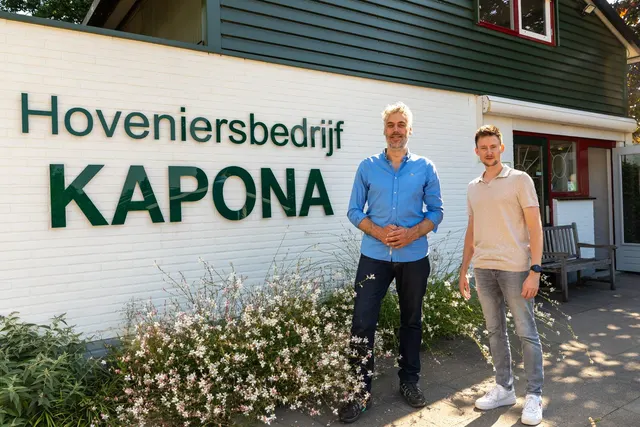
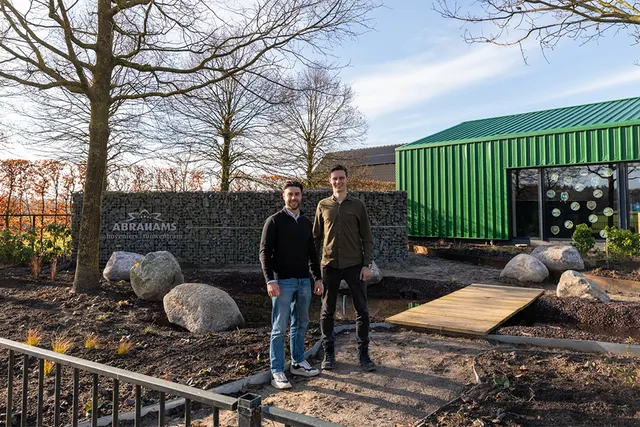
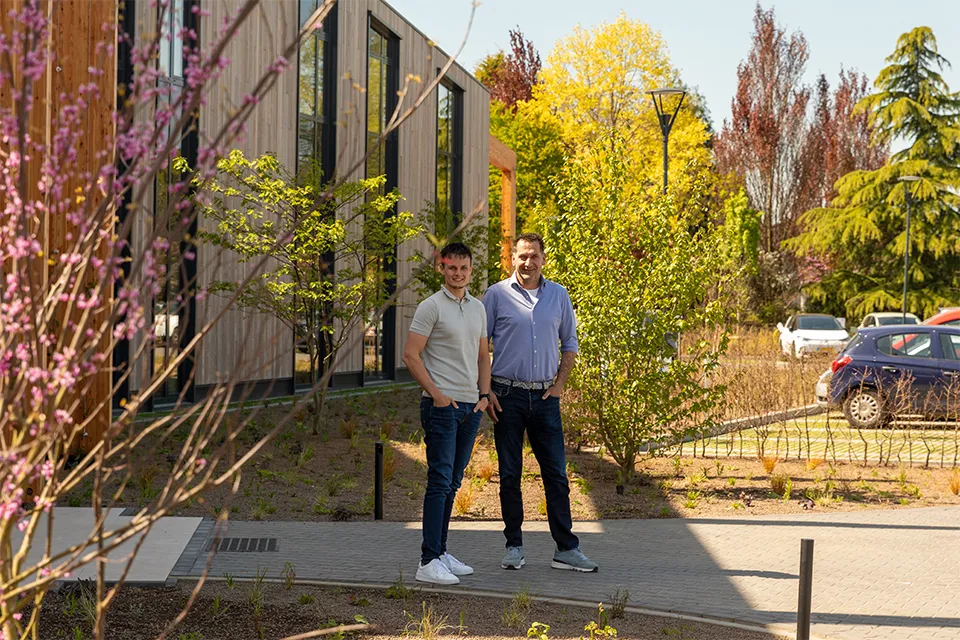
In Maasbree, Herman Vaessen Tuin | Boom | Groen is building not only outdoor spaces, but also a future-proof organisation. By implementing Suite MKB, the family business is taking a major step towards digitalisation, efficiency and supply chain collaboration. Ralf Vaessen, John Engels and Jesse Roozeboom explain how technology, organisation and culture come together in a successful transition, while outside a pair of pigeons work busily on a nest
In Maasbree, where landscaping company Herman Vaessen recently moved into a new, future-proof building, people, machinery and ideas are constantly on the move. During the conversation with director Ralf Vaessen, work planner John Engels and consultant Jesse Roozeboom, a small but telling scene unfolds outside the window. A pair of pigeons are busy building a nest. Talk about biodiversity.
The scene fits the family business’s direction perfectly. While nature takes its course outside, work is under way inside on another form of future-proofing: digitalisation.
From fragmentation to a single system
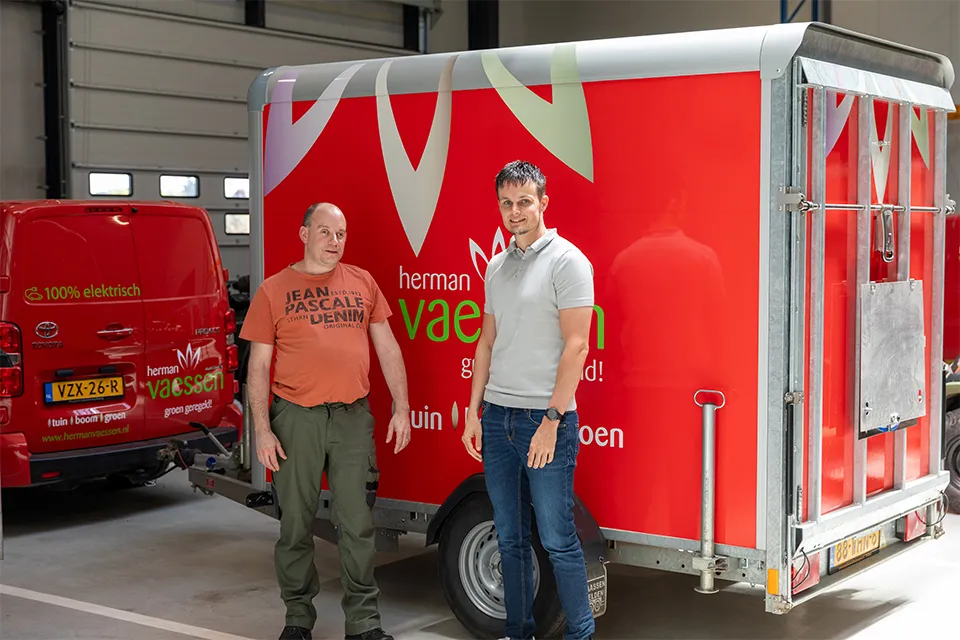
After nearly three decades with the same software system, Herman Vaessen realised that things needed to change. “We had things pretty well organised,” says Vaessen, “but we were using several apps. Time recording here, planning there. That’s not the future.”
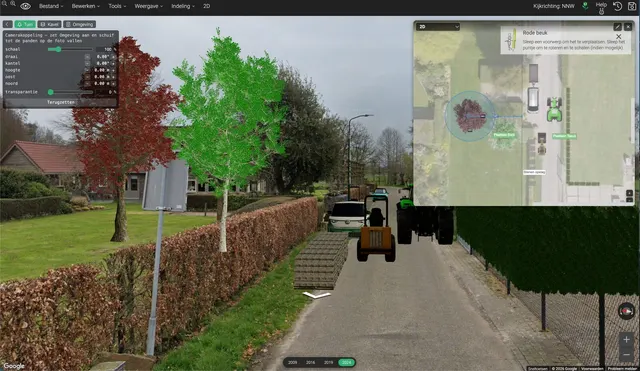
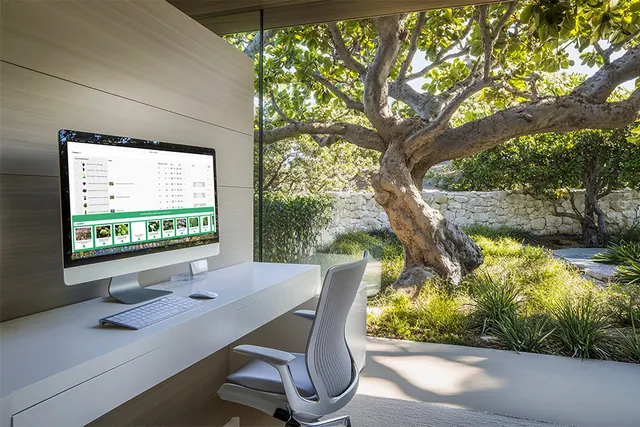
The goal was clear: fewer standalone systems and greater integration. Or, as Vaessen puts it, moving from five applications to one integrated environment. The solution was Suite MKB from Become-IT.
Notably, the decision was not made overnight. They had first met four years earlier, but at the time the software was not yet developed enough for the size and complexity of the business. “We were enthusiastic, but it was too soon,” says Vaessen.
It was only after an intensive period of further development, which Roozeboom says involved tens of thousands of development hours, that everything fell into place. Speed, web-based access and, above all, the integration of all business processes proved decisive.
Buy-in
The implementation was not simply a technical operation, but an organisation-wide change. Vaessen: “During the preliminary research with Become-IT, we looked at every department: what challenges were we facing, and what needed to improve? By then, everyone was in agreement: this was the way forward.”
That approach proved crucial. As is often the case with digitalisation, the biggest challenge is not the technology, but the people. “Change is painful,” says Vaessen matter-of-factly. “But ultimately, it turned out that people could do more, faster and better. It was mainly a matter of getting used to it.”
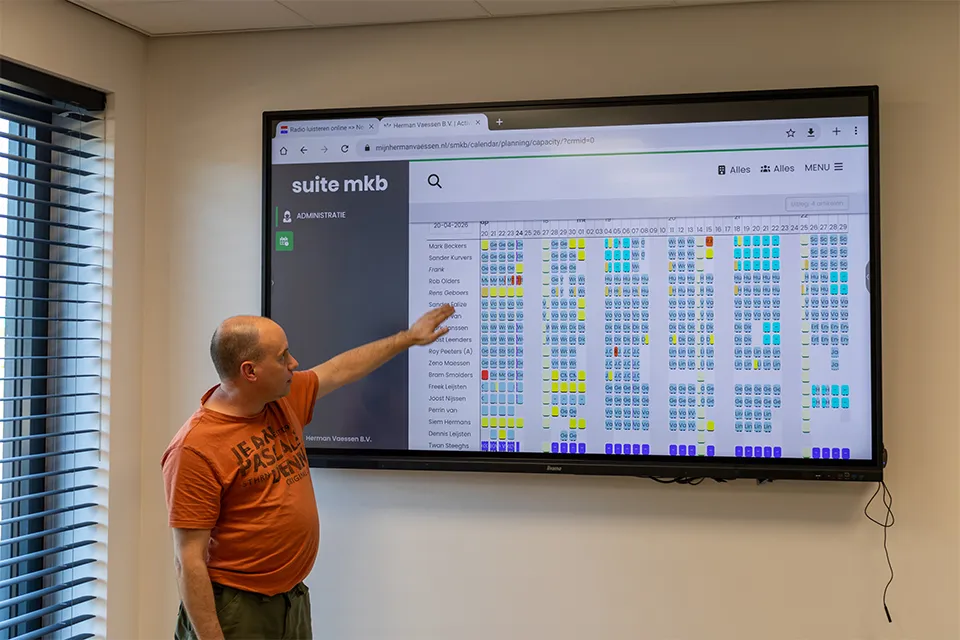
The implementation took around a quarter. A combination of online sessions, practical training and a phased roll-out gradually made the system part of day-to-day operations.
Faster, clearer, more digital
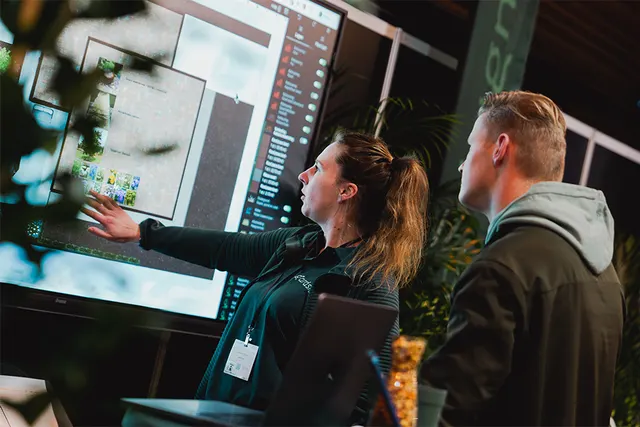
One year after going live, the verdict is unanimously positive. Work planner John Engels says the biggest gains are speed and accessibility. “Everything is simply much faster. You can work anywhere, on a phone, tablet or laptop. That really makes a difference.”
Efficiency on the shop floor has also visibly improved. More than 70 per cent of the paperwork has disappeared. Job sheets, drawings and photos are available digitally to field staff, while planning has become clearer.
Another key benefit is supply chain integration. An in-built library links suppliers directly to estimates and orders. “I press a button and know exactly what to order,” says Engels. “With the right prices and discounts.”
A more professional image in the market
The relationship with clients is changing too. A customer portal allows clients to approve quotations digitally and follow projects. “I can’t imagine a client not being enthusiastic about that,” says Vaessen. “It shows that you’re a modern business.”
The system also provides real-time access to figures: turnover, work in progress and outstanding items are linked directly to the financial administration. This makes data-driven management far more tangible.
A business in motion
The move towards digitalisation is part of a broader transformation. The move to the new building in Maasbree marks a wider development within the business. With, among other things, an extensive charging hub, solar panels and an energy storage system, the company is also making significant investments in sustainability.
Herman Vaessen is also working to further professionalise the organisation, with a management team, a focus on succession and a strong company culture that puts employees first. The recent family festival, attended by more than 500 people, underlines that sense of involvement.
The project is just as valuable for Become-IT. According to Roozeboom, it shows how software evolves in collaboration with users. “We don’t develop bespoke software, but what we develop here eventually becomes available to all our customers.”
That reflects Herman Vaessen’s own open approach. “If it benefits us, the industry can benefit from it too,” says Vaessen.
Looking ahead
Attention has already turned to the next step. This could include expanding functionality such as the specifications module, as well as using AI to share knowledge internally. It is a natural fit for a business that has been around for 63 years but continues to look firmly to the future.
And outside? The pigeons continue working on their nest, undisturbed. A small detail, but a telling metaphor. Whether it is biodiversity or digitalisation, building for the future happens one step at a time.
Een zakelijke vraag aan Become-IT B.V.? Get in touch
Companies in this story
Keep following this
Get an email when a new story is published. No account needed.
- ThemeDigital tools for green space management
- SubjectDigitalisation & software
- CompanyBecome-IT B.V.