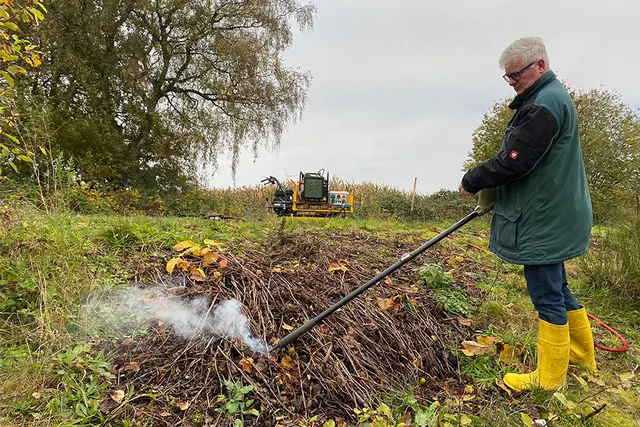
Round-table discussion at GrootGroenplus: ‘There is no such thing as the perfect climate tree’
Text Armand LandmanImage GrootGroenplus
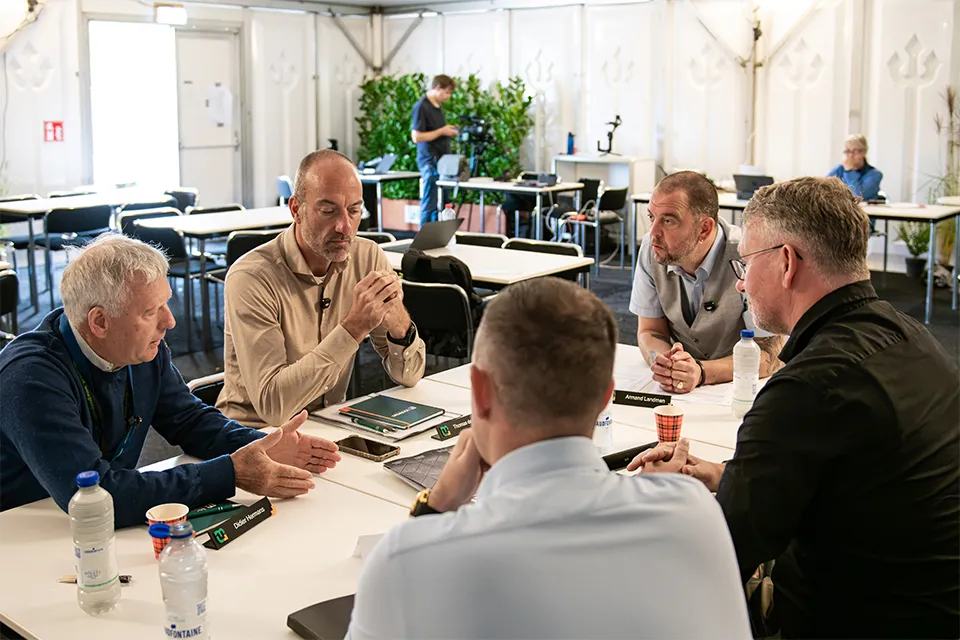
Trees are expected to do a lot these days. Cool the air, retain water, store CO₂, boost biodiversity and, ideally, stay healthy for decades in an increasingly erratic climate. But who decides which tree goes where? And what does that mean for the grower’s role? At GrootGroenplus, GreenPro sat down with four specialists for a round-table discussion. Their conclusion: the future starts long before the tree goes into the ground.
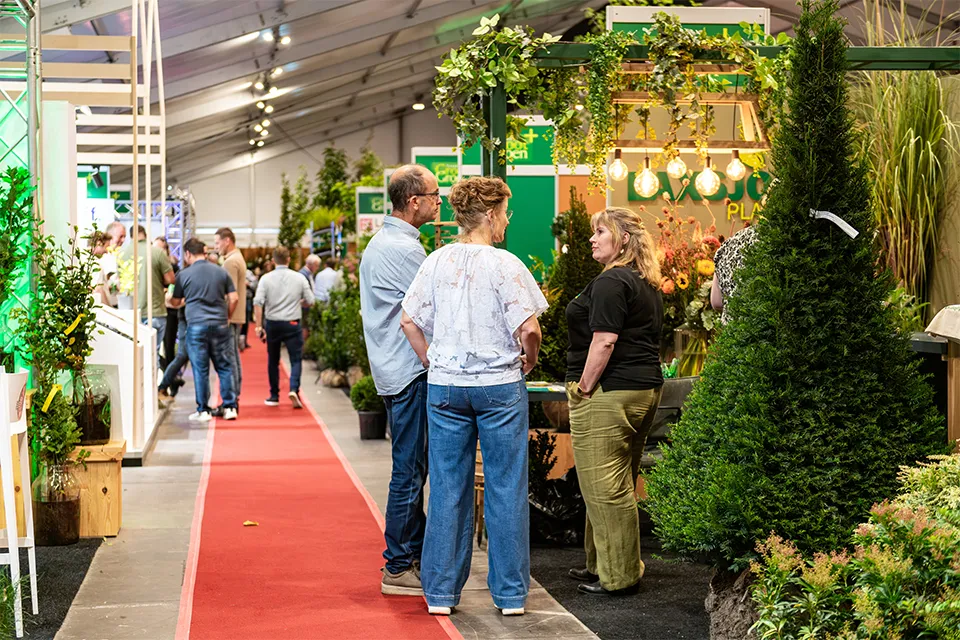
One swears by the quintessential Dutch lime tree. Another opts for the imposing giant sequoia as a symbol of resilience. And before long, someone at the table brings up native species. Or rather, the warning that ‘native’ has by now almost become a magic word.
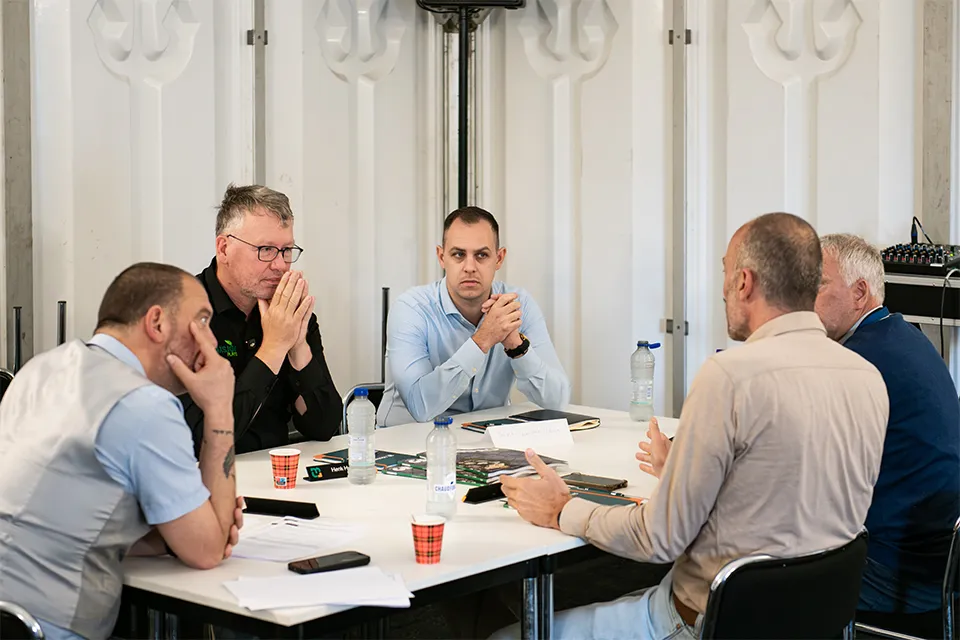
That gives a sense of the breadth of the discussion at the GreenPro round table at GrootGroenplus. Around the table are Thomas de Ruiter of Overbeek Bomen, Didier Hermans of Herplant, Henk Huijsman of Laxsjon Plants and Bart van der Veen, Sales Director at DCM Nederland. Four different backgrounds, but one shared conclusion: there is no such thing as the perfect climate tree.
A tree only becomes a climate solution when much more than the choice of species is right. The planting site needs to be suitable, the soil appropriate, there must be enough rooting volume, and the real work starts after planting.
The foundations lie underground
“You need to consider the substrate, rooting volume, above-ground growing space, the species and aftercare,” says De Ruiter. He points out that when a tree is lifted at the nursery, it always leaves some of its roots behind. This needs to be taken into account when planting. Pruning at planting, for example, but above all, watering. “Aftercare is really the most important thing. If the tree gets no water, it simply won’t grow.”
And this is precisely where things still go wrong quite often. Eight weeks without rain, a hundred litres of water on sandy soil, and two days later most of it has gone. Meanwhile, young trees are being planted in increasingly extreme conditions, between tarmac, building façades, cables, pipes and paving.
Van der Veen compares it to building a house. You don’t start with the roof. “The foundations have to be right. It’s exactly the same with a tree. That tree needs to deliver added value there for a long time.”
That sounds logical. The reality is more complicated. According to De Ruiter, the Handboek Bomen calls for roughly one cubic metre of rooting volume for every year of the desired lifespan of a large tree. A tree expected to last sixty years therefore needs a substantial planting site. “The biggest cost these days isn’t even the tree. It’s the planting site.”
That is why skimping on the tree itself can be a strange reflex. A difference of a few hundred euros for the planting material pales in comparison with the cost of groundworks, site preparation, maintenance and possible replacement.
Native is no magic word
Then comes the key question: which tree should we plant? The conversation immediately gets more complicated. Climate change does not just mean longer dry periods. Wet winters, torrential downpours and high temperatures alternate. A species that copes well with drought may still fail if its roots are left in water for too long.
The debate over native and indigenous species adds another layer. Huijsman is heavily involved in indigenous planting material through Laxsjon Plants, and also harvests seed from specific provenances. Yet he is the one warning against dogmatism. “Native has become a bit of a magic word. But native doesn’t necessarily mean better.”
The question is which planting material will stand up to the climate of the future. De Ruiter raises an interesting point: if the Dutch climate is increasingly starting to resemble that of Paris twenty years ago, shouldn’t we also be looking at provenances from that region?
Hermans sees the same tension. Climate, species and populations have never stood still. “There are species and provenances that are much more drought-tolerant. We need to be willing to consider them.”
That certainly does not mean native species are being ruled out. The palette is simply becoming broader. More southerly provenances, cultivars, resistant selections and sometimes even non-native species can all play a role. At the same time, Huijsman warns against simply putting any exotic species into a nature plan.
Diversity is the key. Not sixty identical trees on one street, but a mix of species with similar mature heights and functions. This boosts biodiversity and also prevents a new disease or pest from wiping out an entire avenue at a stroke. According to De Ruiter, ash dieback has shown just how vulnerable monocultures can be.
Growing means looking ahead
For growers, changing demand presents a difficult dilemma. A client can decide today that they want thousands of trees of a particular species in a few years’ time. The grower has to make that choice much earlier. “We have no idea what they’ll want in fifteen years,” says Huijsman. “You have to rely on a bit of intuition.”
He cites oak as an example. When concerns about the oak processionary moth arose, demand fell and growers decided to grow fewer oaks. The market is now picking up again, and certain sizes are proving almost impossible to find.
Almost all the risk falls on the grower. Sowing, growing on and transplanting trees several times takes years. Long-term production agreements with public authorities are still rare.
That is a problem, particularly now that public authorities are drawing up ambitious plans for more woodland, greater canopy cover and nature-inclusive development. The ambitions are put down on paper faster than the required planting material can be grown in the field.
Perhaps the question itself needs to change. Less of “We want species X in size Y”. More of “This is the site, this is the soil, and this is what the greenery needs to do here in thirty years’ time”.
“Ask for the end result,” is the advice around the table. Then let growers, designers, green-space professionals and managers work together to decide what range of plants is needed.
Green space needs a seat at the table earlier
That automatically shifts the grower’s role, from a supplier at the end of the chain to a knowledge partner at the start.
Fortunately, this is already happening. De Ruiter is increasingly involved before a project is actually built. In project teams, people can consider planting sites, water storage, species selection and future maintenance.
But green space is still regularly left until last. The homes are almost finished, the public realm is nearly complete, and then someone says, “We still need to put in some greenery”. Sometimes this is even during a period when planting is inadvisable.
This can be disastrous, especially on new-build sites. Heavy machinery drives over the soil for years. Then a small planting hole is dug, and people expect a healthy tree to grow there for decades.
“You really only get one chance to create the planting site properly,” says De Ruiter. “And that’s before the tree goes in.”
There is also still too often a hard divide between installation and maintenance. One party plants, another takes over the maintenance later. No one feels fully responsible for the end result.
Working together early prevents many of these problems. The grower knows what is available and what a species needs. The soil expert knows what is required underground. The designer knows what the intended look is. The manager knows what will remain practical to maintain in ten or twenty years. That knowledge needs to come together before planting.
Nurseries are changing too
Anyone selling climate solutions will inevitably be asked about their own footprint.
There is plenty of change here too. At Overbeek Bomen, De Ruiter says, they are looking at electrification, cutting diesel use, smarter water management and more restrained use of plant protection products. Preventive spraying is increasingly giving way to monitoring and targeted intervention. Flower mixes, nest boxes and other nature-based measures also help.
At Herplant, Hermans chose a different route years ago: breeding. Disease problems in Buxus prompted a targeted search for resistant varieties. “As growers, we don’t want to be spraying every week. Consumers don’t want that either.”
From DCM, Van der Veen sees opportunities in soil and plant nutrition. Less one-sided emphasis on rapid growth, and more focus on organic nutrition, soil life, biostimulants and compact, resilient plants.
At the same time, there is a paradox.
The market demands an almost perfect plant, while also calling for more sustainable production with fewer inputs. The challenge is to continue guaranteeing this high quality while changing how it is achieved. Rather than mainly intervening when problems arise, the focus needs to shift to investing from the outset in healthy soil, balanced plant nutrition and optimal growing conditions. This puts increasing emphasis on strengthening the plant’s natural resilience.
The question, then, is not whether sustainability and quality can go together, but how to shift from a reactive to a more preventive approach to growing, with the plant’s resilience at its heart.
From tree seller to knowledge partner
Towards the end of the conversation, attention shifts to 2040. What will a successful grower be selling then?
De Ruiter doesn’t need long to think. “A complete package. Advice, aftercare and the right choice of species.”
The business model is changing too. Successful growers will not just be selling trunks, root balls or quantities of trees. They will be selling knowledge: about soil, genetics, planting sites, water, biodiversity, diseases, maintenance and climate.
And that knowledge is becoming scarcer. Much of the experience is held by a generation of professionals who have worked in the green sector for decades. The next generation needs to take on that knowledge and build on it with new insights from science and technology.
That may be the biggest challenge of all for the four specialists. Not searching for a miracle tree that solves every climate problem, but bringing knowledge together.
Or, as Hermans puts it succinctly at the end, when the conversation turns to the future: “Above all, I hope it’s green. Not grey.”
Question about this story? Ask your question
Keep following this
Get an email when a new story is published. No account needed.
- ThemeTrees and plants for tomorrow
- SubjectGeneral