Why manoeuvrability, visibility and a floating cutting deck make such a big difference
Text Carolien KleesImage Lankhaar Techniek
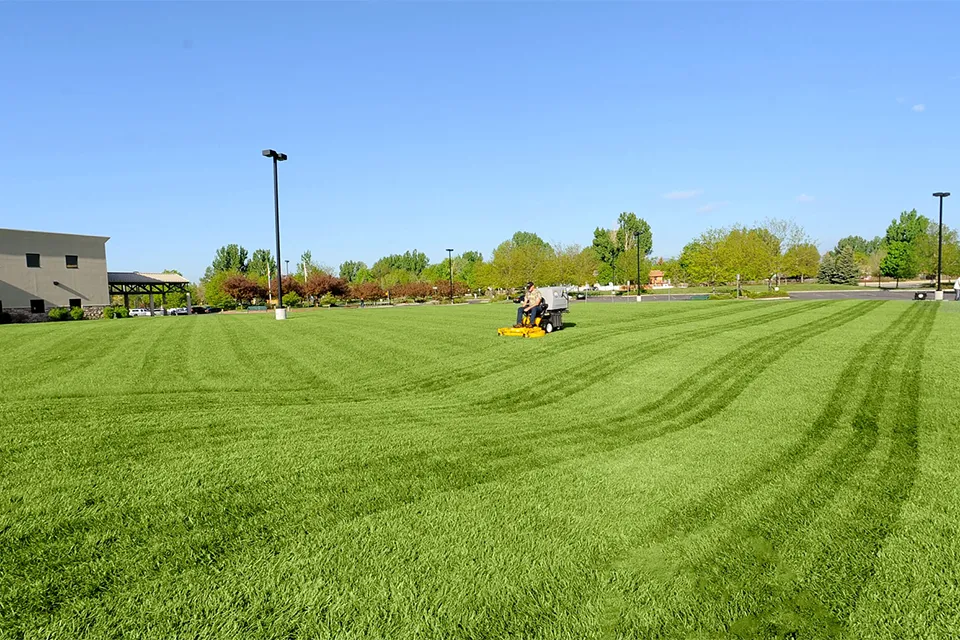
Compact zero-turn front mowers
Ralph Lankhaar has just come back from a demonstration when we speak to him. As owner of Lankhaar Techniek, which specialises in garden machinery, he travels all over the country giving demos. “I’ve just been to a landscape contractor. He was looking for a better solution than his current ride-on mower for maintaining the lawns at a holiday park. The site is undulating, with some fairly steep slopes. As a result, their machines regularly got stuck or snapped their V-belts. I took along a Walker zero-turn front mower with PTO drive, and they were amazed at the difference. It handled the slopes with ease, and a job that used to take an hour was finished in half an hour.”
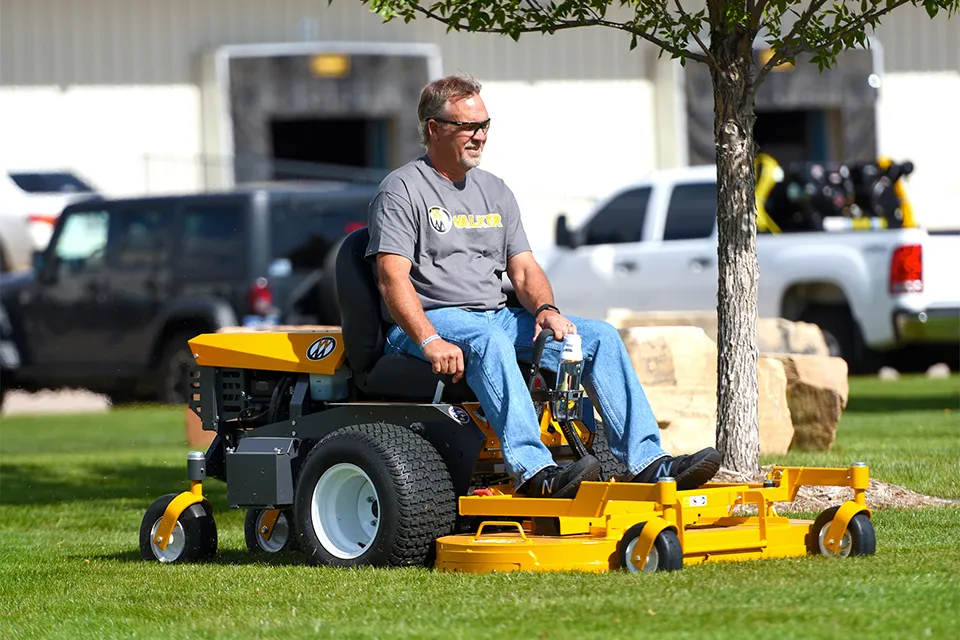
Lankhaar Techniek, based in Eethen in North Brabant, is seeing more and more green-space professionals deliberately choosing a compact zero-turn front mower because it combines efficiency with precision. “I always call it the best of both worlds. With the cutting deck at the front of the machine, the operator has a clear view of the work. At the same time, the machine can turn tightly and manoeuvre easily around trees, lamp posts, goalposts and other obstacles. So there’s less trimming left to do as well,” Lankhaar explains.
Versatile
The machine is of interest to landscapers, grounds maintenance contractors, recreation businesses and contractors who work across a range of sites and conditions. “One major advantage is the floating cutting deck. It moves with the ground, producing an even cut on undulating or uneven terrain. A fixed deck may cut too short in one spot and leave grass uncut in another, whereas the Walker follows the contours of the ground much more closely.”
Collection or mulching?
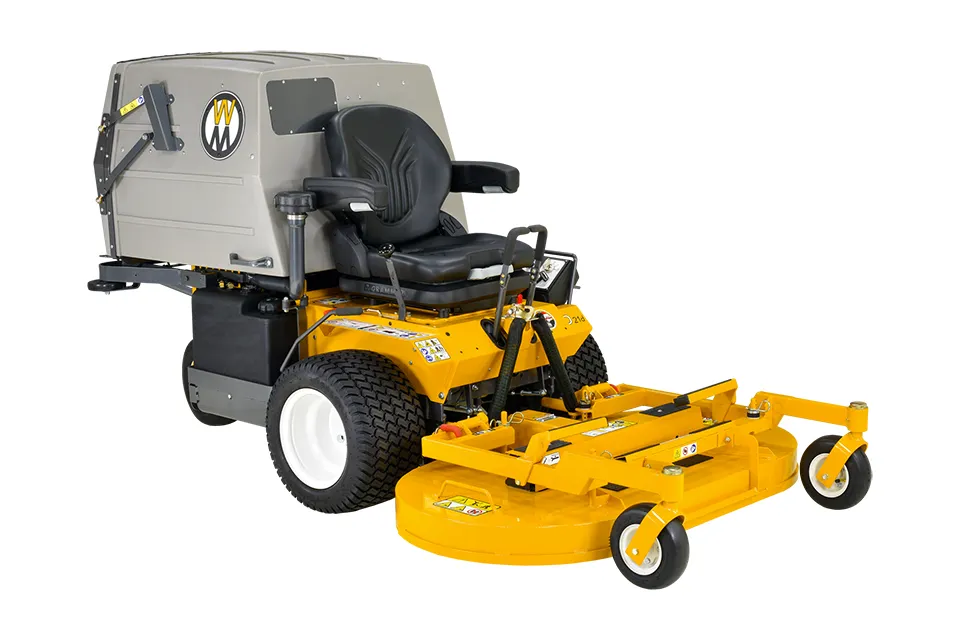
Lankhaar Techniek supplies Walker machines with both collection systems and mulching decks. According to Lankhaar, the choice depends largely on the application. At campsites, swimming pools and holiday parks, collection is often preferred because grass clippings are unwelcome in toilet facilities and on paths. The collection system uses a powerful blower to carry the cut grass through a tunnel into the collection box.
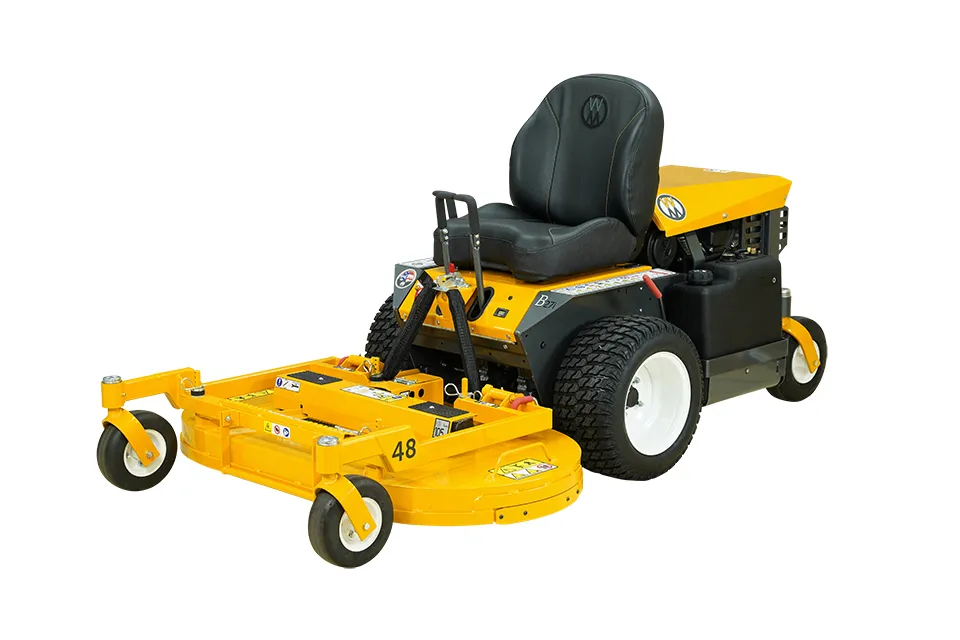
“With this type, you get a very clean finish,” says Lankhaar. “With mulching, there’s always something left behind, because the grass has to go back onto the lawn.” Mulching also requires more frequent mowing. If too much grass is cut at once, material will be left on top of the turf. This results in a less attractive finish and can smother the lawn.
On the other hand, mulching has its benefits when carried out at the right frequency: free natural fertiliser, better moisture retention, and no need to empty a collection box or dispose of grass cuttings.
A sound investment
Although Walker is a premium brand, Lankhaar says it is all about the return on investment. “If the machine saves time for the customer or for your own organisation, it makes money,” says Lankhaar.
He says the machine’s durability is down not only to its drive system, but above all to its robust construction and long service life. “The machine will last at least ten to fifteen years and still retain a good resale value. But there are also plenty of machines out there that are already twenty to twenty-five years old.”
Demonstrations
Asked whether any green-space professional can ask Lankhaar for a demonstration, even if it is on Texel, for example, he laughs: “As it happens, there are around a hundred Walker machines operating on that island! So the answer is yes.”
Lankhaar concludes: “A demo shows what a mower can really do and whether the machine is suited to your work. That’s why we’re happy to come out to you.”
Question about this story? Ask your question
Keep following this
Get an email when a new story is published. No account needed.
- ThemeKeeping sports pitches and lawns in condition
- SubjectMachinery & equipment