









Welcome to the living ecosystem
Text Kris VandekerckhoveImage Koen Verhelst
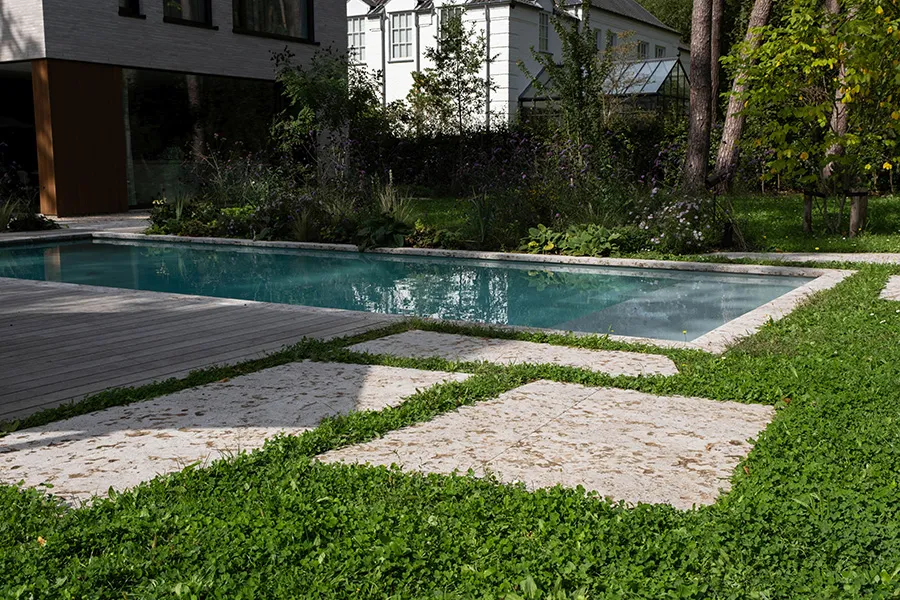
Out with the manicured lawn
More and more people are saying goodbye to the classic, closely mown lawn and consciously choosing a biodiverse alternative. This shift is not limited to private gardens, but is also taking place in parks, public green spaces and even the golf sector. What was once dismissed as ‘untidy’ is now recognised as ecologically valuable.
A traditional lawn may look well-kept, but creating and maintaining one often comes with a considerable environmental cost. Intensive mowing, watering and fertilising, combined with the use of other products, can lead to soil depletion, water pollution and biodiversity loss. A biodiverse lawn offers a sustainable alternative.
More life, fewer inputs
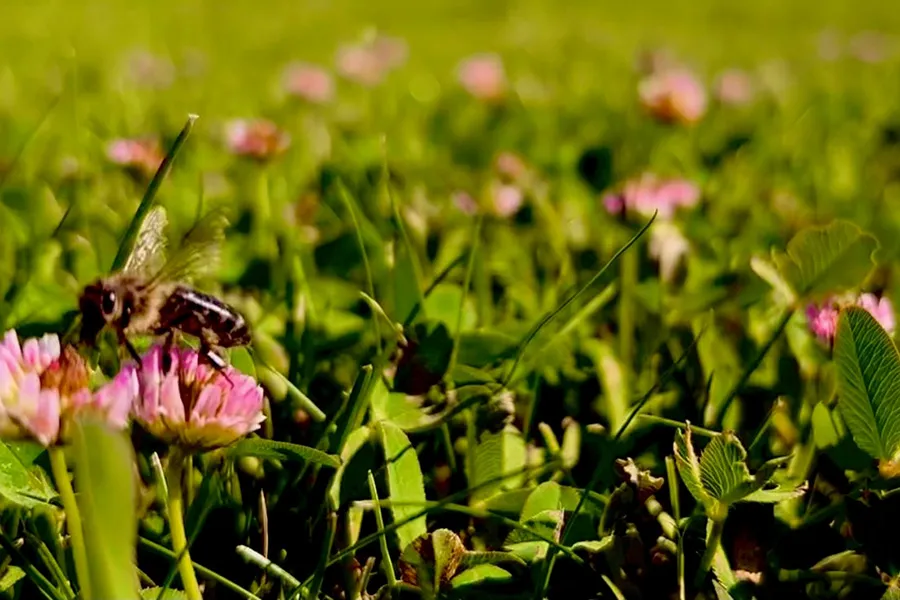
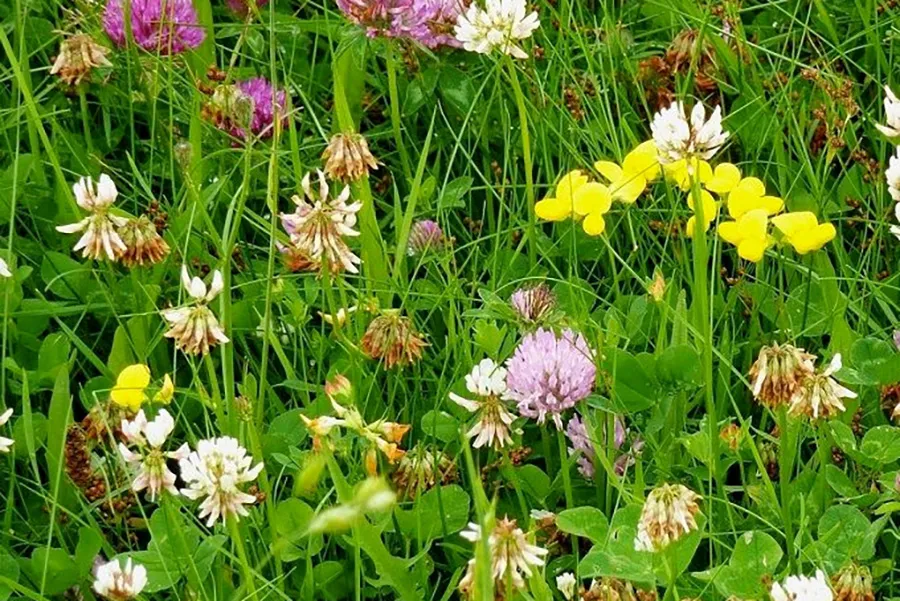
A biodiverse lawn is home to considerably more plant and animal species than a conventional grass sward. A mix of grasses, complemented by flowering herbs such as clover, creates a habitat offering food, shelter and nesting sites for birds, hedgehogs, butterflies and a wide range of pollinating insects.
This type of lawn also requires less maintenance. Fewer mowing sessions, lower water consumption and less need for fertilisers not only reduce costs, but also lessen the environmental impact. As mainly native species adapted to local conditions are used, watering is needed only to a limited extent. Less mowing with petrol-powered machinery also means lower CO2 emissions and less air pollution.
Healthier soil and climate benefits
The benefits go beyond biodiversity. A diverse mix of plants stimulates soil life. Different root depths improve soil structure, water infiltration and nutrient exchange. Native grasses and herbs with extensive root systems also help prevent erosion, particularly on slopes or open ground.
A biodiverse lawn can also play a role in carbon storage. Deep-rooted flowers and herbs lock carbon into the soil over the long term. The lawn thus becomes an active carbon sink and contributes to the fight against climate change.
A well-designed biodiverse garden also enhances the appearance and value of homes and business sites, while green, biodiverse surroundings have a positive effect on stress reduction, mood and concentration.
Establishment and management
A biodiverse lawn can be established in two ways: by converting an existing grass sward or by sowing on bare soil. In the first case, mowing and fertilising less frequently can encourage herbs such as daisies, clover and dandelions to appear naturally. To speed up the process, mow closely in autumn, scarify and sow a suitable wildflower mix without fertilising.
When sowing on bare soil, autumn is preferable, with early spring as an alternative. Key considerations are minimal soil disturbance, using a stale seedbed and sticking to the recommended sowing rates (approximately 2 g/m² on dry soils and 1.5 g/m² on heavier soils). Increasing the recommended rate means dominant species, those that germinate fastest, will take up the available space at the expense of species that need longer to germinate. The result? Less biodiversity in the grass sward.
Maintenance is limited: mow every two to three weeks at a height of 7 to 8 cm, remove the cuttings and water only during establishment or in periods of extreme drought. Mulching is not recommended, as it enriches the soil and allows grasses to become dominant again.
Anyone who chooses a biodiverse lawn for their garden, park or golf course is sowing more than flowers. They are actively contributing to the restoration of a resilient ecosystem and a landscape fit for the future.
Question about this story? Ask your question
Keep following this
Get an email when a new story is published. No account needed.
- ThemeKeeping sports pitches and lawns in condition
- SubjectGeneral







