Superbloei in Arnhem: from experiment to ecological showpiece
Text Armand LandmanImage Arjan Boekel, LOLA Landscape Architects, Ben ter Mull
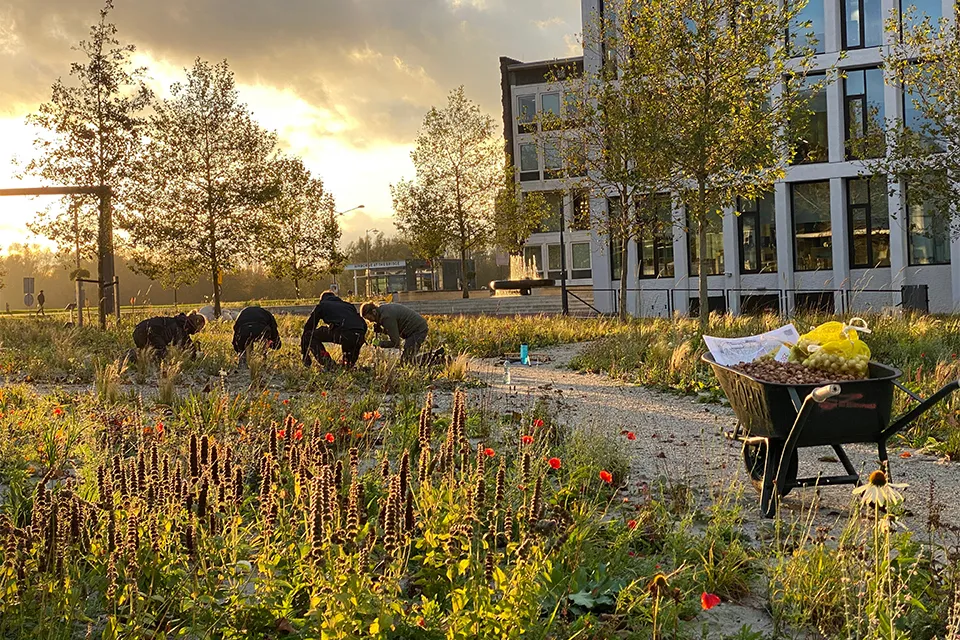
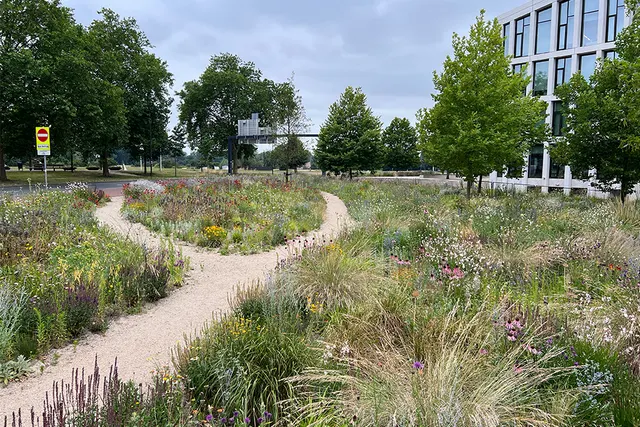
What began two years ago as temporary greening of Arnhem’s Bestuurskwartier has developed into an ecologically inspiring example of how public space can be transformed. The Superbloei project reflects innovative thinking on greening, biodiversity, management and climate adaptation. Mark Spaan, Henk Wentink, Arjan Boekel and Maik Knuiman explain how collaboration, vision and creativity resulted in a remarkable green oasis.
According to Mark Spaan, landscape architect and associate at LOLA Landscape Architects, the brief was clear: radically green the site and make a significant contribution to urban biodiversity. The ambition went beyond visual impact: the site had to actively help strengthen ecological links and improve climate adaptation in the urban area. Spaan emphasises that Arnhem did not simply create a green space, but developed a powerful ecological vision: “It was about more than greenery; it was really about restoring ecological and urban cohesion. We did not just want to create beautiful places, but above all to bring valuable nature back to the heart of the city.”
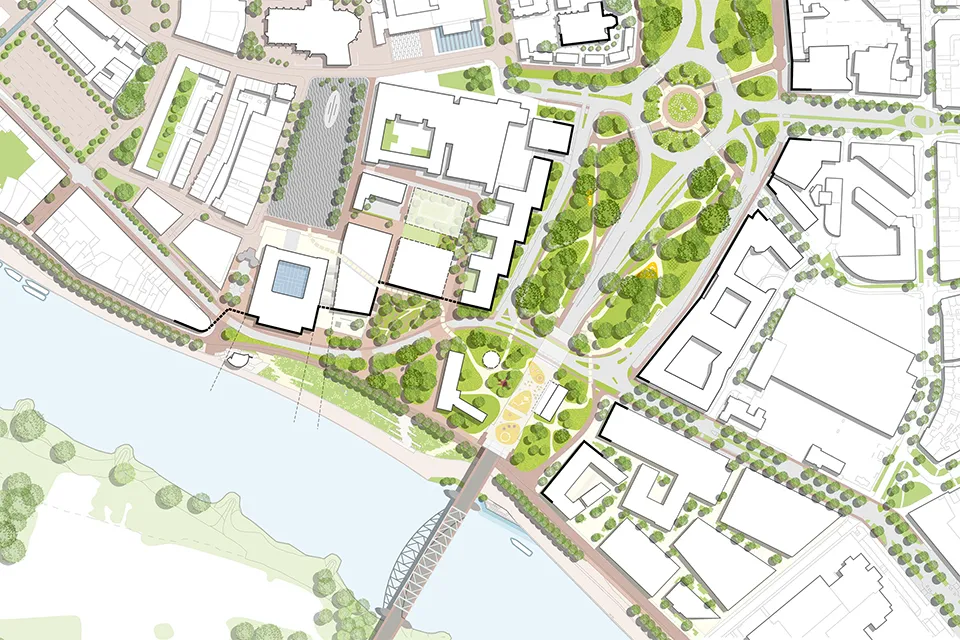
Henk Wentink of Arnhem municipality adds that choosing LOLA Landscape Architects was no coincidence. “We deliberately chose a practice known for its innovative, creative and sometimes unconventional approach,” Wentink explains. “Traditional approaches and standard solutions were deliberately avoided on this project. The aim was to create something distinctive, a place that clearly shows the surprising, positive results that are possible when intelligent green-space management is combined with forward-thinking specifications and vision-led design. Choosing LOLA was a perfect fit with our ambition to create a striking showcase project that could inspire others and be emulated.” Wentink also explains how essential collaboration between the municipality and the province was to the project’s success: “We shared the same green ambitions. Both the province and the municipality wanted to make a clear statement about greening, climate adaptation and biodiversity. Because we wanted to do something special with the planting, we invited De Bloeimeesters to join us.”
Hybrid planting strategy
Arjan Boekel, project leader at De Bloeimeesters, describes the thinking behind the hybrid planting strategy: “We wanted to combine the spectacular effect of a superbloei with lasting ecological value. Our aim was to use the short-lived spectacle of colourful blooms to get people excited about biodiversity, while also building a robust, future-proof ecosystem.”
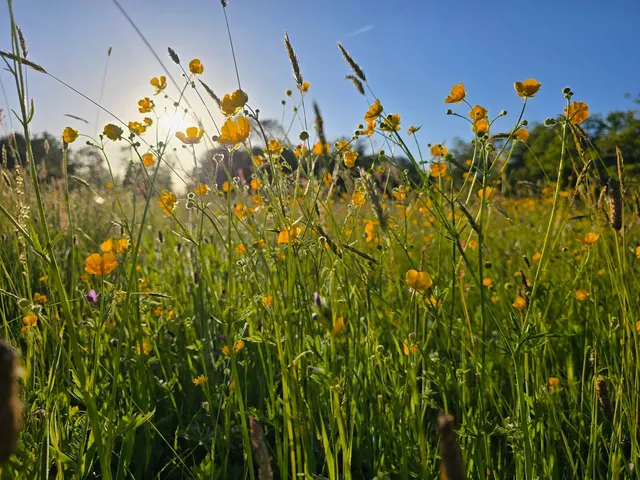
The Superbloei concept was inspired by natural phenomena in California and the United Kingdom, where immense bursts of colourful annual plants sometimes occur thanks to optimal weather conditions. Boekel proposed enhancing this approach by introducing perennials, which would gradually take over from the annuals. This hybrid system would provide a changing visual spectacle in the first few years, then evolve into more stable vegetation that is much easier to maintain in the long term. It also helps increase biodiversity and improves the climate resilience of the green space, making it better able to withstand drought, extreme heat and heavy rainfall. ❯
Innovative use of soil
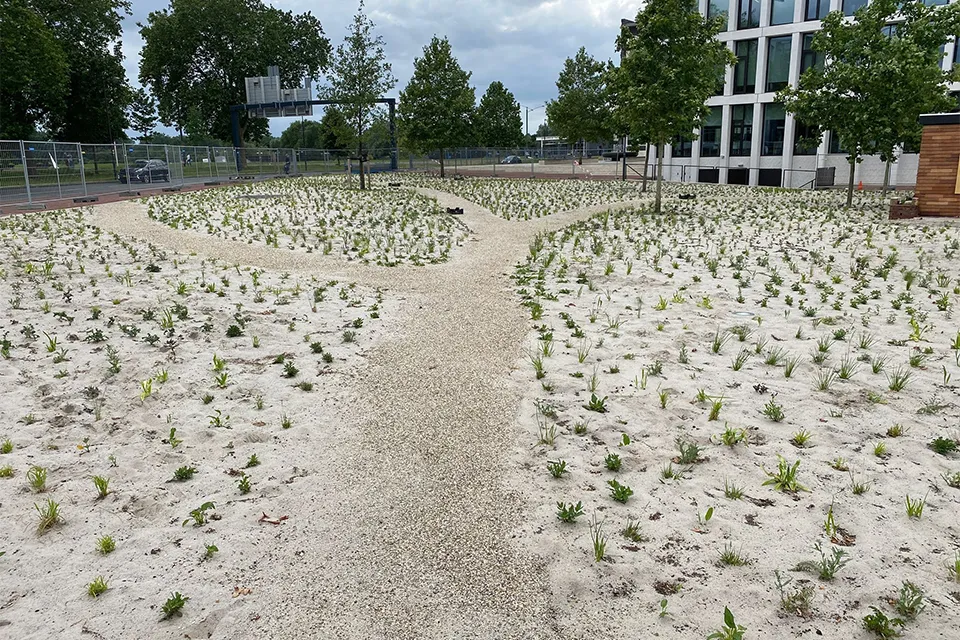
Another important innovation on the project was the decision to take an unusual approach to soil conditions. “By deliberately choosing poor, sandy soil, we encouraged plants to develop deeper root systems,” Boekel explains. “This has several benefits. Plants with deeper roots are better able to withstand drought, making them less vulnerable during periods of extreme weather. It also significantly reduces maintenance costs, as there is less need for artificial irrigation.”
The role of innovative commissioning
Maik Knuiman, who was the client on behalf of the Province of Gelderland at the time, deliberately opted for an open approach. Knuiman is now strategic adviser and lead of Buyergroup Groenvoorzieningen, where public-sector clients, including Rijkswaterstaat, Rijksvastgoedbedrijf, municipalities, provinces and water authorities, develop a shared market vision and procurement strategy at national level, and work on restoring and developing biodiversity through green-space projects. “My philosophy was simple: this is the budget, go for it.” According to Knuiman, this gave the team scope for creativity and rapid implementation, made possible in part by close collaboration within an integrated project team. “Instead of thinking in terms of restrictions, I thought: let’s give skilled professionals room to work and trust the expertise of designers, contractors and managers. That brings energy to the process,” says Knuiman.
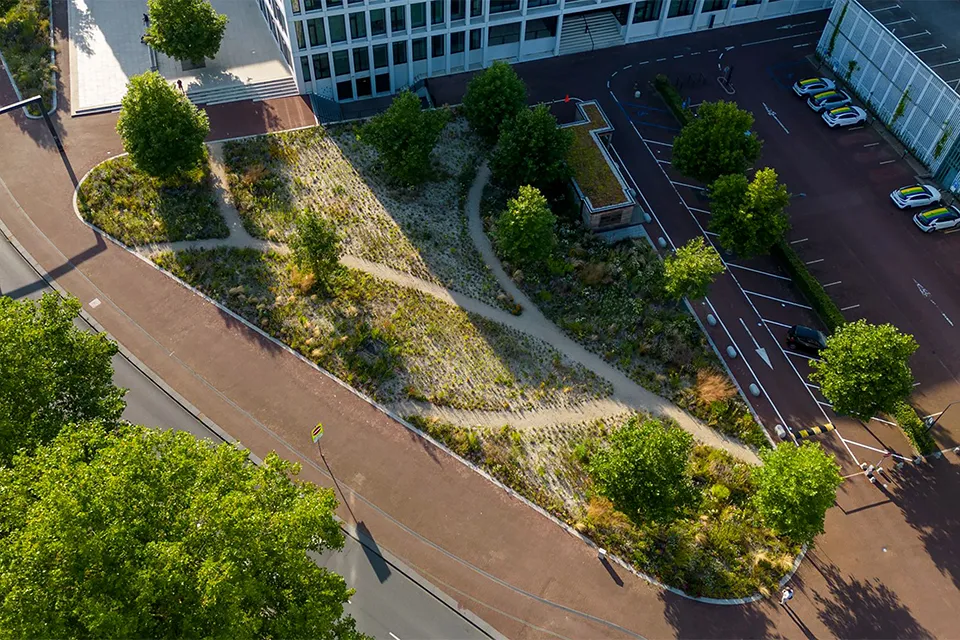
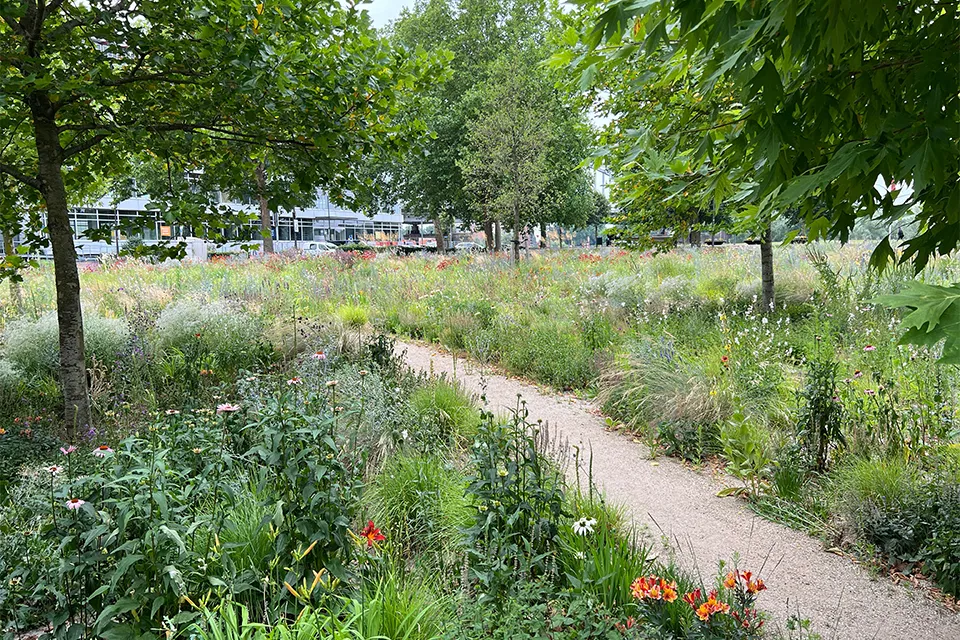
Speed of implementation proved crucial because of the timing of the planting season. “It was February and we wanted to plant within a few months. That forced us to act quickly and thoughtfully,” he says. “But the time pressure did not cause stress. On the contrary, it built momentum and encouraged collaboration.” Thanks to direct communication, rapid decision-making and shared ownership, a dynamic emerged that, according to Knuiman, took the project to a higher level. “You could see that everyone was extra motivated. We knew this was a unique opportunity, and we were going to seize it.” That energy continued later in the process, partly because the results were visible almost immediately. “Just a few weeks after planting, passers-by were already reacting to the sea of flowers. That was recognition, and confirmed that we were on the right track.” Knuiman also visited various examples around the country with the Buyer group Groenvoorzieningen to see what could be used to scale up. “We also visited Super Bloei in Arnhem with a delegation of ecologists, planting experts, clients, procurement professionals and designers.”
Management challenges and solutions
Management is an important part of the project’s success. Boekel stresses that it requires specialist knowledge and dedication: “You cannot leave this to standard maintenance teams. Specialist knowledge of plants and ecology is essential. You need to understand what you are managing, knowing when to intervene and when to let things take their course.”
Knuiman underlines the importance of this expertise by describing Superbloei’s unique approach: “We trained someone to manage the site, giving them in-depth knowledge and a sense of pride in their work. That commitment is reflected in the results. This is not just green-space maintenance; it is ecological craftsmanship.”
Spaan also observes that, in a sense, management is the crowning achievement of the design: “The finest design falls apart if management does not align with the vision. It takes trust on the client’s part to invest in this, and it always pays off.”
Wentink agrees: “The maintenance team is, in a sense, the unseen force behind Superbloei’s success. They make sure it not only starts out beautiful, but stays beautiful, and even becomes richer over the years.”
Ecological impact and role as a model
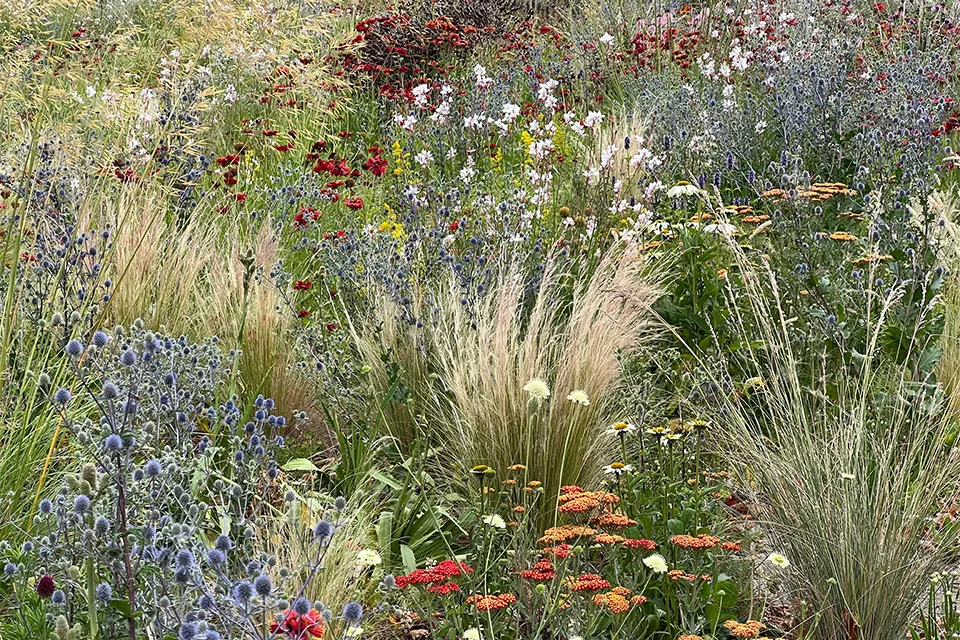
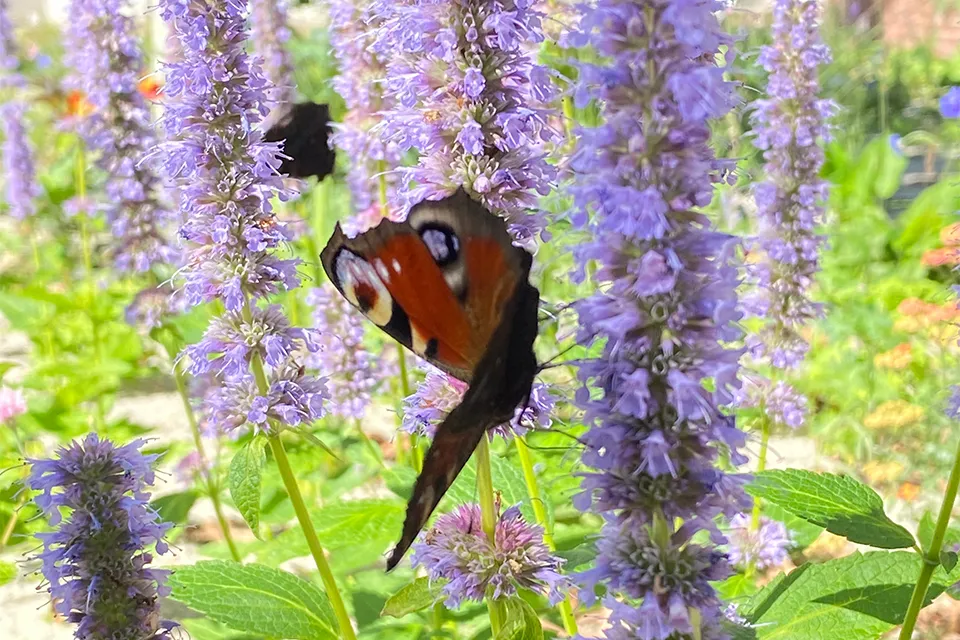
According to Boekel, the ecological value is clearly visible in the diversity of plants, insects and birds that have now made their way to the site. “What you see is an explosion of life: wild bees, butterflies, bumblebees, and birds such as robins and wrens have also become regular residents. This project shows how quickly and effectively you can increase urban biodiversity if you are prepared to invest in the right foundations.”
According to Spaan, the success is visible not only in the flora and fauna, but also in the way people experience the greenery: “We hear from local residents and passers-by that they feel connected to the green space. They see the seasons change, discover new plants and enjoy the tranquillity of the area. That social value is just as important as the ecological value.”
The future and potential to scale up
Could this concept be applied elsewhere? Boekel thinks so, with some caveats: “Not every site is suitable for this approach, but with careful planning and the right knowledge, it can succeed in many more places. You really need to look at the soil conditions, the location and the management available.”
Knuiman also sees plenty of potential for wider application: “With well-framed tenders, considered management and integrated collaboration, similar projects can be delivered. You do not have to copy it exactly, but the principles can be applied universally.”
According to Spaan, freedom in the design process is essential to getting these kinds of projects off the ground elsewhere: “Once you give designers room to experiment with ecology and planting, opportunities arise that you would never achieve within traditional frameworks.”
Henk Wentink emphasises the importance of political courage: “It takes decision-makers who dare to depart from the beaten track. But when they do, they get something in return that has an impact on ecology, the climate and quality of life.”
Key lessons for clients
- Give designers, managers and contractors room for creativity.
- Ensure specialist expertise in management.
- Work collaboratively in integrated project teams.
- Use temporary initiatives as a stepping stone to long-term solutions.
- Be willing to experiment and accept uncertainty as part of innovation.
- Choose trust over control.
- Think not only in terms of costs, but also ecological and social value.
Circular demolition as the foundation
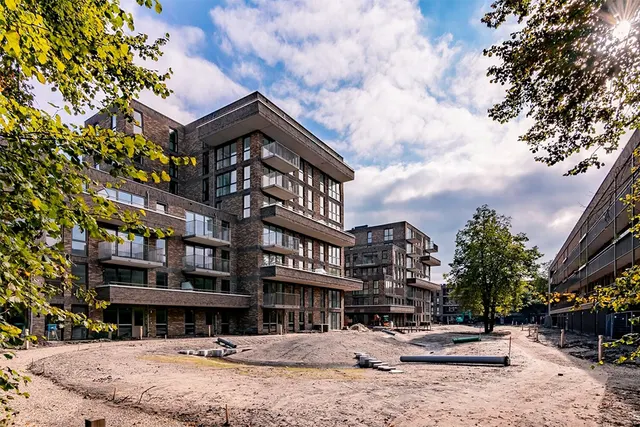
An essential step underpinning the Superbloei project was the circular demolition of the former provincial government building of Gelderland. Under the leadership of Maik Knuiman, who was the client on behalf of the Province of Gelderland at the time, the building was not demolished in the conventional way, but fully dismantled for reuse. “We literally sawed the building apart, reusing the concrete and other materials on a one-to-one basis,” says Knuiman. The process won several awards and set a new standard for sustainable demolition in the Netherlands and Europe.
In the same innovative spirit, materials were reused in the creation of Superbloei, and attention was paid to inclusivity. For example, material from the circular demolition was used in a circular bicycle shelter with an integrated insect hotel. “These objects landed, without any greenery, literally like UFOs in the paved landscape,” says Knuiman. A tree hub was also set up to temporarily house trees before they were given a permanent home elsewhere, further demonstrating how circular principles formed the foundation of the entire project.
Question about this story? Ask your question
Keep following this
Get an email when a new story is published. No account needed.
- ThemeSpace for urban green
- SubjectPublic green spaces