Rotterdam to add 1,000 hectares of green space and water and connect biodiversity hotspots
Text Nolanda KlunderImage Arnoud Verhey / Stadsbrug en OV / De Urbanisten / Bureau VanEig
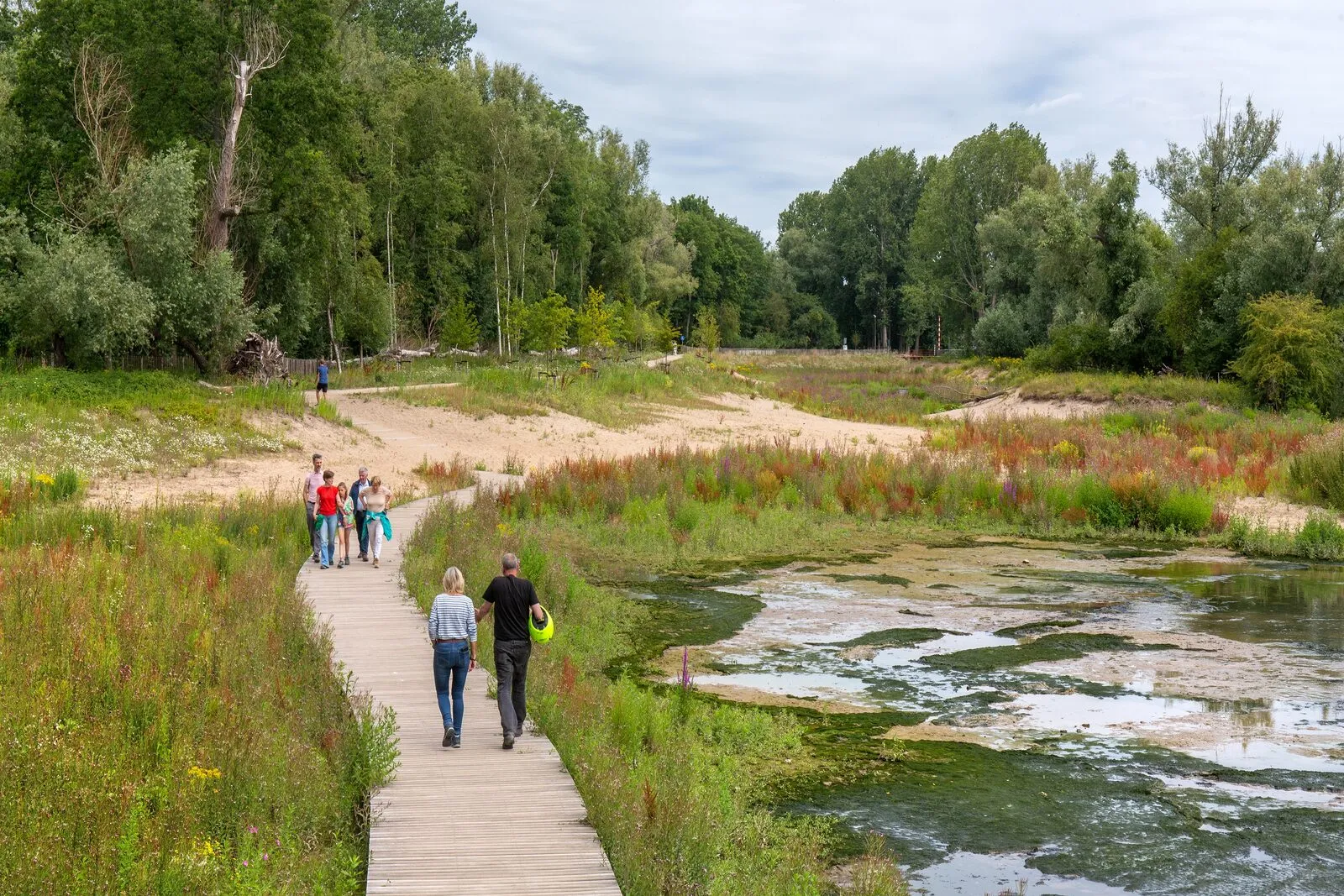
With new parks and better connections between green spaces, Rotterdam is making the most of opportunities to boost biodiversity, climate adaptation and liveability. Project manager Joni Reijven and landscape project senior Pieter Hoen explain why they look beyond individual projects to maximise ecological value.
“Nature is increasingly seen as something that belongs in the city,” says Pieter Hoen. He has worked for Gemeente Rotterdam for a year as a landscape project senior, working on complex or iconic projects at various locations across the city. Joni Reijven, project manager at Stadsbeheer gemeente Rotterdam, where she focuses particularly on biodiversity and climate adaptation, adds: “We are seeing more biodiversity in Rotterdam than in the surrounding area, partly as a result of agriculture. We will strengthen that biodiversity by adding green space and water, and improving, expanding and connecting existing green and blue spaces.”
Green Blue City
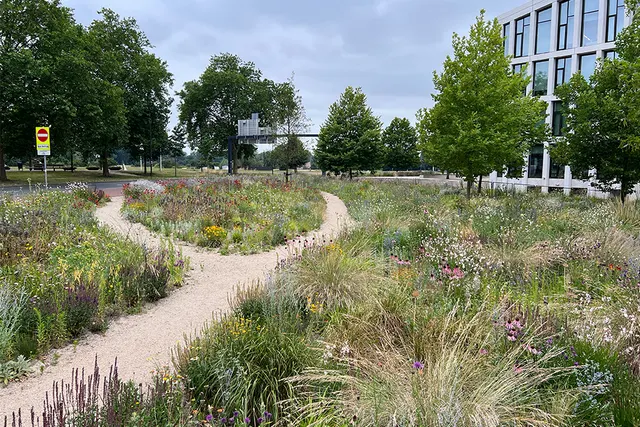
Gemeente Rotterdam has brought together its ambitions for climate adaptation, quality of life and biodiversity in the Toekomstvisie Groene Waterstad 2050. “One of its main pillars is to add roughly 1,000 hectares of green and blue space by 2050,” says Reijven. “In the coming years, the focus will be partly on adding green space and water, and partly on using existing green spaces differently. For example, semi-public spaces such as sports grounds, cemeteries and allotments could be opened up more widely and host a broader range of activities. There are currently too few places where people can enjoy the cool shade of green spaces. This puts a lot of pressure on parks such as Kralingse Bos on summer days. By including these spaces in the green-blue network, we can create more room for recreation.”
Connecting habitats
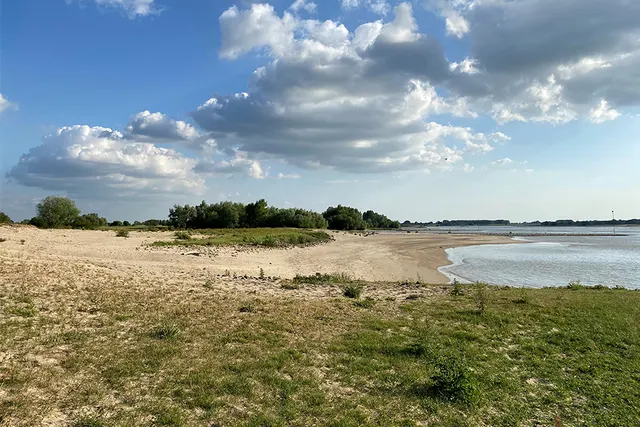
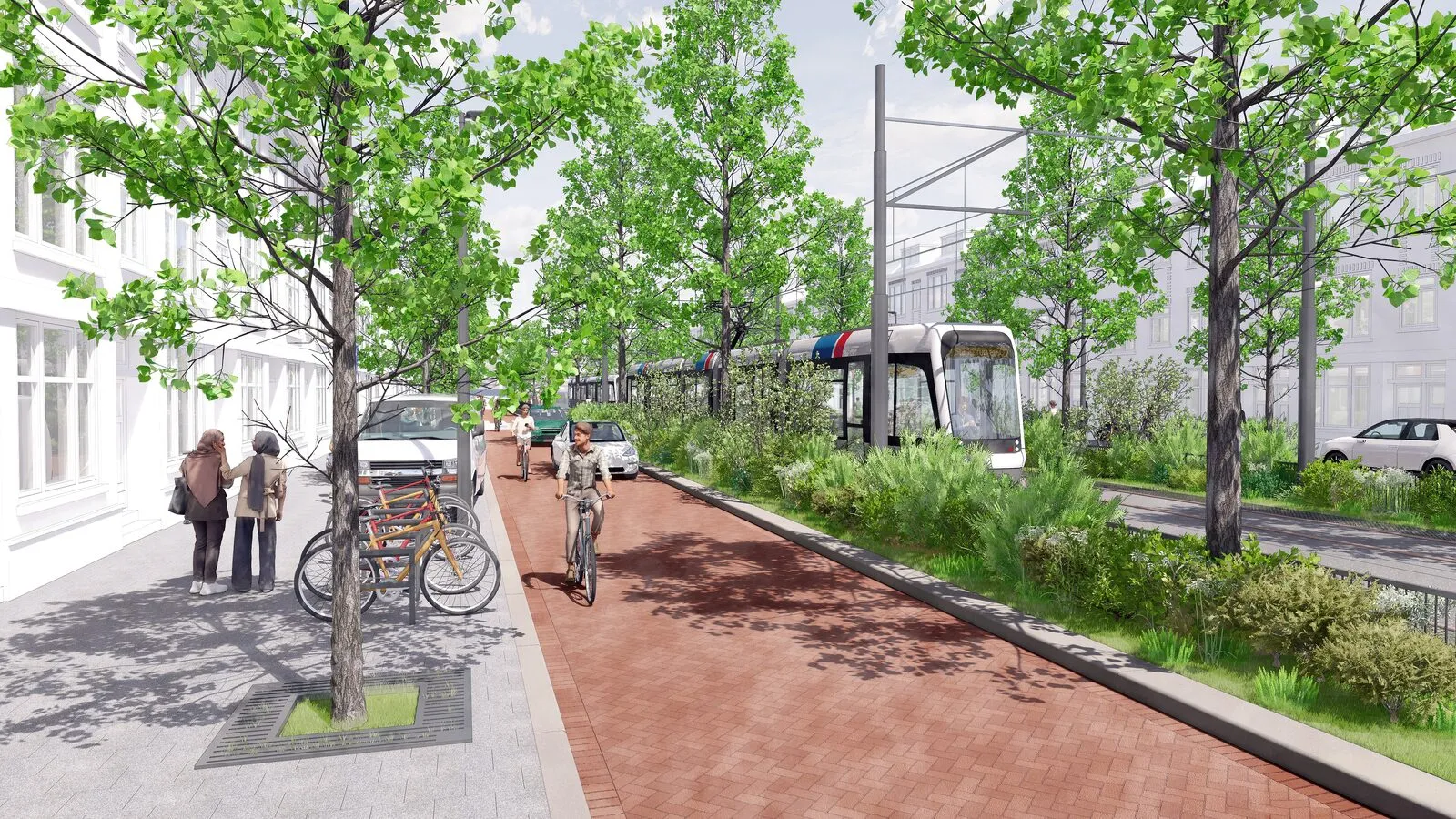
“We see the city as a collection of habitats, such as urban parks, residential areas, riverbanks and woodland,” Reijven continues. “We have identified indicator species for each of these. For every species, we look at what it needs to live and move around the city. We work with the four V’s: shelter, connectivity, safety and food (and water).” To boost biodiversity, Rotterdam is developing an integrated green-blue network. The city centre is a particularly important focus, as the need for green space and cooling is high while space is limited. That is why the municipality is investing, among other things, in Maaspark: a new landscape corridor along the river connecting existing and new green spaces. Hoen says: “In Rotterdam-Zuid, projects such as Rijnhavenpark, Nelson Mandelapark and Getijdenpark Feijenoord are helping to create a better-connected green-blue network across the city. Together, they form links in a wider ecological network of parks, riverbanks and other green spaces.”
A network across the city
The strength lies not only in the individual projects, but above all in how they come together to form a network spanning the entire city. Ongoing projects such as Waterkant, part of Rotterdams Tij, are an integral part of this. A new urban district is taking shape here, with a tidal park, an outdoor swimming pool and direct access to the river. The new HOV line will also run alongside the district, with Hoen involved as a designer. “Around 30,000 new homes are planned in the eastern part of the city. A good public transport connection is essential. With the new line from Zuidplein to Kralingse Zoom and the new city bridge, we are exploring how infrastructure can also contribute to the landscape and ecology. The tram line, bridge and surrounding area could thus develop into an ecological corridor within the urban network.”
Hofbogenpark
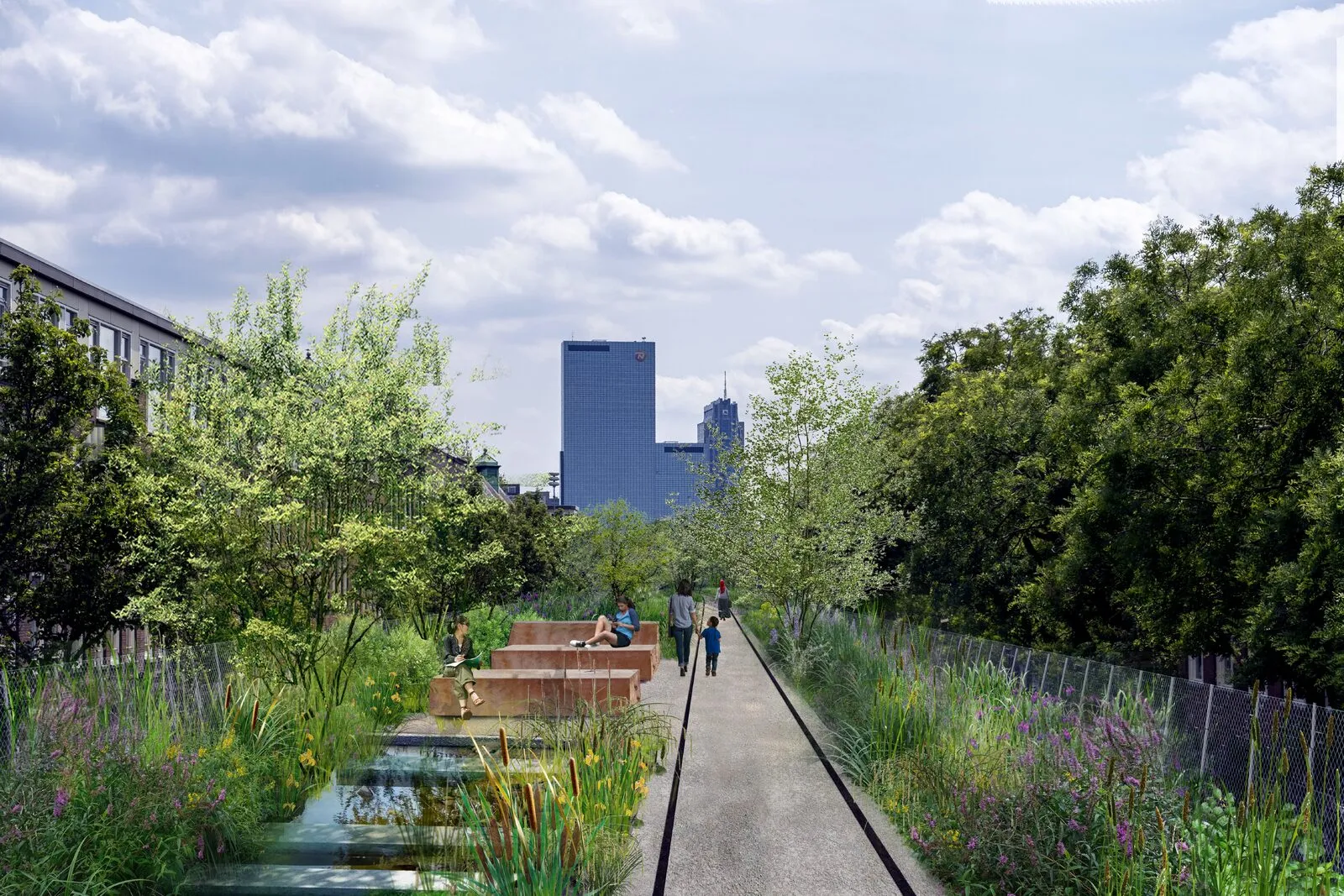
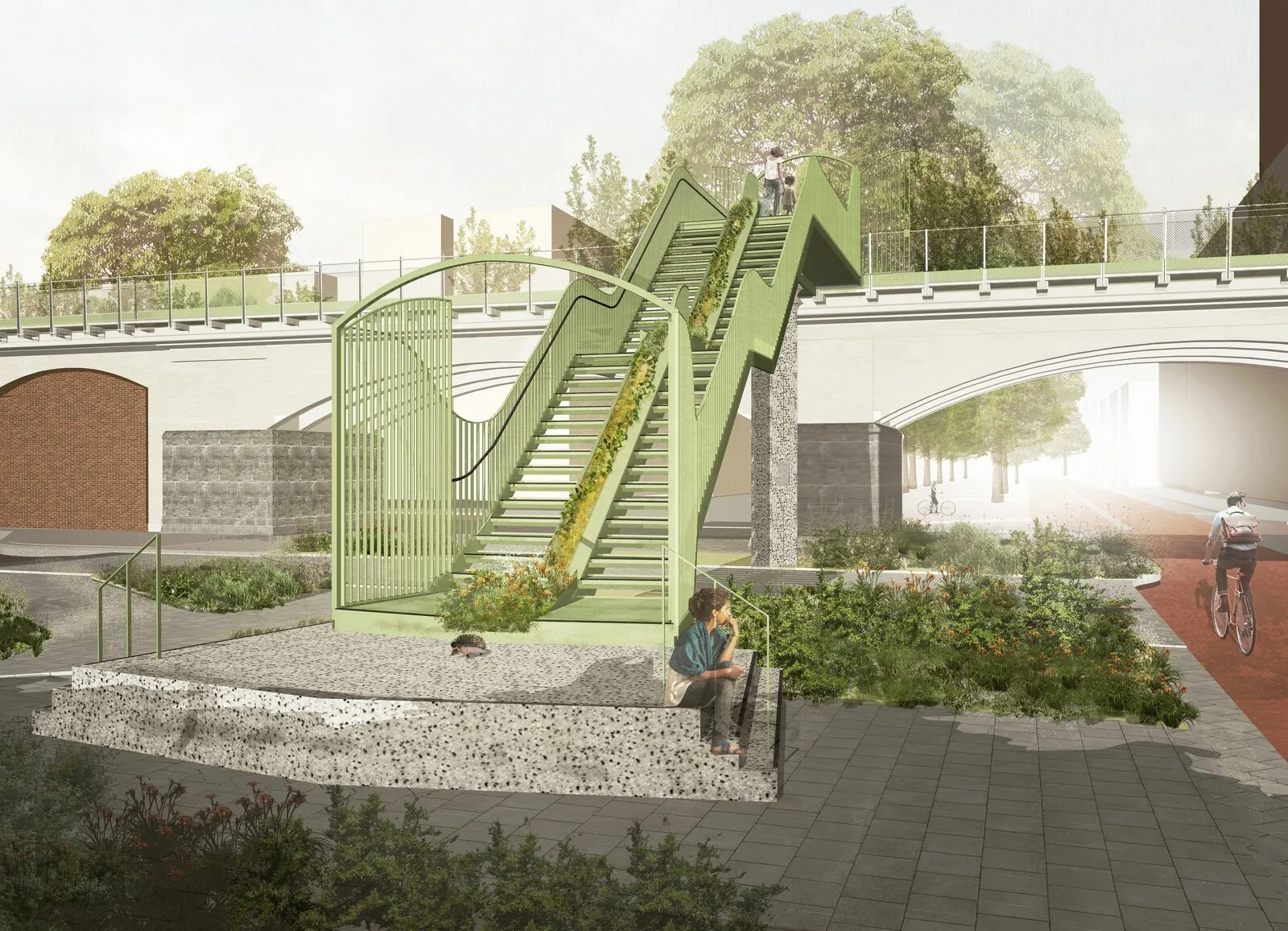
As project manager, Reijven is involved in developing Hofbogenpark, a raised park two kilometres long and eight metres wide on the former railway viaduct of the Hofpleinlijn. Reijven says: “The park will be a recreational walking route and an ecologically valuable zone. The final design is ready. A tender has now been launched for the preparatory work, construction and long-term maintenance of Hofbogenpark. Local residents are closely involved in the process, as are its potential future non-human users. When the conversation began years ago about designing with an indicator species such as the hedgehog in mind, it seemed almost laughable, but that is becoming increasingly normal. You can see a shift in mindset taking place. For this project too, we are considering potential indicator species: what do they need? For example, there will be access points for hedgehogs.”
Connecting to Steilrandpark
A study is currently under way to see whether Hofbogenpark can be extended across the Noorderkanaal and the A20, connecting it to the landscape on the Franciscus site. Hoen is involved in the redevelopment of that site. “The redevelopment of the Franciscusterrein is focused on creating a green healthcare campus where health, quality of place and ecology come together. Through nature-inclusive design, the enhancement of habitats for plants and animals, and links with Hofbogenpark and Steilrandpark, the area will become an important ecological link between the city and the landscape north of Rotterdam.”
Looking beyond boundaries
“Hofbogenpark is a wonderful example of how existing structures can be used to make the city greener, healthier and richer in biodiversity,” says Hoen. “What makes this project special is that a former railway viaduct is being transformed into an attractive park, while work is also under way to strengthen ecological connections with the surrounding green spaces. Joni and I saw how our projects could reinforce one another. Ecology does not stop at project boundaries. Plants and animals move through the city via a network of habitats and connections. That is precisely why it is important to look beyond individual projects and work towards a resilient urban landscape.”
Ambition embedded in policy
He continues: “Our work is all about balancing competing interests. The value of the landscape, biodiversity and existing trees is becoming increasingly firmly embedded in Rotterdam’s policies and decision-making. This means ecological qualities are given full consideration alongside issues such as mobility, housing development and economic growth. Landscape is no longer an afterthought, but a full part of decisions about the city’s future. That makes the work here not only challenging, but also especially inspiring.”
Working with residents
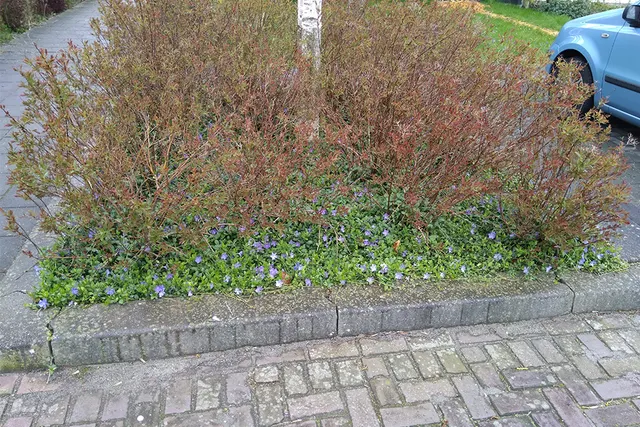
Creating connections is central to the policy, Reijven and Hoen emphasise. “One of the causes of biodiversity loss is fragmentation,” says Reijven. “That also means ecology is not just about major projects, but about what happens at a smaller scale too. Connections and stepping stones are needed between green spaces. For example, residents can support bee habitats by turning a façade garden into a bee refuelling station, with financial support from stichting Opzoomer Mee, and planting pesticide-free plants. There are major projects, as well as countless community initiatives and green-minded Rotterdammers. In Rotterdam, we really are doing this together.”
Question about this story? Ask your question
Keep following this
Get an email when a new story is published. No account needed.
- ThemeSoil and water in balance
- SubjectPublic green spaces