









Green walls without the hassle
Text Armand LandmanImage Adezz, Greeningup
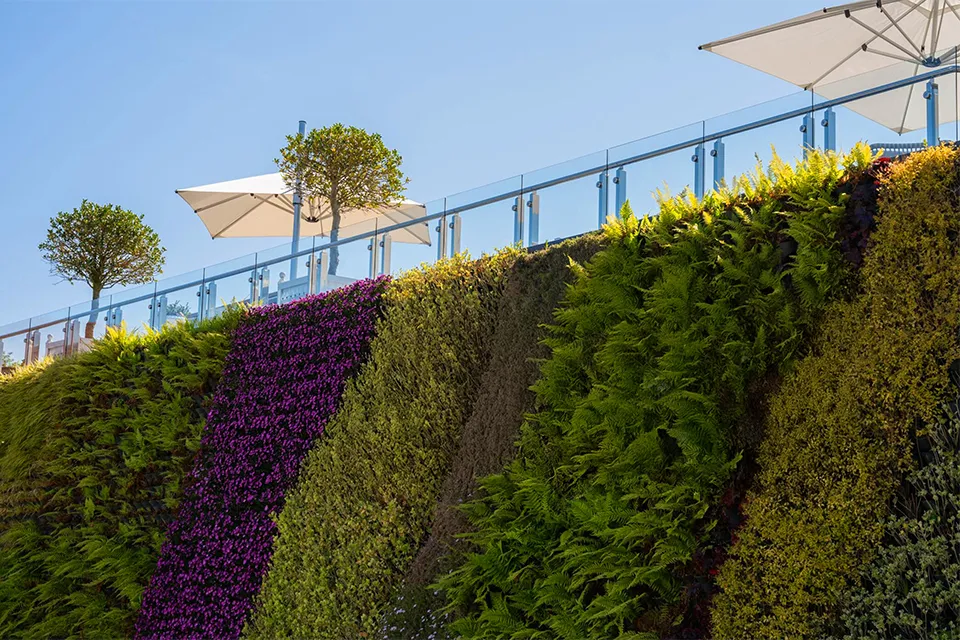
Vertical greenery becomes scalable and practical
Vertical planting has been on the rise for years, but in practice it remains a complex challenge for many projects. Installation, maintenance, water management and plant selection require specialist knowledge, making it a risky step for many landscapers and designers. With the introduction of Greeningup to the European market, exclusively through ADEZZ of Uden, that looks set to change.
At the heart of the concept is a modular green wall that can be installed in almost any location. Indoors or outdoors, in new builds or renovations, on flat or even slightly curved surfaces. According to the developers, greening should no longer be an exception requiring a bespoke solution, but a natural part of the design. This thinking is clearly reflected in the system’s design, where standardisation and flexibility go hand in hand. “It has proved itself over the years,” says Mathijs van Haren, technical product manager at ADEZZ. “With the right maintenance, you’ll have a wall that lasts and performs well.”
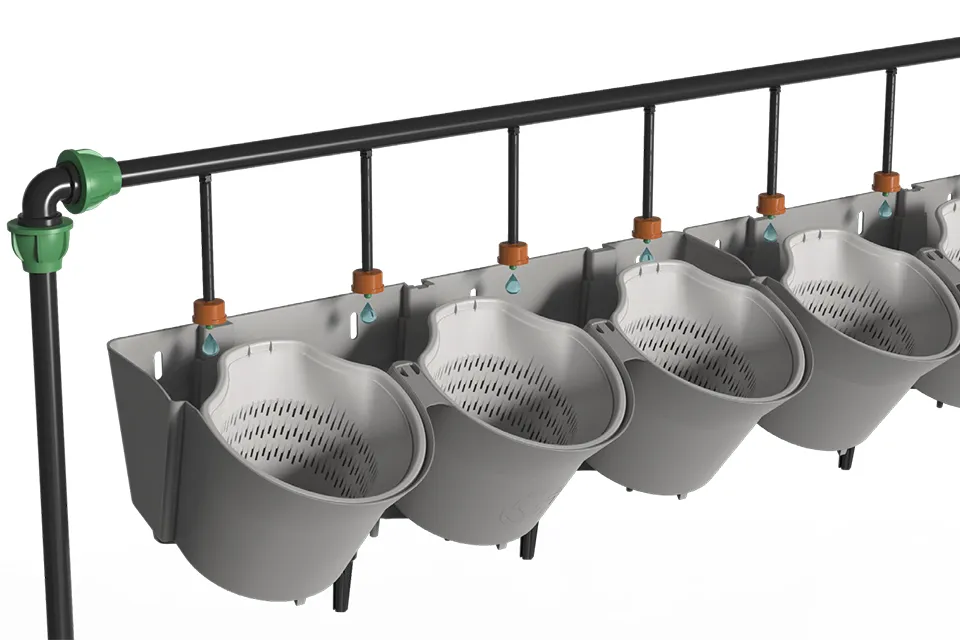
What sets Greeningup apart is the way its engineering and planting work together. The system consists of modular planter sets, with each plant given its own position and root space. Individual plants can be replaced without dismantling the entire wall, making maintenance much simpler and extending the lifespan of the whole system.
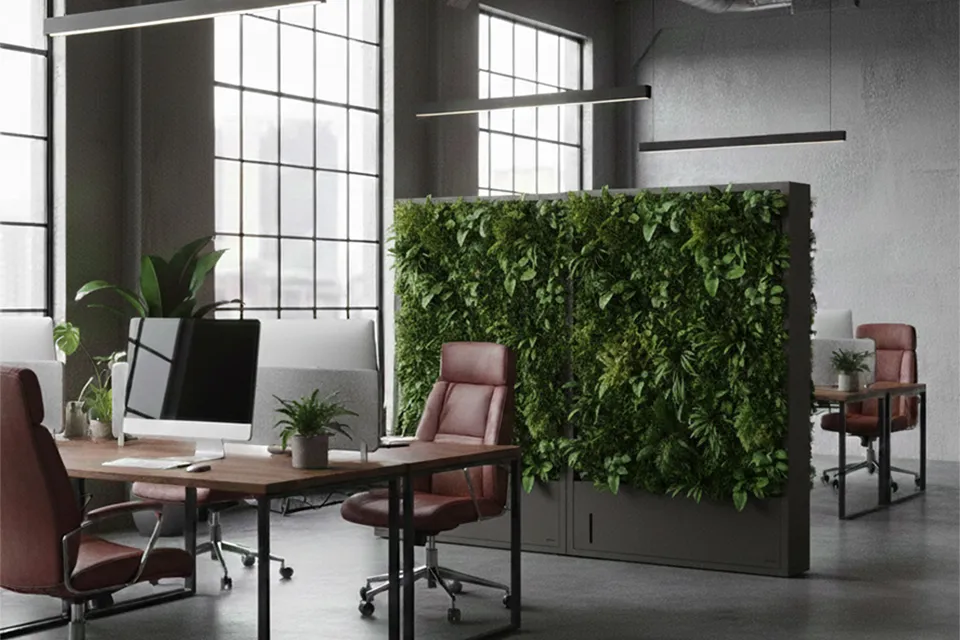
A controlled system
Water management is also an integral part of the design. Water is fed in from above and distributed evenly across the wall through a controlled system of drippers and internal reservoirs. According to Van Haren, this is central to successful façade greening. “Water, together with maintenance, comes first. If your water management isn’t right, and plants get too little or too much water, you can forget about it.” He says the system has been carefully designed to address this. “Any excess water drains away, so you don’t end up with too little water at the top and too much at the bottom.” Excess water is collected at the bottom and can be drained away or reused, depending on the installation chosen.
This practical approach is also reflected in the installation process. The green wall is built on a rail system to which the modules are easily attached. This allows it to be installed on a range of substrates, from concrete to timber-frame construction. Its relatively low weight, around 33 kilograms per square metre when planted, also makes it possible to use without major structural work. This removes a significant barrier to its use in existing buildings. Van Haren describes the system as “a kind of Lego system”. “It’s plug-and-play: you click it together and screw it in place very easily. The technology behind it is well thought out, but anyone can install it.”
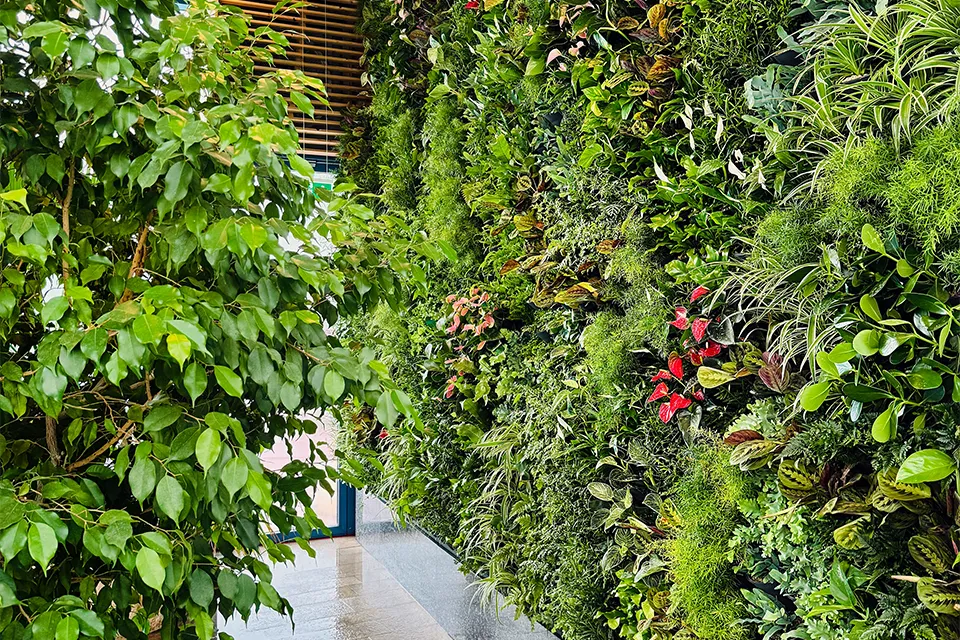
Sustainability is central to the choice of materials. The modules are made from UBQ, a material produced from unsorted household waste which, according to the manufacturer, is climate-positive. This means that more CO2 is captured than emitted over the product’s entire life cycle.
Turning the concept into practice
However, Greeningup’s strength lies not just in its technology or materials, but above all in how it translates into practical use. The green wall has been specifically developed as a system that delivers immediate results. Fully grown plants can be installed straight away, giving a project a mature appearance from day one. This meets the expectations of clients who do not want to wait years for a design to take shape as plants grow in. “You get a green wall straight away,” says Van Haren. “And if a plant does fail, it’s easy to replace.”
The contribution to the urban climate is also becoming increasingly important. Green walls improve air quality, support biodiversity and have a positive effect on users’ wellbeing. Research and practical examples, such as installations at the Living Lab at the University of Salford, show that these systems can contribute to a healthier living environment and more attractive public spaces. The green wall is thus shifting from an aesthetic feature to a functional part of the urban system.
Lower risk profile
This is an interesting development for landscapers and designers. Whereas vertical planting was previously often a bespoke solution with a high risk profile, a product is now emerging that can be standardised without losing its flexibility. This makes it suitable for a much wider range of projects, from private gardens to large-scale area development. “This market needs simplicity backed by proven technology,” says Van Haren.
With ADEZZ as its exclusive distributor in mainland Europe, the system also gains access to a network already firmly established in the green sector. The combination of production capacity, market knowledge and a practical, well-designed product makes Greeningup more than just a new addition to the range. It is the next step in the professionalisation of vertical greenery.
Een zakelijke vraag aan ADEZZ B.V.? Get in touch
Companies in this story
Keep following this
Get an email when a new story is published. No account needed.
- ThemeSpace for urban green
- SubjectGeneral
- CompanyADEZZ B.V.







