Safe charging starts with the right safe: Seefion on storing lithium-ion batteries
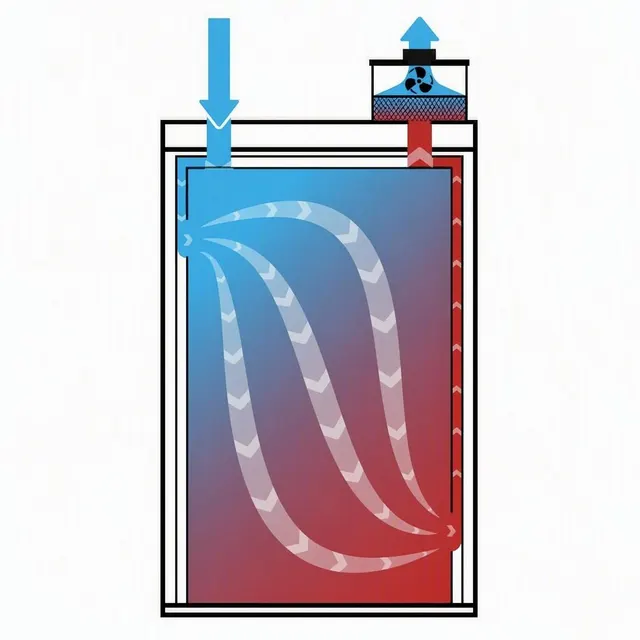
Insurers are imposing stricter requirements, European regulations are on the way and batteries are everywhere. In this episode of Greenpro de Podcast, Remco van Kuilenburg and Hans from Seefion explain how to store and charge lithium-ion batteries safely. They discuss what the forthcoming VDMA standard will change, why using a shipping container indoors is a bad idea and how their safes are custom-built. They also talk about the new partnership with EGO.

Een zakelijke vraag aan Seefion B.V.? Get in touch
Full transcript
Podcast: Greenpro de Podcast
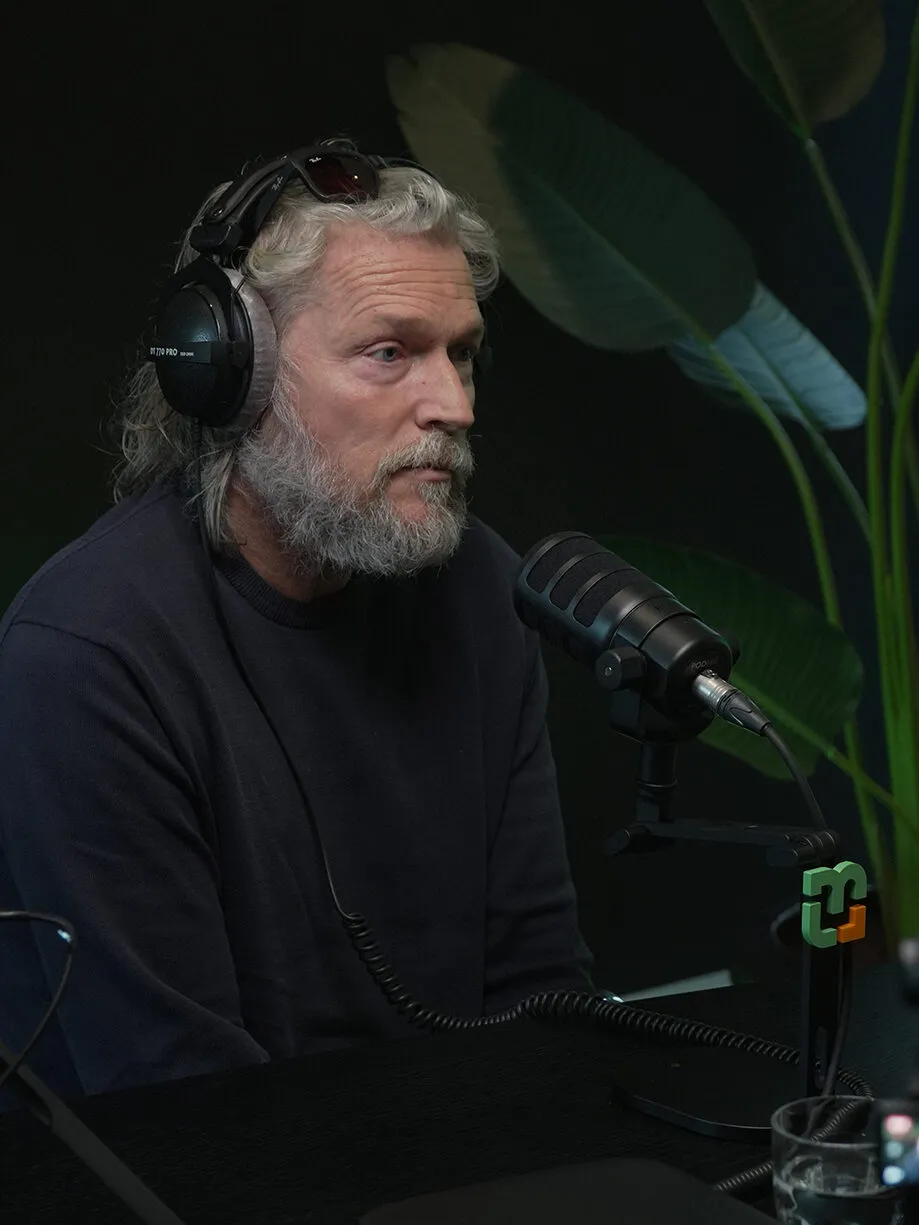
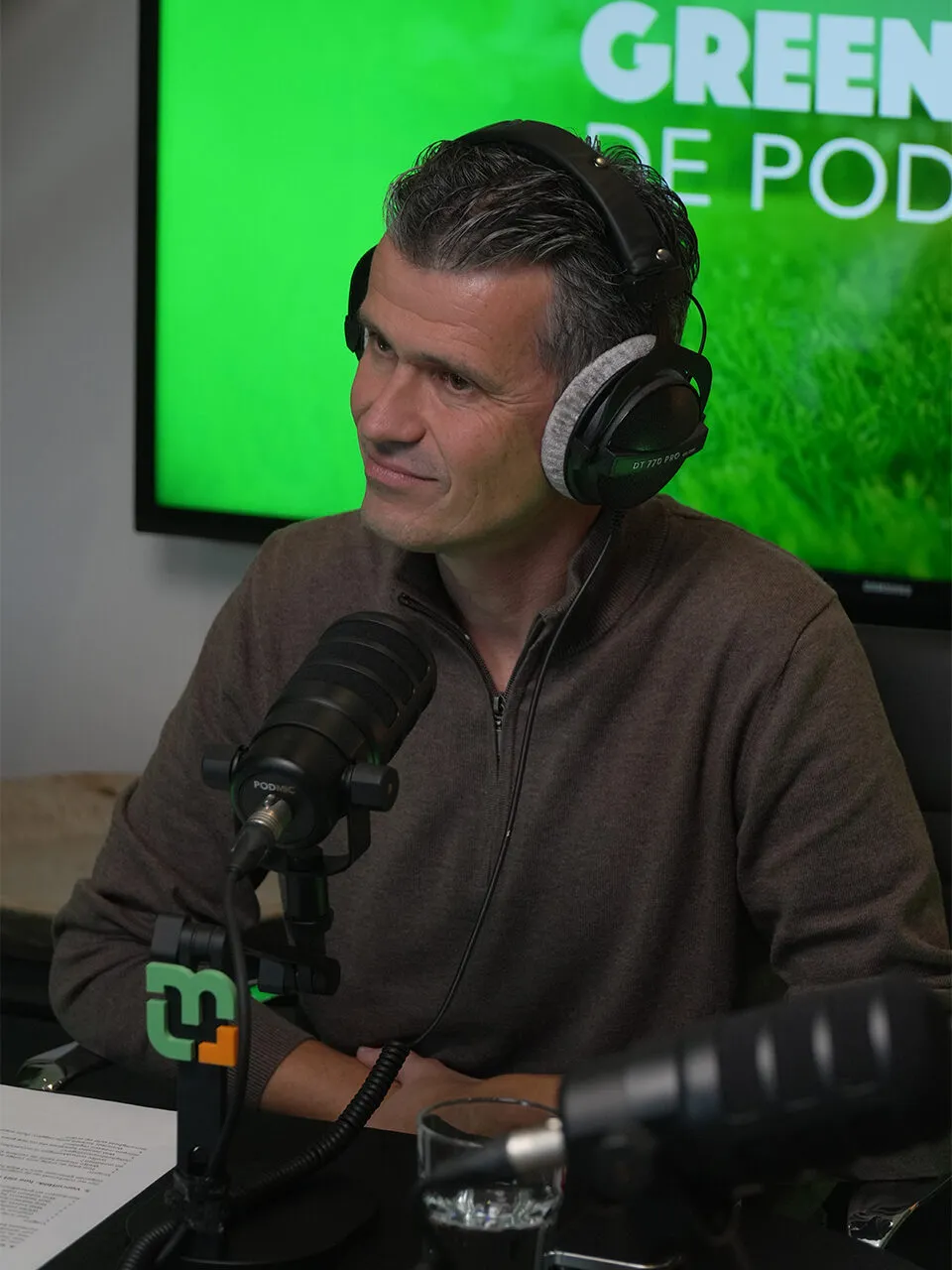
Guests: Remco van Kuilenburg (Managing Director) and Hans (adviser), Seefion
0:02 Host: Welcome to another episode of Greenpro de Podcast. Today we’re talking about storing lithium-ion batteries. The way they are handled is becoming professionalised at a rapid pace: insurers are setting increasingly strict requirements, regulations are evolving and businesses are looking for ways to store and charge batteries safely. Joining me at the table are two gentlemen from Seefion. Welcome.
Remco & Hans: Thank you.
Host: Please introduce yourselves briefly.
Remco: I’m Remco van Kuilenburg, Managing Director of Seefion. I founded the company in Barneveld almost six years ago, following a request from the municipality of Apeldoorn. We’ve been working on this for six years now.
Host: I see. We’ll come back to that in a moment.
0:42 Hans: Certainly. The team grew a little when I joined. I’m Hans, and I’ve been working for Seefion for just under two years. I travel around the country, sometimes crossing the border, to give partners and customers the right advice.
Host: Great. Welcome again. Tell us, what exactly does Seefion do?
Remco: We develop and manufacture safes in which batteries can be charged safely. I got into this almost by chance six years ago. I come from a completely different background, but the municipality of Apeldoorn more or less steered me in this direction. We started the company because there was simply nothing available. There were a few old filing cabinets and modified cabinets for liquids, which people then called lithium-ion cabinets. That wasn’t good enough. In the end, we came up with a safe. We developed what we have today together with a safe manufacturer in Barneveld.
Read the full transcriptCollapse transcript
Host: For the safe storage of lithium-ion batteries.
Remco: Storage and charging, yes.
Host: And who is your main target market?
Remco: Mainly the green sector, because our investors at the time came from that sector: two Stihl dealers. That’s why we went in that direction. We also work in broadcasting, and now automotive too. So we’re expanding into more sectors. We’ve divided up the markets. The safe manufacturer, [Nato Security], also has Battery Guards, which serves the rest of the market that we don’t cover, such as bike shops and food delivery. So we’ve clearly agreed who does what. But ultimately, one product has been developed, with sockets inside. Whether you use it for target group A, B or C makes no difference: a lithium battery needs to be stored safely.
2:40 Host: Is everyone aware that batteries need to be stored safely?
Hans: More and more so.
Host: Thanks to you, of course.
Hans: Yes, but also thanks to insurers. Some insurers are currently launching, or have already launched, a campaign aimed at business customers to alert them to the fact that things are going to change in the future, and quite soon. Make sure you’re ready for the future and have invested in somewhere safe to store and charge batteries.
Host: Are insurers the main ones putting this on the agenda, or are there other developments too? Do businesses approach you themselves?
Hans: Mainly government bodies and municipalities. They’re looking into it more and more. There’s also the MIA/Vamil scheme, which helps too.
Host: A grant.
Hans: Yes. I don’t think it’s being used all that much, but the scheme is there. Anyone can claim investment tax relief on the purchase, which saves money.
Host: We are Dutch, after all.
3:47 Host: What are the biggest misconceptions you come across in practice?
Remco: “We don’t need it.” “Our batteries are compliant.” “Oh, is that necessary? Is it mandatory?” You still hear that very often. Or: “We’ve sorted it out like this.” Then you see a shelf with chargers and sockets all over it. Or: “We don’t charge at night.” That’s partly true: if you don’t charge at night, you’re not required to charge in a safe. You still hear things like that. And I’m sure you come across other examples when you’re out and about.
Hans: To put it simply, people aren’t aware of the risks, when they can and can’t charge, or how to handle a battery. We all know not to keep a naked flame near a fuel can, because it’s dangerous. But if you drop a battery from a certain height, it could sustain internal damage. If you then put it on charge, the consequences could be serious. People just don’t know that yet. We are seeing greater awareness, though, thanks to the emergency response training courses held across the country. And awareness is growing as insurers and regulations come into the picture.
Host: So awareness is growing.
Hans: Absolutely.
4:55 Host: What should businesses bear in mind when setting up a storage facility? You can’t just put a load of batteries next to each other on a rack and charge them, can you?
Remco: No, not really. Any battery rated at 100 watt-hours or above must be charged in a safe. It doesn’t matter whether you have one, a hundred or a thousand: even one battery is enough.
Host: Oh, really? Okay. And does it also depend on whether you’re charging during the day or at night, as you just mentioned?
Remco: If you’re present, you can charge during the day. But you have to make sure the plugs are removed in the evening and nothing is left charging. However, a battery can catch fire spontaneously, so in our view that doesn’t guarantee safety. I saw this once in Sneek, at a large landscaping company. They said: our insurer says it can simply be switched off on Saturday, so we don’t need a safe. That’s correct, but the PGS says otherwise. So the insurer’s advice conflicts with what the PGS prescribes.
Hans: When you’re working with batteries, you keep an eye on them. If something happens, you can then warn yourself and others about the danger. But at the end of the day, the batteries are flat and we put them all on charge. If something happens then, the consequences are much worse. And by the time the fire brigade arrives…
Host: …it’s already too late.
Hans: Exactly.
6:35 Host: What requirements do insurers set, exactly?
Remco: They specify the VDMA standard. The VDMA will soon become a European regulation.
Host: It’s originally a German standard, isn’t it?
Remco: Yes, and we already work to this VDMA standard. You can see that all cabinets and safes have already been tested to VDMA. At the end of this year or the beginning of next year, it will become European. It will then be a European regulation that suppliers of cabinets or safes will have to comply with.
Host: And how does that differ from the PGS, which you also mentioned?
Remco: The PGS is a binding standard that can be required as part of an environmental permit. It still contains a very incorrect standard: a test from the outside in rather than from the inside out. That will soon be replaced by the VDMA, as the new EN standard.
Host: And what will that change?
Remco: It will mean we have genuine lithium-ion cabinets or safes. And things will be much more clear-cut. Once it’s a European regulation, which will come into force next year, it will be clear to everyone. At the moment, it’s still a grey area: it depends on how you interpret it and what an insurer puts in the policy. The new regulations could lead to changes in policies, making things clear for everyone.
7:55 Host: Tell us about your product range. What does it include?
Remco: It’s a safe. That’s one thing that sets it apart from other products. It can be quite fun at trade shows: people walk around and open a door on other products, then come to us and open a safe door. It’s a different experience.
Host: Does it have one of those combination dials too?
Remco: No, no. But we can add one if you want. Anything is possible.
8:29 Host: What does the range look like?
Hans: We have a number of safes, all named [Safe] followed by a number: the Safe 2, for example. The number indicates how many sockets are inside. We have a 2, a 6, a 10, a 16 and a 20. The 20 has 20 sockets, making it the largest safe: 2.05 metres by 1.25 metres.
Host: And the smallest?
Hans: The smallest is about 60 by 60 centimetres.
Host: Is there any fundamental difference between the safes, or is it purely a matter of the number of sockets?
Hans: Just the size and the tested capacity. The largest has been tested to 15,000 watt-hours. That’s the amount of energy you’re allowed to put in it. The single-door model, the 10, for example, has been tested to 7,500 watt-hours. That tells you how much can be stored and charged. In principle, you can fill the safe completely.
9:34 Host: So there’s no wasted space?
Hans: No, and that’s why I always visit customers or partners. Every situation is different, and everyone has different batteries or brands. I look at how we can arrange the safe as efficiently as possible. We always consider the location, height and width: will it fit or not? And we only supply a product that meets the customer’s needs.
Host: Did you want to add anything?
Remco: We don’t just push a box or safe through the door. We really do offer tailored advice. What sets us apart from others is that we visit the customer on site and guide them through finding a solution.
Hans: These days I often draw it out as well. A customer says: I have this many batteries of that brand and this many chargers, so what do I need? You want to make it clear. If you can show them a drawing and say, “This is what it will look like”, it’s much clearer and gives the customer a better idea.
10:42 Host: Do you supply just the safe, or all the equipment too, such as the chargers?
Hans: Not the chargers, as they come with the batteries. And of course customers already have batteries and chargers. We work with partners, usually Stihl, Husqvarna or EGO dealers. They sell customers new chargers, as well as the safe everything goes into. And we have a solution for securing every charger inside the safe.
Host: So, the accessories.
Hans: Yes. Whether you have brand A, B or C, you want to position the charger so that it’s efficient and practical to use. A battery is heavy. If the weight of the battery makes the charger unstable, we start thinking: let’s make a bracket or accessory so it fits neatly in the safe again.
Host: You really tailor everything to practical needs.
Remco: Absolutely. And we more or less make users follow certain steps so that charging is safe. For example, we often work with social enterprises that employ people who are distanced from the labour market. You need to give them specific steps to follow, and we can make that happen. You can put in a cabinet with shelves, but then everyone does things differently. We enforce a degree of consistency.
11:59 Host: Speaking of cabinets with shelves, what sets your solutions apart from other storage systems?
Hans: We can build the safe around the customer. I can tell you, hardly any two of our safes are the same. Whether it’s the locks and fittings, the shelves, the brackets or the compartments inside, we build around the customer. We really enjoy doing that.
Remco: And our philosophy is rooted in the security safe. That’s already a big difference compared with other solutions. We also have a particular way of working: we visit our customers. That takes time and money, but it means we can be sure we’re giving them the right advice. We enjoy that, and it adds value.
12:45 Host: How important is the environment where the safe is installed? Do you take that into account?
Hans: Yes, we look closely at where it’s going to be installed and how accessible the location is. It has to be possible to get it in, but in an emergency it must also be possible to get it out again. We don’t just put it in some room and shut the doors. We give clear advice on how we think it should be set up.
Remco: And our largest models don’t just run on three-phase power, they can also run on [32 amp]. In that case, we use smart flow. Say you have a 16-amp circuit available, but all the chargers together draw more than that. The safe then manages the power itself, switching between shelves. These are all the clever details we think about, and that’s what sets us apart from the rest, in my view. People often immediately think: then we’ll use three-phase power. But in the Netherlands and Belgium, we’re dealing with grid congestion. So increasing your connection capacity is pretty much out of the question. We have a solution that runs on 230 V.
Host: So that works with a safe that large too.
Remco: Yes. Say we put fast chargers in all twenty sockets. The safe detects that too much power is being drawn and starts with shelves one and two. Once shelf one is finished, it moves on to three. When people come back the next morning, everything is fully charged.
14:15 Hans: And one thing that’s often overlooked is that break-ins happen and things get stolen. If everything is in the safe and it’s locked, it’s very difficult to get into. That’s another advantage of a safe like this.
Host: And does it have, for example, a small cylinder lock at the top?
Remco: We use heavy-duty locking hardware: an electronic lock, a key lock or [remote access]. You won’t get it open.
14:39 Host: Is a safe heavy too?
Hans: Yes. That’s another reason we look not only at the height and access route. I always ask, and it may sound like a strange question: is this a solid floor, or a raised floor? Because it’s very heavy. Sometimes getting it inside can be a bit of a challenge.
Host: Can it be installed outdoors too?
Hans: It can, but we’d rather it wasn’t. The safe itself can handle it reasonably well, but temperature fluctuations and moisture are hard on the equipment inside. Say it’s 15 degrees outside and you connect a battery to the charger. Heat is released, and condensation forms. Electronics don’t like that.
Host: I see.
Hans: So, indoors is best. And our safes are certified for indoor use.
15:35 Host: I understand you’ve entered into a partnership with EGO. How did that come about?
Remco: We’d been seeing each other at the pub for years. We had a lot of discussions, and now the time was right to do something together. EGO has a great system, the PGX system, which we could build on. We entered into a partnership covering the whole of Europe, and are custom-building the [16] for their solution.
Host: And what are the differences?
Remco: With EGO’s PGX system, you can daisy-chain [140] batteries from a single connection. They have an electronics box that manages the system, and you connect one charger after another to it. We’ve built that into the safe.
Host: Is that your largest safe, then?
Remco: One of our largest. And our aim is to make it possible to link safes together. That’s not possible yet, but we’re working on it.
Host: So you can install several safes?
Remco: Yes, and link them together. The power supply goes into the first safe. From there, you connect through all the chargers, six of them, then go outside to the next safe, where you connect the next set of chargers. It’s a neat little feature. But the last safe needs to communicate with the first about smoke, heat and things like that. We’re still working on that.
Host: And when will that product be available?
Remco: The product is available now, but linking the safes together is still to come. That’ll be next year.
17:10 Host: Will anything else come out of the partnership? Any more surprises in store?
Remco: Actually, yes, but I can’t talk about it. There’s still a lot up our sleeve.
Hans: But to be very clear, batteries aren’t just used in the green industry. They’re everywhere. One thing I’d suggest is that you take a look at home or at work at the batteries you use and how you store them. We also have a partnership in the automotive sector. Garages often no longer have a compressor because energy is expensive. They’re switching to battery-powered tools, but those need to be stored safely too.
Host: We’ve already had a glimpse of that. And your partnership with EGO isn’t just for the Netherlands, is it?
Remco: No, it covers the whole of Europe.
Host: And I also heard something about Dubai?
Hans: I’m going to Dubai.
Host: Or are you allowed to go to Iceland?
Hans: Yes, gladly.
18:14 Host: For now, then, it’s just the [16] safe?
Remco: There may be more to come. We’re looking at the possibilities. EGO has other chargers besides PGX, of course, and those fit in the 20 or the 10 as well. So there’s no conflict, and dealers can sell those too. We’re now in contact with all EGO dealers in the Netherlands and Belgium. And I think, Hans, since you’ve spoken to them more often than I have, that they’re really nice to deal with. It’s different from dealing with a Stihl or Husqvarna dealer. Worlds apart.
Hans: Absolutely.
18:45 Host: Looking at battery storage in the future, what do you think it will look like?
Remco & Hans: A Seefion safe.
Host: Oh yes, of course. Is the Netherlands leading the way in this respect?
Remco: Yes. Six years ago, we had nothing at all. People were saying all sorts of things: it had to be tested to EN 14470, which, incidentally, is a test from the outside in. It had to meet this requirement, that requirement, have self-closing doors. There was a whole list of requirements, but nothing met them. EN 14470 tests from the outside in. Then people say: “It’s fire-resistant for 90 minutes.” They’re still saying that, and it’s complete nonsense. With a VDMA test, you know that the watt-hours tested in the safe have to burn out completely before the test can even be passed. Anyone who claims their safe is fire-retardant for 90 minutes is talking nonsense.
19:40 Hans: We were lucky in Amsterdam, as it happens. A warehouse burned down. The whole warehouse was gone, but the safe was still standing.
Host: That’s a good real-world example.
Remco: Yes, but am I going to make a big thing of it? Our safe is designed to contain a fire inside, and we happened to experience a fire on the outside. Everyone says: I’ve got this, I’ve got that. We have that too, but we’ve proven it in practice, not with some test or other.
Hans: And ultimately, a small battery might burn for 15 minutes. If you take larger batteries or several at once, it won’t be over in 30, 60 or 90 minutes. Of course, the fire brigade may arrive, but if they’re late or haven’t been alerted in time, the fire will still spread outside. The test is designed to ensure the fire stays inside at all times, whether it takes half an hour, a day or longer.
Remco: We had a test with 15,000 watt-hours. It burned for a day and a half. They could only open the safes after a day and a half. And there’ll also be a limit: in future, the maximum tested capacity will be 15,000 watt-hours in three cubic metres. That will be set out in the new standard.
Host: So you’re not allowed to go bigger either.
Remco: No. Take the shipping containers we’re seeing more and more of. They’re great, and outdoors I think they’re an excellent storage solution. But these days you also see them being moved indoors, and that’s not what they’re for, because they’re too big. A 40-foot container is larger than three cubic metres, I can tell you. It can hold 130,000 watt-hours. As I said, we’ll be testing up to a maximum of 15,000 watt-hours. I wouldn’t want to live near one if something went wrong, because it would cause real trouble.
Host: It’ll end up on the moon.
Remco: Yes, you’ll have to bring it back from the moon. And we’re increasingly seeing companies that build shipping containers putting them indoors too. That simply isn’t possible. An insurer might say: we’ll turn a blind eye. That happens from time to time. But there are real-world examples, and they’re reported in the media too: 350 batteries in a shipping container without an [emergency system], installed indoors.
Hans: That’s why it’s great that soon everything will be black and white. The regulations will be clear to everyone: insurers, fire safety officers, emergency response staff and so on. It’ll be very clear what is and isn’t allowed. That leaves less room for ambiguity.
21:55 Host: You said it’ll be a maximum of three cubic metres. I assume your largest safe is smaller than that at the moment?
Remco: Yes, it’s smaller.
Host: Could we expect larger products, then?
Remco: We’re looking into it. But to give you an idea, a test like that costs between 30,000 and 40,000 euros. You lose the safe, as well as the batteries you put in it. And you don’t always pass the first test. We did very badly in our first test, and the second one too. Developing a safe like that and testing a new product has cost serious money. The first one was tested at 6,100 watt-hours, and now we’re already at 15,000. We’d be willing to go higher too. I’d be happy to put 20,000 watt-hours in one, but then we’d have to repeat the test. So we keep developing. And you can see why: take an e-bike battery. It needs to store more and more energy because we want to cycle faster and further.
Host: So batteries are getting bigger and bigger.
Remco: Perhaps physically bigger, but above all, they’re getting more energy-dense. But if you look at the total capacity and dimensions of the batteries stored in the safe, you don’t get much above 15,000 watt-hours either.
Hans: No. I sometimes tell customers: the size of the charger determines what will fit inside. And the safe is only so big. We make the most efficient use of space: the largest model can hold 15,000 watt-hours, perhaps more in future, but we’ll also make sure the space is used to the full. That’s only possible if we visit customers, work through the options with them and agree on the optimum design together.
Remco: To give you an example, Stihl multi-chargers. We simply put three side by side on one shelf. None of our competitors can do that. They might manage it with a few tricks, but we can put them side by side in a very efficient and safe way. That gives you 48 batteries in one go.
Host: That’s a lot.
Remco: Absolutely.
24:05 Host: I think we’ve had a great insight into your world of battery safes. To finish, if you could give listeners one tip or piece of advice, what would it be?
Hans: I’ve already hinted at it: take a look around, at home or at work. How do you handle your batteries and chargers? They belong in safe storage, preferably from Seefion. But take a look at your chargers too. I was at a sawmill recently: there was more dust and sawdust on the chargers than there were batteries on them. That’s not ideal either.
Remco: It’s still something that gets overlooked. People underestimate the dangers involved. That doesn’t mean every battery could suddenly catch fire; there’s no need to be frightened. If you handle it properly and use the right charger, which takes good care of the battery, the risk is very small. I’d never say there’s no risk, but the likelihood is very small. If you throw the battery around or use a counterfeit charger, then there is a risk.
25:06 Host: There has been research into this, hasn’t there: one lithium fire a day?
Hans: A day, yes.
Host: In the Netherlands, or in general?
Hans: In the Netherlands. According to the insurance companies. But it could be a watch, an iPad, all sorts of things.
Host: And everything is becoming more electric, so it’ll probably only get worse.
Remco: Yes, but electric cars are very often blamed. Very few incidents involving them still occur. More petrol and diesel cars still catch fire, but that doesn’t make the news. Everyone says, ‘See, it’s that battery again.’ Of course it happens. But what happened to the car? Was it hit? You don’t know, it’s never mentioned.
Hans: And fuel is extremely dangerous too. There’s a reason we have to store fuel in accordance with PGS 15. Gardeners have to keep the petrol can in a cabinet. It’s exactly the same rule, but for fuel.
26:00 Host: Well, thank you both.
Remco & Hans: You’re welcome.
Host: And thanks for listening, everyone.
Companies in this story
Keep following this
Get an email when a new story is published. No account needed.
- ThemeCleaner and safer working
- SubjectMachinery & equipment
- CompanySeefion B.V.