Garden landscaping & maintenance
A lush, sustainable lawn in every season
Text Elise NoyezImage DSV zaden
Microclover gets lawns ready for the future
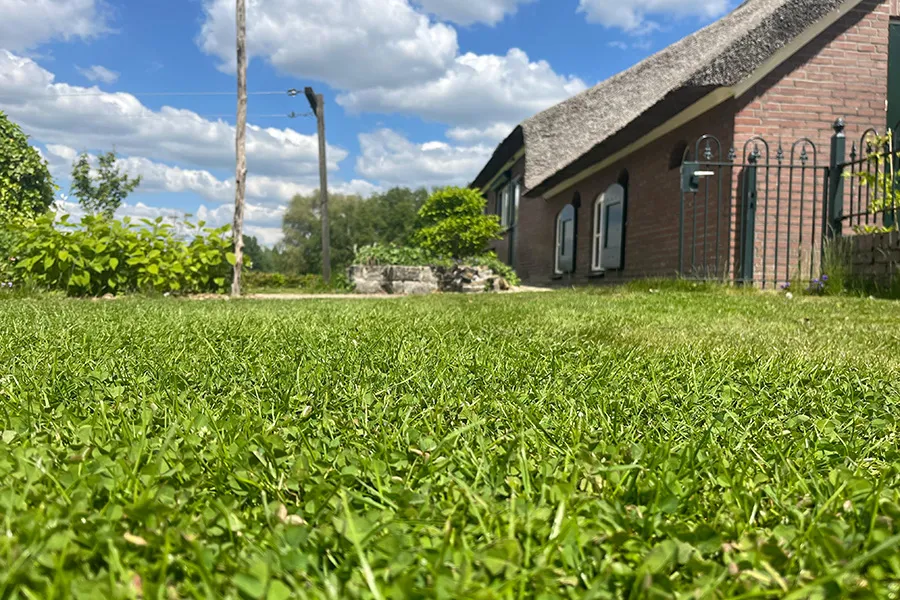
The traditional lawn is coming under increasing pressure. Extreme weather makes it difficult to maintain an attractive sward throughout the year, while there is also growing interest in sustainability and biodiversity in lawns. For many people, this creates a dilemma. A lawn provides space for sport, play and relaxation, and is hard to imagine leaving out of the garden. With EUROGRASS Trifolino, DSV zaden offers a forward-looking solution.
EUROGRASS Trifolino is a mixture of several grass species and microclover. At its core is a hard-wearing lawn mix of perennial ryegrass, smooth-stalked meadow grass and common red fescue. “The red fescue gives it its ornamental value,” says Thijs Schoenmakers, product specialist at DSV zaden. “Perennial ryegrass and smooth-stalked meadow grass create a strong sward that withstands foot traffic and recovers quickly. This makes the mixture ideal for intensive use in gardens, play areas and recreational spaces.”
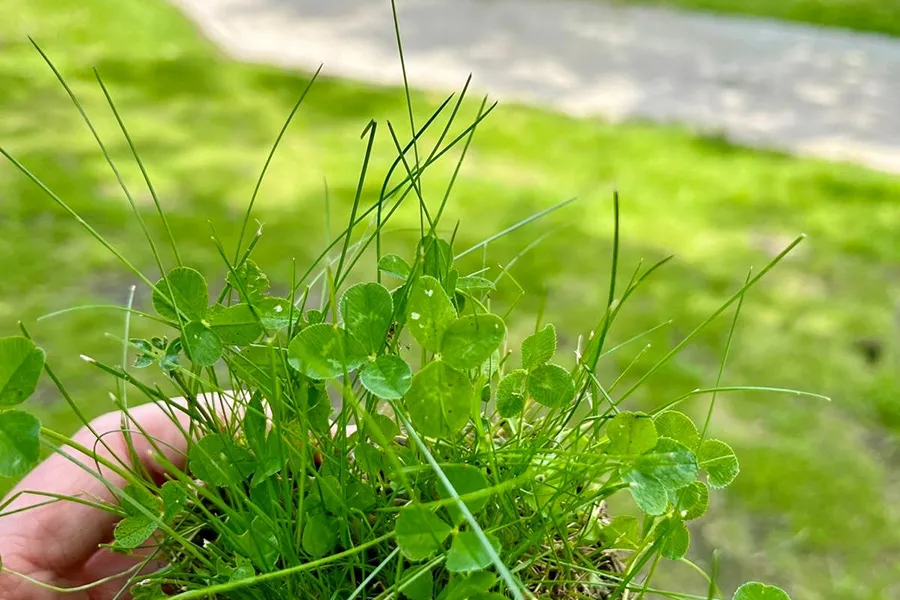
What sets Trifolino apart is the addition of 5 per cent EUROMIC microclover. This increases biodiversity and reduces the need for fertiliser. The mixture therefore also carries the ClimateSmart label.
Don’t call microclover just ‘clover’
EUROMIC microclover is the result of years of research and breeding at DSV and should not be confused with ordinary clover. “Its genetics are completely different,” explains Schoenmakers. “Its characteristics differ too. Microclover has the same fresh green colour and self-repairing ability as white clover, but it is much finer and not dominant. So there is no need to worry that microclover will take over the lawn.”
EUROGRASS Trifolino was developed with a focus on uniformity and balance between the species. DSV conducted numerous trials with different proportions to determine the best distribution. “Because it is a ready-made mixture, we can guarantee those proportions,” says Schoenmakers. “This makes it easier to sow evenly and ensures a uniform, well-kept appearance.”
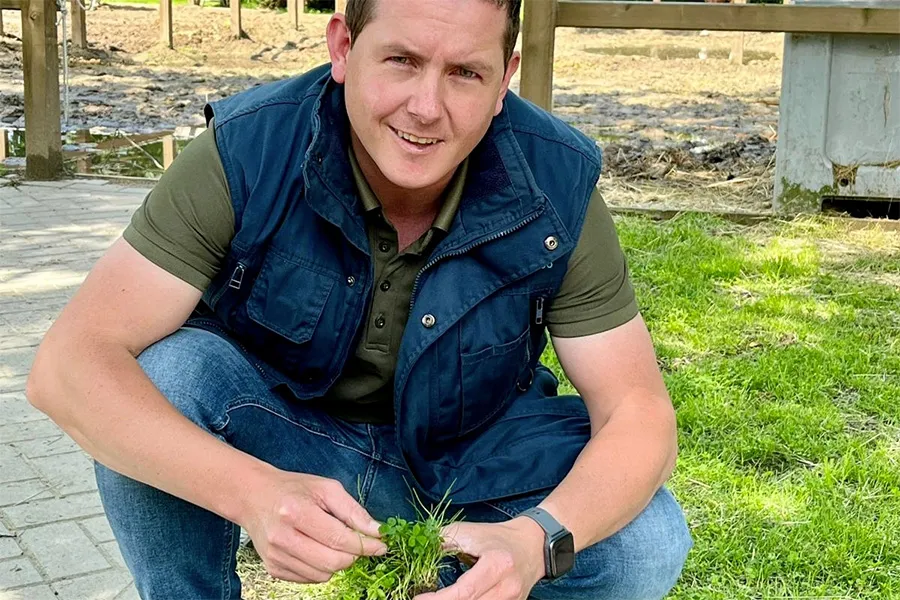
Less fertiliser, greater balance
Microclover is a legume that fixes nitrogen from the air and releases it into the soil. This naturally enriches the soil and fertilises the grass. As a result, much less fertiliser is needed throughout the year, benefiting both the environment and maintenance requirements.
To maintain balance in the sward, fertiliser is only needed in spring, preferably based on a soil analysis. “It is no coincidence that EUROGRASS Trifolino carries the ClimateSmart label,” stresses Schoenmakers. “The label is awarded to grass mixtures that actively contribute to climate solutions, are resilient and promote biodiversity.”
The power of mowing
Microclover gives lawns a fresh green colour and keeps them healthy throughout the year. But with a well-planned mowing regime, green-space managers and landscape contractors can really get the most out of it. “During the first six to twelve months, it is important to mow regularly,” explains Schoenmakers. “Intensive mowing during the first growing season helps the microclover grow into a fine sward. After that, you can switch to a less intensive mowing regime.”
When the intervals between mowing become longer, white flowers appear in the sward, attracting beneficial insects. Those who would rather avoid this can mow a little more often, or create different zones for a varied look. “It all depends on the application,” concludes Schoenmakers. “EUROGRASS Trifolino is a versatile grass mixture that can be tailored to users’ requirements through mowing.”
Question about this story? Ask your question
Keep following this
Get an email when a new story is published. No account needed.
- ThemeNature-friendly green space management
- SubjectGarden landscaping & maintenance