Mowing in strips without wires
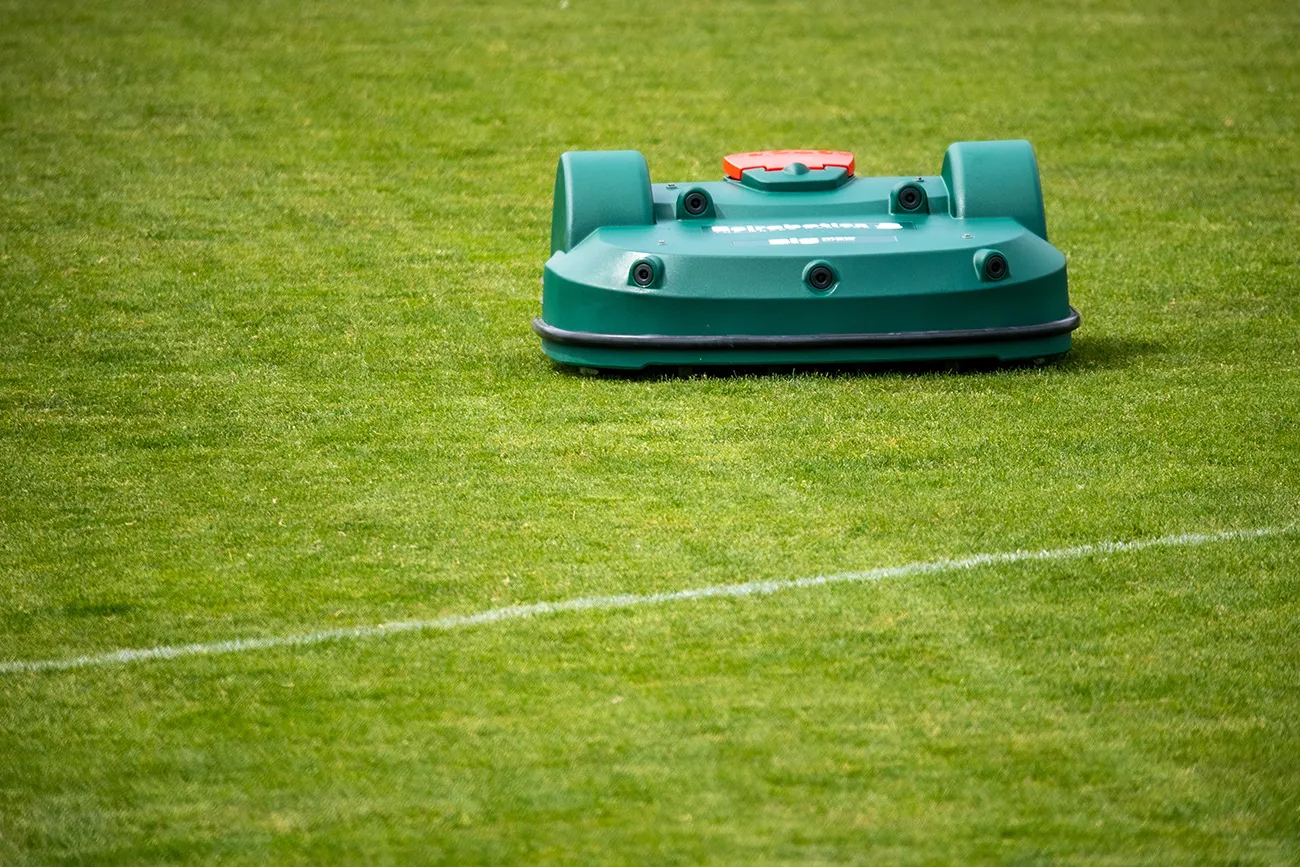
Yamabiko Europe is introducing the Wisenav system for all Belrobotics GPS-RTK robotic mowers. With Wisenav, the mowers can mow in strips, with or without a boundary wire, delivering up to three times the productivity across areas of up to six hectares. Users can adjust working zones with great flexibility.
Flexible mowing with three times the productivity
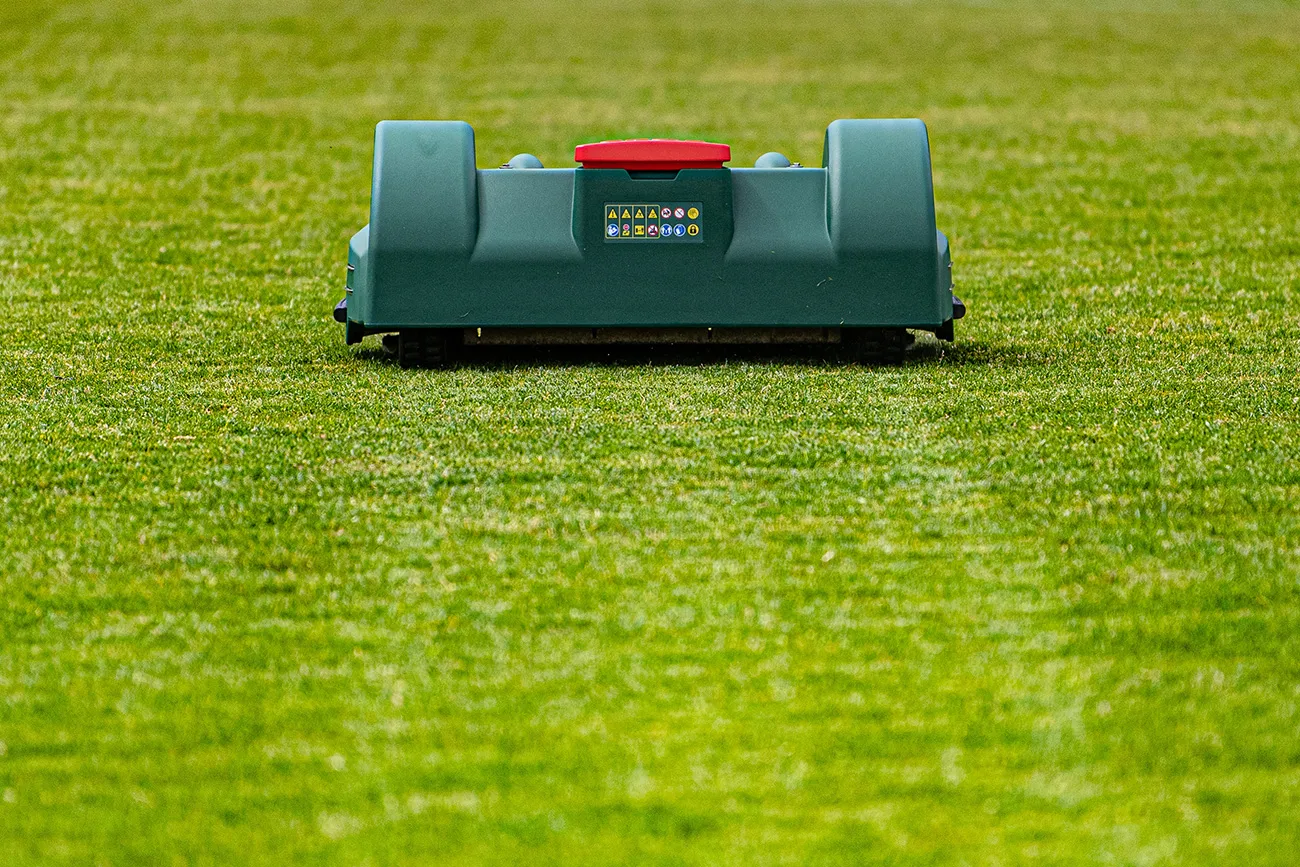
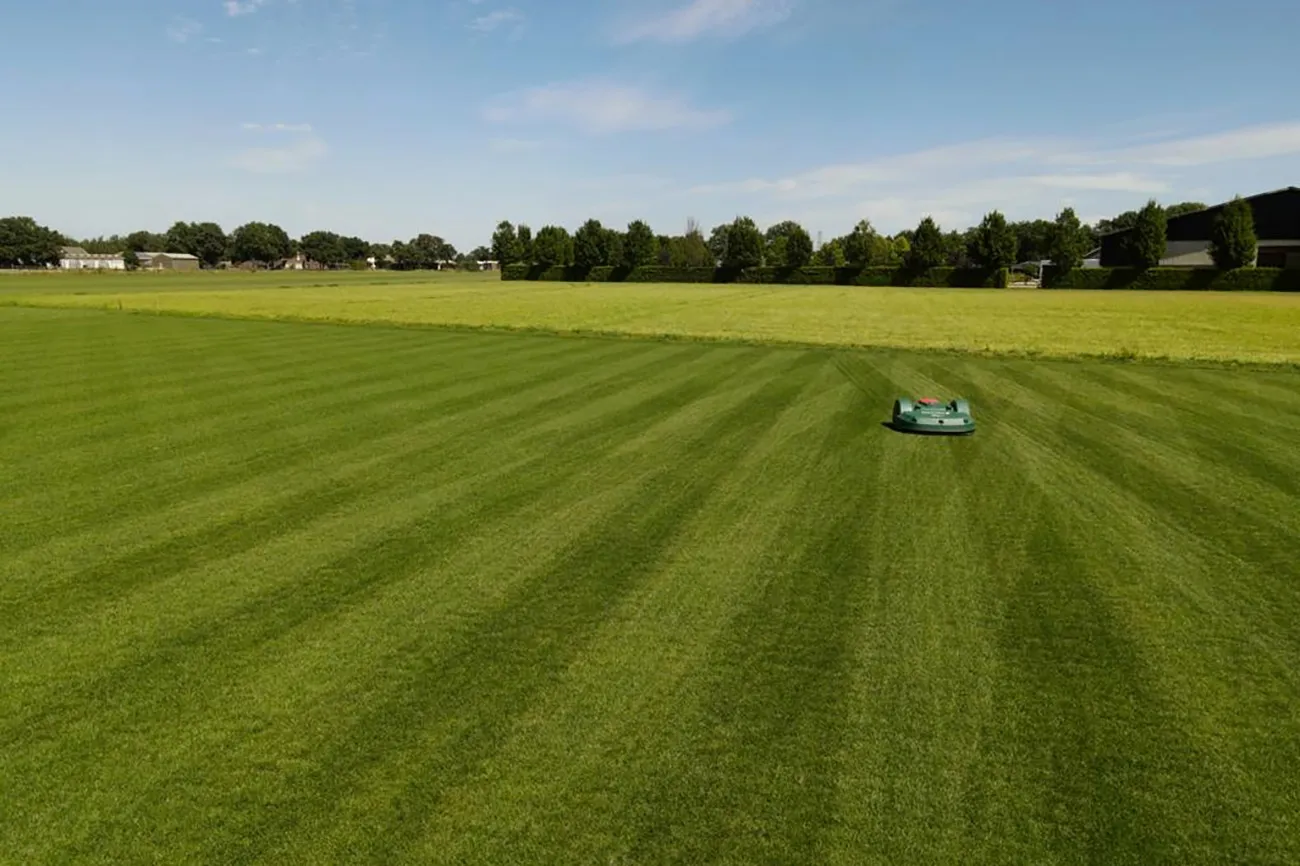
Last year, Yamabiko introduced GPS RTK technology for robotic mowers, using satellite data to mow in strips. “Mowing in strips allows the machine to cover three times more ground than mowers that travel around randomly. It also produces a better finish,” says sales & marketing director Diederick Geerinckx. The technology is particularly well suited to sports pitches. As these are large areas, this mowing method saves a considerable amount of time. “When GPS-RTK was first introduced, a boundary wire was still required to prevent the robot from leaving the working area. Our engineers therefore developed Wisenav, a system that allows users to create a virtual boundary around the site.” Wisenav stands for Wireless Satellite Exact Navigation.
Easy installation
The virtual boundary is created by walking around the site from the charging station, using a mobile phone with the Belrobotics app. Users can mark as many boundary points as needed at the touch of a button. Four boundary points are enough for a football pitch, for example, while a golf course with an irregular shape requires many more. A boundary wire can still be used in areas with weaker satellite reception, for example where there are many trees.
End users can also use the app to set zones where mowing is or is not required. The preferred mowing direction and mowing times can also be set for each zone. When the battery runs out, the robotic mower returns to its charging station. Once charged, it returns to the starting point of the last unfinished strip.
Accurate to within three to five centimetres
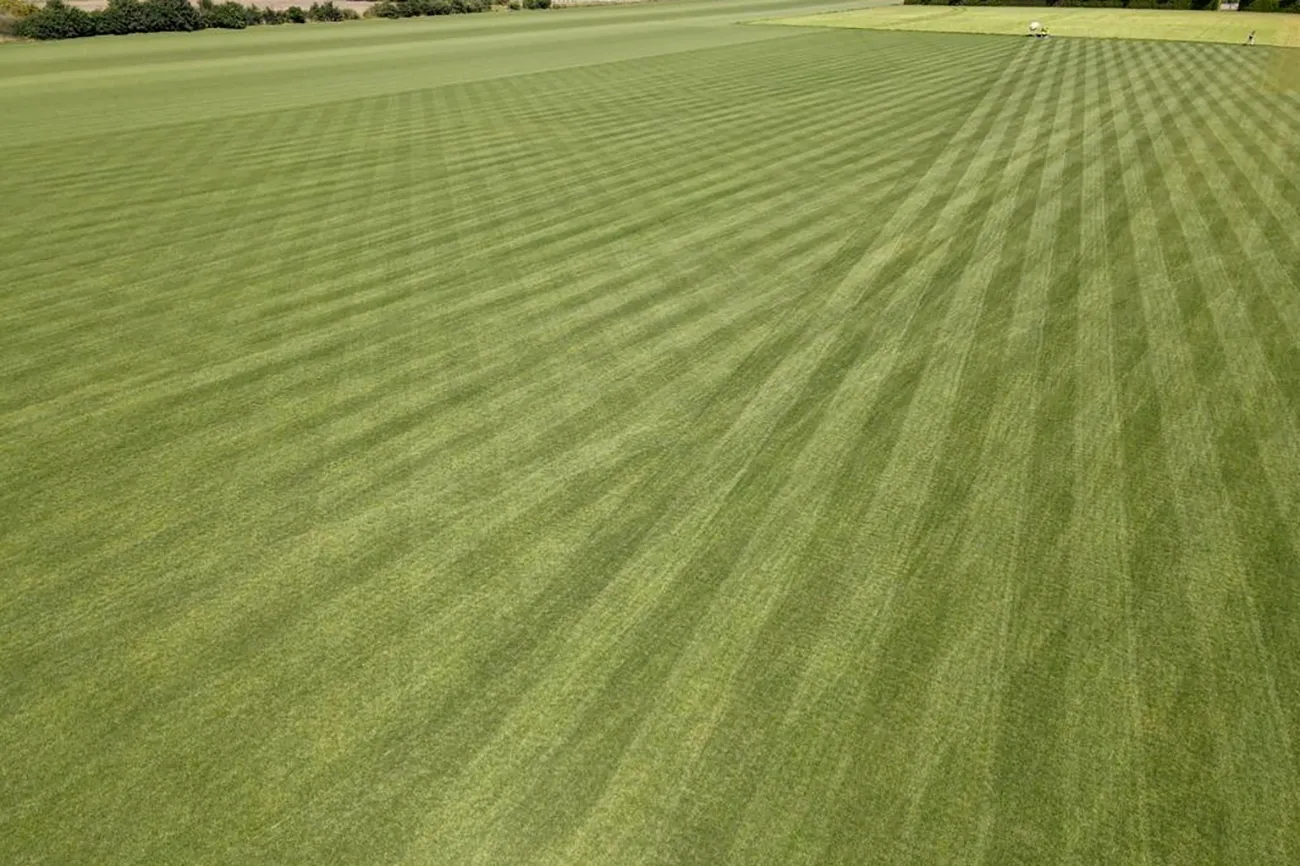
The system is available for all GPS-RTK models. A software update will be made available to users who have already purchased a Belrobotics robotic mower. Using RTK (Real Time Kinematic), the Belrobotics robot can mow continuously with an accuracy of three to five centimetres. The robot communicates with the base station, which has a fixed position.
Demand for robotic mowers is high. Geerinckx says: “Yamabiko Europe’s robotic mower sales have grown by more than twenty per cent a year in recent years. GPS-RTK models now account for more than half of our sales. These new developments will only accelerate this trend.”
Yamabiko works with specialist dealers, who also receive training from the company. They install and maintain the robotic mowers. End users manage day-to-day operations themselves. For example, if there are obstacles on site, work is taking place or the layout of the site is changing, users can set no-go zones themselves.
“The Netherlands is a good market for us, particularly because municipalities are showing strong demand for robotic mowers on sports pitches as a way to make their machinery fleets more sustainable. It is also becoming harder to find staff, and robots help make the work of grounds maintenance teams more flexible. Finally, the mowers are cheaper to buy and run than conventional mowers.”
Question about this story? Ask your question
Companies in this story
Keep following this
Get an email when a new story is published. No account needed.
- ThemeMachinery for landscaping and grounds maintenance
- SubjectDigitalisation & software
- CompanyYamabiko
- CompanyBelrobotics