What are the rules for safely storing lithium-ion energy storage devices?
Text Carolien KleesImage Asecos
Safely storing and charging batteries
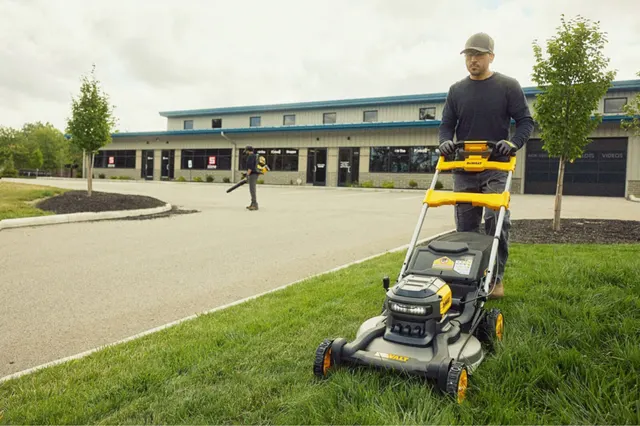
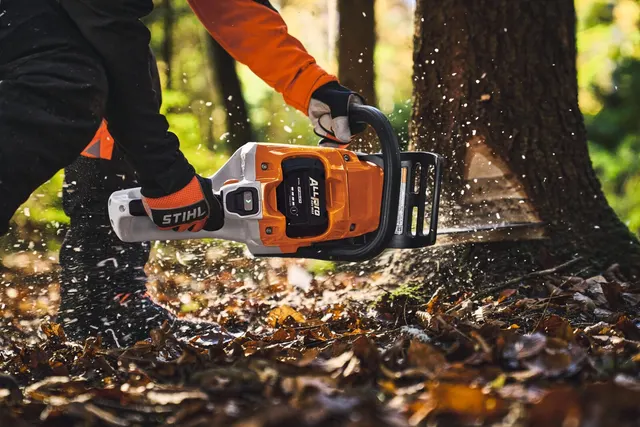
The number of electrically powered devices in the green sector is growing rapidly. Storing and charging them carries risks because the batteries can ignite spontaneously. In addition to the risk of fire and explosion, toxic fumes may also be released, which can even be fatal in large quantities. And the problem is that from the outside we cannot tell the quality of a battery or whether it has been damaged. What is the best way to protect your staff and business, and what do the regulations and insurers say?
We asked Henk Niewenhuis, director of Asecos. As a market leader in safe storage solutions for hazardous substances, the company has a wealth of expertise. Thanks to its pioneering spirit, it began considering the safest way to store lithium-ion energy storage devices ten years ago. Niewenhuis says: “The positive and negative terminals of these batteries are separated by a separator. If the separator is damaged, the battery can ignite spontaneously. However, as a user, there is no way of seeing whether there is a tear, for example as a result of poor quality or a fall. Charging a battery also increases the risk of ignition, and this often happens overnight, unsupervised.”
Risk
“Take a cordless hedge trimmer, for example. It is quite possible that it might be dropped, but any damage to the separator would not be visible. When using second-hand machines, you also do not know the condition of the battery. Even if a new battery is supplied with the machine, it may be of questionable quality.”
Advice
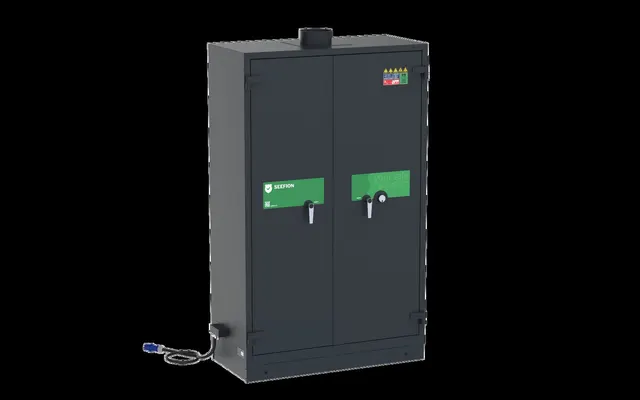
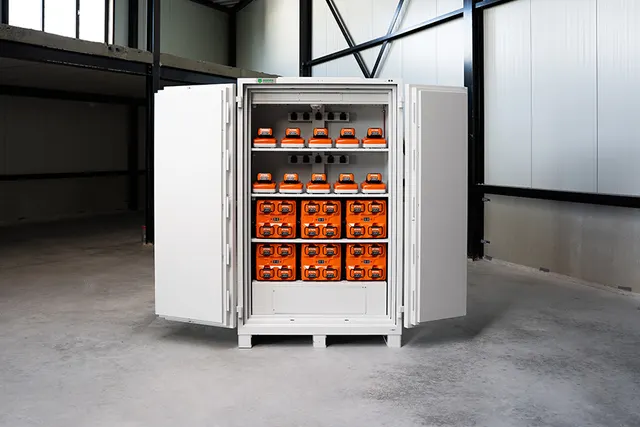
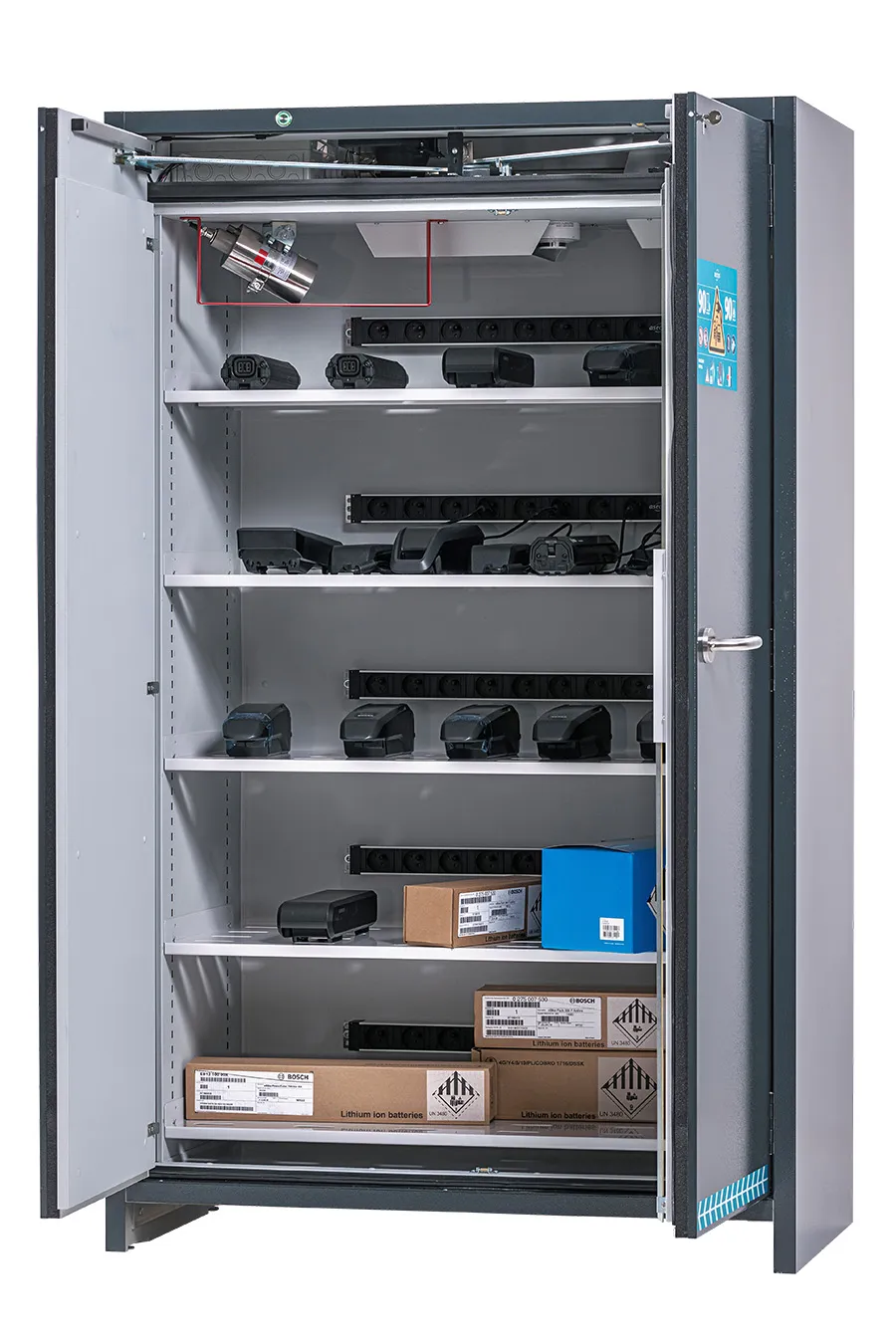
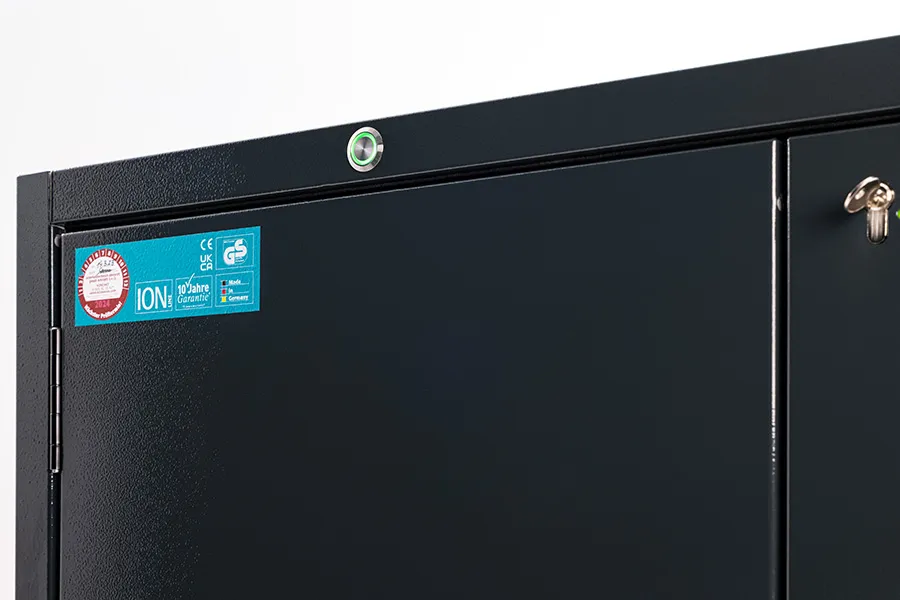
According to Niewenhuis, companies looking to safely store and/or charge their lithium-ion energy storage devices in a fire-resistant cabinet would be well advised to seek information from reliable organisations with sufficient expertise. “There is still a great deal of uncertainty about the regulations, and many manufacturers do not yet have enough knowledge. The only way for you, as a user, to be sure is to ask for certificates, such as the European EN 14470-1, which help you separate the wheat from the chaff. You should also ask your insurer whether it has any requirements.” You can also use handy tools to get a clearer picture, such as the configurator on the Asecos website.
Regulations
There has recently been some clarification on the safe storage of lithium-ion batteries, thanks to the PGS 37-2 regulations. “In addition, the German VDMA 24994 guideline came into force last year, and some insurers are already referring to it. Germany has also proposed introducing a European standard based on this VDMA guideline. We believe the guideline is incomplete, however, and our cabinets go considerably further. In any case, it will be some time before that European standard is introduced, but in the meantime insurers are likely to impose stricter requirements.”
Fire safety
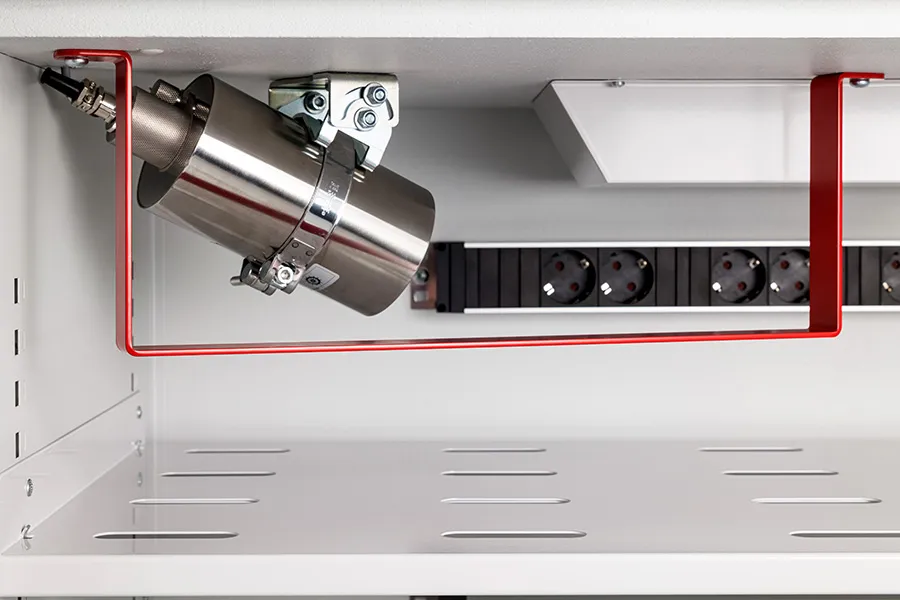
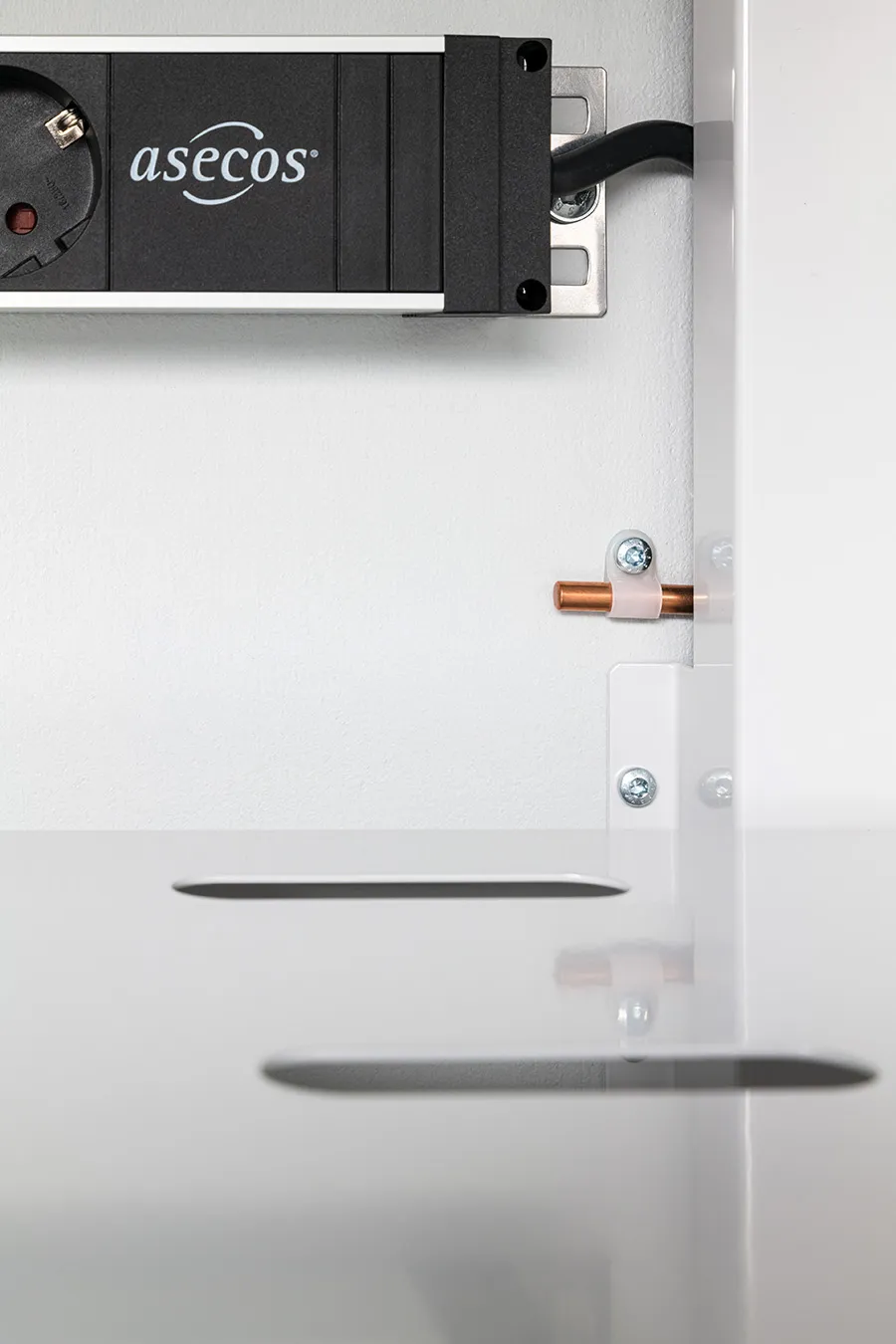
Because Asecos began developing fire-resistant cabinets for storing and/or charging lithium-ion batteries at an early stage, its products fully comply with the current PGS 37-2 guideline. “Our cabinets already met the EN-14470-1 standard, which stipulates, among other things, that fire resistance from the outside in must be at least ninety minutes. But as a lithium-ion battery produces its own oxygen, we have also made our cabinets fire-resistant from the inside out.” Asecos went a step further by equipping its lithium-ion cabinets with alarm detection and making them smoke-tight and explosion-proof. Asecos is also the only manufacturer whose cabinet is certified in accordance with the GS principle EK5/AK4 22-01.
A business enquiry for Asecos? Get in touch
Companies in this story

Keep following this
Get an email when a new story is published. No account needed.
- ThemeCleaner and safer working
- SubjectElectrification
- CompanyAsecos