Battery platform makes the move to all-electric possible in the garden and landscape sector
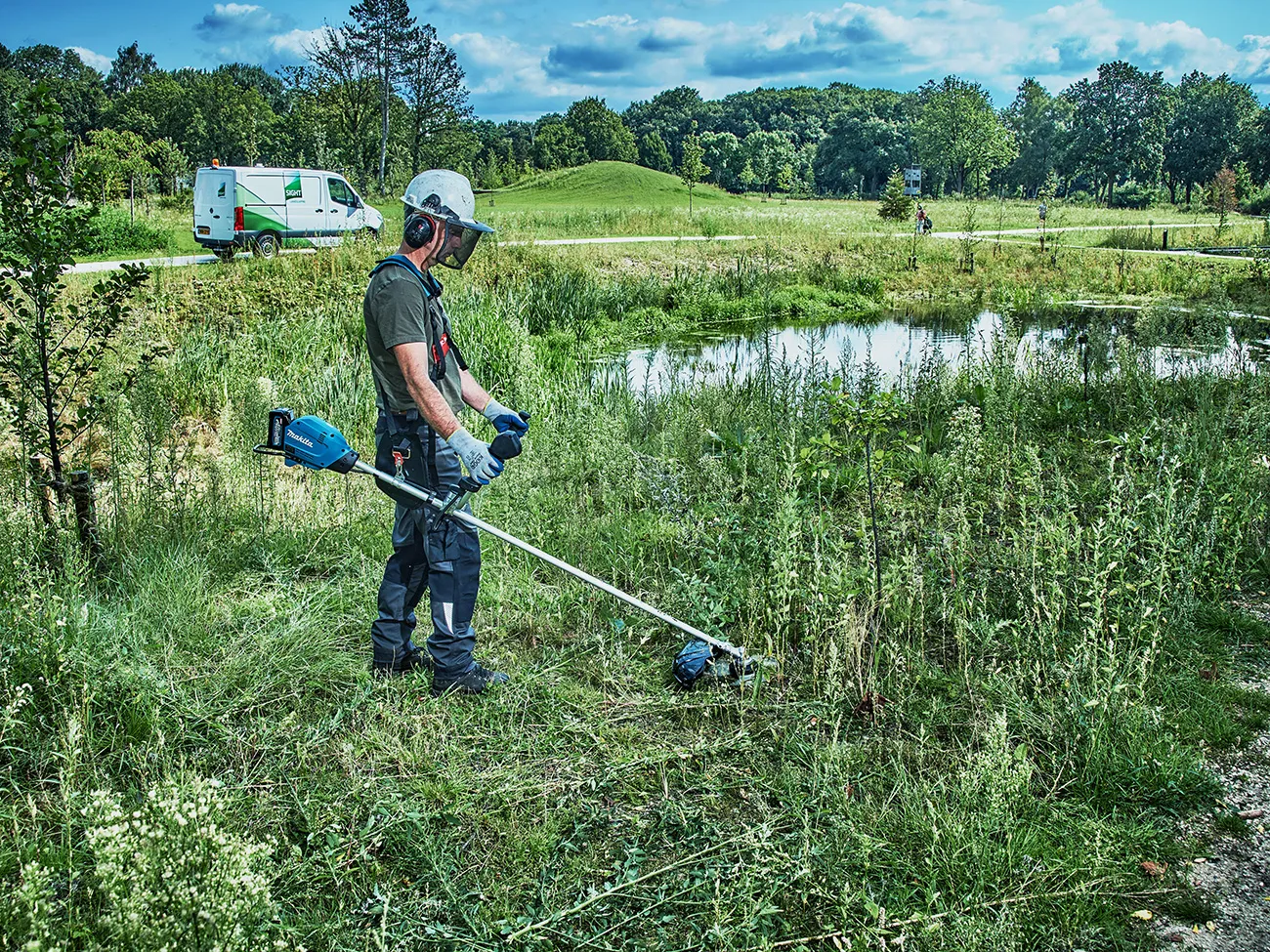
Makita Nederland is rapidly expanding its XGT platform. Arjen Peeters, product and account manager at Makita Nederland, explains more. “The platform has been specially developed for heavier, more demanding jobs. We already have 120 machines, and around another hundred will be added over the next year.”
‘As a manufacturer, we take responsibility for sustainability’
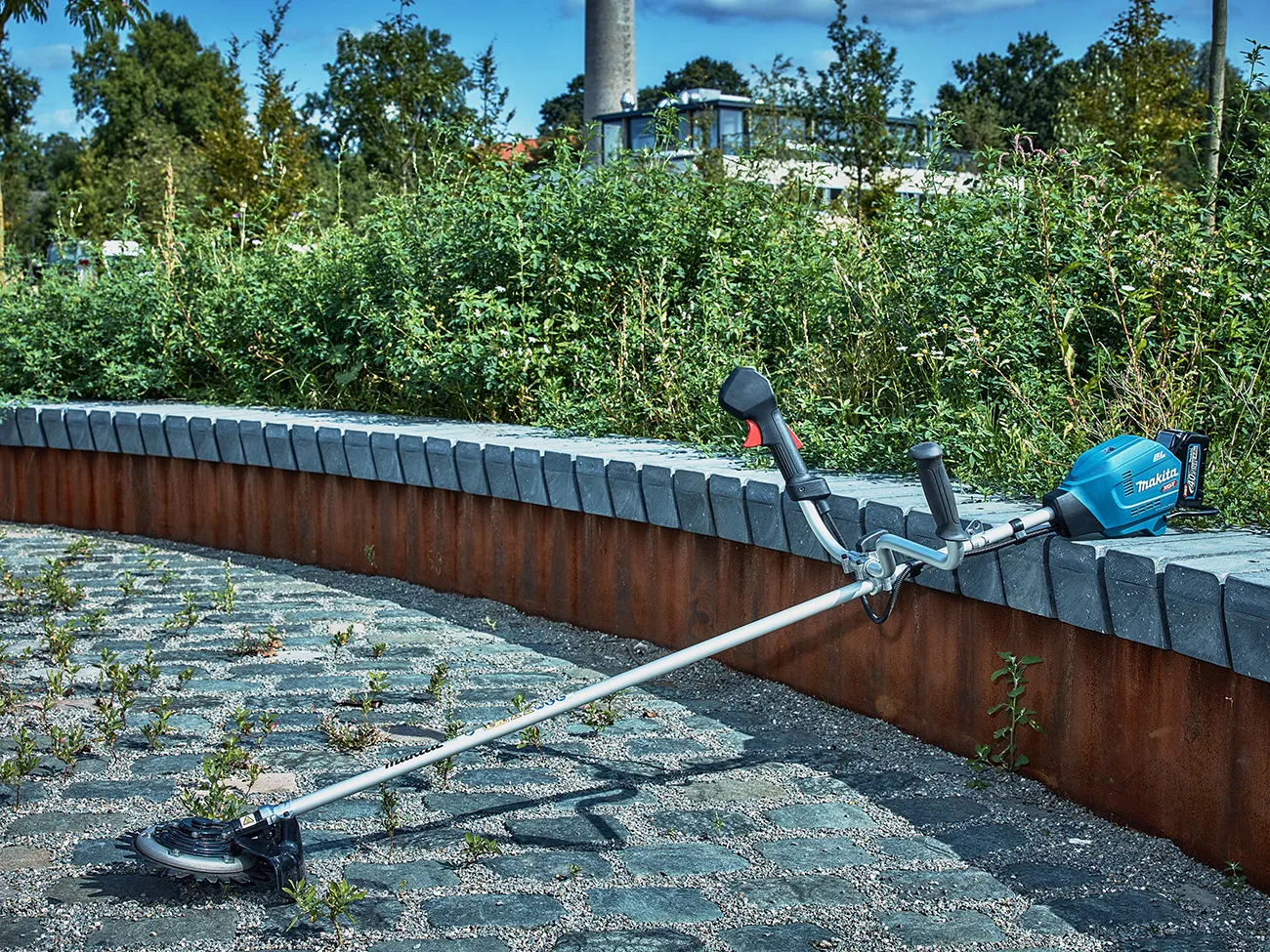
The LXT platform has been an enormous success, and the machines powered by its battery are suited to the everyday tasks of landscape professionals. “Many landscape professionals also use garden machinery for heavier, more demanding jobs, such as felling trees, mowing verges or clearing leaves from parks. The 18 V battery on the LXT platform does not provide enough capacity for this. That is why we introduced the XGT platform, with 40 V and 2×40 V machines that deliver twice the power. With an output of 40 or 80 V, the machines are just as powerful as comparable petrol-powered models.”
“The move to the XGT platform makes it possible for businesses in the garden and landscape sector to go fully electric. All the machines in the platform run on the same battery, which is why the range is growing so quickly.”
“Innovation is central to what we do. We continue to expand both the LXT and XGT platforms to make the green sector as sustainable as possible. We focus in particular on battery life. We believe it is important to use the battery as often and as much as possible. That is also better for the battery itself. Our aim, therefore, is to bring as many appliances to market as possible that run on the same battery.”
Optimum power
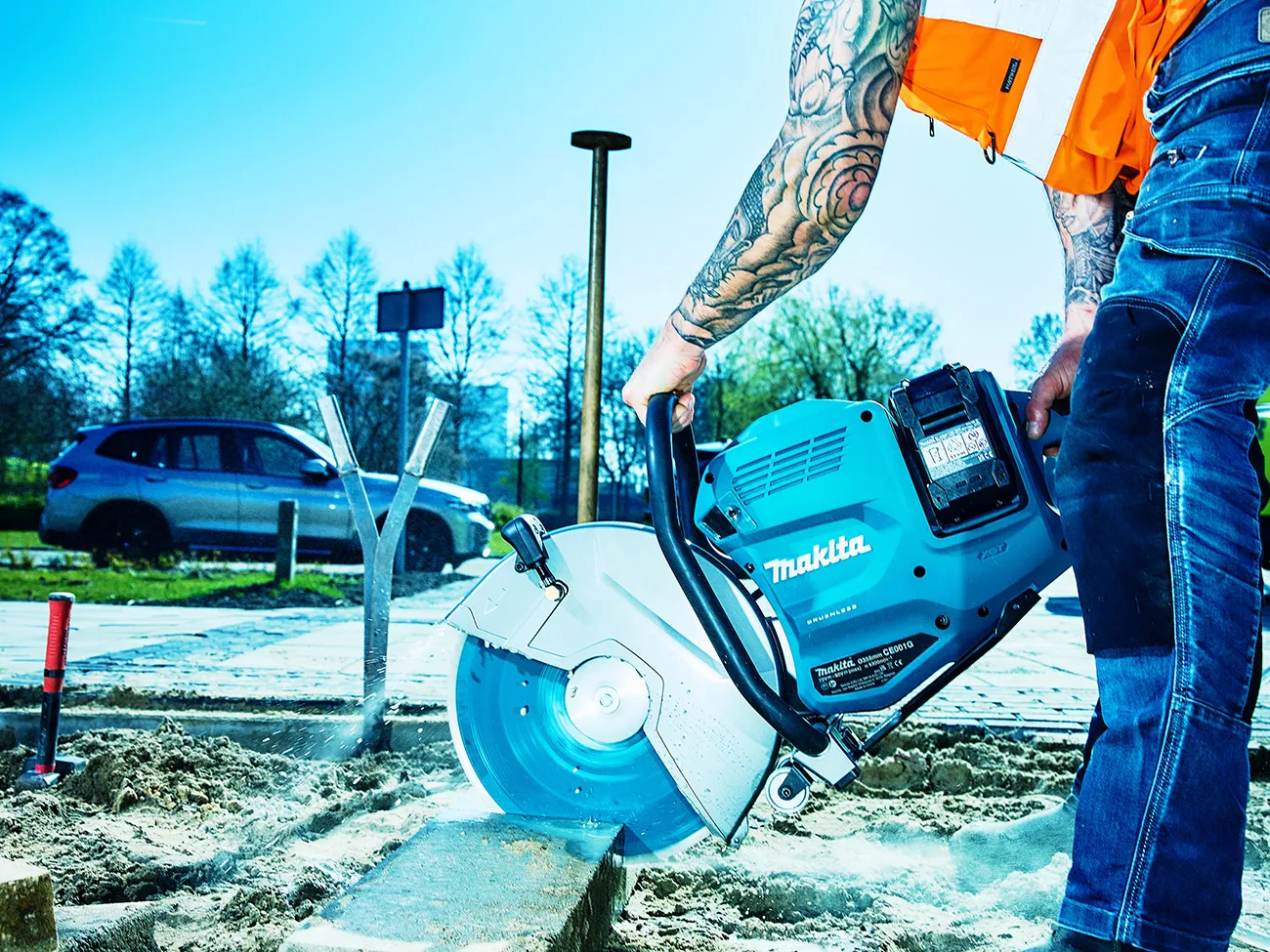
Makita occupies a unique position in the market. “We develop our own brushless motors specifically for each machine. Every application calls for something slightly different. Each machine has a dedicated controller that drives the motor, and we develop that ourselves too. The controllers are programmed for each machine so that it delivers optimum power. This is an area where we are leading the way,” says Peeters.
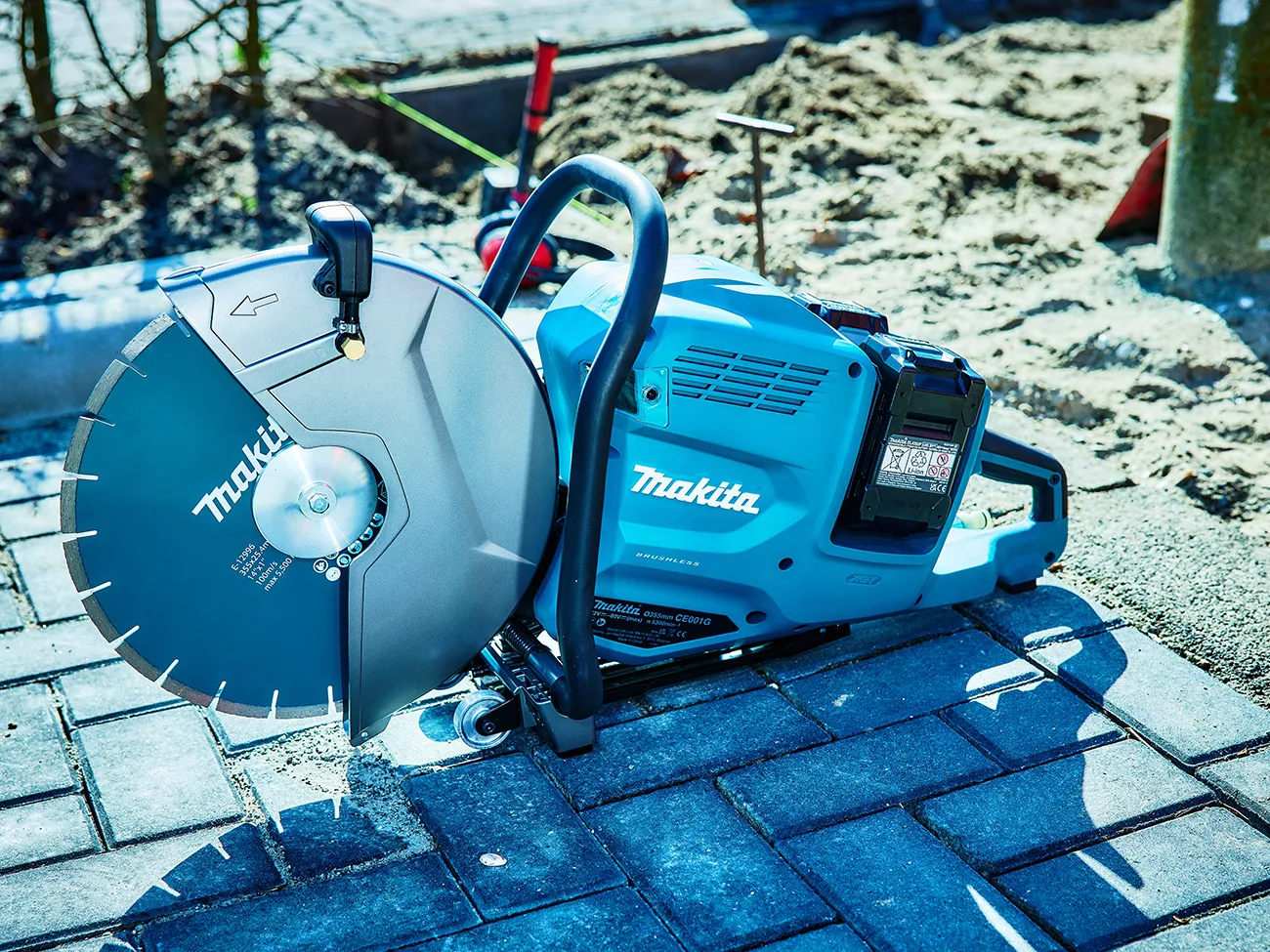
“That makes an enormous difference. It means we can now match the performance of a 70 cc petrol engine with a cut-off saw, and a 50 cc petrol engine with a brushcutter. But we are nowhere near reaching our limits yet, and there is plenty more scope for development. And we will certainly continue to develop.”
Making a statement
Sustainable business is an important issue, including in the garden and landscape sector. Makita is the first supplier in the market to have switched its entire range of machines to battery power. “Since March 2022, we have stopped producing and developing petrol-powered machines at Makita altogether. As a business, it is easy to say you are committed to sustainability. But as long as you still offer petrol alternatives, end users do not feel the urgency to switch either. As a manufacturer, we therefore take responsibility for sustainability,” Peeters concludes.
Question about this story? Ask your question
Companies in this story
Keep following this
Get an email when a new story is published. No account needed.
- ThemeCleaner and safer working
- SubjectMachinery & equipment
- CompanyMakita Nederland
- CompanyPeeters Group