E.L.S. Garden has a solution to wear and tear
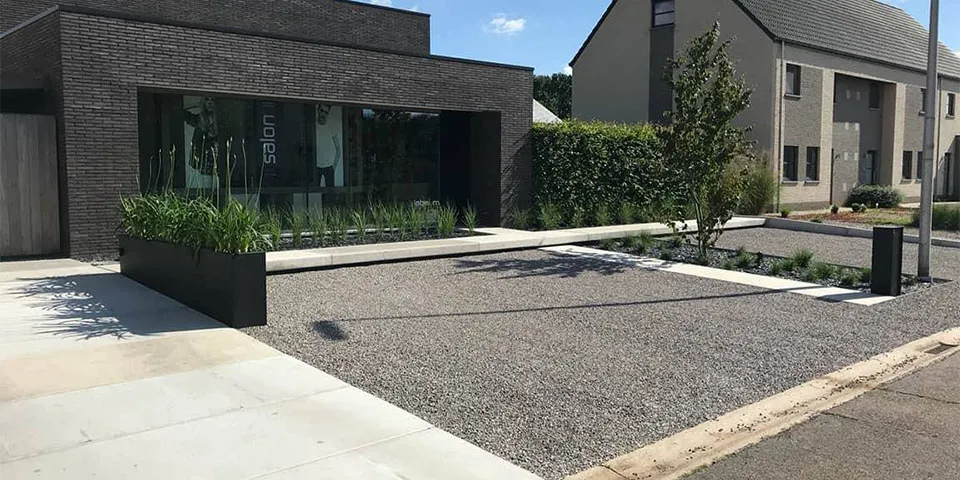
Mud, puddles, rutting and weeds. After five to ten years, a gravel driveway or car park can look very different from when it was first laid. In many cases, both the drainage and the stability of the surface and sub-base then begin to deteriorate. To prevent this, garden construction materials wholesaler E.L.S. Garden developed the GravelLock gravel grid.
Gravel grid designed to provide lasting stability and drainage
Garden contractors have several options for laying gravel paths and surfaces. They can spread loose gravel or use one of the many gravel grids or panels currently on the market. One thing that does seem standard, however, is the use of weed-control fabric. It is considered essential, regardless of the laying method chosen. But is that really the case?
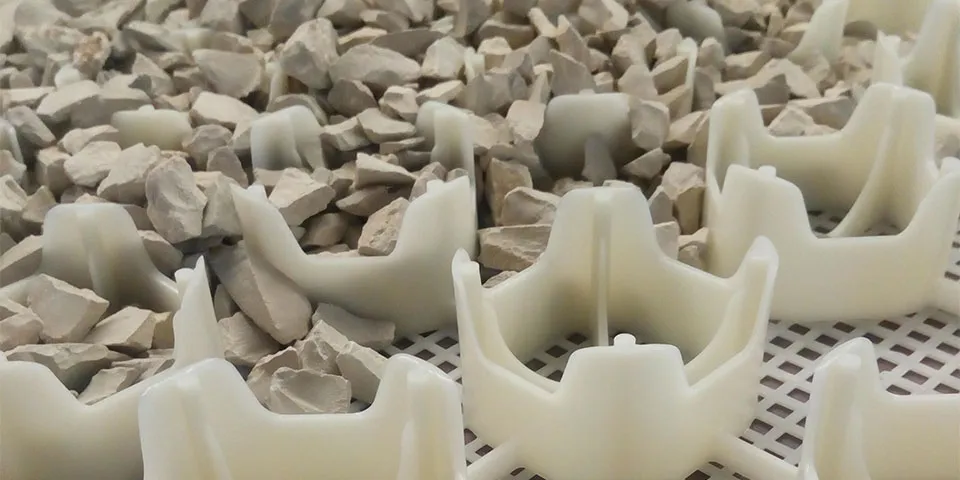
The cells in this gravel grid are designed so that the gravel can also behave as a single, continuous surface.
Drainage
Weed-control fabric is placed directly beneath the gravel layer or grid to prevent weeds from growing, without impeding water permeability. “The weave of this fabric is so fine, however,” explains Els Meynen of E.L.S. Garden, “that dust and dirt carried into the gravel layer by wind and use cannot pass through it. As a result, weed-control fabric starts to clog up after just three to four years.” The result? Rainwater takes much longer to reach the ground, which in extreme cases can lead to mud and puddles, while a new, fertile growing medium for weeds forms on top of the fabric. “In the long run, weed-control fabric therefore ends up having the exact opposite effect to the one it was originally intended to have.”
In response to this problem, E.L.S. Garden developed an alternative, 100% Belgian gravel grid: GravelLock. This polypropylene panel does not require weed-control fabric. Instead, it has a fine-mesh 4 x 4 mm grid on the underside and is laid on a crushed stone base, optionally combined with a levelling layer of gravel and sand. “Small organic particles can easily wash through to the bottom of the grid, where worms and other soil organisms can break them down and carry them away. This helps the gravel surface retain its drainage function over the long term, which is particularly important given the water management problems of recent years.”
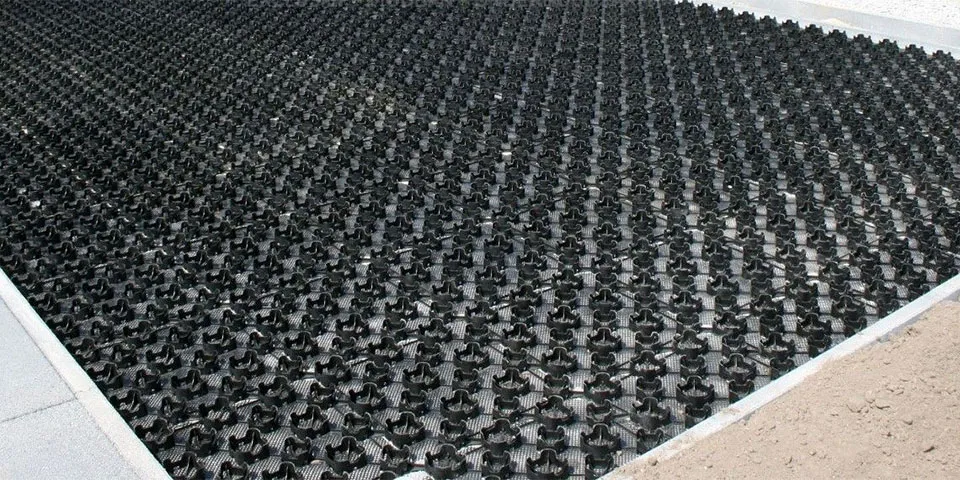
As an alternative to weed-control fabric, GravelLock has a fine-mesh PE grid on its underside.
Stability
According to Els Meynen, using weed-control fabric can also have a negative effect on the stability of a gravel path or surface. “If the fabric is not attached directly to the gravel panels being used, they can slide over it. And if the panels are also loose from one another, stability is even less assured.”
The solution is to make the entire gravel grid function as a single unit. The GravelLock base modules, each measuring 490 x 490 mm x 40 mm, are therefore fitted with tongue-and-groove connectors that simply clip together. This creates a large framework that is firmly anchored in the sub-base by the weight of the gravel. “Because the cells in this gravel grid are separate from one another and have several openings at the top, the infill material also remains connected to itself across the entire surface. Once fully filled, the gravel will therefore behave as a single, continuous surface or mass.”
Els notes that this not only improves the stability of the whole surface, but also makes maintenance easier. “If a few weeds do come through the gravel surface, they can simply be pulled out, just as they would be in a conventional gravel surface.”
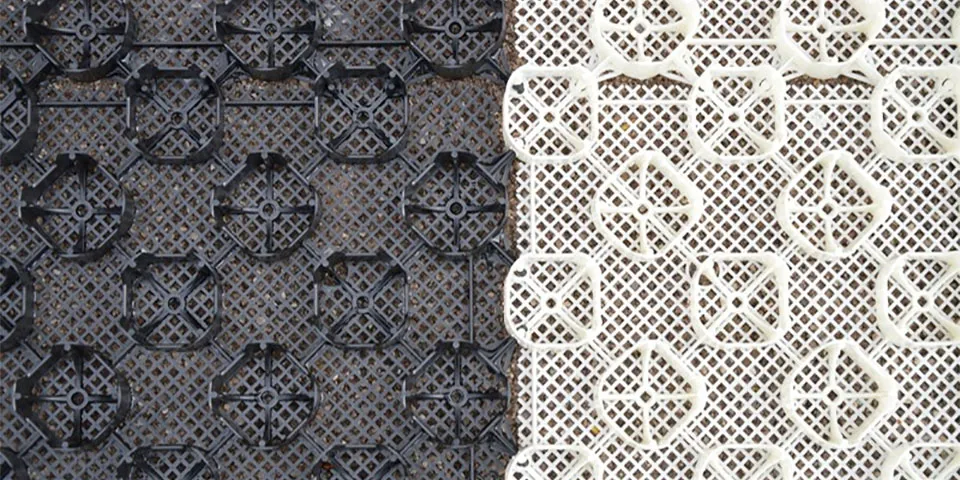
The GravelLock gravel grid modules simply clip together to create one strong, stable surface.
Easy installation
The GravelLock gravel grid is suitable for all standard applications, except heavy industrial traffic with non-steering tandem axles. The material’s flexibility also allows it to be used on gently sloping ground. To shape the panel to fit the project, simply clip together the required number of base modules and trim them with an angle grinder where necessary.
Infill material between 5 and 25 mm gives the best results. The recommended quantity is approximately 1 m3 of gravel per 20 m2, or a depth of 50 to 60 mm. To speed up the compaction and settling of the gravel and sub-base, the whole surface can be compacted immediately after installation.
Question about this story? Ask your question
Keep following this
Get an email when a new story is published. No account needed.
- ThemeNature-friendly green space management
- SubjectMachinery & equipment