Enjoy the sun, but in moderation
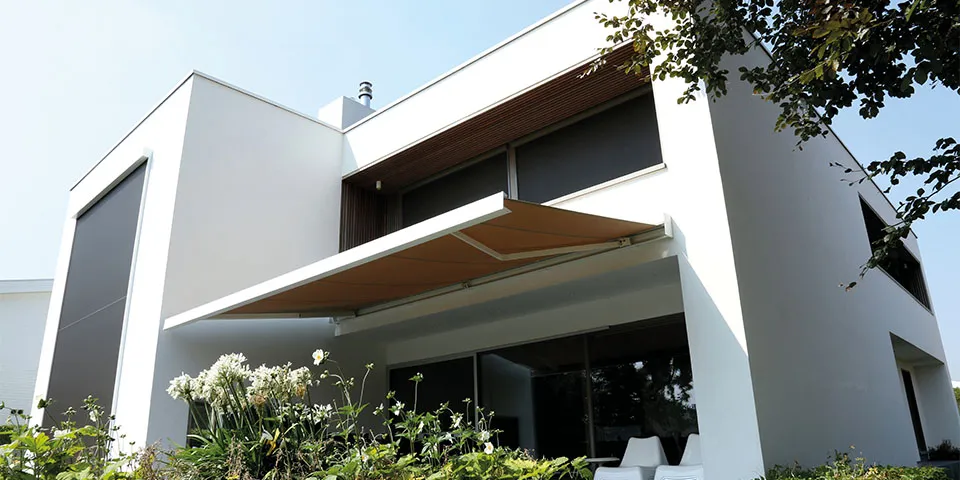
In the wake of the coronavirus crisis, we will spend more beautiful summer days at home than before. The message is to enjoy a sunny ‘staycation’! In moderation, of course, because excessive UV radiation can discolour furniture, parquet flooring and carpets. Too much sunlight can also cause a home to overheat. The harsh light can also create annoying reflections on windows and TV or computer screens. Effective solar shading can help.
Shading is good for you and your home
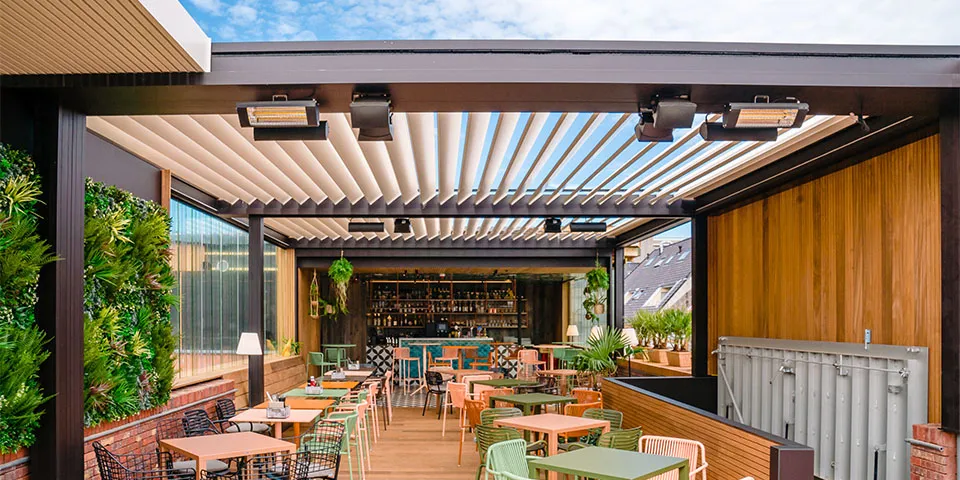
Louvre shading for hospitality applications.
Work for specialists
Installation and service company Holstra has specialised in solar shading for many years, as well as installing gates, roller shutters and all kinds of outdoor structures. The company has been in business for 22 years and has focused on regional coverage to be closer to its customers. From three branches, in Wevelgem, Alveringem and Brugge, 25 specialist staff serve the West Flanders market. The branches have spacious showrooms where customers can view materials and applications and obtain advice beforehand.
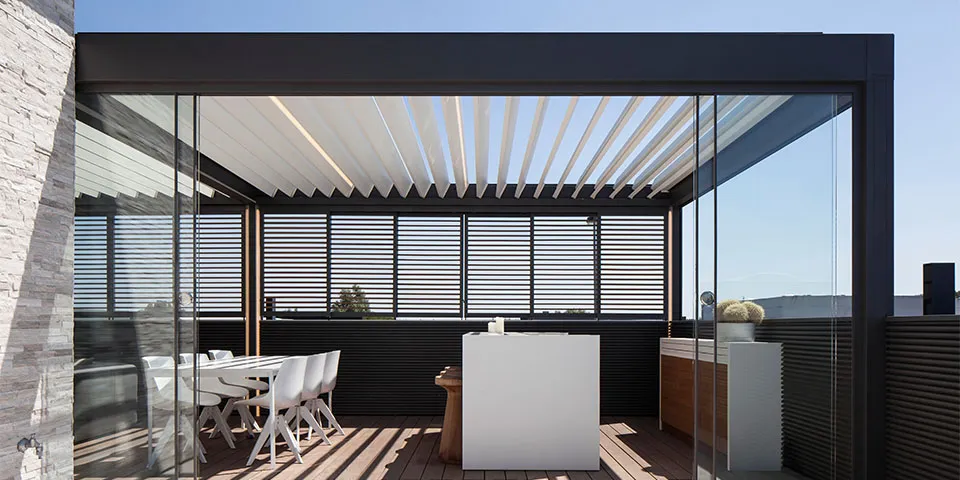
Louvre-roof patio cover with screens.
Vertical or horizontal?
Several factors come into play when choosing the right external solar shading. Where should it be installed: vertically against a glass wall, above a rooflight or glass roof? Aesthetics are also an important consideration, as is the desired level
of automation.
Vertical fabric shading on a window or large glass façade is the ideal solution for keeping excess heat out. Holstra works exclusively with Renson Fixscreen systems. Their special fabrics filter incoming light while preserving the view outside. Vertical fabric shading can be fully automated and easily withstands wind speeds of 130 kilometres per hour, equivalent to a Category 12 hurricane on the Beaufort scale.
Horizontal fabric shading is used to control sunlight through sloping glazing, such as rooflights, skylights or verandas. Without shading, this type of glazing can cause a home to heat up significantly.
Structural or architectural shading accentuates a building’s design. This is achieved using aluminium louvres. Their angle keeps sunlight out in summer, while in winter the low sun provides passive solar gains. The view outside is also preserved. The required projection is determined in part by the orientation of the home or building. Smaller projects mainly use elegant, C-shaped louvres.
Solar shading sliding panels can be adjusted precisely to suit the amount of light coming in. They consist of aluminium frames with a range of infill options. The panels can be slid in front of the windows manually or automatically. On covered terraces, they can also be used as sliding windbreaks.
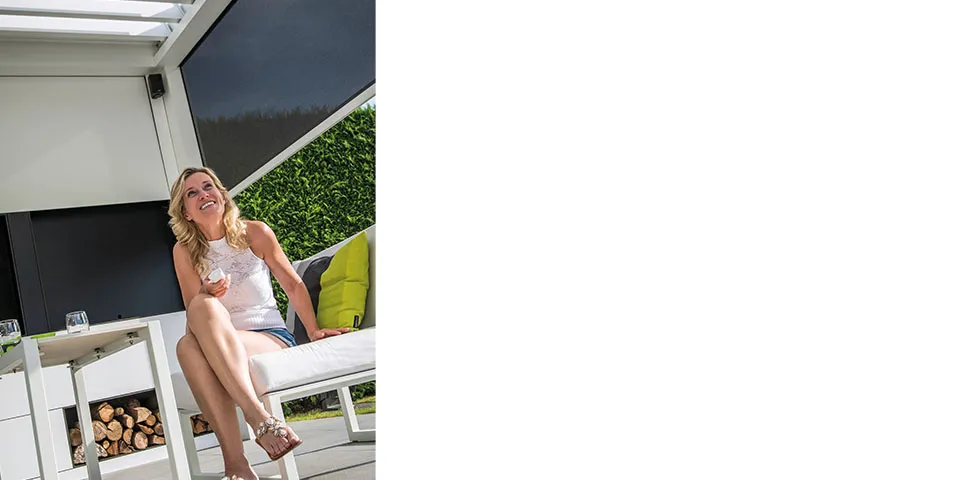
Outdoor structure with adjustable aluminium louvres.
Trusted partners
Holstra has its own team of experienced installers and uses only renowned brands and manufacturers. For solar shading, this means the world-renowned Renson. The electromechanical systems and controls are of the same high quality, ensuring optimum reliability and comprehensive guarantees. Maintenance and repairs are carried out by the company’s own specialist team.
Question about this story? Ask your question
Keep following this
Get an email when a new story is published. No account needed.
- SubjectMachinery & equipment