Pioneering an electrically powered hedge trimmer
Text Carolien KleesImage Becx Machines
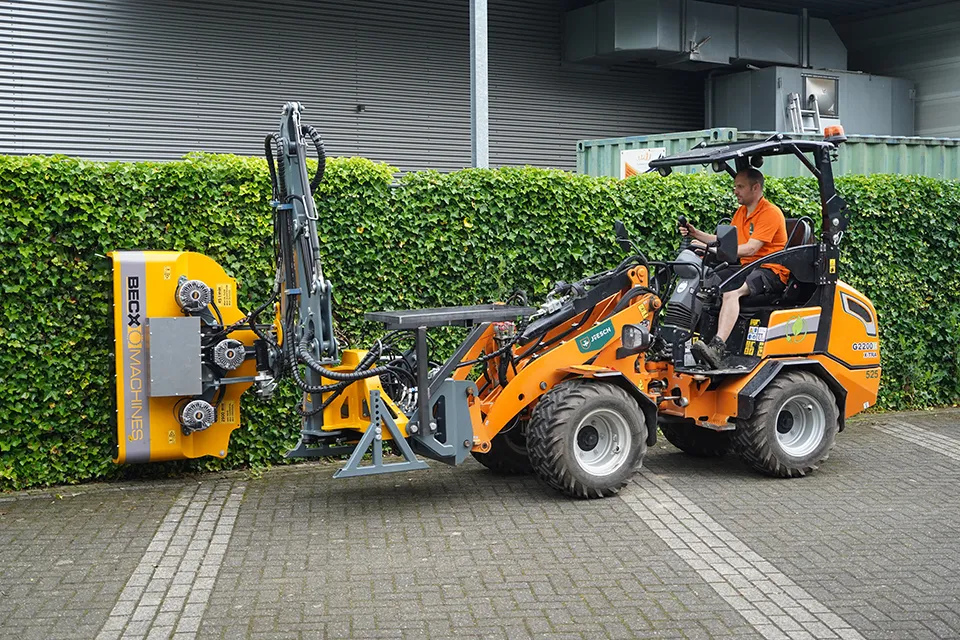
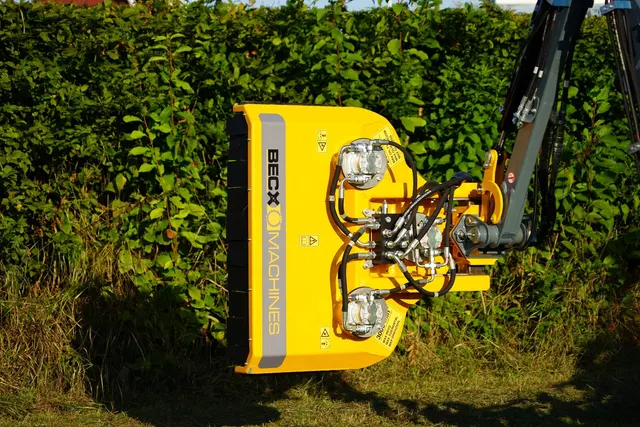
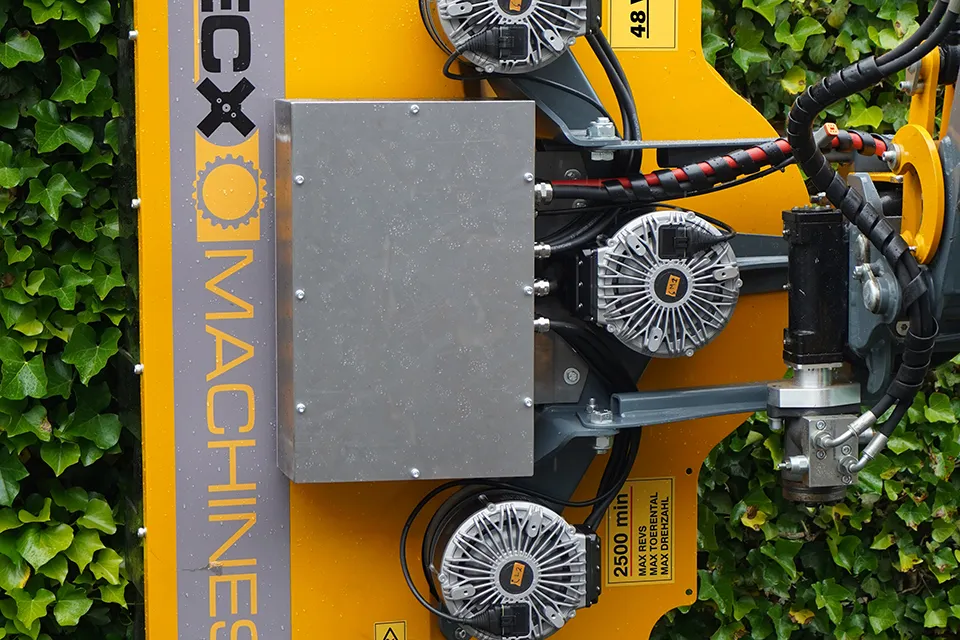
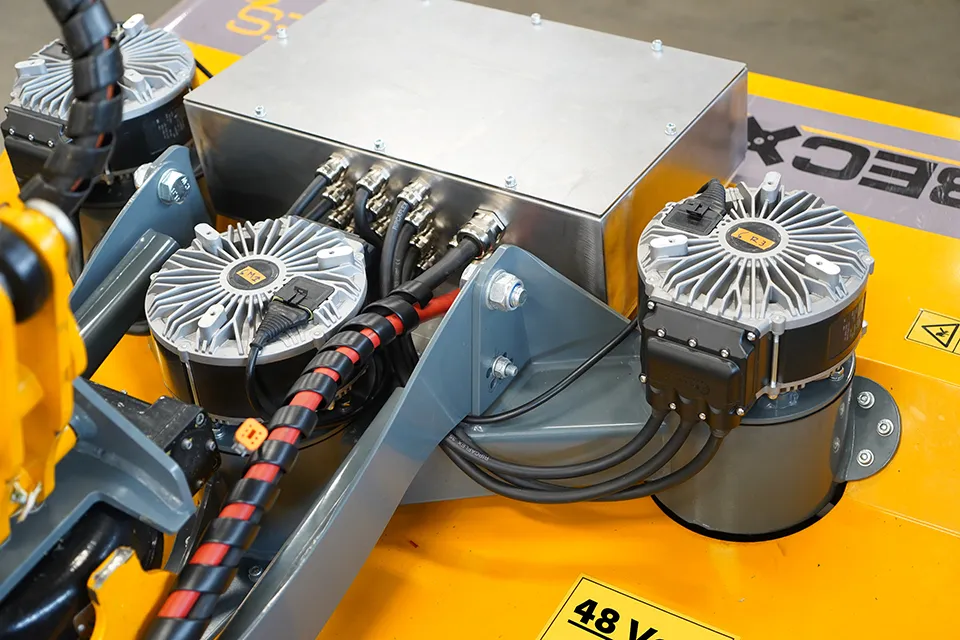
There is a real buzz of enthusiasm at Becx Machines. The company is currently developing a fully electric version of its ‘famous’ hedge trimmer, the Becx HS13HR. It is an interesting but complex process, explains managing director Koen van den Hurk: “Everything used to be hydraulic. That gives you plenty of flexibility because the components are universal. But electrical systems for electrically powered implement carriers still have an air of mystery about them. Knowledge is not yet as standardised as it is in hydraulics. That makes it a challenge to ensure the different components are compatible.”
Becx Machines had already planned to develop an electrically powered hedge trimmer, but everything accelerated when its customer JvESCH from Cromvoirt expressed the same wish. “The customer then put us in touch with E-Hydro Power, and together we started exploring the options for an electric drive. E-Hydro Power has been electrifying truck-mounted cranes since 2018, and that experience is proving invaluable in this project.”
Thorough research
Van den Hurk’s roots are in the earthmoving machinery sector. He has worked for many years at Becx Machines, which produces hedge trimmers, hydraulic arms and weed brushes, among other products. “We are naturally curious and keen to lead the way. That is why we invest in innovative products. Quality is everything to us, so we want to be well prepared when launching a new product. That is why we carry out thorough research, together with customers, partners and manufacturers.”
Complexities
“Another factor that complicates development is that, with an electric drive, you need to be very precise about how much power is required to do the job. A diesel engine gives you an abundance of power and capacity, but that is not the case with an electric drive. So we had to start by working out how much power is actually needed to trim a hedge. And it turns out that theory and practice do not always match. During the first test of our prototype, we found that starting the blades requires more power than our theoretical calculations suggested.”
Further testing
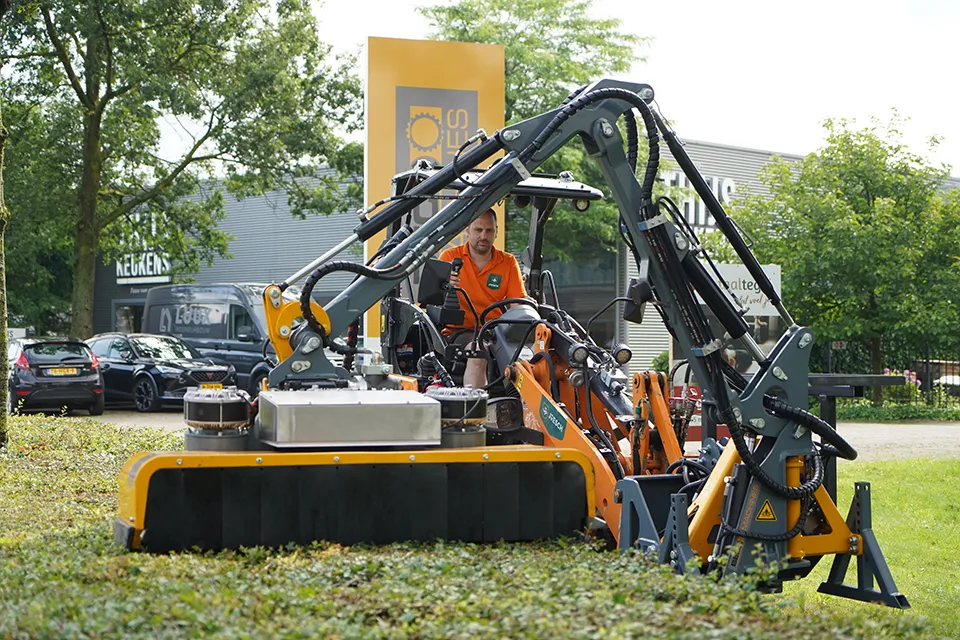
“We are now going to carry out what is known as a dry test, and next week we will also test it in the field. This should show us how much power we will ultimately need and what type of battery pack will be suitable. We are also looking at how many hours a day and how intensively a trimmer is used, so that we know which electric motor can do the job.”
Promising test results
Although the initial test results are promising, it is difficult to predict when the electric trimmer will come onto the market. “But we are building the drive onto a standard machine, so once we have gathered all the necessary knowledge, it will simply be a matter of buying the right components and assembling the machine. And then things could move very quickly,” laughs van den Hurk.
Reliable operation
Asked why they have chosen to start by electrifying a hedge trimmer, Van den Hurk replies: “Our hedge trimmers perform extremely well and are very popular with our customers. We also hold several patents for them. The HS131HR is our best-selling product, which is why we are working to make it the first model to get a sustainable version.”
As the above makes clear, Becx Machines is determined not to compromise on quality. “We are passionate about developing machines to a high standard of quality, so that they require little maintenance and are virtually trouble-free. That gives us the scope to come up with new concepts. Some of our customers have machines that are still working after 14 years. For a machine with a rotating engine, that is something we can be proud of.”
Question about this story? Ask your question
Keep following this
Get an email when a new story is published. No account needed.
- ThemeMachinery for landscaping and grounds maintenance
- SubjectMachinery & equipment