The quiet revolution on site
Text Kris VandekerckhoveImage Stanley Black & Decker
Why battery-powered green space machinery is increasingly coming out on top
Electrification in professional green space management is no longer a hype. According to Geert Maes, Commercial Product Trainer at Stanley Black & Decker Belgium, we are now clearly in a period of transition. “I think the pioneering phase is well behind us,” he says.
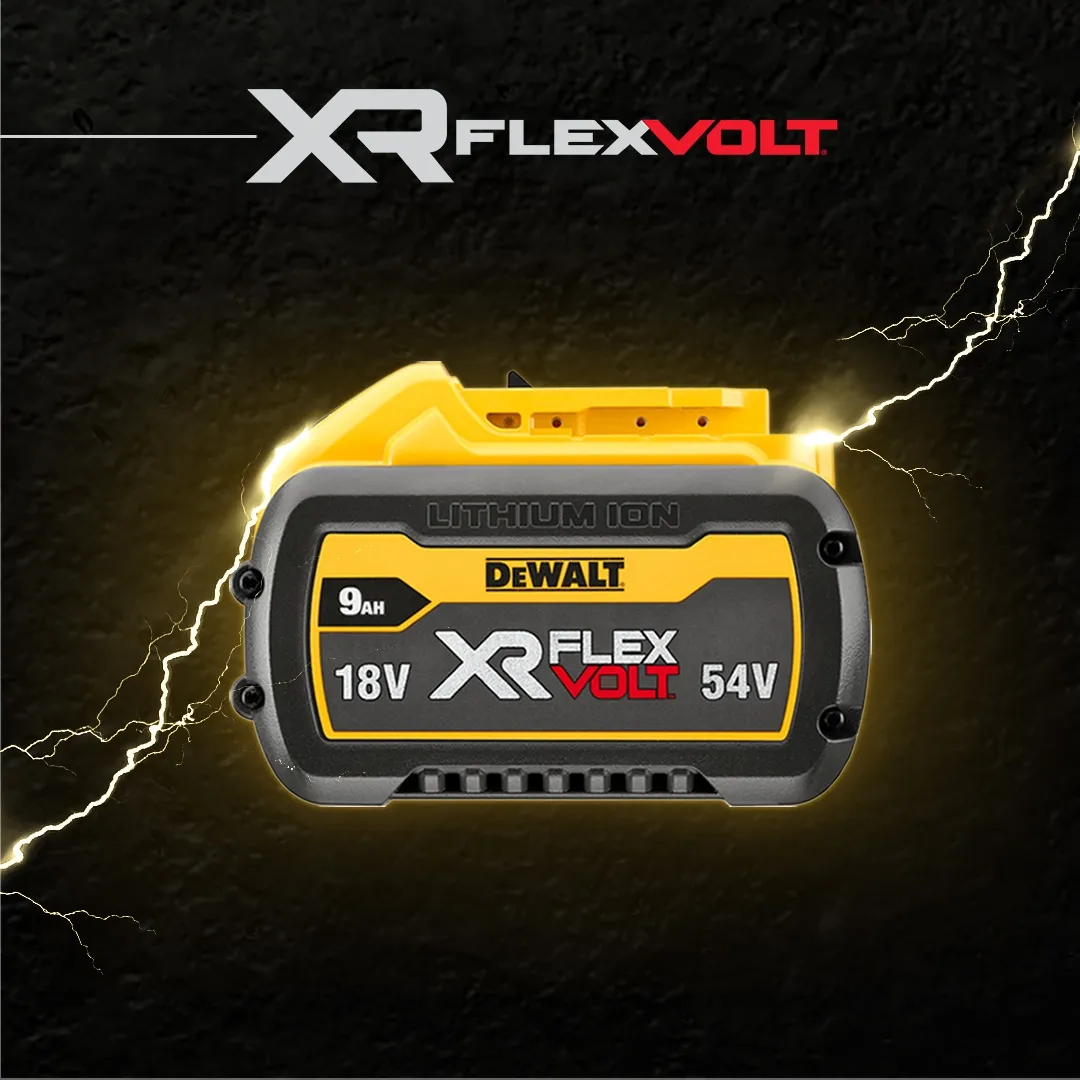
The first 18-volt XR lithium-ion slide batteries appeared in 2011, with a capacity of just 3 amp-hours. In 2016, the first Flex Volt® battery was launched, which can be used with both 18V and 54V tools, offering a unique advantage: the choice between power and runtime. Today, Maes talks about 54-volt batteries with a capacity of 10 amp-hours (powerstack), providing around 554 watt-hours. “In just over 15 years, we have seen phenomenal progress.”
There is still resistance, though. It is not so much technical as psychological. “For professionals, runtime remains the biggest stumbling block. It is partly a question of mindset,” says Maes. Fuel is still often associated with unlimited use, while batteries are seen as restrictive.
According to Maes, however, the comparison is not entirely fair. Fuel-powered machinery also requires maintenance and fuel, and involves downtime. “You also have to go and get your jerrycan and refill it. That is exactly the same as taking a charged battery and putting it back into the machine.” In practice, preparation is crucial. Large batteries charge to 80% in about 40 minutes and to 100% in an hour. With two batteries, work can continue almost uninterrupted.
Legislation drives the market forward
Regulation also plays an important role alongside technology. Municipalities are imposing increasingly stringent noise and emissions requirements. In some residential areas, combustion engines are simply no longer permitted. CO2 reduction is also increasingly weighted as an assessment criterion in tenders.
Electrification is therefore not just a sustainability choice, but also a competitive advantage. Contractors who can demonstrate and reduce their emissions improve their chances of winning contracts.
TCO trumps purchase price
The debate over price continues. Battery-powered machines are generally a little more expensive to buy. “But if you look at the costs over three years, including maintenance and fuel, a battery-powered machine is cheaper in most cases,” Maes explains. No oil, no filters, less wear and lower energy costs make the difference. He says the main challenge is explaining the ‘total cost of ownership’ correctly.
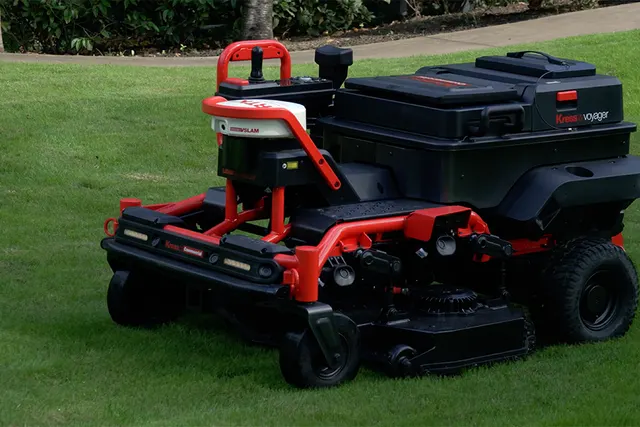
Are there no limitations, then? There are. They mainly affect applications that require a great deal of power for extended periods. Leaf blowers running at full power for hours are a particular challenge. “Current battery capacity is still not quite up to the task,” says Maes. That is why some municipalities are continuing to allow exceptions for fuel-powered leaf blowers for the time being. The largest professional mowers, with cutting widths of around 1.80 metres for areas of 10,000 to 20,000 m², are also not yet fully suited to battery power, according to Maes. But the rapid development of battery technology will undoubtedly provide an answer to this soon.
Technology is key
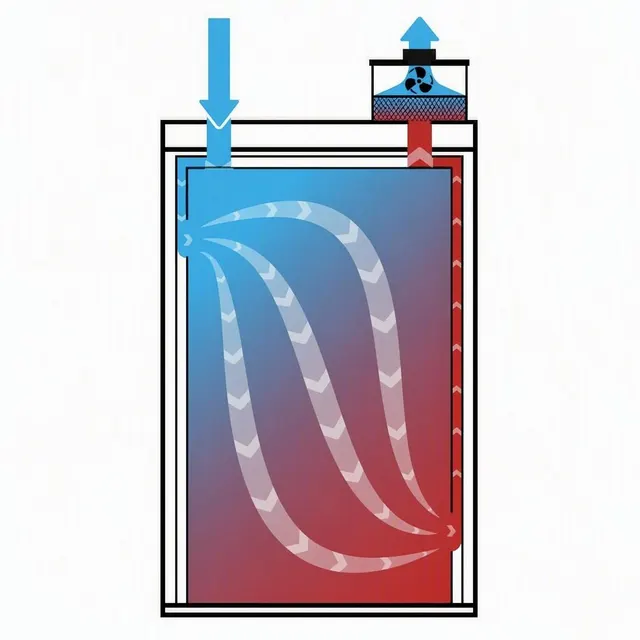
According to Maes, real progress comes down to three elements: the battery, the electronics and the motor. Cell quality and control via circuit boards to manage temperature and internal voltage are crucial. Brushless motors are also gaining ground thanks to their efficiency, longer runtime and lower maintenance requirements.
New cell designs, such as ‘tapless cells’ (round cells with a larger contact surface), provide more power and longer runtime. In 2021, the ‘flat battery cell’ (powerstack) was also introduced, offering a compact design, higher power and longer runtime (up to 50% more power and 2 x longer service life). And the pace of development is rapid: Maes expects 54V batteries with up to 1000 watt-hours soon, which will almost double runtime again.
“I am also convinced that lithium-ion is just a stepping stone,” concludes Geert Maes. For the green space sector, that means one thing above all: anyone who gets on board today is right in the middle of a technological acceleration that has only just begun and is unquestionably better for the environment.
Een zakelijke vraag aan Stanley Black & Decker? Get in touch
Companies in this story
Keep following this
Get an email when a new story is published. No account needed.
- ThemeCleaner and safer working
- SubjectMachinery & equipment
- CompanyStanley Black & Decker