Amsterdam is greening rooftops to build the city of tomorrow
Text Armand LandmanImage Gemeente Amsterdam
‘A roof that supports biodiversity’
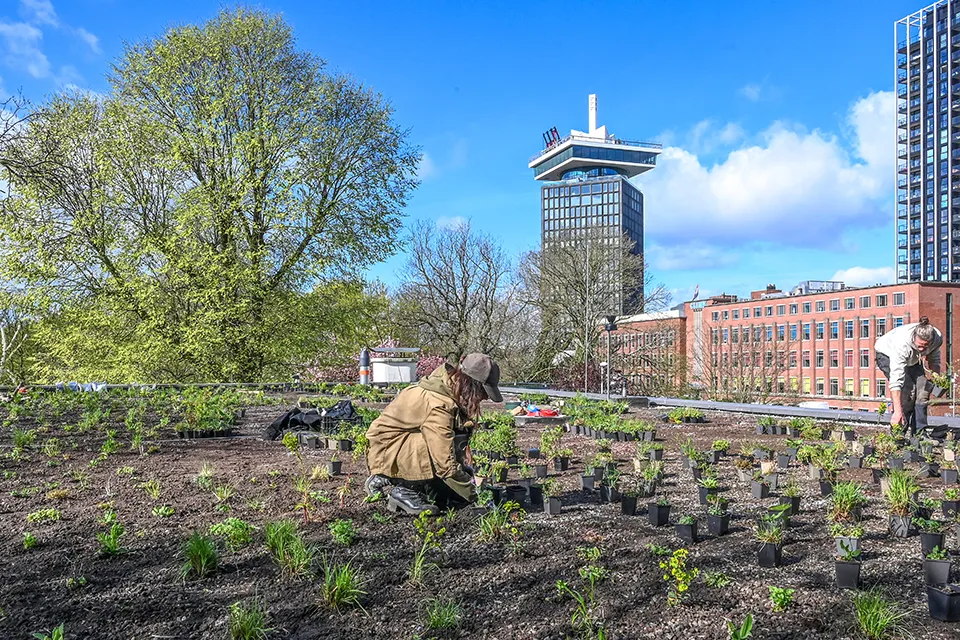
The City of Amsterdam has committed to drastically reducing CO₂ emissions, including by making its property portfolio more sustainable. The city council has provisionally allocated €150 million for this purpose over the next four years. Around 300 municipal buildings will be upgraded in the coming years. One of them is Het Poortgebouw, part of the Tolhuistuin cultural venue in Amsterdam Noord. Greenpro visited the site and spoke to several people involved in the project.
Jan Henk Tigelaar, director of Rooftop Revolution, stresses the crucial role collaboration played in this particular project. “Rooftop Revolution advised on the options for the roof. It was a balancing act between the tenant’s wishes, the roof’s potential and the city’s ambitions,” he explains. The City of Amsterdam, represented by Claudia van ’t Slot and Eveline Roubos, played an active role in facilitating the project. “Through the Sustainable Municipal Property Programme, we want to lead by example by implementing sustainable and innovative solutions in our buildings,” says Roubos.
Technical requirements
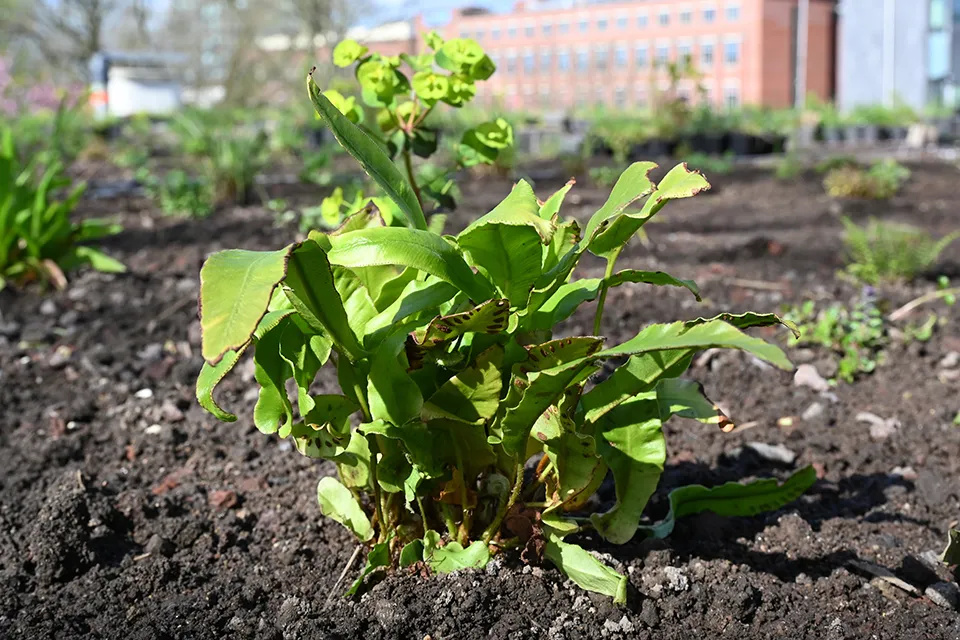
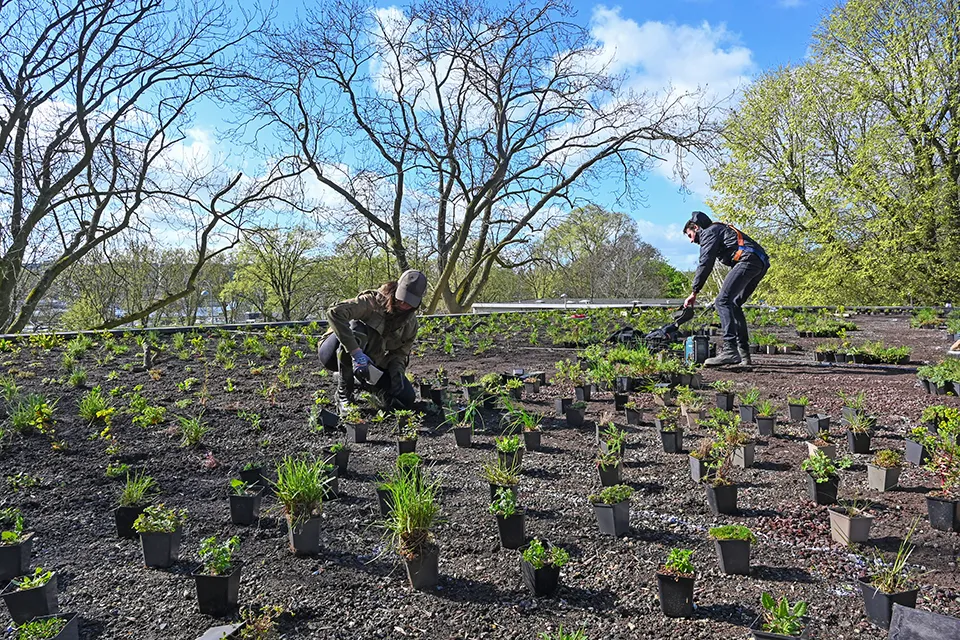
However, creating the blue-green roof was not without its challenges. The variety of planting and the roof’s technical requirements called for careful planning and execution. Sandor Walinga, garden and landscape designer, explains: “The roof offers a range of conditions, from full sun to deep shade, so we had to choose the planting mix carefully. We used around 70 to 80 different plant species to ensure the roof supports biodiversity and can withstand changing conditions.”
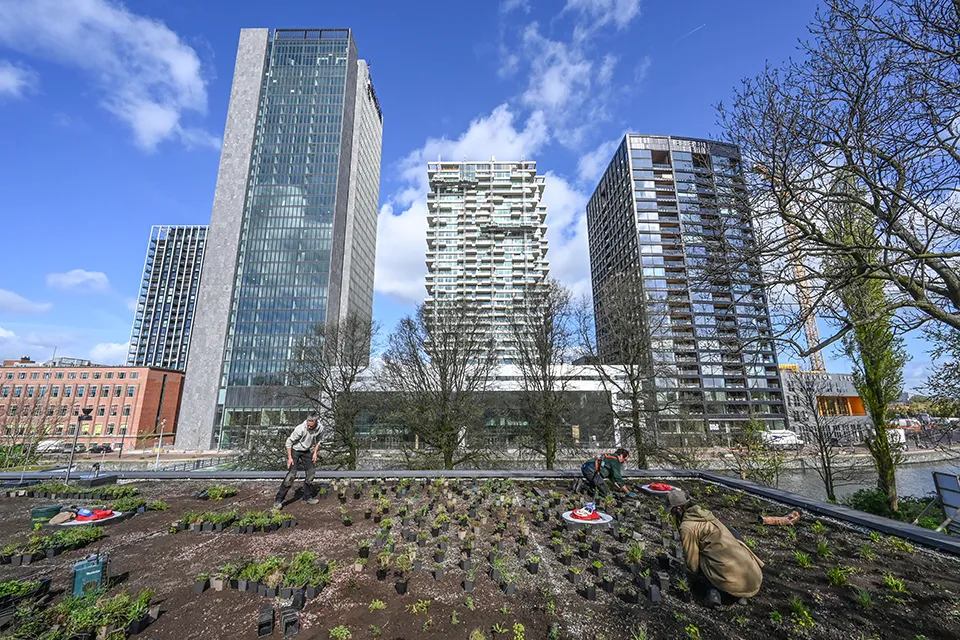
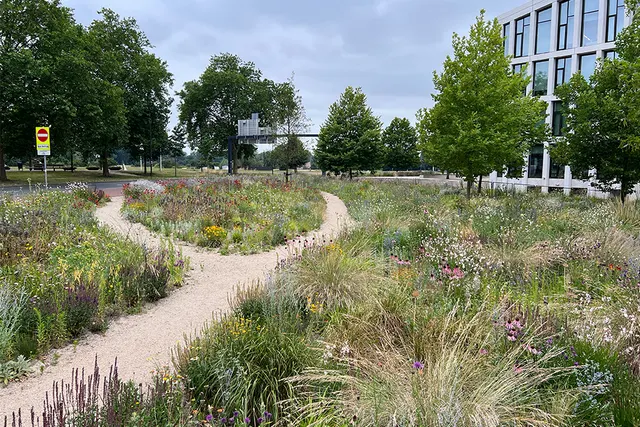
The planting includes a mix of native species, which occur naturally in the Netherlands or its ecosystem, supplemented by a few species from similar climate zones. One of the planting plan’s striking features is its seasonal flowering, which adds variety and colour to the roof throughout the year. “In spring, bulbs add an extra layer of colour and life to the roof, followed by a varied display of flowering perennials in summer,” says Walinga. This succession of flowering helps support biodiversity by providing food and habitat for different insect species, such as bees and butterflies, throughout the year.
The planting plan was also designed with a degree of natural dynamism in mind. “The plants are not arranged in strict sections, but mixed together to create a more natural appearance,” Walinga explains. “This means they will shift somewhat over time and may spread to new areas of the roof, helping to create a dynamic, self-regulating ecosystem.”
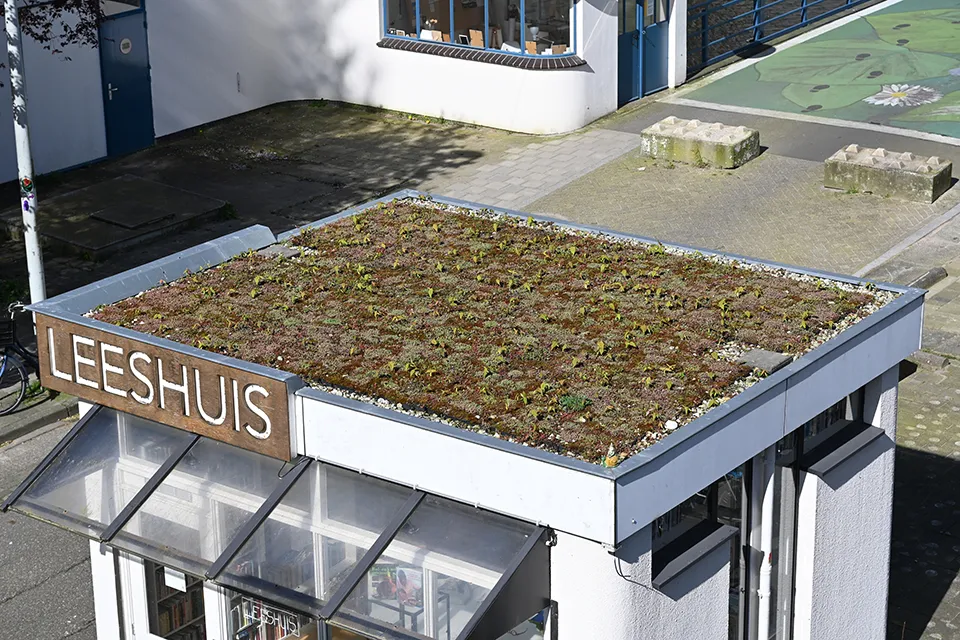
However, this dynamic character requires a well-considered maintenance plan. “It is important to monitor how the planting develops and intervene where necessary,” says Van ‘t Slot. “This may mean adding more of certain species or removing invasive plants to ensure the roof retains its ecological value.”
The roof also had to be adapted to increase its water storage capacity. “The green roof is not just aesthetic, it also functions as a blue roof, collecting and storing rainwater,” says Van ‘t Slot. “This not only helps manage rainwater, but also helps cool the building and its surroundings.”
Biodiversity
One of the driving forces behind the project is the growing need to better prepare urban areas for the effects of climate change. The blue-green roof helps by storing water and providing a habitat for a variety of plant and animal species. Matthea de Jong, tenant of Het Poortgebouw and director of the Tolhuistuin cultural venue, notes: “This project fits perfectly with our ambition to promote sustainability and biodiversity at the Tolhuistuin site. It is a wonderful way to make visitors to our cultural programmes aware of the solutions available to tackle climate problems and actively involve them in those efforts.”
Protected townscape
Another important consideration when creating blue-green roofs is whether a building has listed status. Jan Henk Tigelaar of Rooftop Revolution explains: “We regularly encounter restrictions in our projects, such as a building’s listed status or its location within a protected townscape. These can limit the roof alterations that are possible. Fortunately, however, more and more authorities are recognising the need for climate adaptation and its implications for the built environment.”
Eveline Roubos adds: “There is always a delicate balance between preserving a building’s historic character and introducing sustainable innovations. The city is currently also working on plans to relax the rules on making heritage buildings more sustainable. Het Poortgebouw is not listed, which makes things easier.”
The roof at Het Poortgebouw is a successful example of how collaboration between different parties can lead to innovative, sustainable solutions to urban challenges. The project not only supports biodiversity and climate adaptation, but also serves as an inspiration for other initiatives. As Roubos aptly sums up: “This project shows what is possible when we take our sustainability ambitions seriously. It is a step towards a greener, more resilient city of tomorrow.”
City of tomorrow
All of Amsterdam’s ambitions for an energy-efficient, resilient future are brought together in the document “Onze stad van morgen”, explains Eveline Roubos of the City of Amsterdam’s Sustainable Municipal Property department. “This vision serves as a guide for both existing and new initiatives that contribute to a sustainable city.”
The Sustainable Municipal Property Programme is part of this broader vision, with the City of Amsterdam leading by example by making its buildings substantially more sustainable. Seuren says: “Measures range from insulation and installing solar panels to creating green or blue-green roofs and installing heat pumps. We are also constantly looking for innovative ways to improve sustainability, such as using bio-based insulation material. Each building is assessed individually so that the most effective measures can be implemented.”
The blue-green roof on Het Poortgebouw in the Tolhuistuin is just the tip of the iceberg when it comes to the sustainable transformation currently under way across the City of Amsterdam. Through the Sustainable Municipal Property Programme, the city is working to make its own buildings more sustainable and create a greener, healthier and more resilient city.
The programme’s results are already becoming visible across the city. “Green roofs have now been installed on more than 50 municipal buildings,” says Seuren. “There are some fine examples, including at Ite Boermastraat and Oostelijke Handelskade. Several green façades have also been completed, contributing not only to a better climate but also enhancing the appearance of the urban environment.”
Collaboration
Collaboration is a key part of the Sustainable Municipal Property Programme. Through initiatives such as ‘Zon op daken’, the city works with contractors and cooperatives to install solar panels on municipal buildings. The panels are owned by cooperatives, which ensure that the energy generated benefits Amsterdammers without a suitable roof on which to generate their own power. This model benefits everyone involved and helps accelerate the city’s energy transition.
Amsterdam’s ambitions extend beyond municipal property. With innovative projects such as RESILIO, which has now delivered 10,000 m² of smart blue-green roofs, and other initiatives such as Project PhotoSynthesis and SmartRoof 2.0, the city is demonstrating how it is developing pioneering solutions with partners and new technologies. The city is also encouraging Amsterdammers to play an active role in greening the city through grant schemes for green roofs and façades.
Question about this story? Ask your question
Keep following this
Get an email when a new story is published. No account needed.
- ThemeSpace for urban green
- SubjectPublic green spaces