Building green for a sustainable future
Text Armand LandmanImage Koninklijke Ginkel Groep, Jordi Huisman (Max & Moore)
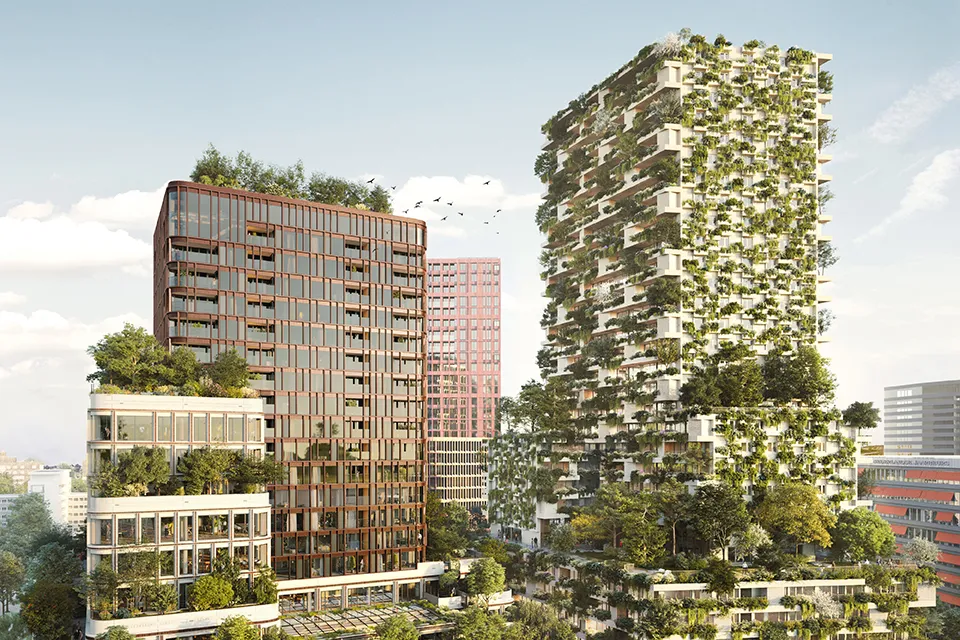
Koninklijke Ginkel Groep’s vision for urban greening
As urban densification and climate change pose ever greater challenges, the need for innovative and sustainable solutions is becoming increasingly clear. Koninklijke Ginkel Groep is at the forefront, with a forward-looking vision for urban greening. Marc de Jager, Project Adviser at Koninklijke Ginkel Groep, shares the company’s approach and philosophy.
Koninklijke Ginkel Groep’s involvement in urban greening began several decades ago. What started as a technical challenge to bring greenery into the city has evolved into a holistic approach in which nature itself provides the guiding principles. “Originally, roof gardens were mainly technical feats,” says De Jager. “But today, the focus is shifting towards understanding how nature works and how we can translate that into urban environments.”
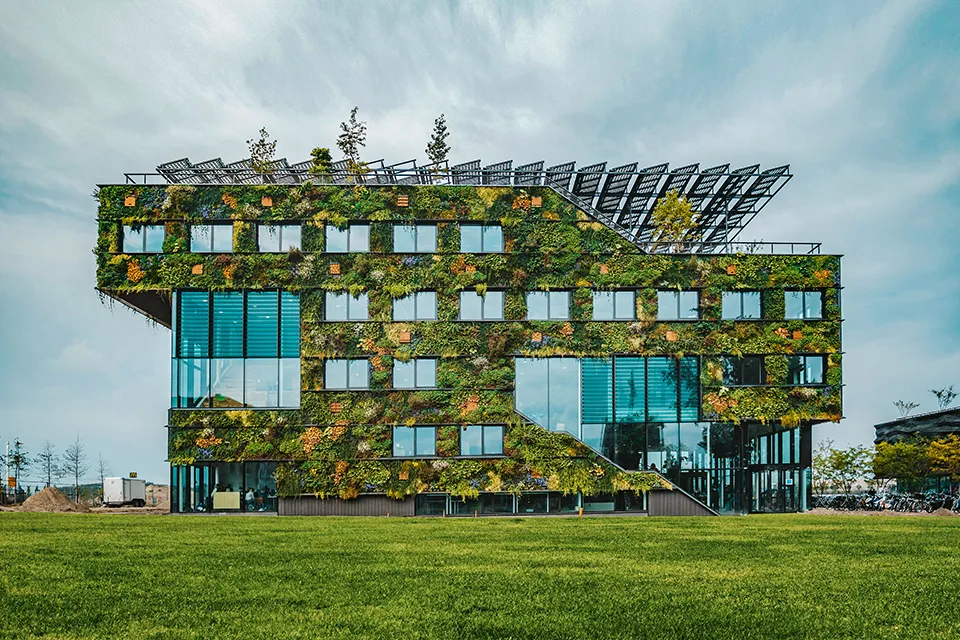
This shift from a purely technical to a more ecological approach is driven by the increasing complexity of urban environments and the urgent need for sustainable solutions. “It is no longer enough simply to put greenery on buildings; we need to think about how to integrate these green spaces into the urban ecosystem,” De Jager explains. This means taking into account factors such as soil life, water management and the biodiversity that a roof or façade garden can support.
Alternative substrates
An important aspect of this renewed vision is the use of sustainable materials and methods. De Jager stresses the importance of replacing traditional substrates with more ecological, locally produced alternatives. “Traditional substrates were originally developed with a focus on low weight and technical feasibility. They are designed to place as little load as possible on structures, but they have significant drawbacks. These substrates are often virtually lifeless, meaning they contribute little to a healthy soil ecosystem. This lack of soil life makes it harder for plants to grow well and remain healthy, resulting in a greater need for maintenance and artificial interventions. Good substrates are the foundation of nature-inclusive roofs.”
In response to these limitations, in recent years Koninklijke Ginkel Groep has focused, in close collaboration with Optigrün Benelux, on developing and using circular, natural substrates such as sand mixes. De Jager says: “These new substrates are not only available locally, reducing the project’s ecological footprint, but also provide a much better basis for rich soil life. Healthy soil is the foundation of a resilient, low-maintenance roof garden that can sustain and develop itself without constant intervention, and in which plants and soil organisms can function optimally.”
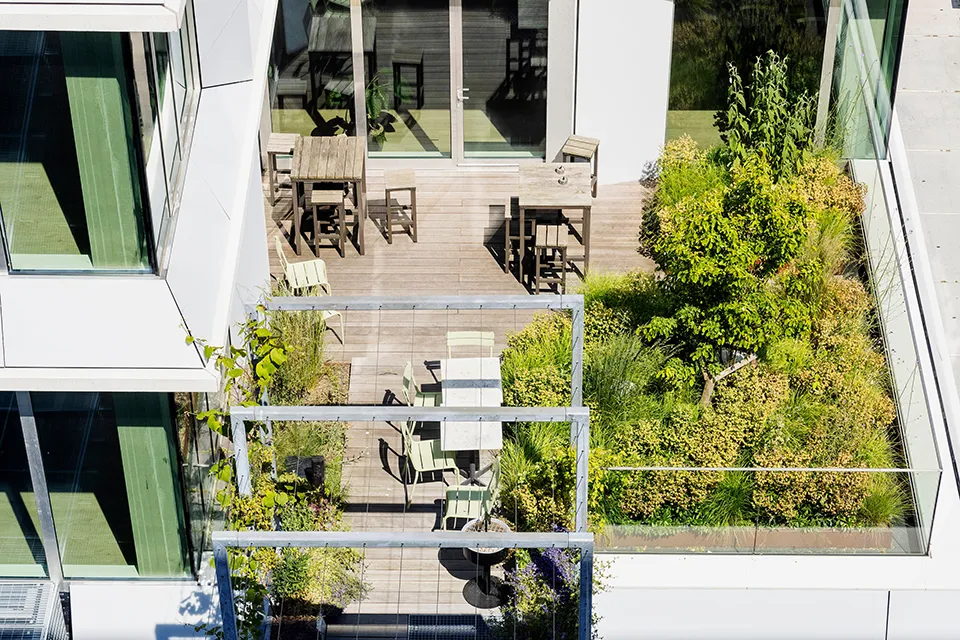
Water management also plays a crucial role in the roof gardens of the future. In recent years, much attention has been paid to systems that can not only reduce flooding but also store water for use during dry periods. This integrated approach ensures that roof gardens contribute not only to a better microclimate but also to urban water management. Ginkel Groep uses these new developments to design roof gardens that are better suited to their purpose. De Jager says: “It is now easier to control moisture levels and soil life on roofs. This means we can better create the conditions that nature needs to thrive in the city.”
Long-term involvement
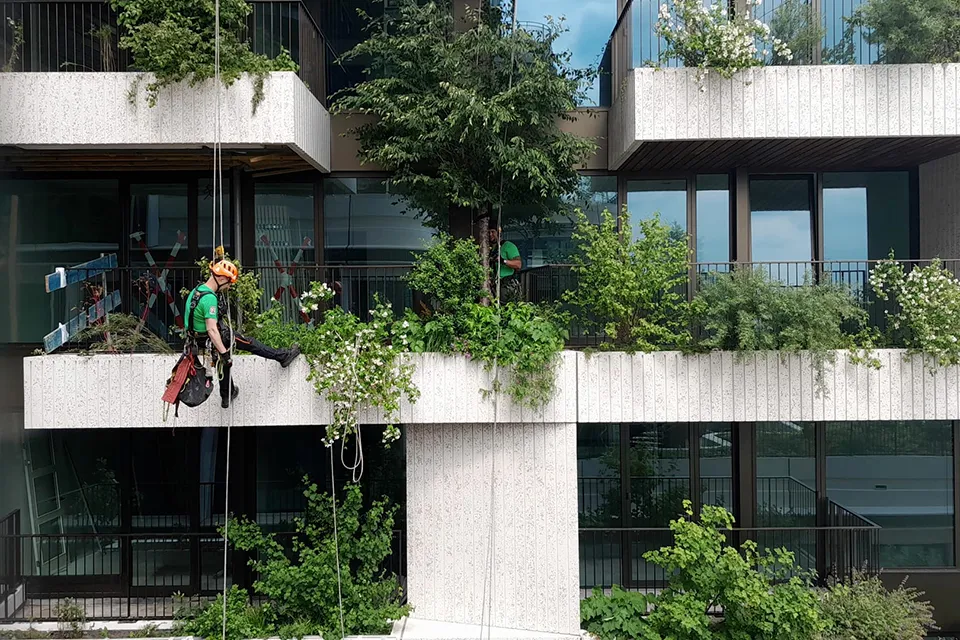
Another hallmark of Koninklijke Ginkel Groep’s approach is its emphasis on craftsmanship and a long-term vision. “A roof garden is never really ‘finished’ when it is handed over. That is when the real work begins,” says De Jager. This requires the long-term involvement of specialist professionals who carefully monitor the garden’s development and make adjustments where needed. “We aim to remain involved in projects over the long term, sometimes for as long as 25 years, to ensure the green space can develop to its full potential.”
This long-term perspective also calls for close collaboration with clients and urban planners from the very start of a project. De Jager notes that integrating greenery at the earliest planning stages is becoming increasingly common, leading to better results and more sustainable urban landscapes.
More than adding greenery
Nature-inclusive building, a term increasingly used in construction and landscape architecture, is a core principle of Koninklijke Ginkel Groep’s approach. It goes beyond simply adding green features to buildings; it is about creating a living environment in which nature and urban development go hand in hand. “We want to draw inspiration from nature and integrate it into our urban environments,” says De Jager. “Respecting and preserving existing nature is essential. It is about working with nature rather than artificially maintaining urban greenery.”
‘There is no stopping this development’
“There is no stopping the greening of cities,” says Wim van Ginkel, CEO of Koninklijke Ginkel Groep. “We started pioneering 25 years ago, at a time when many people thought roof gardens were a passing trend. As a result, over the years we have learned many lessons the hard way, but that is a price worth paying. It is part and parcel of innovation and trying new things. It also means having the courage to invest time, money and people to bring about change. We have now reached a point where the demand for urban greenery is growing all over the world. Cities are growing and becoming increasingly compact, so if you want to keep them liveable, you have to take greenery upwards. Our vision for urban greenery, and especially for roof and façade gardens, also requires a great deal of knowledge and expertise. This is something I have invested heavily in over the years and have always championed within our organisation. By inspiring and motivating people, we are now able to work on wonderful projects for years and are involved at an early stage in greening urban developments.”
Question about this story? Ask your question
Keep following this
Get an email when a new story is published. No account needed.
- ThemeSpace for urban green
- SubjectPublic green spaces