Groen van Prinstererplein comes to life again
Text Kris VandekerckhoveImage Marc Zeegers
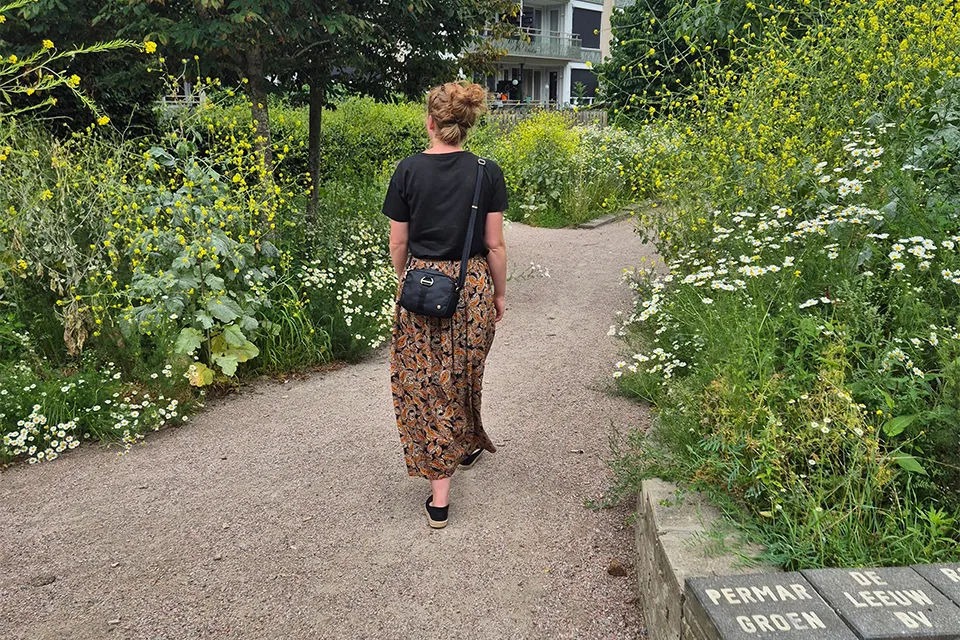
Wageningen: where paving gives way to life
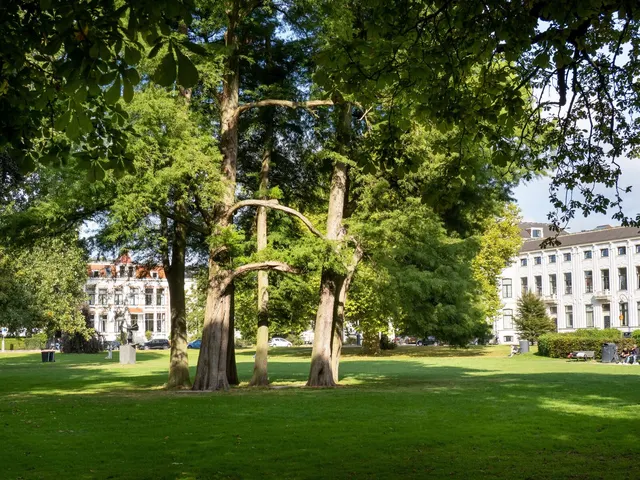
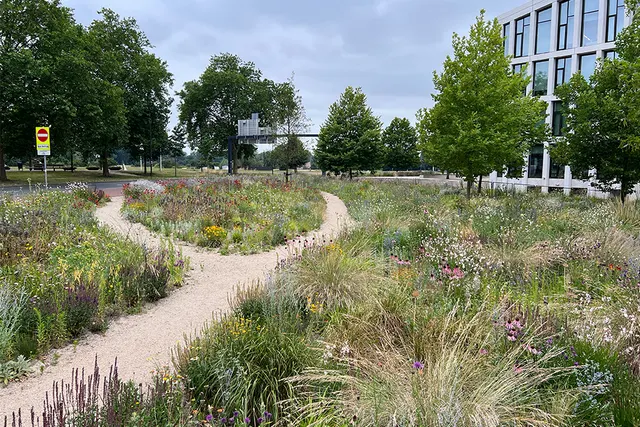
In De Nude, a neighbourhood in the west of the municipality of Wageningen, Groen van Prinstererplein has undergone a remarkable transformation. Once a largely paved neighbourhood square, it has been transformed, in collaboration with local residents and neighbourhood organisations, into a green, lively meeting place with plenty of space to play, relax and meet.
A key part of the redesign is the sustainable semi-permeable surfacing supplied by HanseGrand BeNeLux, a partnership between Maccrox and BNR Bouwstoffen. The work was carried out by contractor NTP, and the result shows how smart material choices and proper installation go hand in hand with climate-adaptive design.
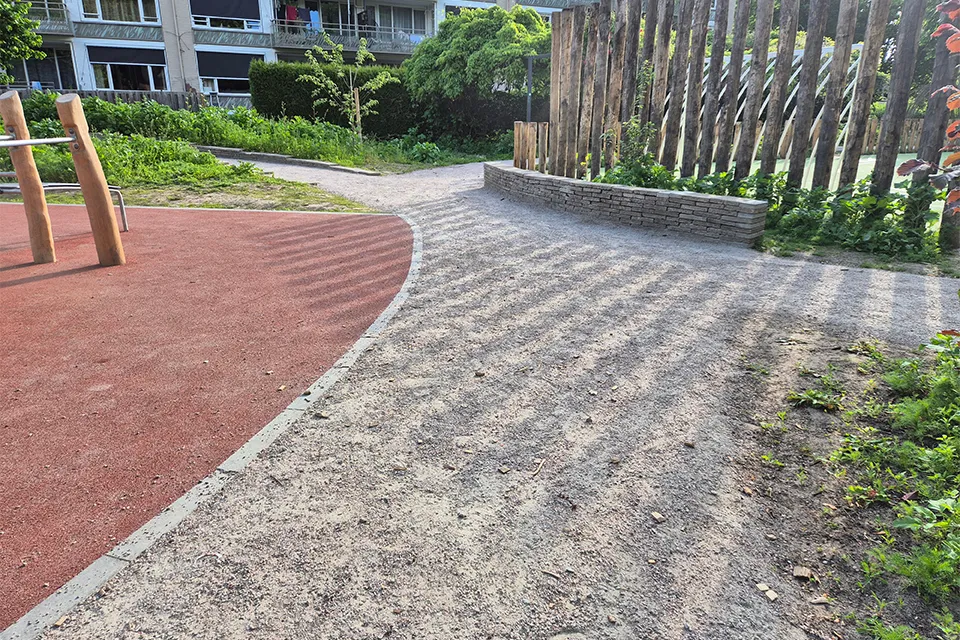
From grey playground to green meeting place
The redevelopment of Groen van Prinstererplein is part of the municipality of Wageningen’s broader efforts to green the area. More greenery in the neighbourhood not only provides cooling and a more pleasant living environment, but also improves water management.
According to Onno Berens, managing director of Maccrox, the strength of projects like this lies in the way aesthetics and functionality reinforce each other. “Semi-permeable surfacing has a natural appearance, yet is also strong and permeable. That makes it the perfect choice for squares where pedestrians, playing children and greenery come together,” says Berens.
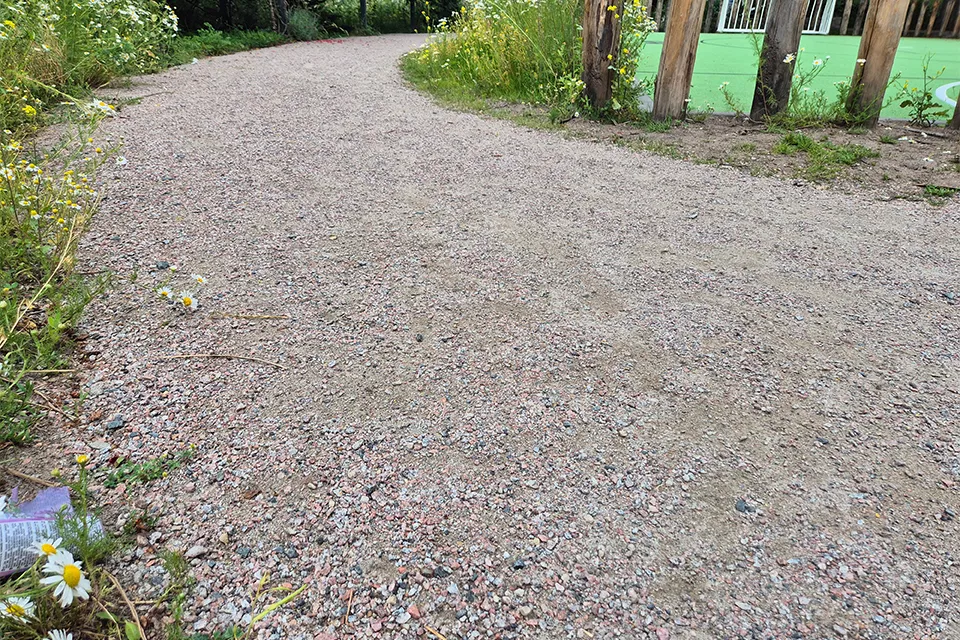
A carefully constructed system
A two-layer HanseGrand system was chosen for the square: a 6 cm intermediate layer of HanseMineral 0/16 on an open rubble foundation, topped with a 4 cm-thick surface layer of HG-Mix. This surface layer contains a mineral binder, a natural rock, which gives the material extra stability without chemical additives.
“HG-Mix consists of 100 % natural components,” explains Berens. “The hard crushed stone, mostly from Scotland, has a low LA value, allowing the mix to be compacted well without crushing. This creates a stable path that will last for years without losing its permeability.”
The work took just two days: one day for the intermediate layer and one day for the surface layer. Thanks to thorough preparation and collaboration with the contractor, the process went particularly smoothly. Berens praises the quality of the sub-base: “You don’t often see such a good, permeable foundation to work on. It is the basis of every successful project.”
More than technology: a matter of vision
The project illustrates how municipalities are increasingly choosing local, sustainable solutions, but Berens says there is still work to be done.
“Too often, the lowest price is still the only consideration. Yet quality and service life are at least as important. Hard crushed stone, a carefully designed mix and water are the foundations of the material. Correct installation completes the job.”
The semi-permeable surfacing at Groen van Prinstererplein shows that there is another way: strong, attractive and ecologically responsible. Working in combination with greenery, it also helps create a cooler urban environment, a major advantage during hot summers.
An example for other municipalities
The renovated square in Wageningen proves that semi-permeable surfacing fits seamlessly with the ambitions of climate-adaptive cities. The combination of sound advice, natural materials and correct installation on a solid foundation makes this project a benchmark for other municipalities.
Berens concludes with a wink: “In short? We improve outdoor spaces: naturally strong, sustainably beautiful, and helping the city breathe again.”
Question about this story? Ask your question
Keep following this
Get an email when a new story is published. No account needed.
- SubjectPublic green spaces