How can you make planters as circular as possible?
Text Armand LandmanImage FURNS Streetfurniture
Less waste, more reusable raw materials and standardisation
FURNS Streetfurniture has been striving to produce as sustainably as possible since it was founded in 2009. Clients are increasingly asking for circular products such as benches and seating elements, tree grilles, planters and litter bins. The company, based in Uden, aims to meet these requirements through standardisation, efficient cutting techniques and the use of as many renewable raw materials as possible.
“Our production waste rate is very low, at 5%,” says sales director Oscar Gathier. “That is down to optimising our production process and those of our sister companies Adezz and Awood. Our factory in Poland uses specialist nesting optimisation software, and rather than producing to individual projects or products, we work from buffer stock. For steel and aluminium, we cut elements for different projects from different sheets, making the best possible use of every square metre of raw material. This brings many benefits, both in terms of sustainability and cost.”
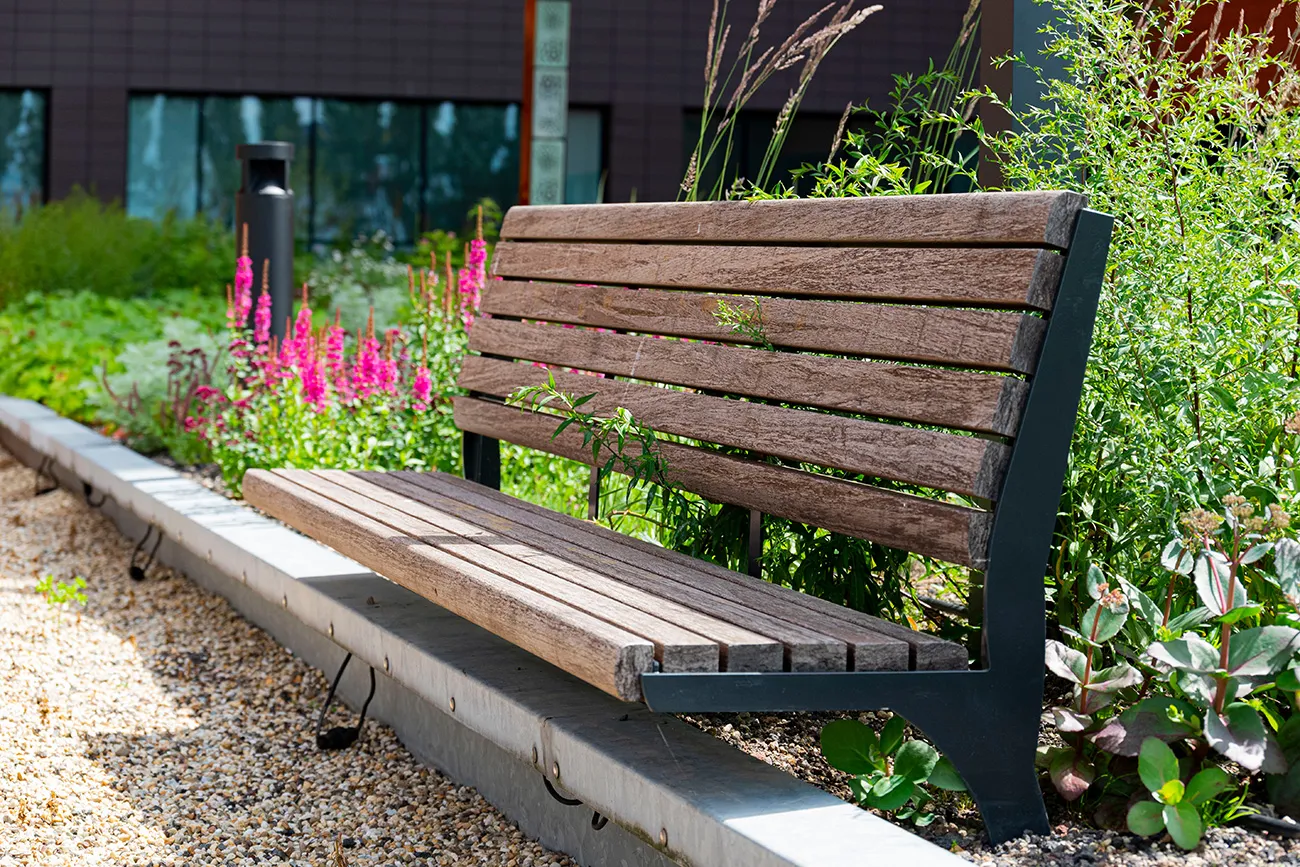
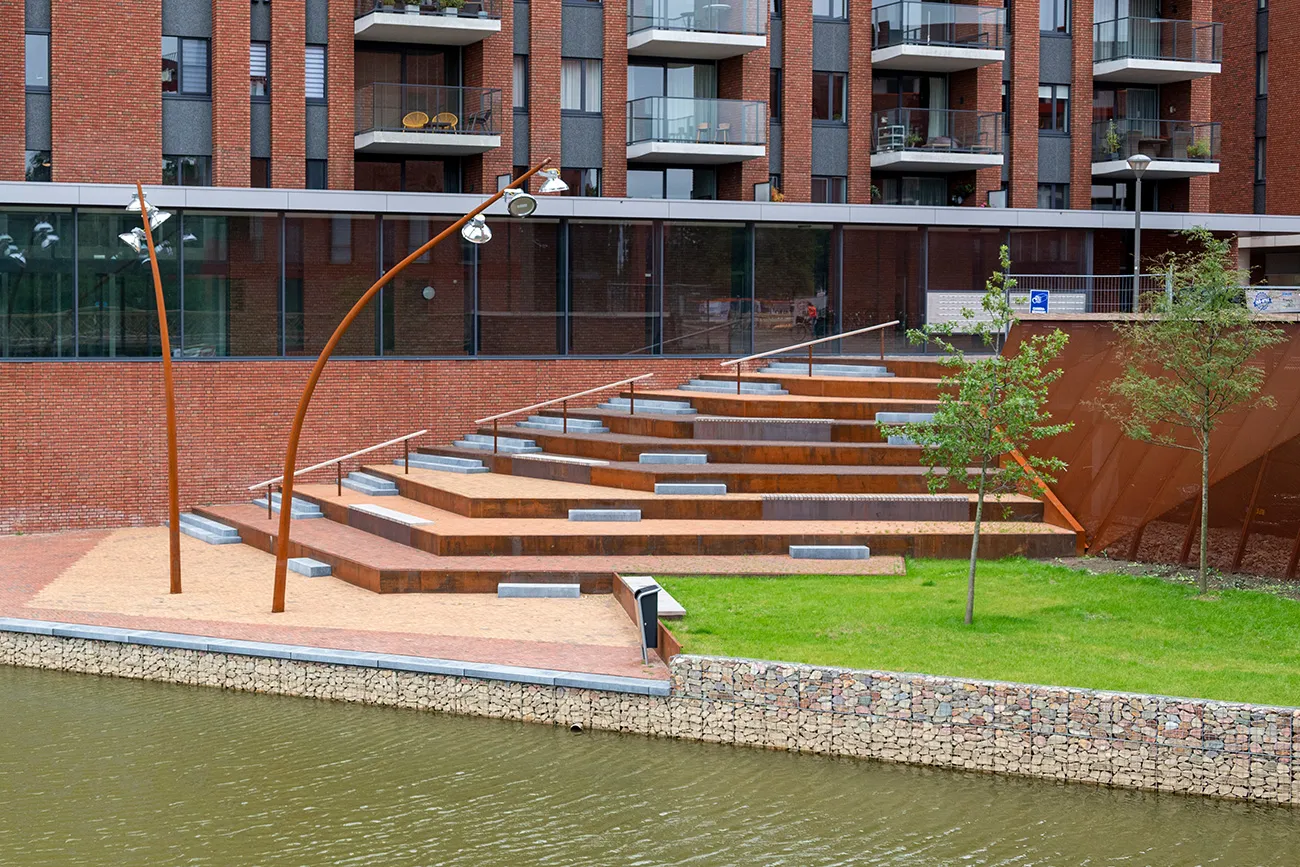
But FURNS is not only focused on using materials sparingly and efficiently. The company also aims to use as many materials as possible that are readily recyclable or naturally renewable. “We hardly use galvanised steel any more, and generally choose Corten steel and aluminium instead.” Both are highly recyclable. What’s more, much of the Corten steel we use is made from recycled scrap. And thanks to the very simple bolted construction, elements are easy to reuse. Alongside bespoke products, our range includes a standard range of interchangeable components. This greatly encourages reuse.”
Bamboo
And instead of hardwood, FURNS is increasingly using bamboo from its international partner Moso Bamboo, which processes bamboo culms in China into industrially heat-treated and engineered bamboo. Gathier says: “Bamboo is extremely hard and wear-resistant. If a bamboo bench is collected at the end of its service life, for which we offer a 25-year guarantee, and planed, it can be used again in full. With its long service life and reusability, bamboo has important circular properties. Bamboo can be harvested every five years. Compared with hardwood, this means bamboo can be harvested ten times in the time it takes hardwood to grow.
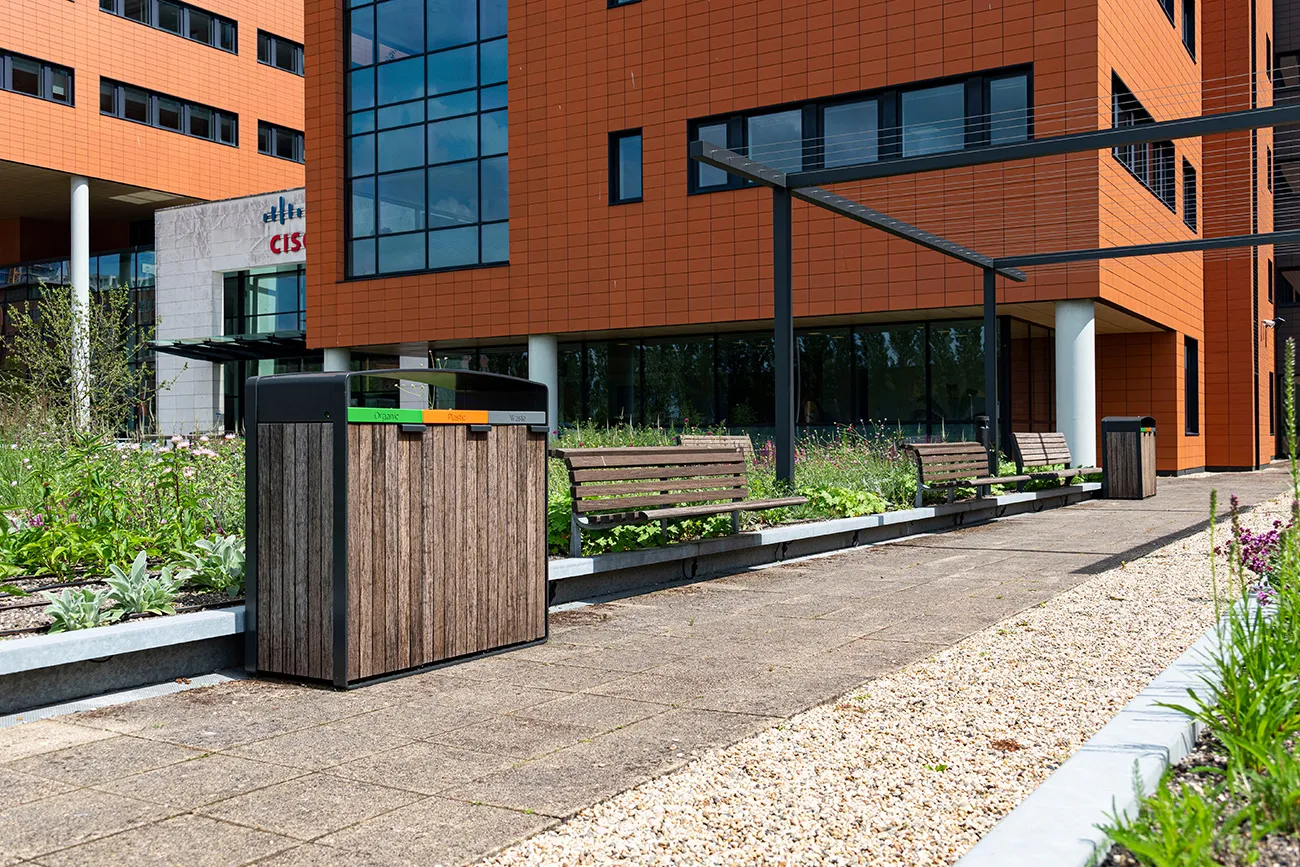
It is a fully renewable raw material and absorbs a lot of CO2. It is also increasingly being grown in Europe, reducing the need for lorry journeys.”
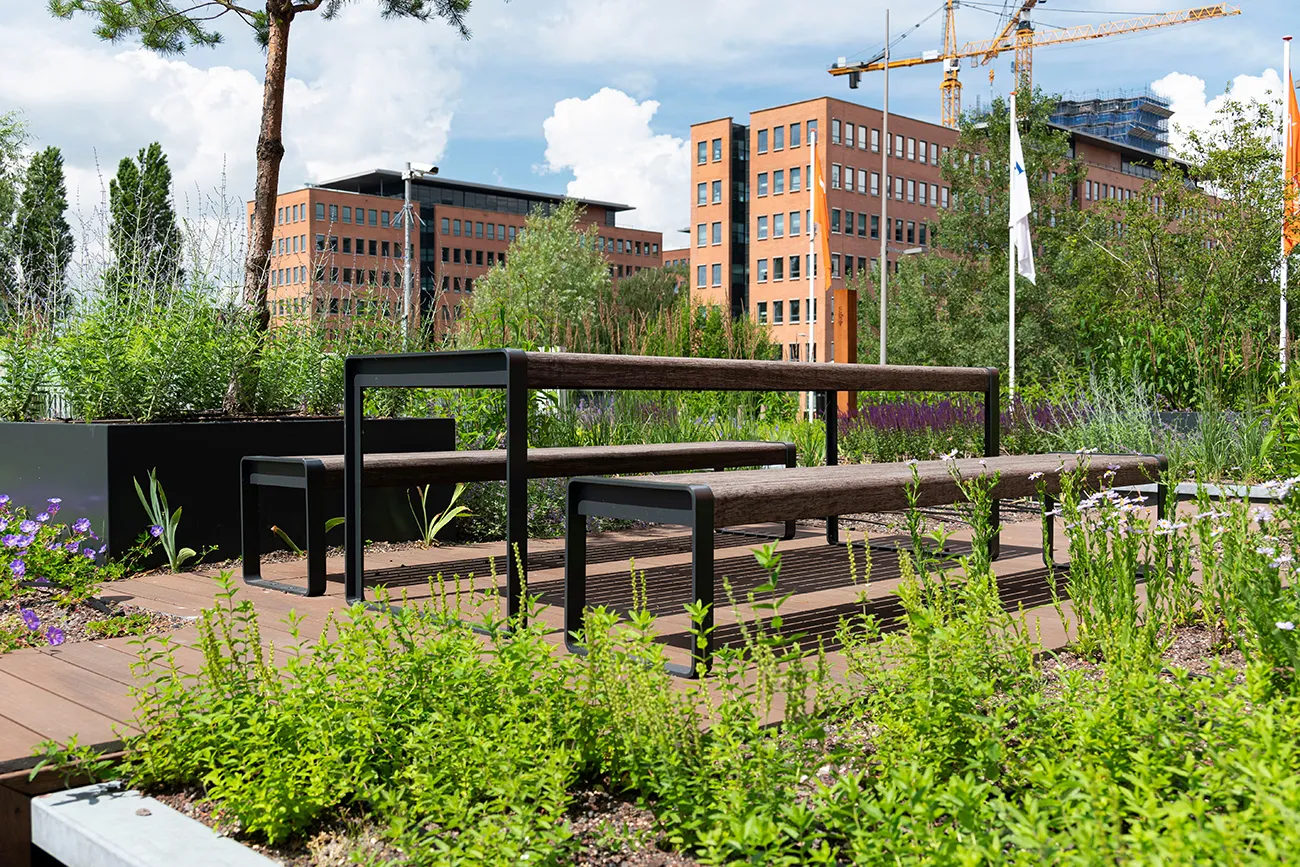
FURNS stands out in the street furniture market because the company does everything in-house, from design through to production and delivery. A characteristic feature of FURNS is that many of its designs combine furniture with greenery. In addition to, for example, a place to sit, much of its furniture also provides space for planting or even entire trees.
FURNS designs and produces not only planters with seating, but also standalone seating elements, litter bins, tree guards and tree grilles for public spaces.
Standardisation
Gathier believes standardisation also contributes to the sustainability and circularity of FURNS products. “For every project, we consider the dimensions and how components can be linked, so that our elements can also be used elsewhere. This scores better on the circularity ladder: you remain in the re-use and reduce phases, after all. That is better than recycling, which involves starting another production cycle.”
Although FURNS pursues sustainability and circularity largely on its own initiative, Gathier says clients are increasingly including these requirements in their tenders. For a project for ING in Amsterdam, FURNS was therefore able, after consulting the designer, to keep the steel elements of the benches and tables and replace only the wood with bamboo. “But it still hasn’t caught on everywhere. Clients find it difficult to compare products with one another. An environmental cost indicator (MKI) score, which we use a lot, is still not widely used by others and does not measure everything. The market still has a lot to learn, particularly when it comes to record-keeping and materials passports. That is why we are taking these steps on our own initiative too.”
That is why FURNS has solar panels on all its roofs, making it self-sufficient or even allowing it to feed power back into the grid. “Not because it saves us money, but because we are committed to sustainability.”
Een zakelijke vraag aan FURNS Straatmeubilair? Get in touch
Companies in this story
Keep following this
Get an email when a new story is published. No account needed.
- SubjectPublic green spaces
- CompanyFURNS Straatmeubilair
- CompanyADEZZ B.V.