Vast areas of verges and green strips offer major opportunities for local authorities
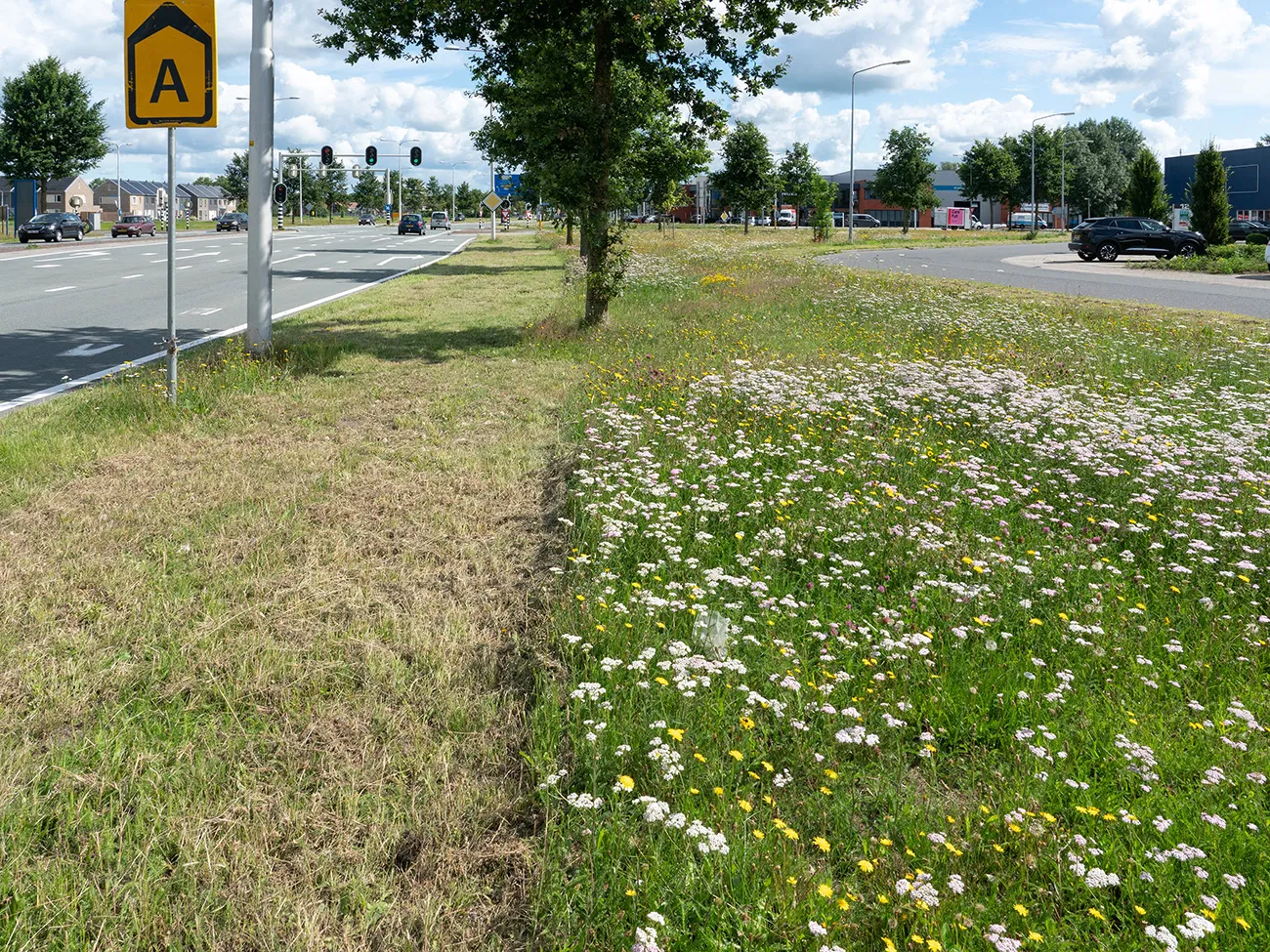
According to Bijenstichting Nederland, 55 per cent of the 359 wild bee species are now almost or even completely extinct. The trend appears to be continuing steadily, with major consequences for bee populations, biodiversity and local food production in the Netherlands. That is why the foundation, together with Stichting Steenbreek and Flora van Nederland, is calling for a more considered approach to mowing, for private individuals, but especially for professionals.
Mowing less benefits biodiversity and climate adaptation
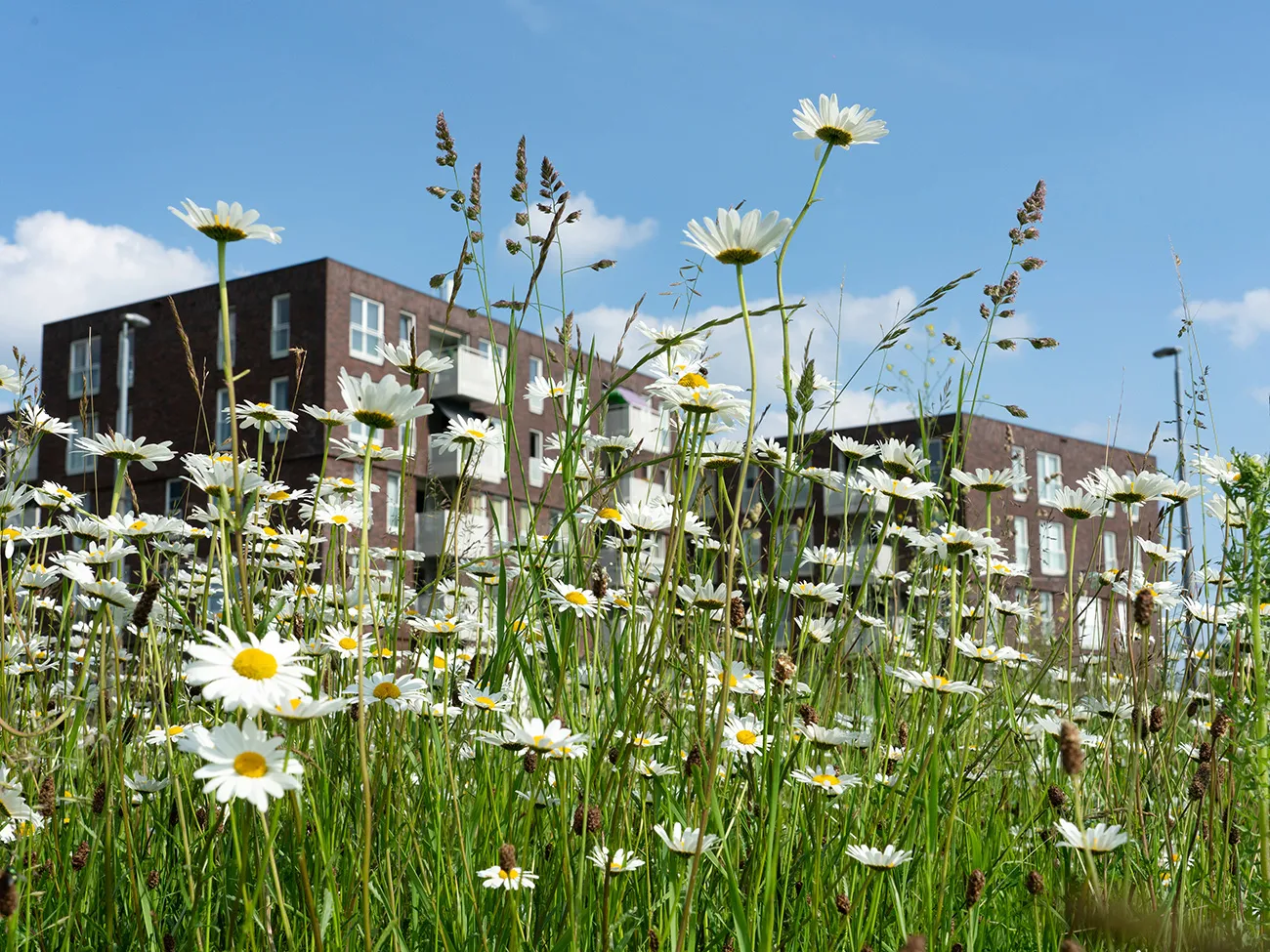
Following the Belgian Maai Mei Niet project, Stichting Steenbreek, Flora van Nederland and Bijenstichting have launched a campaign in the Netherlands to encourage garden owners and local authorities to adopt different mowing practices. The campaign’s title refers to the advice for garden owners not to mow the lawn, or part of it, in May, or to mow it less often. Research in the UK shows that mowing every 4 weeks instead of more frequently can attract up to ten times as many bees.
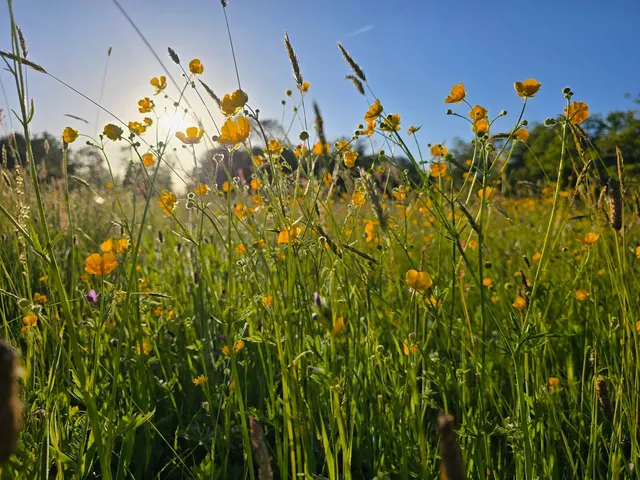
For local authorities, the campaign aims to raise awareness of alternative mowing practices through ecological mowing policies. Closely mown verges and green strips in public spaces are disastrous for nature and biodiversity. Mowing less often and differently provides more food for bees, beetles, butterflies and bumblebees, among others. Less frequent mowing also helps mitigate the effects of climate change, such as prolonged heat and drought.
Phased mowing
The vast areas of verges and green strips demonstrate the important role local authorities can play in enhancing biodiversity and implementing climate adaptation measures. They extend over many thousands of kilometres: around 140,000 kilometres alongside roads, 17,500 kilometres alongside dykes and approximately 3,000 kilometres alongside railway lines.
Verges and green strips offer a major opportunity to give plants and animals room to thrive. Ecological verge management with phased mowing is essential to achieving this. It ensures that feeding and shelter opportunities remain for small animals even after mowing. In spring, phased mowing can help boost biodiversity on verges with excessive nitrogen levels. Removing large amounts of nitrogen at the start of the growing season can significantly increase the abundance of flowers on verges.
Sinuous mowing
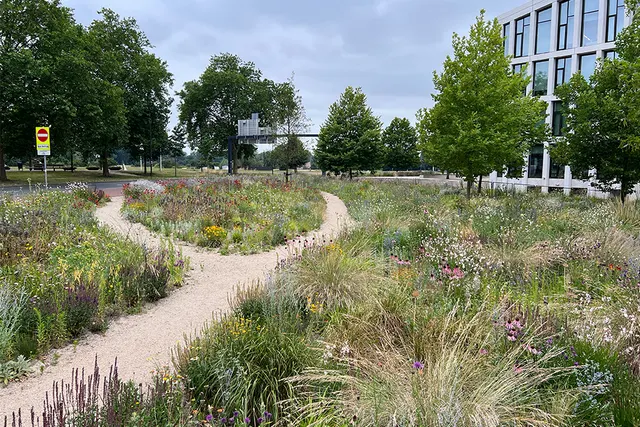
A specialised form of phased mowing is sinuous mowing, which creates considerable variation in a small area. This is highly beneficial for many butterflies, bees, birds, mammals and amphibians. Around 40 per cent of the vegetation is left standing after each mowing, and winding mowing paths, known as sinus paths, are used. The vegetation is only mown when it is ready for cutting within the sinus path. The timing can be decided by the operator.
Ecological verge management, which involves mowing and removing the cuttings, is often more expensive than, for example, flail mowing and leaving the cuttings in place. However, the investment pays off over time. Leaving the cuttings in place causes organic material to build up on the verge. Within 5 to 10 years, this can raise the verge above the level of the road, preventing water from draining off the road. The verge then has to be stripped back, and the excavated soil and organic material removed. This is a very costly operation, ultimately caused by flail mowing.
Kleurkeur quality mark for ecological verge management
To ensure that ecological verge management is carried out correctly, De Vlinderstichting and Stichting Groenkeur have developed the Kleurkeur quality mark, which is backed by substantive assessment criteria. These include phased mowing and the removal of cuttings. Mowing is managed flexibly and adjusted to weather conditions, so that, for example, mowing takes place later in a late spring than in an early spring. The use of plant protection products is prohibited. Since mowing semi-natural grassland on verges requires considerable expertise, one of Kleurkeur’s requirements is that managers, including mowing-machine operators, attend a course that teaches them to view their own work through an ‘ecological lens’.
Question about this story? Ask your question
Keep following this
Get an email when a new story is published. No account needed.
- ThemeNature-friendly green space management
- SubjectPublic green spaces