Garden landscaping & maintenance
A closer look at tree growing sites
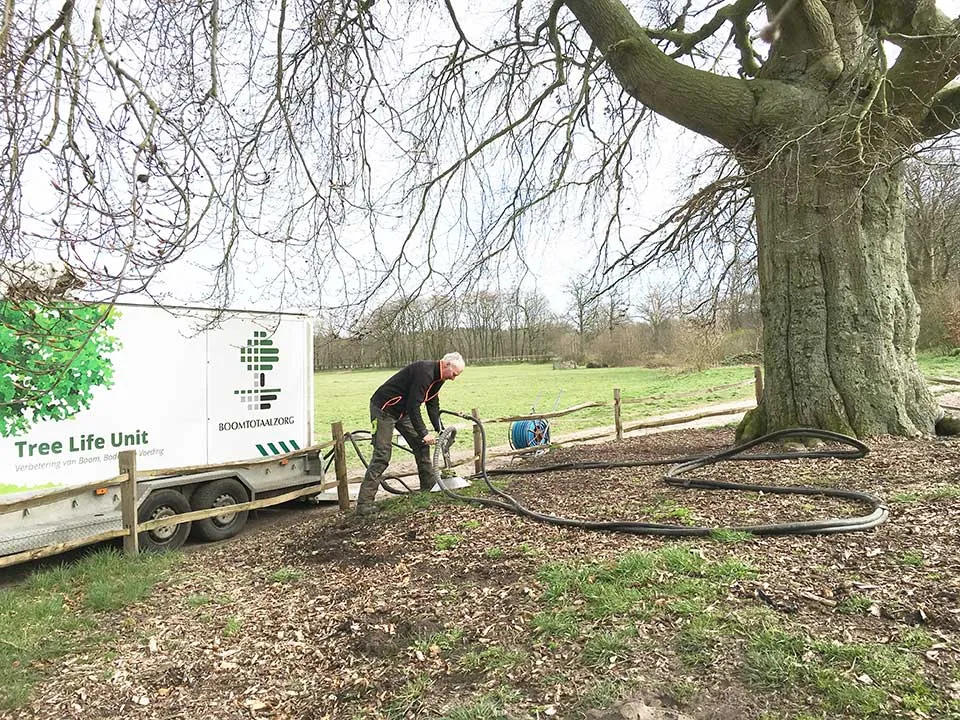
Restoring a balanced underground habitat.
Trees in urban areas, in streets and avenues. We expect a lot from them: evaporating water, filtering particulate matter, providing cooling and capturing CO2. Urban trees are more than just attractive. They help improve the living environment for people in cities. The growing site is essential, says Bert van Eck, tree specialist at Boomtotaalzorg bv in Schalkwijk.
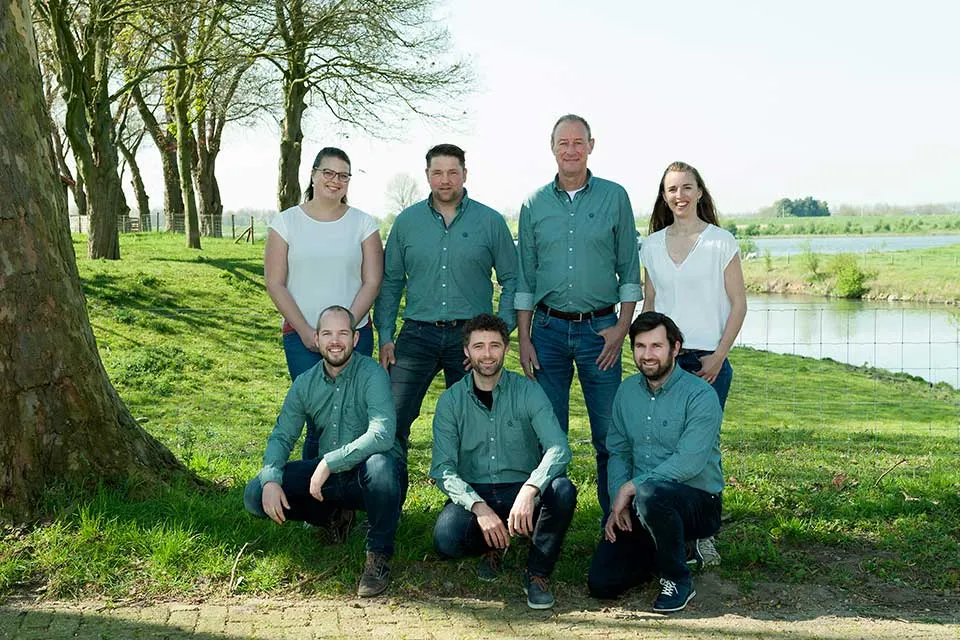
Bert advises on trees and their growing sites as part of a team of thirty employees, including his colleagues Maarten Debruyne and Henk van Scherpenzeel. “When we talk about trees, we often focus on what we can see above ground. Yet the underground growing site is just as important.” Henk says: “You can’t make a good pizza without a good base, and you can’t have a healthy tree without healthy soil. A tree needs enough space and an optimal habitat.” Maarten adds: “Tree management is often limited to planting and the necessary pruning. The growing site and its maintenance are often overlooked.”
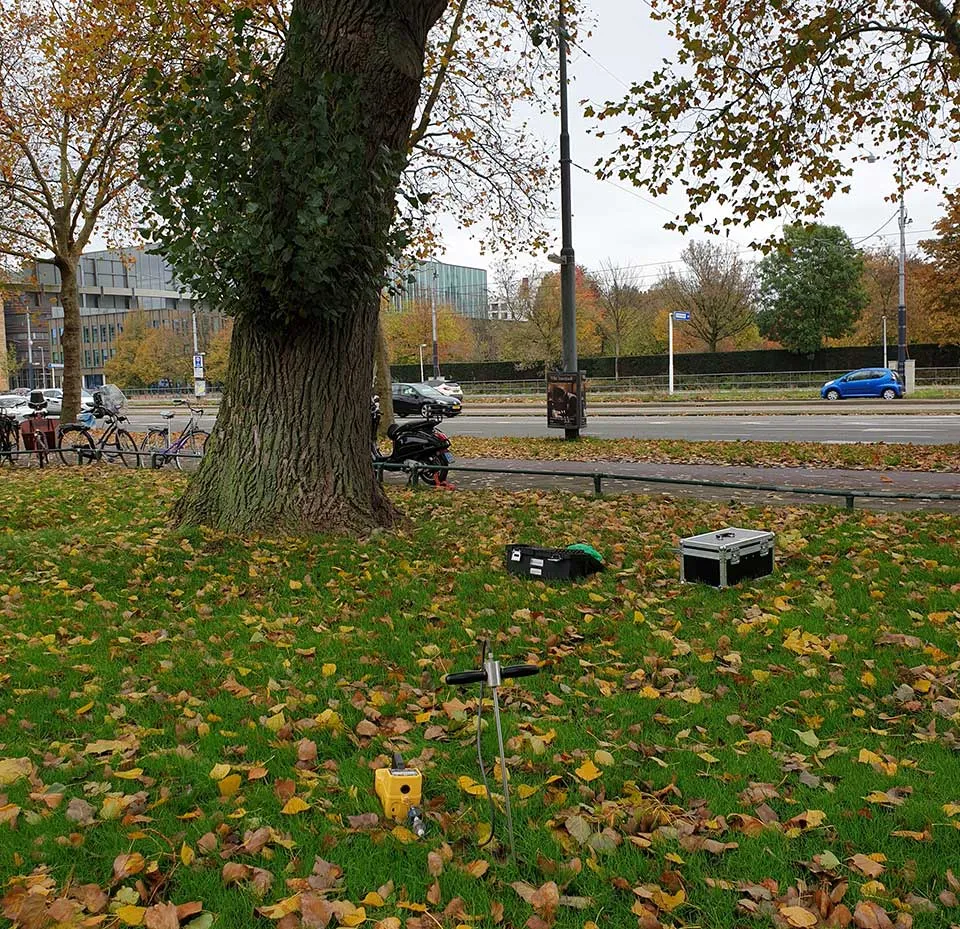
Henk says: “After the Second World War, Dutch cities expanded enormously. Residential areas sprang up in fields. A hole was dug in raised sand and the newly planted trees were left to it: good luck, off you grow! That works for a while, but roots cannot grow in heavily compacted sand. We can optimise a tree’s habitat to make it more like the conditions found in a forest.”
Soil food web
Bert says: “In a forest, everything is in balance: leaves fall from the trees and stay on the ground, creating ideal conditions for worms, bacteria and fungi. We call this the soil food web. Forest soil is not compacted to provide a level road surface or heavily compressed by daily traffic. Roots need enough space, as well as water and oxygen. Everything needs to be in the right balance. That is a challenge in urban areas, particularly with the growing network of underground cables and pipes.”
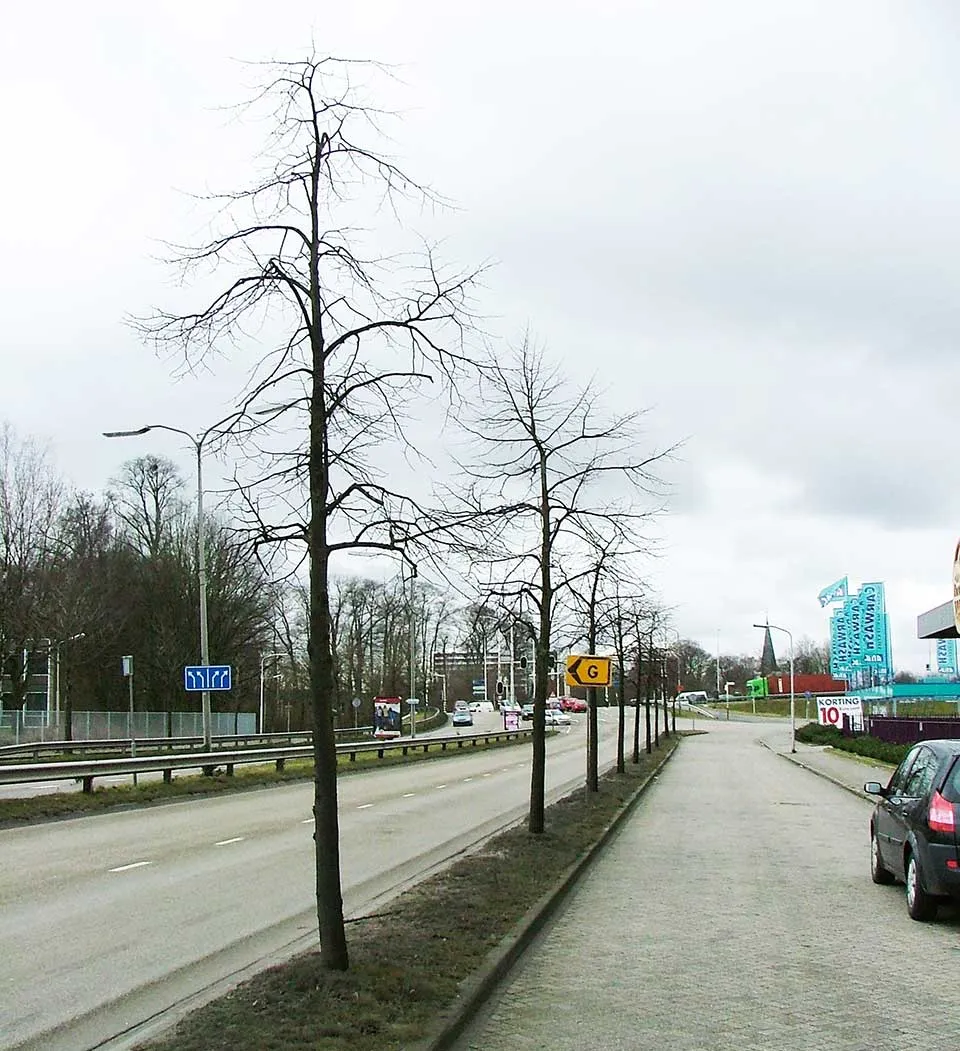
When a tree’s condition deteriorates, this can be seen in its thinning foliage, smaller leaves, paler leaf colour and shorter shoot growth on the terminal twigs. Bert says: “Removing a tree as soon as it is in fair or poor condition? That is an option, but it is even better to try to extend its life expectancy. Urban trees live for an average of thirty years, so gaining another five to ten years is a real win.” Maarten adds: “The older a tree is, the better it provides ecosystem services. Trees also have artistic and emotional value. We recently saw a man in tears because the tree that had been felled reminded him of the war.”
Finding the cause
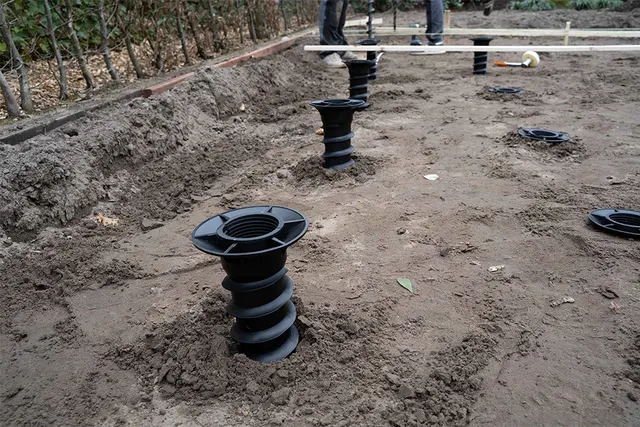
Bert says: “A growing site can be improved by replacing the soil. We do this on a limited scale. It is costly and generates a lot of CO2 emissions. We can achieve results without large-scale soil replacement and excessive emissions. Specialist equipment is used to survey the soil and identify the cause of stalled growth. This could be compacted soil layers, a lack of oxygen or insufficient nutrients and moisture. We then prepare a nutrient mix of solid materials and inject it into the soil. A growing site cannot always be fully restored with a single treatment. Restoring the biological balance takes time, and in some cases the treatment needs to be repeated.”
Maarten says: “Give a tree room underground and visualise its protected habitat: one and a half metres around the crown. When planting trees, think 30 to 40 years ahead, because that is when a tree is only just reaching young adulthood. A tree’s condition can gradually decline over several years, so recovery can sometimes take years. It is important to act in good time.”
Question about this story? Ask your question
Keep following this
Get an email when a new story is published. No account needed.
- ThemeTrees and plants for tomorrow
- SubjectGarden landscaping & maintenance