Garden landscaping & maintenance
Worry-free irrigation starts with a good plan
Text TaalkennersImage Wildkamp
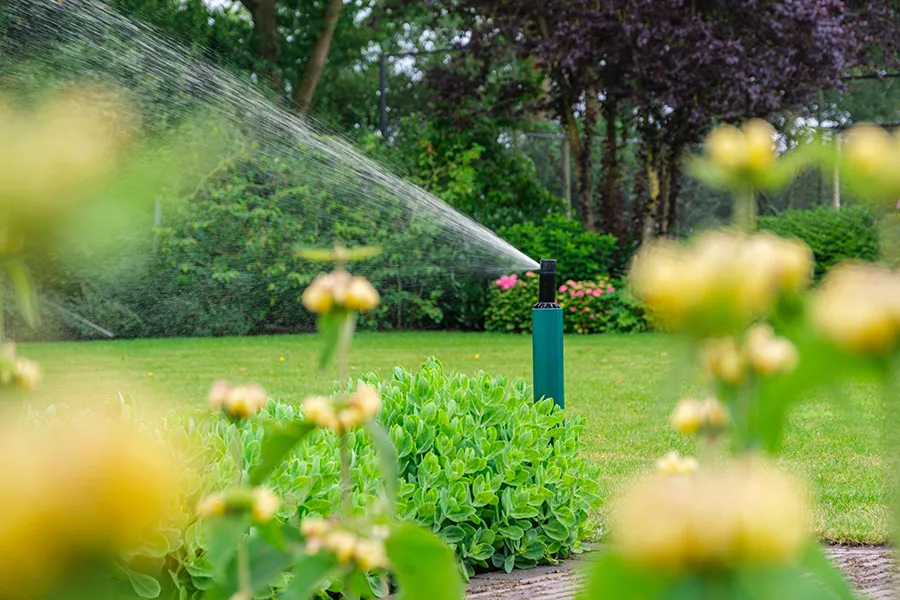
Irrigation systems: from basic to high-end
A good irrigation system starts with a well-designed plan and its implementation. But that is not where it ends, says Rudolf van de Velde, manager of product specialists at Wildkamp: ‘Getting the timing right and maintaining the system properly also help make irrigation efficient and economical. Various smart systems also make life much easier for users.’
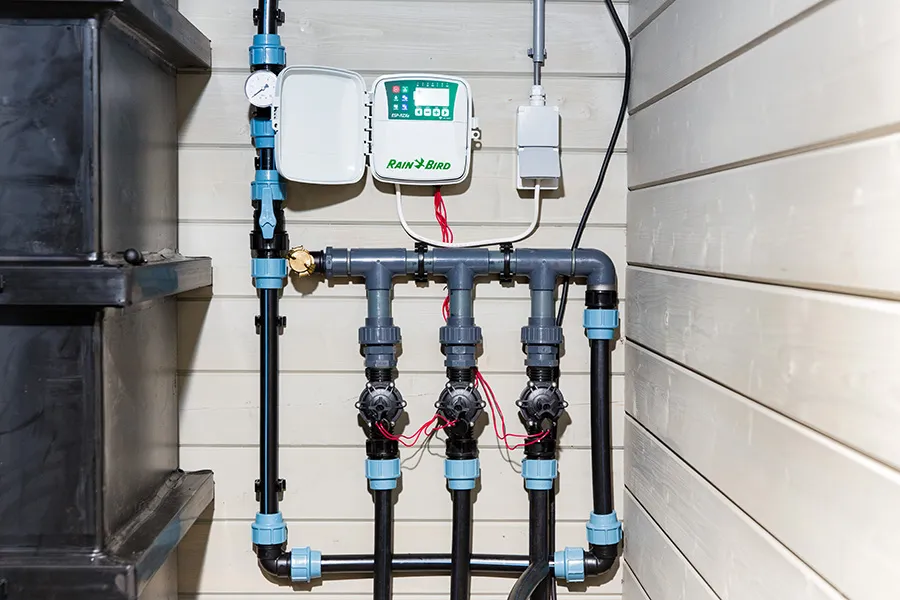
Irrigation systems come in all shapes and sizes, from simple solutions to fully automated installations. “It often starts with an irrigation controller,” explains Van de Velde. “You can set it to run at specific times, for example at around 4 am. That way, the garden stays in good condition even when the user is on holiday.”
A step up from these are systems that can be controlled via Wi-Fi, allowing users to make adjustments remotely. “But the real gains come from automatic systems with sensors,” says Van de Velde. “They measure soil moisture and, in some cases, even take current weather forecasts into account. If rain is on the way, the system skips a watering cycle. This prevents waste and delivers exactly what is needed.” These systems are still relatively expensive, but Wildkamp is working on solutions to make them more widely accessible.

Start before the drought becomes visible
A common mistake is to start watering only when plants are visibly drying out. “By then, it’s already too late,” says Van de Velde. “It’s better to base your decisions on soil moisture readings. That allows you to determine much more precisely when to irrigate.”
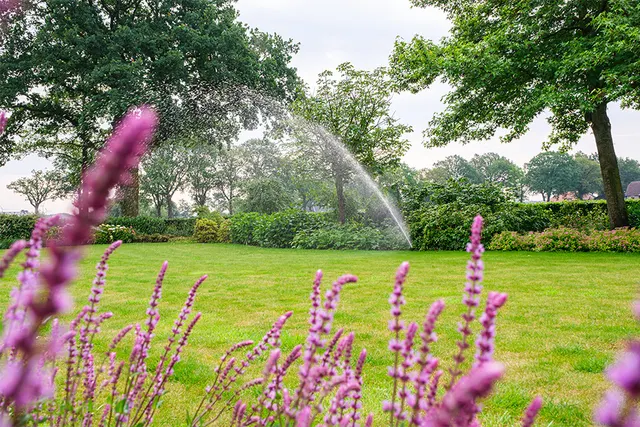
According to Van de Velde, the biggest gains come from a well-designed system. “You should always design for the driest spot in the garden. If it doesn’t get enough water, you may be tempted to irrigate for longer, which leads to waste. Sprinkler positioning is crucial. Make sure there is enough overlap. It’s better to have one sprinkler too many than one too few. We’ve seen calculations showing that extra sprinklers quickly pay for themselves through lower pumping and energy costs.”
Wildkamp actively supports landscapers with tailored irrigation plans, including pipes, fittings and sprinklers.
Sensors and smart control
Rain sensors are also a valuable addition to soil moisture sensors. “You can connect them to almost any irrigation controller. They prevent the system from switching on when the ground is already wet enough,” says Van de Velde. “Do pay attention to where you install them, not under a canopy, for example.”
For high-end applications, complete weather stations take temperature, wind, rainfall and soil moisture into account. These systems operate fully automatically, providing maximum convenience and efficient water use.
Don’t forget maintenance
A good system also needs proper maintenance. “Winterise installations by blowing them out, and make sure pumps are kept frost-free or that all the water is drained. In spring, check that everything is still working properly and is suited to the garden’s growth,” advises Van de Velde.
According to Van de Velde, a smart irrigation system is ultimately an investment in convenience, sustainability and quality. “You prevent waste, save water and energy, and ensure that plants get exactly what they need. That’s good not only for the garden, but also for the user’s wallet.”
Een zakelijke vraag aan Wildkamp? Get in touch
Companies in this story

Keep following this
Get an email when a new story is published. No account needed.
- ThemeSoil and water in balance
- SubjectGarden landscaping & maintenance
- CompanyWildkamp