Garden landscaping & maintenance
Data-driven maintenance to control costs
Sustainability in public spaces with ConnectedGreen
According to René Voogt of ConnectedGreen, the Covid19 pandemic has shown that people need good-quality outdoor spaces. “You can also see people rising up against environmental pollution and demanding clean air for their children. I find that moving, and it confirms how people have long had the wrong attitude towards green spaces.”
Voogt: “At the same time, it is good to see this shift taking place: a renewed appreciation of green spaces in our society. We are realising that our outdoor spaces are under considerable pressure from a housing shortage, heavy traffic and long tailbacks, and limited infrastructure. In my view, we should move straight towards nature-inclusive construction, with nature in outdoor spaces incorporated into the design. But that brings two challenges: maintaining and installing green spaces. Naturally, plants do not grow on roofs or walls. At the same time, efficient watering requires careful consideration.”
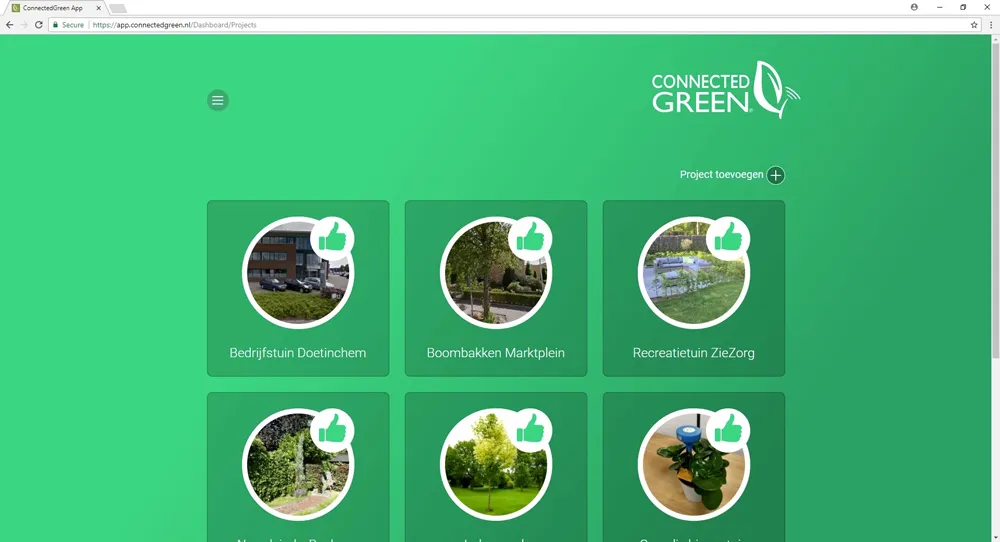
According to Voogt, the most sustainable method is to plant a seed and let nature take its course. “But that is not how it works, at least not when we want to create the green outdoor spaces we envisage. ConnectedGreen offers a solution: making smart, efficient use of soil sensors, combining this with data collection in the cloud and adding specialist knowledge. We help local authorities and landscaping contractors save water and CO2, reduce the number of maintenance visits and prevent tree losses. It is the best way to keep maintenance costs under control.”
The right measurements
Various studies show that pressure on public spaces is increasing, as is the need for greenery. “Green spaces close to where people live are essential to their health, but budgets are not always sufficient to provide them. Recent climate patterns, with extreme drought or heavy rainfall, are also taking a toll on trees. The first step towards greater sustainability is to ensure that green spaces survive and do not need to be replaced. Another benefit is that maintenance can be scheduled using the right measurements: landscaping contractors go out when needed, avoiding unnecessary journeys. Studies show that monitoring also significantly reduces water consumption.”

Keep it green
“Our charts feature a green band indicating the target soil moisture level. If the reading falls below it, the soil absorbs water less effectively. If it rises above it, the soil is too wet and the water drains away. That means too much water has been applied. We make sure the readings stay within the green band, or, as our motto goes, ‘Keep it green’. This saves money, makes green spaces look better and significantly reduces water use. It is our recipe for making public spaces more sustainable, with fewer vehicle journeys and less loss of greenery. In future, I believe this solution will form part of data-driven input for workflow management in public spaces, alongside vehicle management and routing.”
Question about this story? Ask your question
Keep following this
Get an email when a new story is published. No account needed.
- ThemeDigital tools for green space management
- SubjectGarden landscaping & maintenance