Fred Prins on the blind spot in water and green-space policy
Text Armand LandmanImage GEP Water
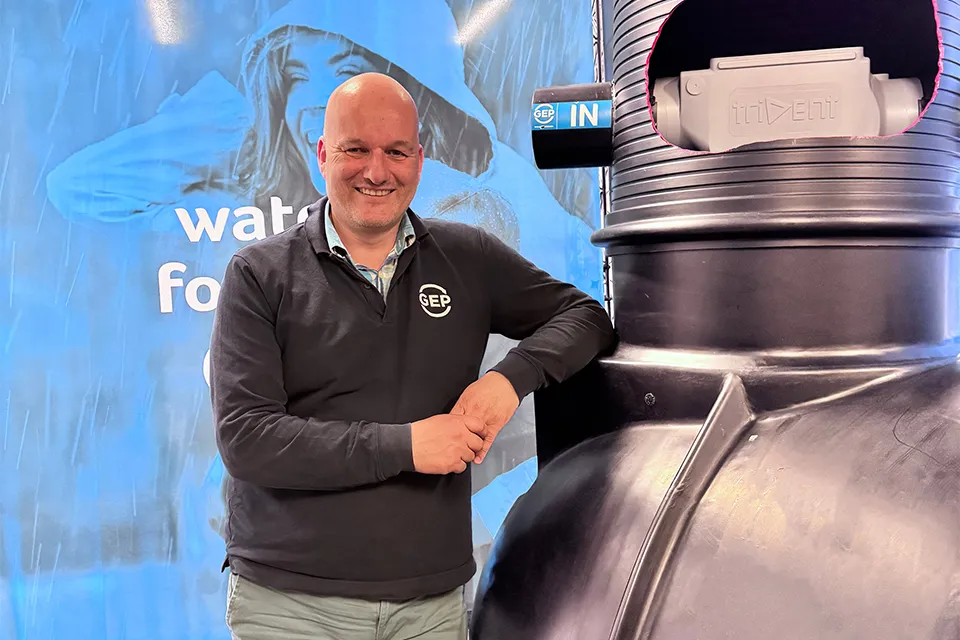
‘Green without blue is a dead end’
The Netherlands is known internationally as a water-rich country, but according to Fred Prins, director of GEP Water, this is a misleading image. “We have a fantastic drinking water system, but it is starting to creak. Our sources are polluted and the network is at capacity. At the same time, we still flush our toilets with drinking water. That’s absurd.”
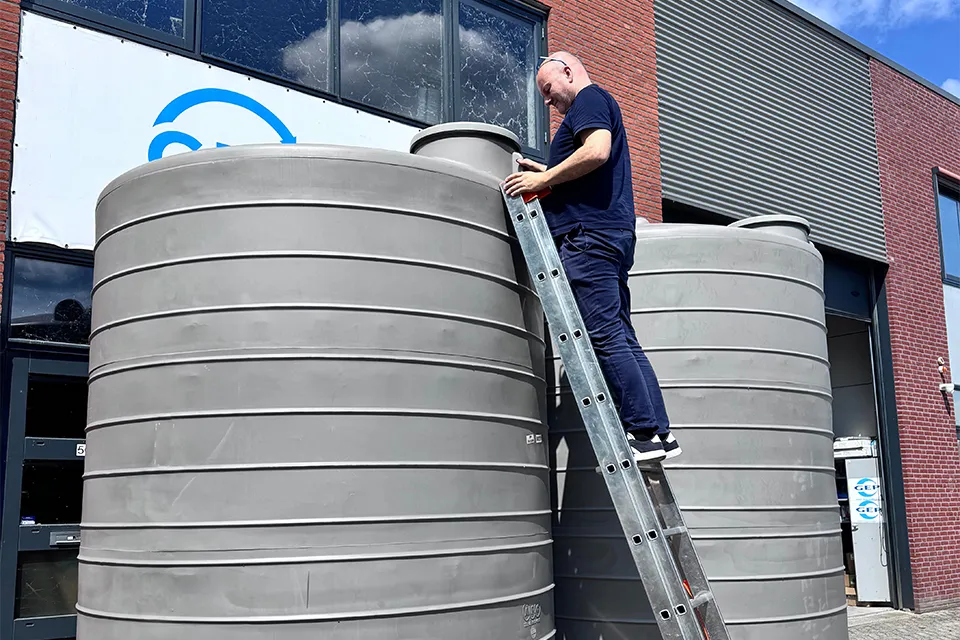
Prins, whose company supplies rainwater and greywater systems to the construction and green sectors, has strong views on how the Netherlands manages water and plants. His message is as simple as it is urgent: green and blue belong together. “If you green an area without considering water, you only make the problem worse.”
Thirsty trees
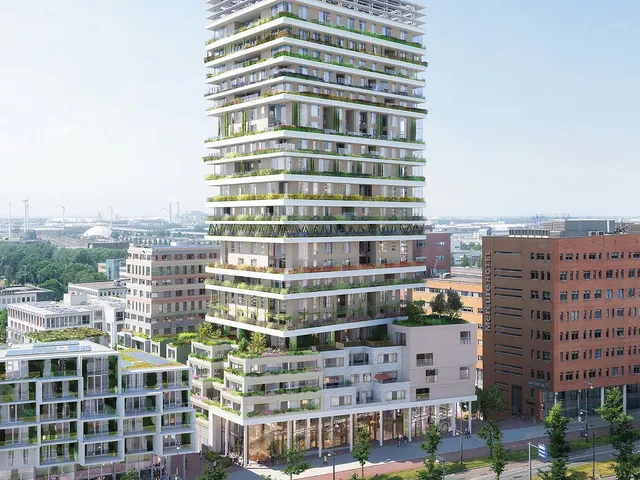
Prins’s conviction took shape when he became involved in the construction of Trudo Toren in Eindhoven, the Netherlands’ first “vertical forest”. “It’s a beautiful building,” he says, “but what shocked me was the drinking water consumption. Trees 50 metres up, exposed to wind and full sun, can easily ‘drink’ 250 litres a day. Add that up across dozens of trees and shrubs, and you can see why the pump there runs for almost 23 hours a day. And this is social housing. Surely that can’t be right?”
From paving to resilience
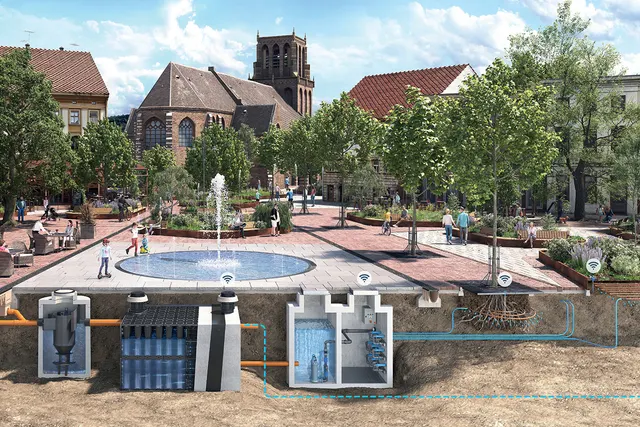
Prins advocates an integrated “green-blue strategy” in which water storage, planting and energy generation reinforce one another. “In summer, you need water for the greenery and want to store peak rainfall. In winter, you need heat. Why not combine the two? We now install heat exchangers in our rainwater tanks. In summer, the tank acts as a buffer against flooding; in winter, it is a source of heat for your heat pump. That gives you a sustainable and cost-effective system.”
Prins says most players in construction still think in silos. “The installer looks at pumps, the civil engineer at rainwater regulations, the gardener at planting. Everyone does their own thing, and no one asks: couldn’t we combine these?”
The forgotten garden
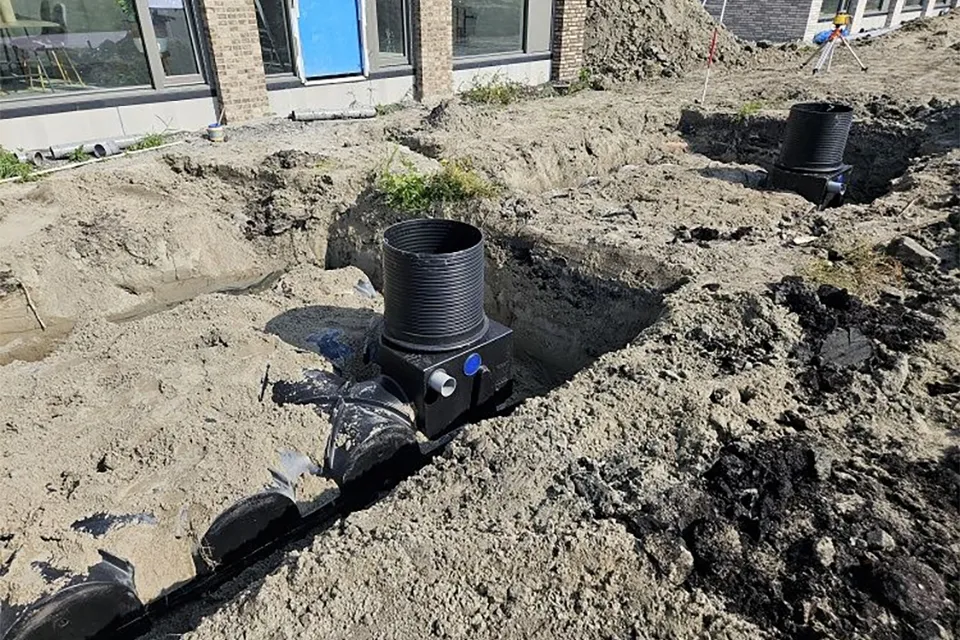
What perhaps bothers Prins most is that gardens are rarely included in design and regulations in the Netherlands. “The construction industry is focused on insulation values, heat pumps and circular materials, but the garden is an afterthought. Yet it is crucial to a neighbourhood’s capacity to adapt to climate change. Greening is not just about aesthetics; it is water management.”
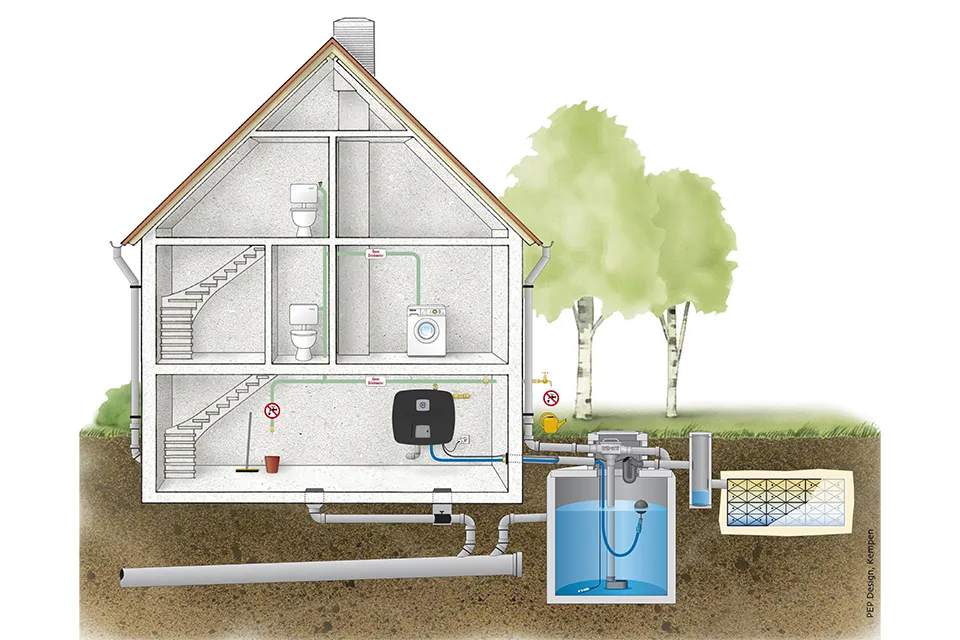
Prins expects gardeners to play an increasingly important role in designing sustainable gardens and neighbourhoods. “Every garden design should really include a rainwater tank as standard. The gardener of the future will be a water manager as well as a green-space expert. They’ll know which plants can withstand drought, how infiltration works and how to design a garden so that it needs hardly any irrigation.”
He gives the example of a gardener he spoke to recently. “They said: I design my gardens so they don’t need water. I plant different species in sunny and shady spots. That’s brilliant. That’s how it should be.”
Legislation slows progress
However, Dutch regulations often stand in the way of sustainable innovation, Prins says. “Greywater recycling, reusing shower or bath water for toilets or gardens, is officially prohibited. We’re now building the first project in Tilburg where it is finally allowed, but the water quality requirements are absurd. The water that comes out is almost drinkable.”
Collective rainwater systems also face regulatory hurdles. “As soon as five houses share a tank, it is prohibited to irrigate the garden with that water. The lawmakers want to prevent a child from drinking from an outdoor tap. That’s ridiculous, of course. That law has to go.”
According to Prins, countries such as Belgium and Germany take a much more decisive approach. “In Belgium, a rainwater tank of at least 5,000 litres has been compulsory for new-build properties since 2005. In Germany, you get a tax benefit for disconnecting paved surfaces from the sewer system. There’s a vision there. Not here.”
A change in culture is needed
Prins describes the current attitude in the Netherlands as ‘complacent’. “The construction industry too often has a ‘we’ve done it this way for 30 years’ mentality. Everyone is doing well, so why change anything? But with the climate we’re facing, drier, warmer and wetter, we can no longer afford to treat water and greenery separately.”
He expects the government to restrict water use within a few years, including for private individuals. “The agricultural sector is already banned from irrigating during drought, but private individuals can still water their lawns. That will change. The smart gardener will be prepared.”
What drives Prins is not just technology, but the conviction that our awareness of water must fundamentally change. “People always ask me what the payback period is for a rainwater system. But no one asks that about a kitchen. We need to think differently: not in terms of cost, but of value, for the climate, for green spaces, for the future. Green without blue is a dead end. If we don’t combine the two intelligently, we’ll use more drinking water, worsen heat stress and make ourselves vulnerable. But if we get it right, we can build gardens, neighbourhoods and cities that keep themselves in balance.”
Question about this story? Ask your question
Keep following this
Get an email when a new story is published. No account needed.
- SubjectDrainage