Garden landscaping & maintenance
Listed building de Doelen to get huge biodiversity-rich roof with smart water storage
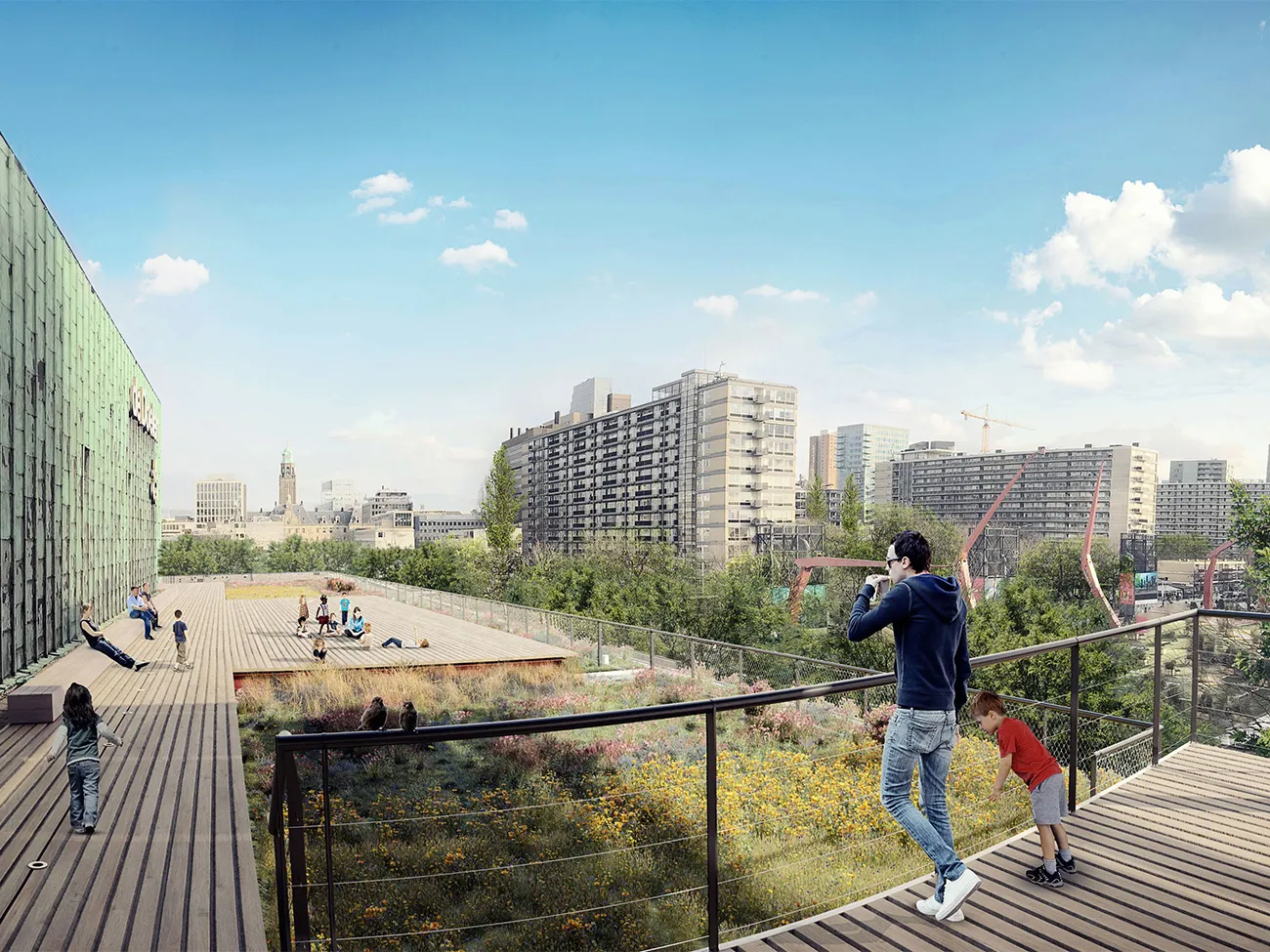
More extreme weather is also being felt in urban areas, where sewers and buildings are not designed to cope with intense peaks in rainfall or tropical summer temperatures. A remarkable roof on concert and conference venue de Doelen in Rotterdam shows how Dutch rooftops could be an important part of the solution.
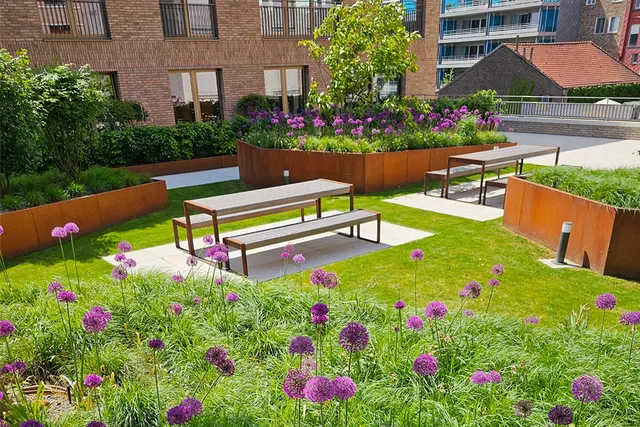
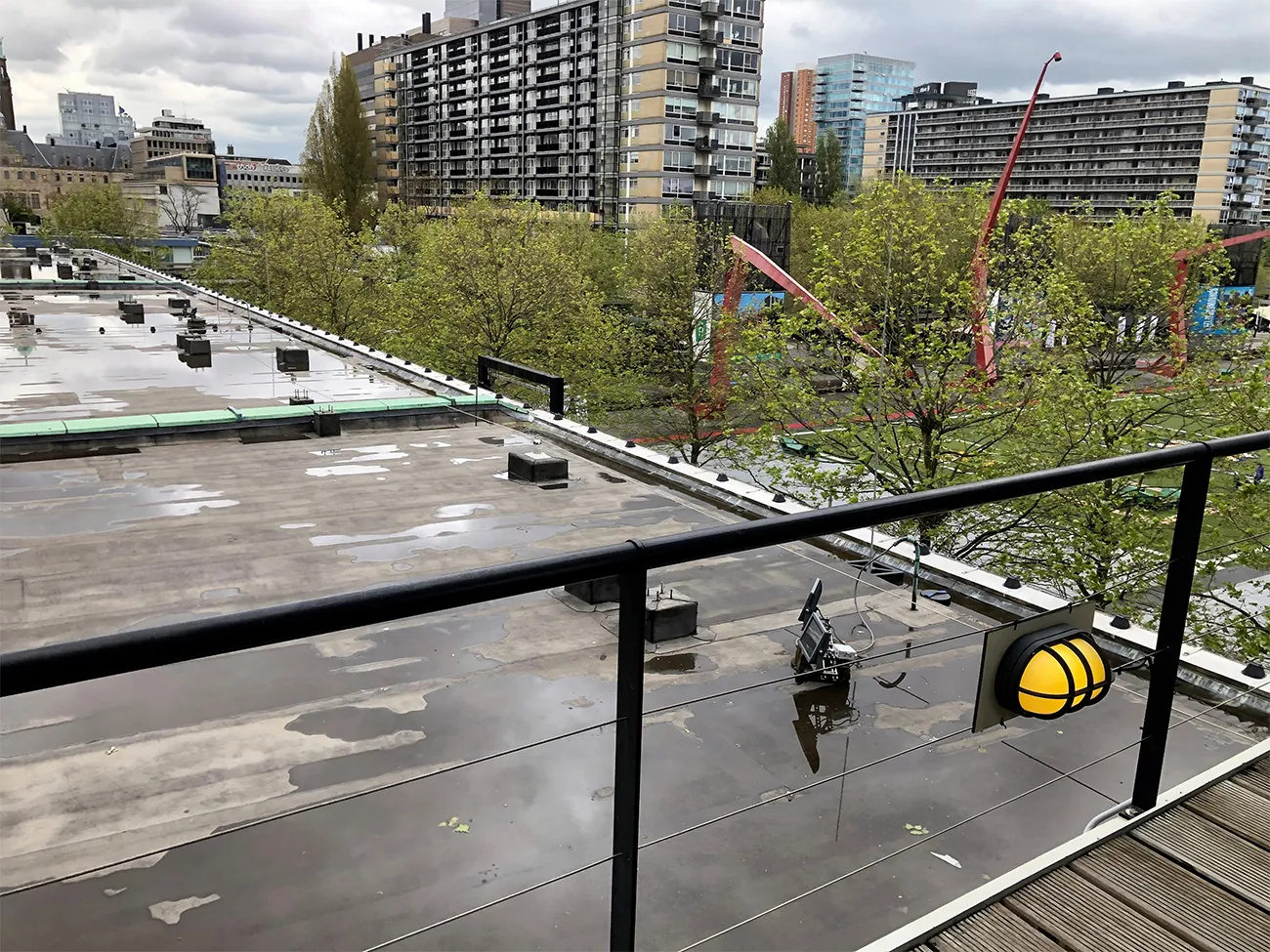
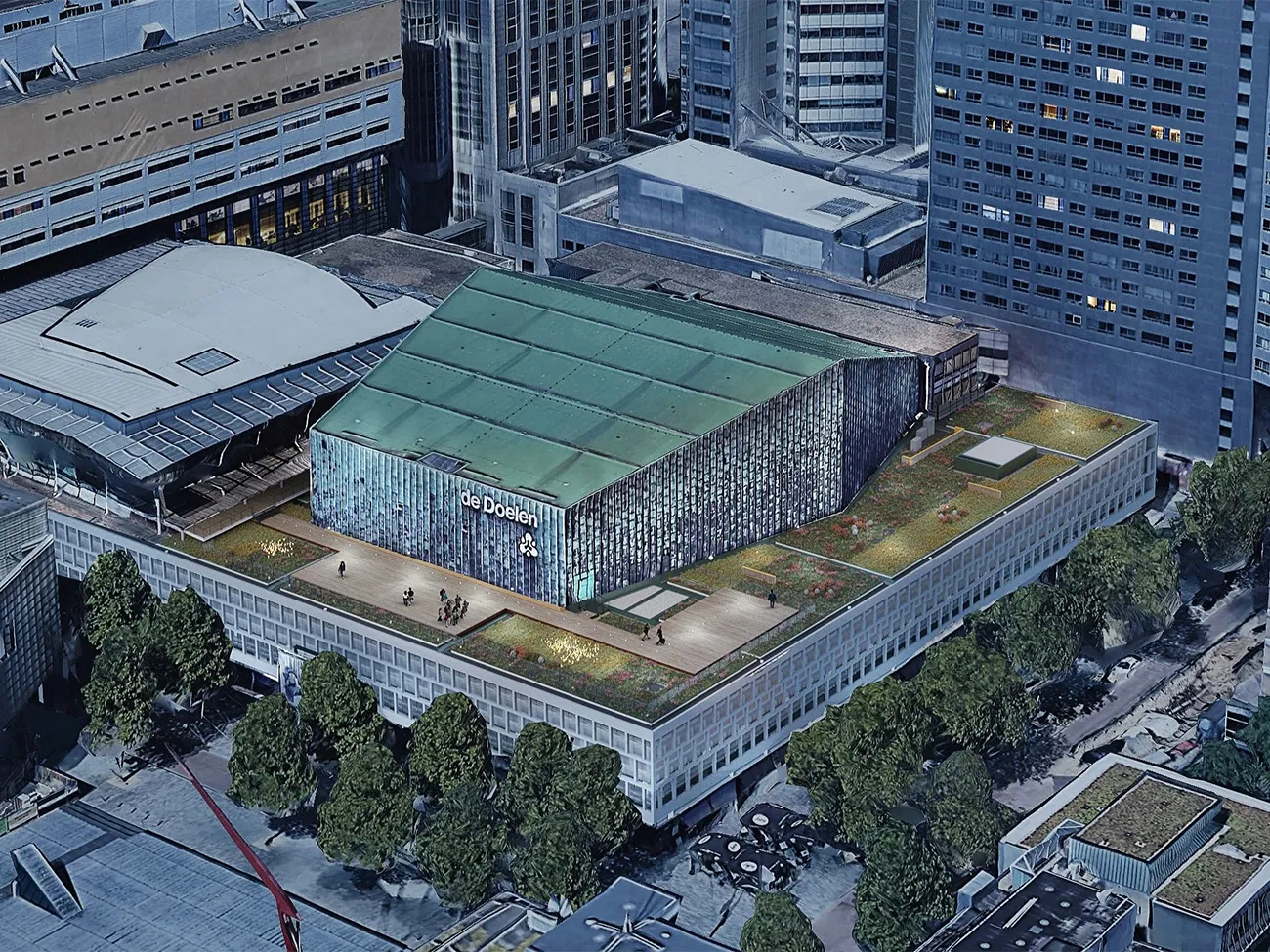
The listed building in the heart of Rotterdam is an impressive sight, and in the coming months it will become even more remarkable. Its 2,581 m² flat roof is being transformed into a multifunctional green oasis with its own water-storage system. Van der Tol B.V. Hoveniers en Terreininrichting has been brought in as contractor to carry out the work. It is no small undertaking, says Gert-Jan Middelie, project adviser at Van der Tol B.V.
2,000 bathtubs
The company focuses on green solutions to make cities greener, more sustainable and more liveable. “We are working towards a climate-resilient ECOcity and looking for green solutions that make effective use of rainwater, curb urban warming and promote biodiversity,” says Middelie. Van der Tol BV creates large-scale parks, roof gardens, green façades and even indoor gardens, and is not afraid of a challenge. Even so, de Doelen is a particularly special project, Gert-Jan agrees. It is the first time a municipal building and listed monument has been given a multifunctional roof of this size. “The techniques we are using are not new. But a water-storage system on this scale is unprecedented. It has a capacity of 300 m³, or 2,000 bathtubs.”
Using roofs to tackle extremes
The dynamic water-storage system forms the blue artery of the green roof and helps keep the streets drier. “Extreme rainfall of up to 100 millimetres in a day will become more common. Our sewers are not designed to cope with that much rain in such a short time, especially in cities, where water runs straight off and too little soaks into the ground. At the same time, we are seeing longer dry spells. Roof planting combined with dynamic water management can help, including by promoting biodiversity. That is why a municipality such as Rotterdam is investing in roof gardens.” And with around 18 square kilometres of rooftop in a single city, the area involved is considerable.
Technology in the service of greenery
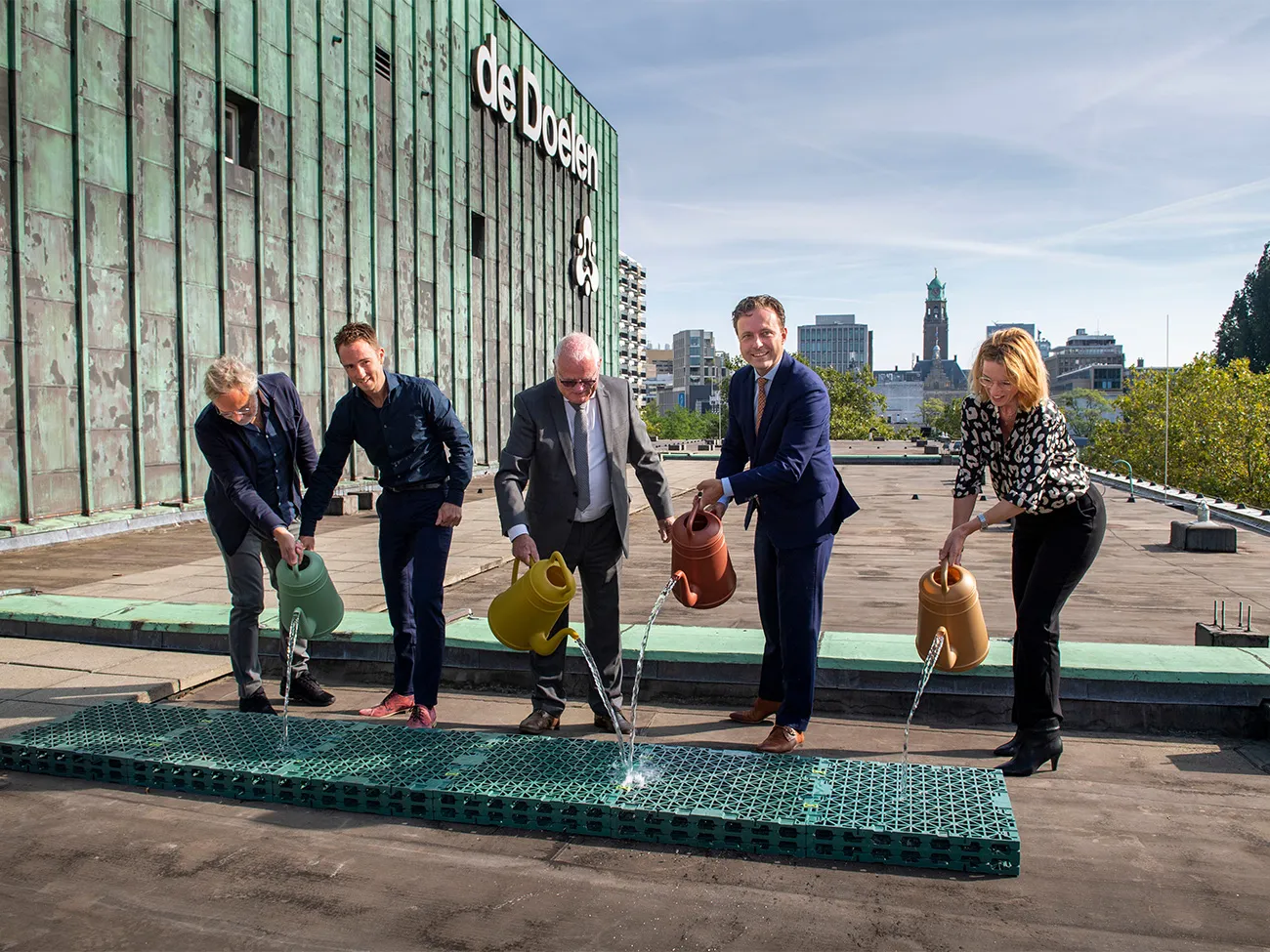
How does it work? “The best approach during heavy rainfall is to retain as much water as possible on the roof and release it when the sewer is no longer under strain,” Gert-Jan explains. “We are building an upstand around the entire roof, with an outlet that can be controlled via the internet. Crates will be installed inside it, with a growing medium on top, followed by the planting.” But greenery is not the only feature. A floating deck measuring no less than 480 square metres will also provide space for educational and social activities. “The bamboo deck will be installed on a steel frame weighing almost 40 tonnes and surrounded by a fence to ensure safety.”
Biodiversity at height
The planting has also been carefully considered. A wide variety of native herbs, bulbs, plants and shrubs will be planted on the roof to attract bees, butterflies and birds. “The greenery must contribute to greater biodiversity in the city without requiring too much maintenance. So this is certainly not an intensive roof garden.”
The multifunctional roof is due to be completed in spring 2022, and Gert-Jan thinks we will see more and more green roofs in the future. “There is a great deal of potential here, especially in new-build projects, where green solutions can be incorporated into the plans from the outset. We will need to keep thinking creatively and sustainably.”
Interested in working on projects like this? See the vacancy for a project manager at Van der Tol.
Question about this story? Ask your question
Keep following this
Get an email when a new story is published. No account needed.
- ThemeSoil and water in balance
- SubjectGarden landscaping & maintenance