Garden landscaping & maintenance
Preserving trees with a thorough Tree Impact Assessment
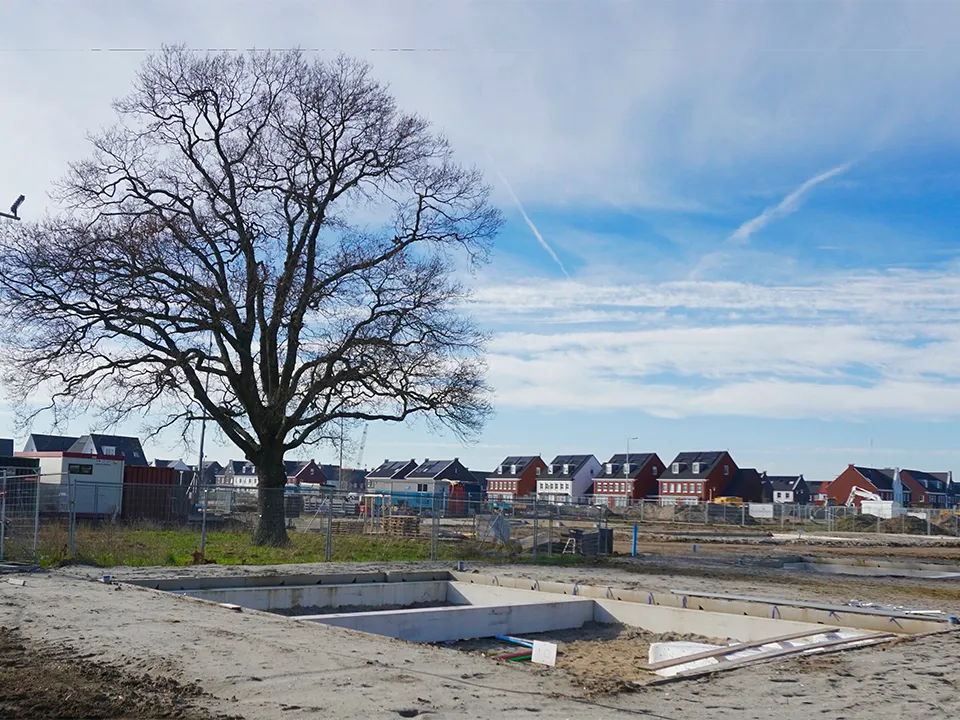
Building a new road or developing a new housing estate can cost trees their lives. Yet trees can often be preserved by carrying out a Tree Impact Assessment. The new guidelines provide an even clearer picture of the options.
Since the Bomenstichting introduced the Tree Impact Assessment (BEA) in 2003, this standard assessment has helped preserve many trees. It is a development the foundation is rightly proud of. “Years ago, Bomenstichting already mapped the Netherlands’ veteran trees to help secure their protection,” says Annemiek van Loon. The foundation built up a wealth of knowledge about what is needed to help a tree reach old age, and increasingly took on an advisory role in tree preservation.
This led to the BEA, which assesses how a tree can be preserved sustainably. A BEA is now standard practice for construction work near protected trees. “Simply not felling a tree is not enough if the work means that it still dies a few years later, for example because a car park is built over its roots and they no longer get oxygen.”
Guidelines
There is now also growing focus on sustainable, creative solutions in outdoor-space developments, while practitioners have called for greater consistency in how BEAs are carried out. “Previously, advisers had more or less free rein in deciding how to assess tree preservation within a design. BEAs were also often commissioned only once the plans were already in place. At that point, preserving a tree within the proposed plans becomes very difficult.”
Bomenstichting has launched new guidelines that give alternatives an important role, such as improving growing conditions or modifying a plan. This makes it possible to provide clear advice, after which a project developer or politicians can weigh up what to do.
The BEA in practice
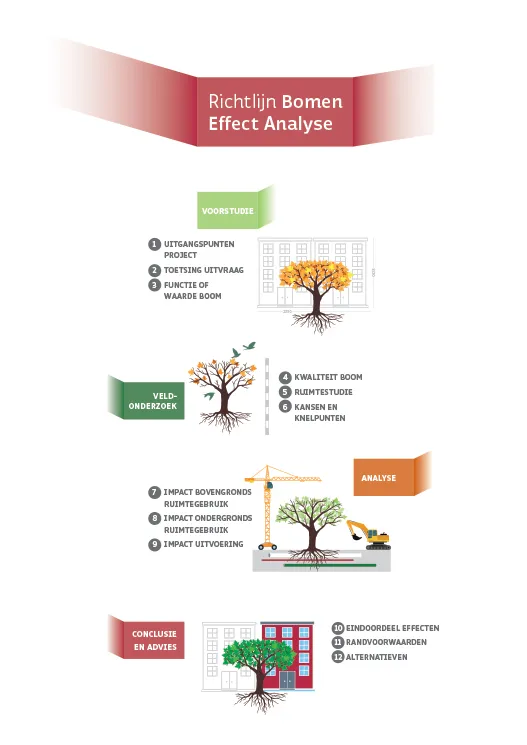
Once a BEA has been commissioned, it is carried out by a certified European Tree Technician (ETT) in several stages. The process begins with a preliminary study, in which the plans are examined and assessed. This is followed by a field survey, including a baseline assessment of the tree’s condition and an evaluation of potential opportunities and constraints. The analysis assesses the impact of the proposed plan. It concludes with findings and advice, with tree preservation increasingly proving to be a viable option.
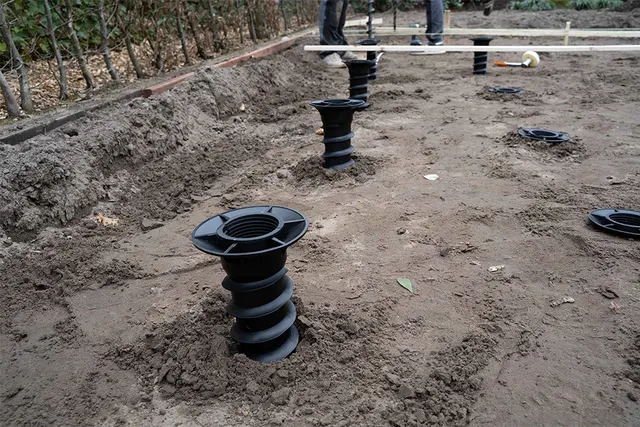
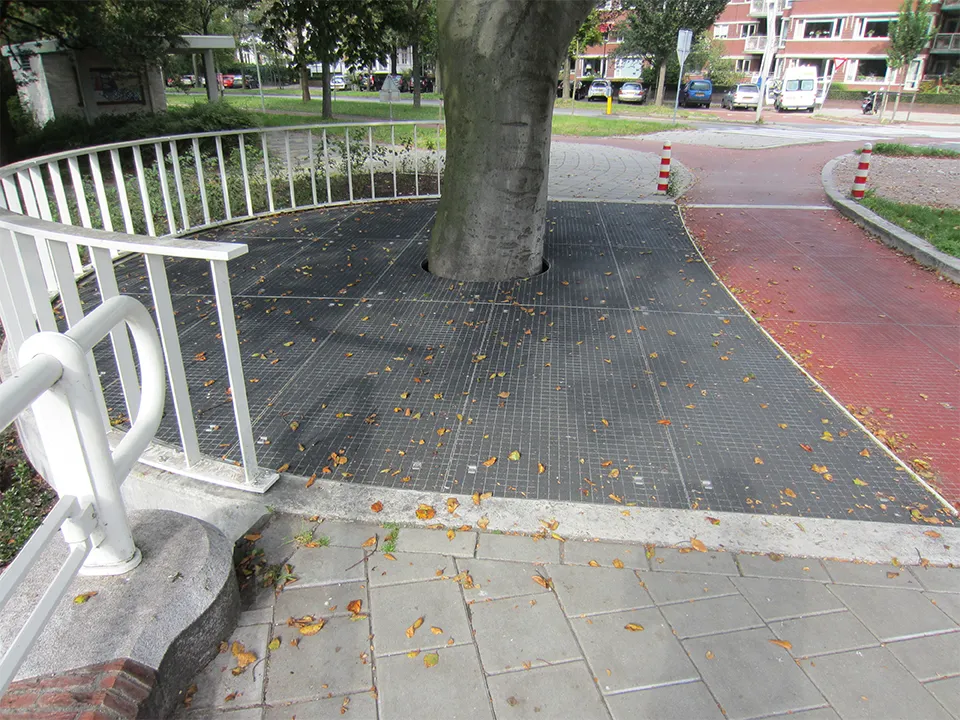
“Alternatives are becoming an increasingly important focus,” says Annemiek. “There are more and more technical ways to incorporate existing trees into new plans. Think, for example, of load-bearing structures over roots. The specialist develops these proposals in consultation with experts from other disciplines. Ultimately, the aim is to give trees a permanent place in outdoor spaces. This can be achieved by exploring the options early and taking an integrated approach.”
Question about this story? Ask your question
Keep following this
Get an email when a new story is published. No account needed.
- SubjectGarden landscaping & maintenance