









A green haven on a rugged stretch of the Maas
Text Armand LandmanImage Armand Landman, Studio for New Realities, LOLA
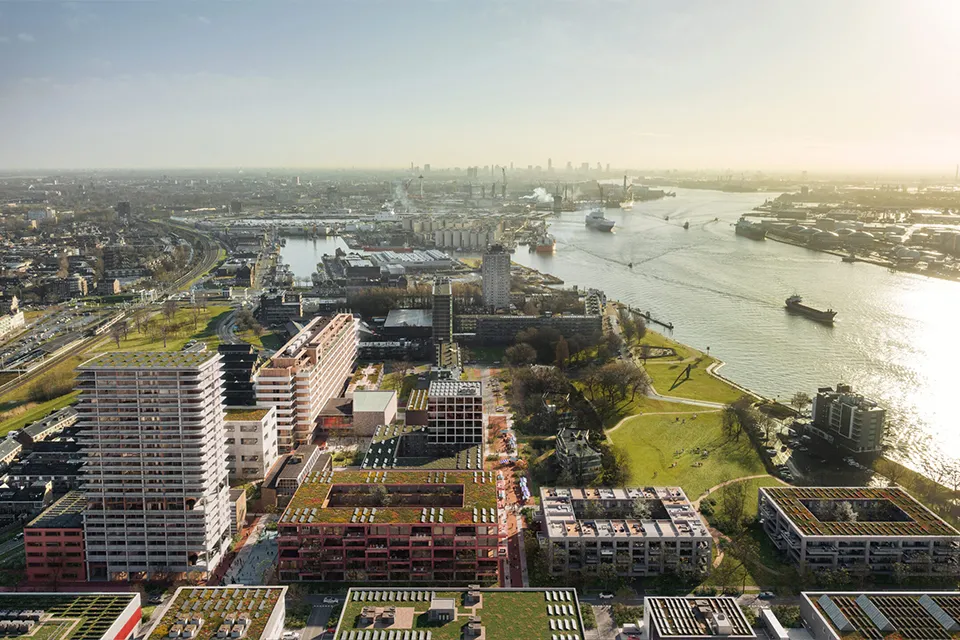
From Unilever site to green urban district on the Maas
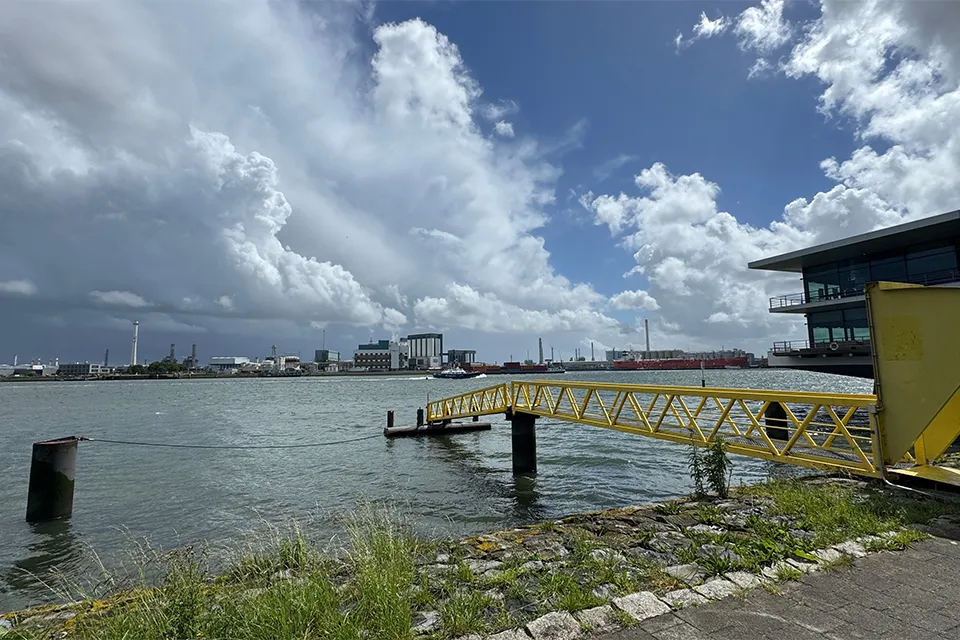
The wind sweeps freely along the Maasboulevard in Vlaardingen. Clouds race low over the Nieuwe Maas, the water ripples in long lines and, across the river, storage tanks, chimneys and cranes stand out sharply against the sky. Ships glide past as if they belong to the scenery. This is not a place that immediately reads as a residential district. It feels more like an edge, a hard transition between city, industry and river.
It is here, on the former Unilever site, that District U is set to take shape: a new urban district that does not try to smooth away the roughness of the place, but embraces it as part of its character. “It really is a world of contrasts,” says Peter Veenstra, founder and landscape architect at LOLA Landscape Architects. “Urban density, close to the station, and then right alongside the brutal oil industry and the big ships.”
Together with Jeroen Zuidgeest, architect and founder of Studio for New Realities, he walks through the development site. The wind makes the conversation a physical experience. Anyone planning a district here needs to think beyond housing, considering shelter, protection from the wind, shade, water and the quality of the public realm. In District U, greenery is no afterthought. It is a prerequisite for making life here pleasant at all.
Streets as gardens
Zuidgeest designed the masterplan around the public realm. The starting point is not the buildings, but the question of how people will live here. “Public space is space for people to use,” he says. “We are looking for a place where a real community can develop. A place people fall in love with, where children learn to ride a bike and ideas are shared.”
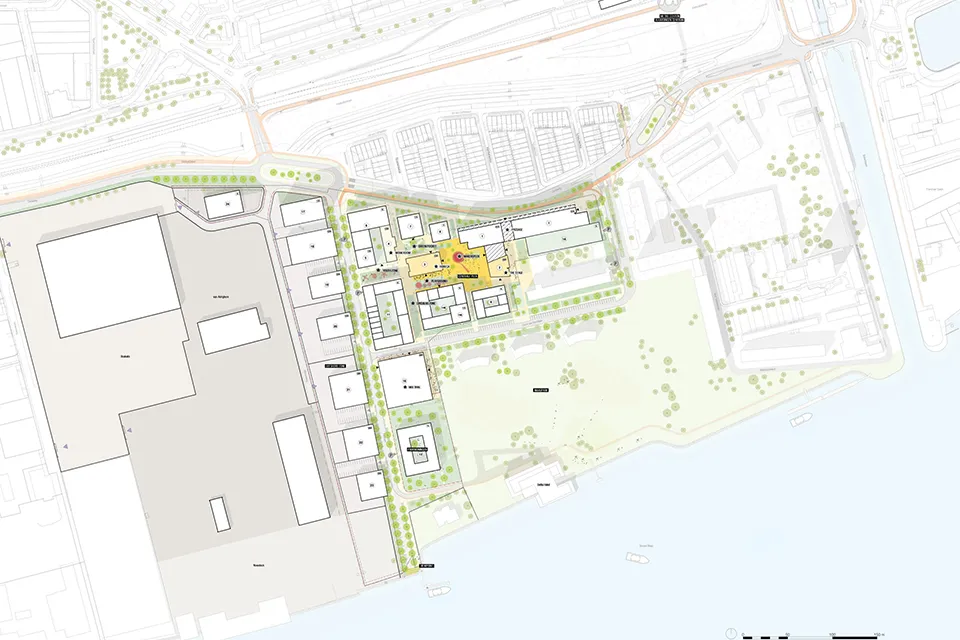
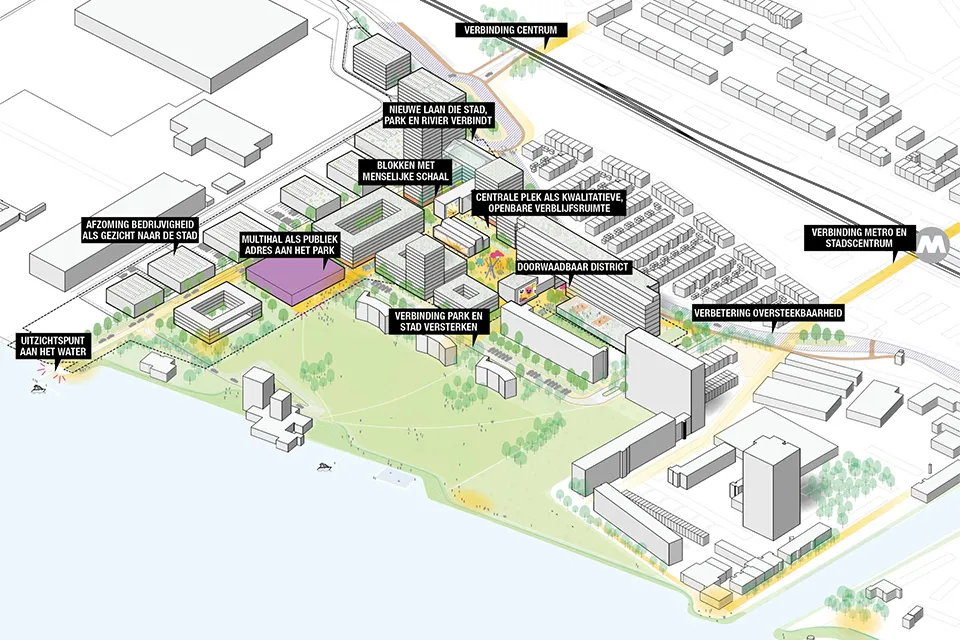
This approach translates into a low-traffic central area with squares, courtyards and green street profiles. Not standard streets with pavements, parking spaces and a few trees, but a network of gardens, sheltered areas and places residents can make their own. Logistics, parking and waste facilities are kept as far as possible from the heart of the district, along its edges. This creates space in the centre for meeting, play and planting.
Veenstra says this is essential in a place like this. “When you look outside here, it’s incredibly attractive, but for half the year the wind practically blows you away. So creating a pleasant microclimate where people can spend time every day is incredibly important.”
That is why LOLA has opted for layered planting: large trees, smaller trees, shrubs, perennials, grasses and ground cover. Not just for visual effect, but also to break the wind, reduce heat stress, provide shade and retain water. “All the layers are there,” says Veenstra. “That has a hugely positive effect on the wind. And we are making room for genuinely large trees right from the start.”
More than grass and trees
Today, anyone walking along the Maasboulevard will see mostly large expanses of grass, rows of trees and open sky. Attractive in its openness, but ecologically limited. District U aims to create a richer landscape in its place. Veenstra describes diverse, dynamic planting that is attractive all year round, not only to residents, but also to birds, insects and other species.
Along the river, the greenery will be wilder, with the plan drawing on river and tidal ecosystems. Maaspark will form the link between the city and the water, with routes, places to spend time and space for sport, play and socialising. In the central area, the planting will be more manicured and garden-like. This creates a transition from a rugged, ecological edge to a sheltered, people-focused district.
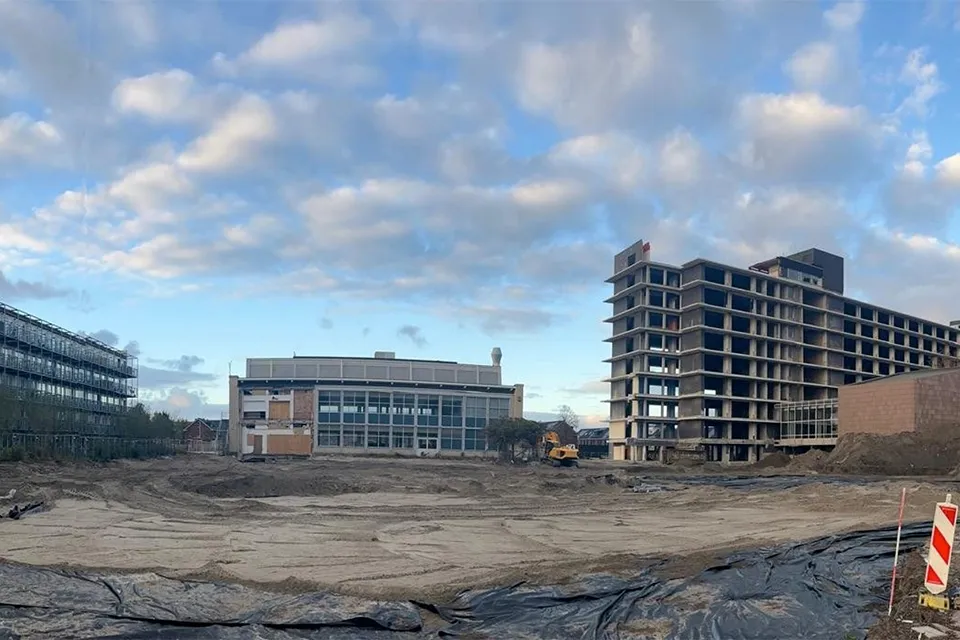
At the same time, Zuidgeest puts the ecological impact into perspective. “This is not going to solve Vlaardingen’s ecological situation all at once,” he says. “But everything we do is guided by a clear agenda to help create a better world.” That contribution does not come from one grand gesture, but from many small choices: less paving, more layers of planting, water storage, reuse of materials and linking greenery with everyday use.
Rugged materials, given new life
Circularity also finds expression in the landscape. Stelcon slabs from the former industrial site are being reused. Discarded crane sections from neighbouring crane company Van Adrighem will get a second life as play equipment. In this way, the port identity remains tangible in a district that is also becoming softer, greener and more people-friendly.
This tension is what makes District U special. The plan does not opt for a generic new-build district by the water, but for an urban landscape that takes the character of the place seriously. The industry remains visible. The wind remains palpable. The river retains its grandeur. But amid these powerful forces, a district must take shape where people can live, play, work, learn and meet one another.
Or, as Zuidgeest puts it: greenery as cement. Not as decoration, but as a connecting layer between buildings, residents and landscape. On the Maas in Vlaardingen, this shows what urban development can look like when the living environment, rather than the housing layout, is the starting point.
Question about this story? Ask your question
Keep following this
Get an email when a new story is published. No account needed.
- SubjectGeneral







