









A springboard for an even more ambitious vision of urban green space
Text Armand LandmanImage LOLA Landscape Architects, Photography Ebben
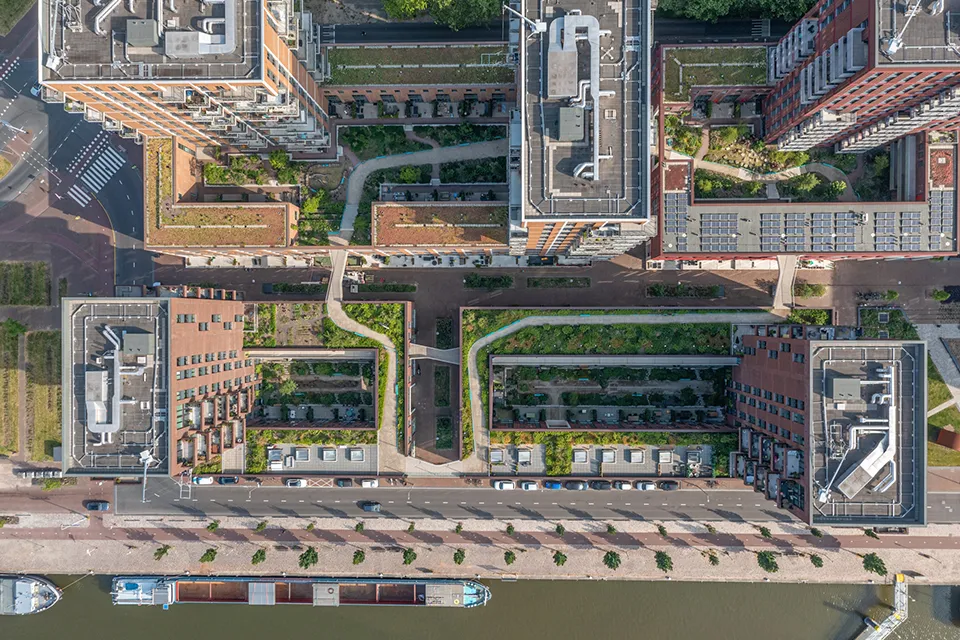
De Groene Kaap in Rotterdam
“De Groene Kaap is a project that, although it was completed several years ago, is still relevant and full of life,” says Pleijster. He explains that the project continues to evolve and generate new stories. “It’s great to see new groups of people coming to admire the project every year, from both the Netherlands and abroad. We recently had visitors from Finland and Austria,” he says.
The development of De Groene Kaap began in 2017, after LOLA Landscape Architects won the commission through a tender. “We wanted to bring something extra to the table to win the commission, so we placed a strong emphasis on nature-inclusive design,” explains Pleijster. The concept was still relatively new at the time, but appealed greatly to both the developer and the landlord. “It wasn’t just about biodiversity, but also about creating an attractive, healthy living environment where people feel more connected to their surroundings,” says Pleijster.
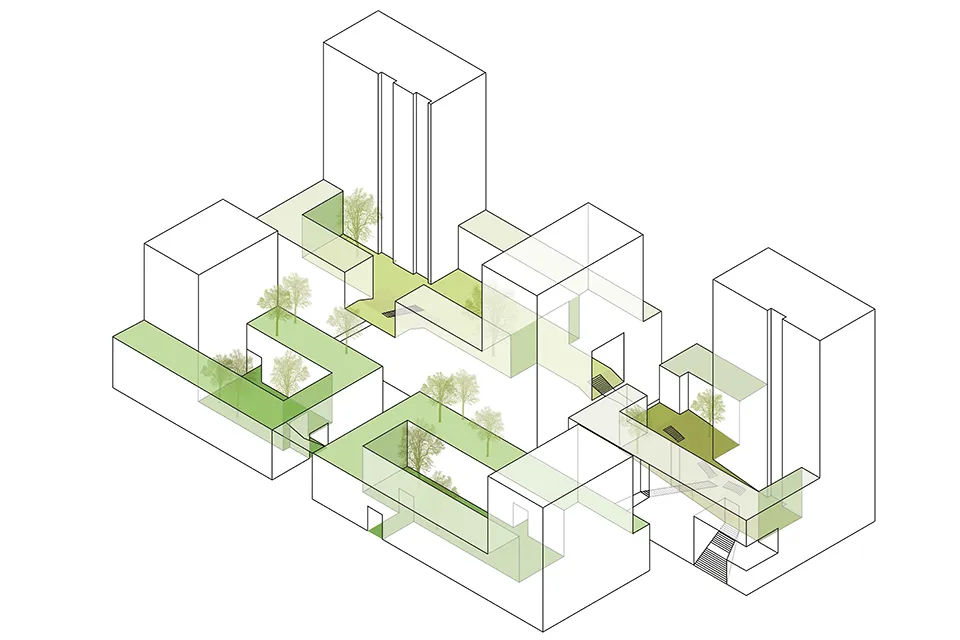
The project’s architecture, designed by Koos Kok of Bureau Massa, played a crucial role in weaving green elements into the design. “Kok had a visionary plan in which four blocks of residential towers would be linked by green roof gardens and walking routes. These gardens are not just green spaces, they also provide room for recreation and socialising in an urban setting,” says Pleijster.
Connected to the social network
What makes De Groene Kaap truly special is the way it connects to both the city’s social network and its walking and cycling network. Pleijster explains: “We wanted not only to create a nature-inclusive project, but also a place with strong links to the city and its residents. That’s why we chose to make the gardens accessible via a public route that does not simply go back and forth, but forms a complete loop through the project.”
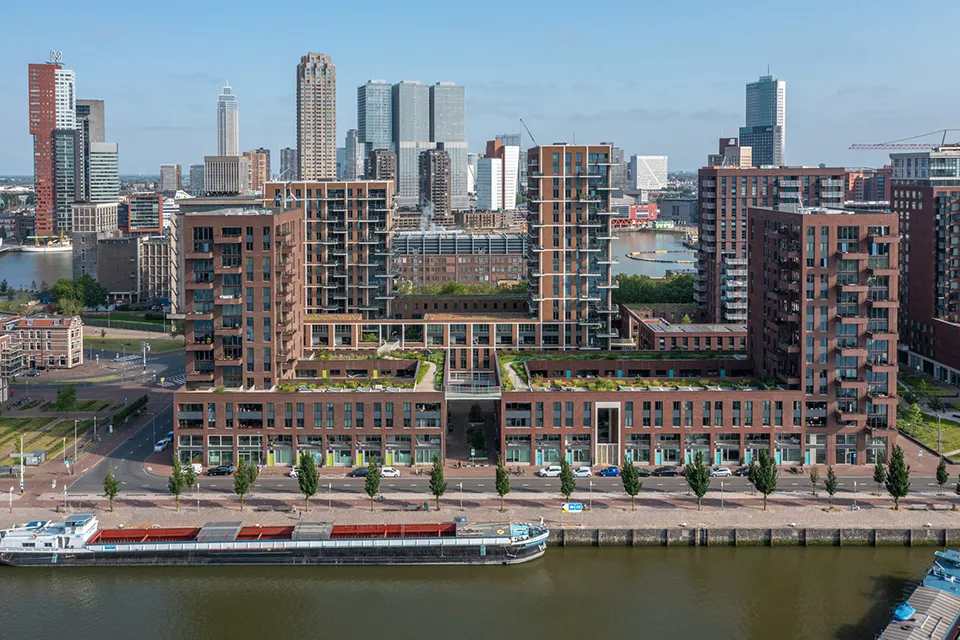
This route allows residents and visitors alike to walk through the greenery, offering a unique experience in an urban setting. “The idea was to connect not only to the city’s nature network, but also to its social network. This continuous route helps integrate De Groene Kaap into the urban fabric, making it part of the city’s everyday life,” says Pleijster.
The third dimension
A key factor in De Groene Kaap’s success is the technical foundation underpinning the project. “The green elements are not merely an aesthetic addition, they also require a solid technical base,” explains Pleijster. “It’s not just
about drawing a green area on a plan, but also about the third dimension: what lies beneath.”
Pleijster stresses the importance of a well-designed soil profile, water storage and the right growing media to ensure the planting is sustainable. “Creating a roof garden is a technical undertaking. It’s not simply a matter of planting, you also have to ensure there is enough soil, that water storage is adequate and that the right growing medium is used to support the plants,” he explains.
In the early days of roof gardens, these aspects were often overlooked, sometimes leading to problems. “We now know that a roof garden must be able to withstand a 70-day dry spell,” says Pleijster. Although De Groene Kaap was ahead of its time in many respects, it still lacks a fully integrated water storage system. “At De Groene Kaap, water is still supplied using mains water, which we would consider wasteful nowadays. We would do things differently now,” Pleijster admits.
A necessity
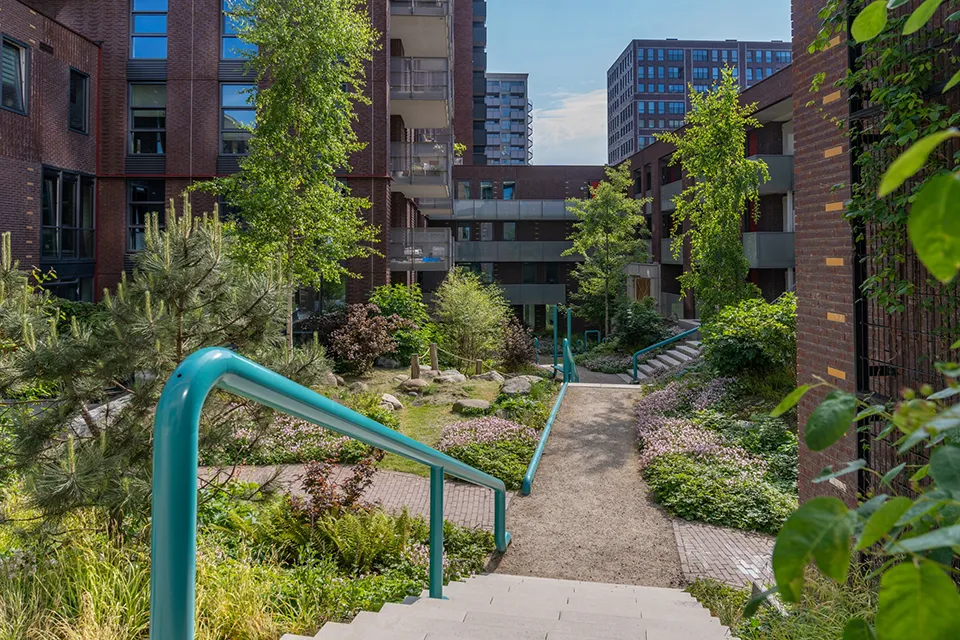
The landscape architect stresses that projects such as De Groene Kaap are just the beginning of a much wider movement to green cities. “Cities are far too paved, too hard and too hot. We urgently need more green space to tackle these problems,” he says. “Urban greening is not just about aesthetics, it is an essential step towards improving the liveability and health of urban environments. Green spaces help reduce heat stress, retain water, improve air quality and promote biodiversity. What’s more, people are happier and healthier.”
Urban Rewilding
Pleijster has since taken a new step in his vision for urban development. He wants to go beyond nature-inclusive building and now advocates what he calls “Urban Rewilding”. This concept takes urban greening a step further by allowing nature to take its course as much as possible. “We are now trying to deliver projects in which urban landscapes are designed to be as natural as possible, with minimal maintenance costs and maximum biodiversity,” explains Pleijster. This means less maintenance and intervention in green spaces, allowing nature to develop more freely.
“It’s about shaping the city in a more sustainable and natural way,” says Pleijster. This vision is currently being put into practice in a new project in the Spoorzone in Zwolle, where the urban space is being designed to remain as close as possible to its natural state.
De Groene Kaap is therefore not only a success story for Rotterdam, but also an inspiring example of how urban development and nature-inclusive design can go hand in hand. The project shows what is possible when architecture and landscape are integrated harmoniously into the urban environment. It also provides a springboard for an even more ambitious vision for greening cities, with Urban Rewilding, in Peijster’s view, set to shape the future of urban development.
Question about this story? Ask your question
Keep following this
Get an email when a new story is published. No account needed.
- SubjectGeneral







