









Amsterdam’s chief designer for green public spaces: ‘You can’t simply put everything you like in a garden into public spaces’
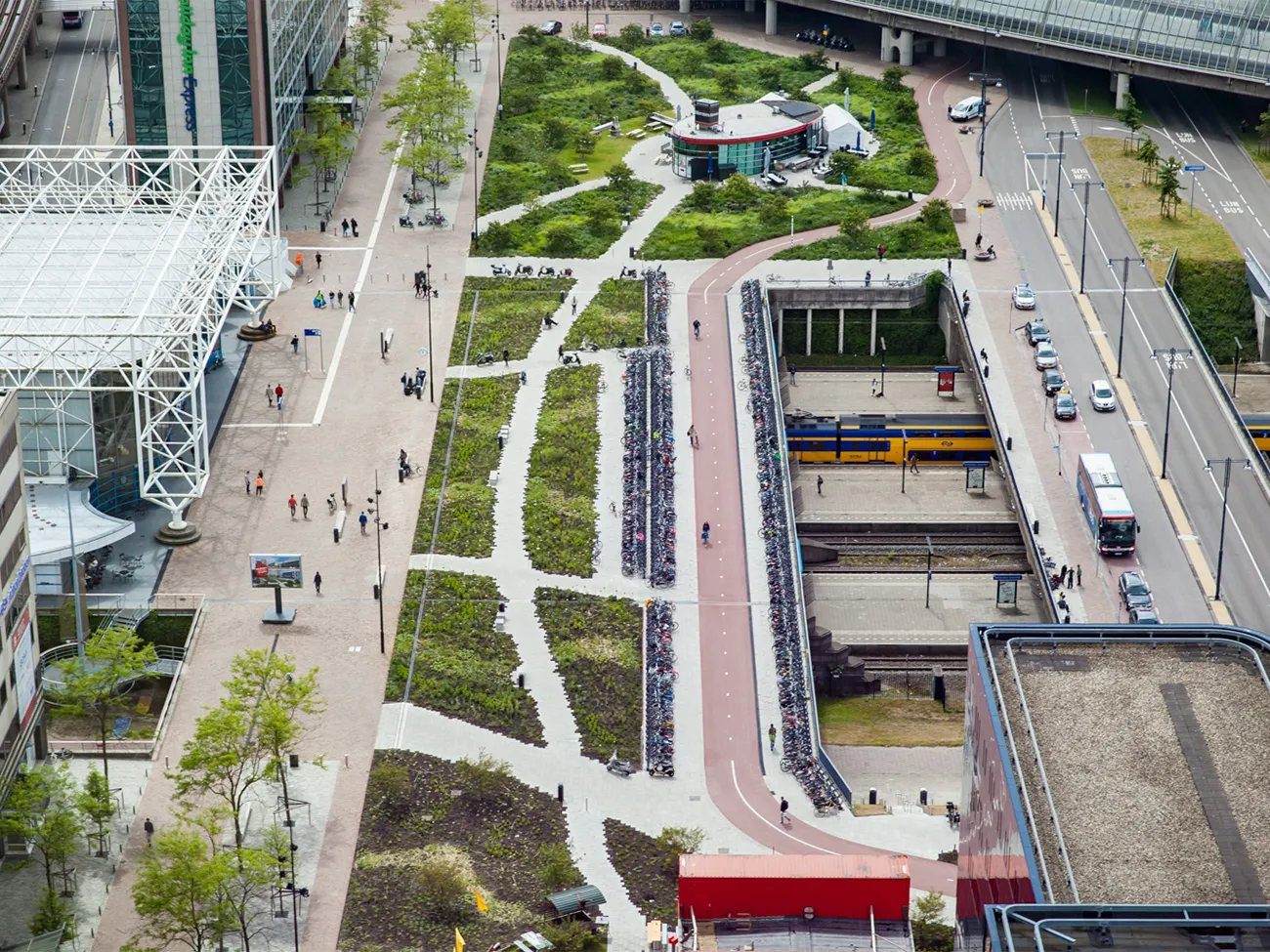
Ton Muller is responsible for designing green spaces in Amsterdam’s public realm. In this role, he is not only responsible for green spaces in streets, squares and parks, but in some locations he also oversees the greening of entire buildings.
On the Zuidas, Muller is green-space supervisor. From day one, he ensures that a landscape architect, a roof-garden specialist and a gardener are involved alongside the architect in the building design team. “That way, it doesn’t become greenwashing, with plants simply added to façades or balconies after the event. Instead, the building is designed as a whole, with all its greenery integrated from the outset.”
Muller is also involved in the Groenvisie Amsterdam, which sets out a vision of Amsterdam as a green city and how it will become greener between now and 2050, and the Handboek Groen Puccini, which covers the proper installation of green spaces in the city, including trees, perennials, grasses, shrubs and rain gardens. Muller also trains twelve young people at the municipality to become planting designers. “We do this because we saw that designing green spaces in a city’s public realm is a specialised profession in its own right, and one that conventional courses still devote too little attention to.”
Policy
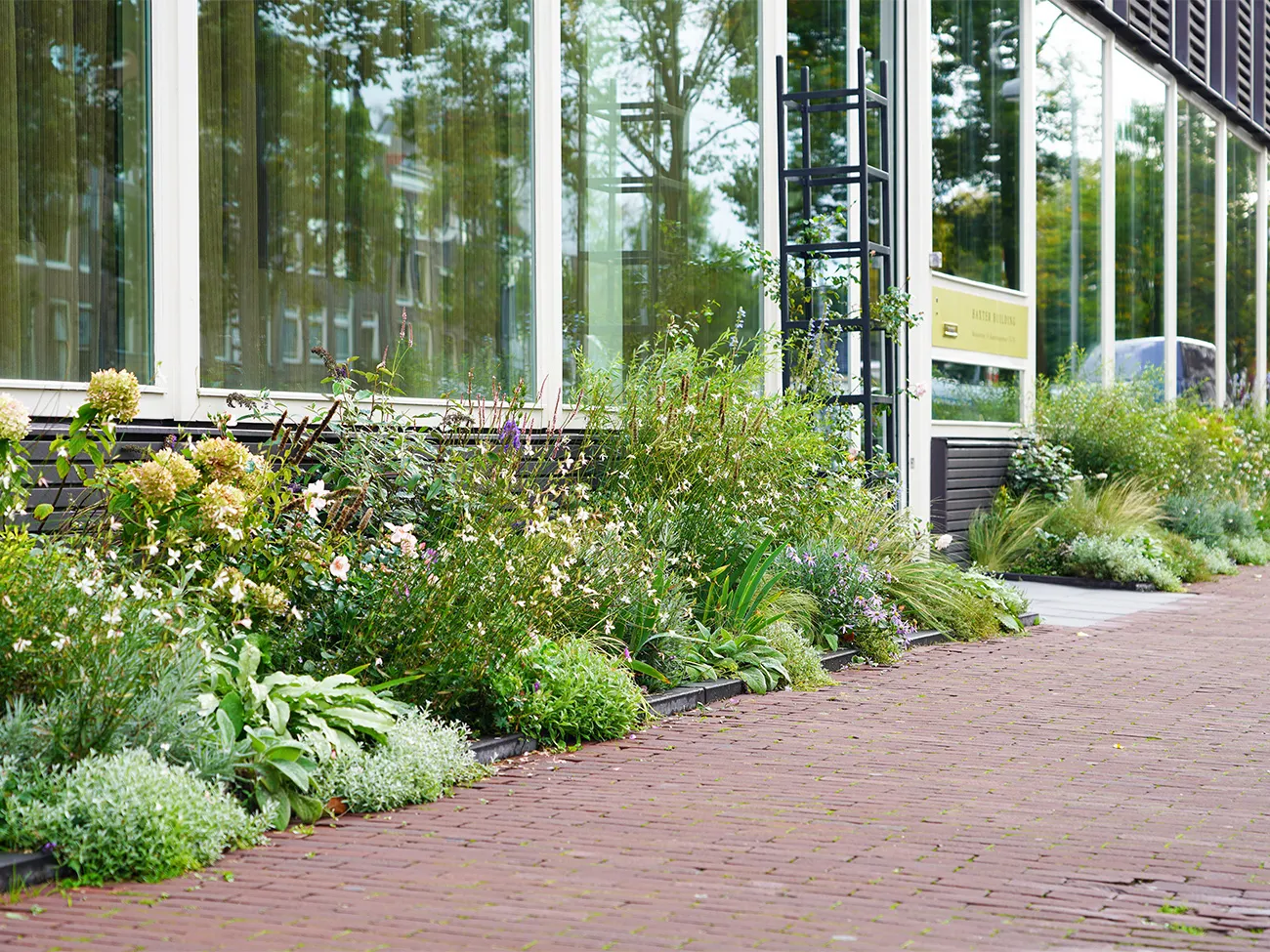
Muller began taking an increasing interest in policy as well as design because he saw that a lot was going wrong when it came to greenery in the city. “You can design whatever you like, but if installation and maintenance aren’t done properly, it won’t work. The designers of the city’s hard infrastructure, its streets and squares, have it much easier: you lay some paving and then just have to keep it clean and tidy. But with greenery, the work only starts once it’s planted. That’s when it starts growing.”
Muller is also drawing up planting plans more and more often, a task he has come to regard as his great passion. “That’s also my link with the Bloeimeesters. I’ve noticed that there’s actually very little knowledge and not much happening in our profession, landscape architecture, when it comes to planting. It’s also looked down on a little. The attitude is, ‘Oh, we can just add those plants at the end.’ They’re treated a bit like wallpaper. Which is nonsense, of course, because what do you ultimately use to green cities? Exactly: plants. So you really do need to know about plants, and that can take a lifetime. It’s incredibly fascinating, but perhaps infinitely complex. It’s no coincidence that the great landscape architect and designer Piet Oudolf only started working on major projects after the age of 50.”
Essential
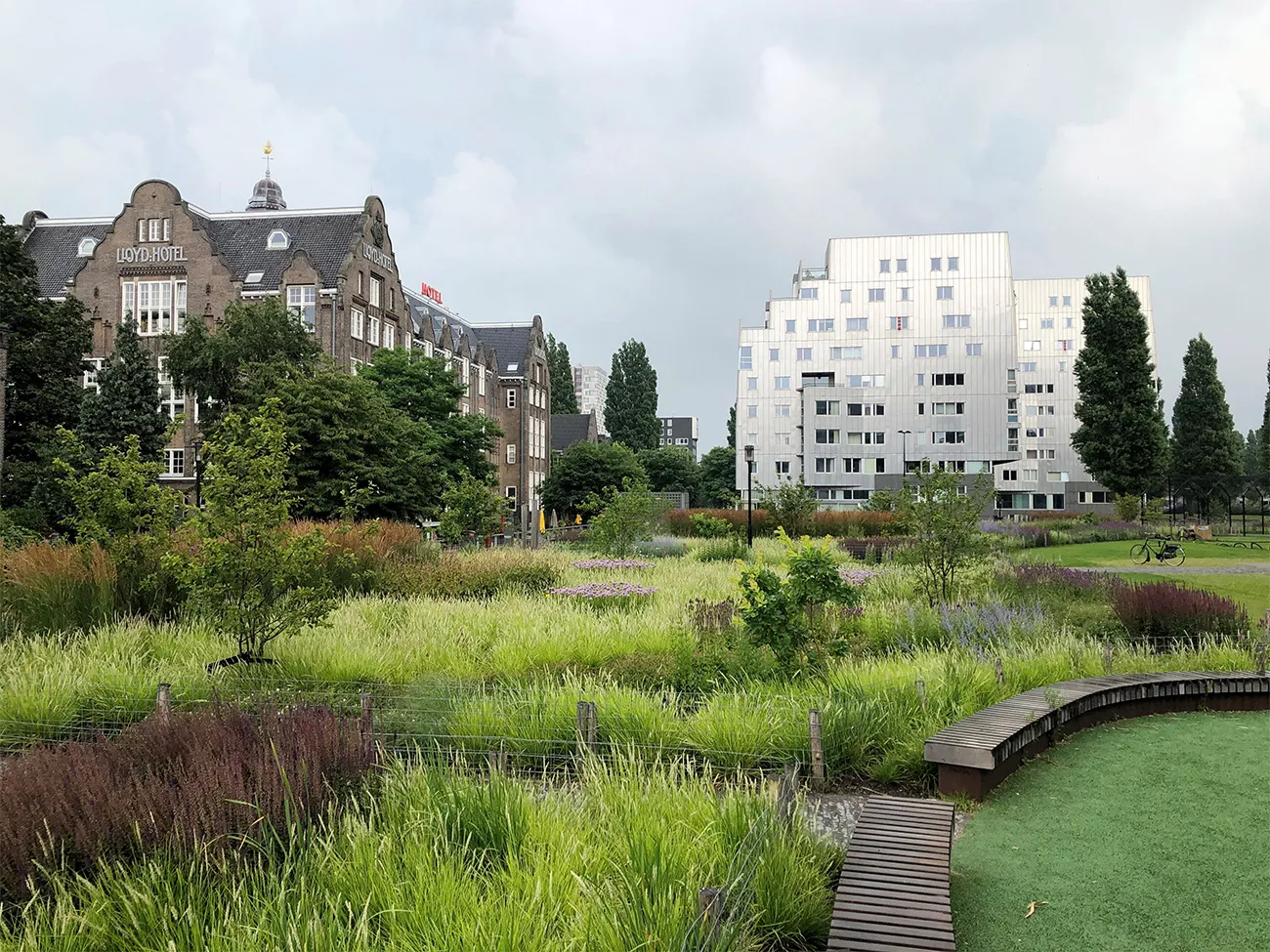
Building up knowledge takes time, Muller notes. And although things are slowly getting a little better, the construction and property sectors paid little attention to greenery for a long time. “People really do understand that more greenery in the city is essential, but I fear that as soon as the economy takes a turn for the worse again, the purse strings will be tightened. That would be a terrible shame.”
Muller observes that since the last crisis, construction in his city has been proceeding at an enormous pace. And because there isn’t much land available for building, many buildings are going up rather than out. As a result, the city is becoming much denser. “By 2030, Amsterdam’s population will exceed one million, but it will still be living on the same amount of land. The crowds in the parks show just how important green spaces are to people. And they are under pressure.”
Muller firmly believes that a green environment is hugely important, not only because of climate change and declining biodiversity, but also for people’s health. “Green spaces are places to exercise and play, but they also matter to our mental wellbeing: they let us experience the seasons and see birds and insects. My challenge is to do things a little differently from the past, when the focus was mainly on grass and trees. I want to bring much greater diversity to the greenery.”
Social cohesion
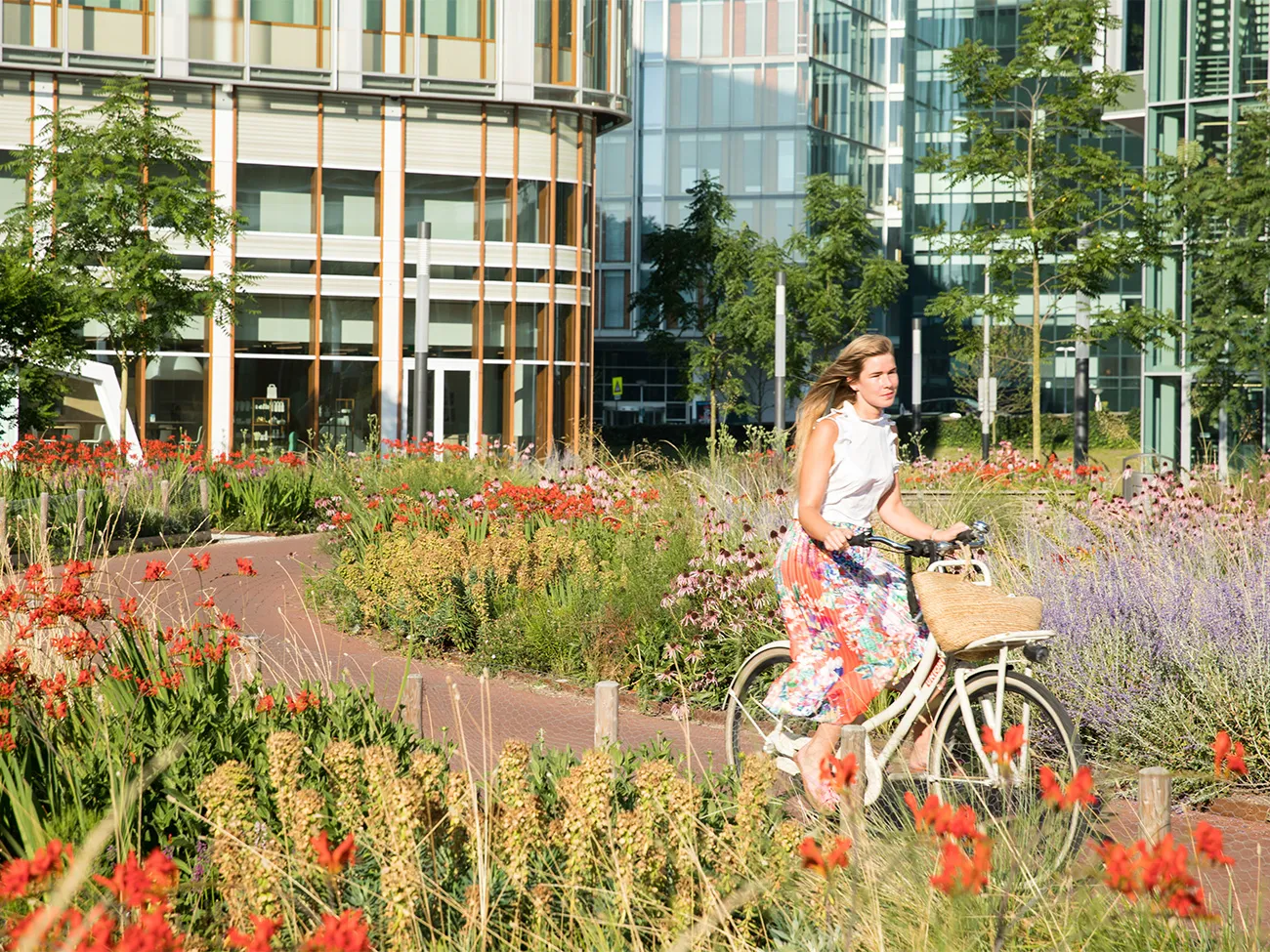
Alongside climate, biodiversity and health, social cohesion also plays an important role in Amsterdam’s Groenvisie. Muller says: “People need to be able to meet in green spaces, grow vegetables together or hold a party. Many people have no more than a small balcony, after all.”
Muller also wants to design the city’s green spaces so that they benefit not only people, but flora and fauna too. “That calls for a different approach to design. How can we create opportunities for plants and animals to thrive?”
Maintenance is another challenge. Muller sees a shift taking place. Younger generations are more accepting of wilder, less-pruned nature than older people. “But at some point it starts to look neglected. People start throwing their rubbish into it. You’re dealing with a very large and diverse group of users.”
For that reason, Muller tries to choose plants for his planting designs that can cope well with a changing climate, retain plenty of water and require little maintenance. “You can’t simply put everything you like in a garden into public spaces.”
Question about this story? Ask your question
Keep following this
Get an email when a new story is published. No account needed.
- SubjectGeneral







