









BOOM-heating system (BHS) offers a solution
Combating bleeding canker of horse chestnut through heat treatment.
Rust-brown spots appear on the trunk, spreading rapidly across the entire trunk and oozing a fluid. Initially clear, it later turns dark brown and viscous. Beneath the spots, the bark rots and eventually dies. According to Jan-Bouke Sijtsma of Boom-KCB in Nijeberkoop, these are the tell-tale symptoms of bleeding canker of horse chestnut.
With bleeding canker of horse chestnut, a bacterium infects the cells responsible for transporting nutrients through the tree. These become blocked, reducing sap flow. This in turn leads to a thinning crown, smaller leaves and dead branch tips. The bark sounds hollow, comes away from the trunk and splits develop. Sections of the trunk die back in vertical strips.
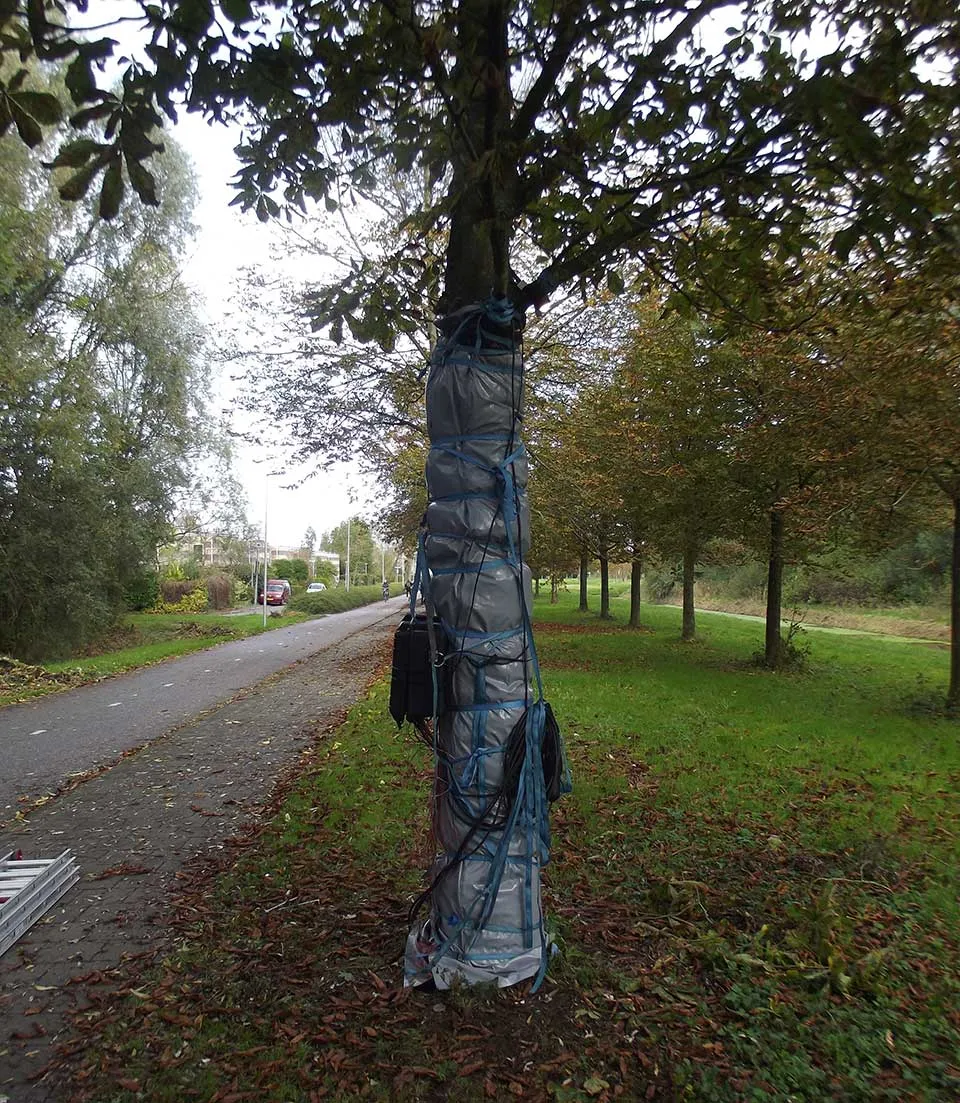
Treatment by heating
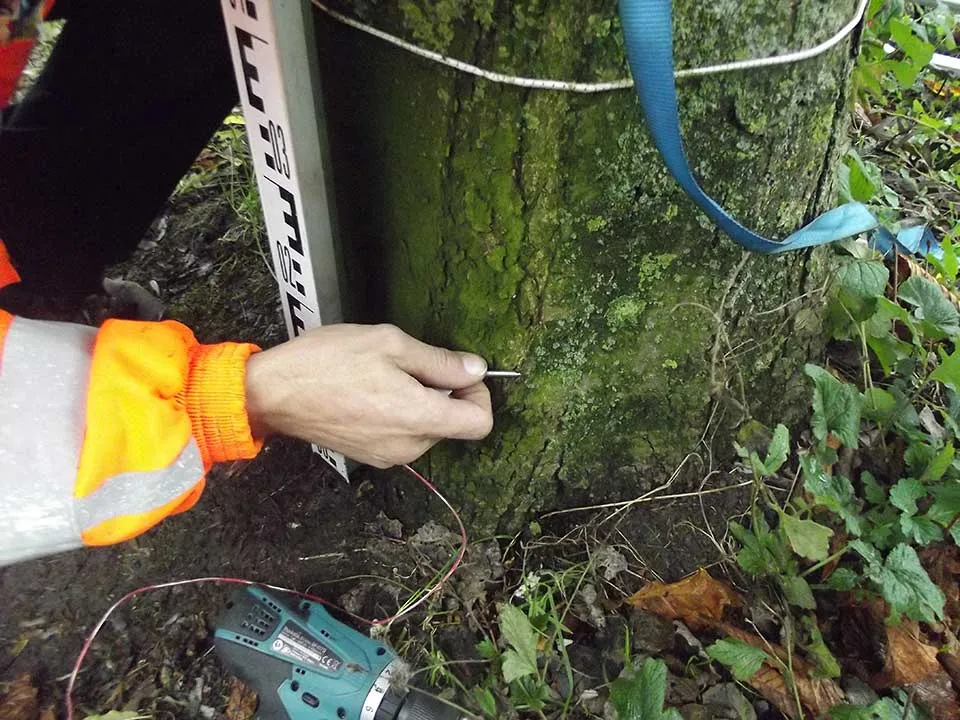
In collaboration with Wageningen University & Research (WUR), Boom-KCB developed the BOOM-heating system (BHS) to combat the disease. As the principal licence holder for the northern region, Boom-KCB is authorised to treat diseased horse chestnut trees. Sijtsma says: “The affected areas are heat-treated, killing the bacteria. WUR laboratory research showed that they are sensitive to temperature. Treating infected sections of the trunk at 40°C meant the bacteria could no longer grow or divide.”
In 2017, 25 mature horse chestnut trees were selected in collaboration with the municipality of Groningen, based on their condition and the extent of the infection. “Several severely affected trees were selected as test subjects. Fifteen trees were selected in accordance with the protocol developed by WUR. The trunks were wrapped and heated for 48 hours. Their condition, growth and symptoms were then monitored for three years. After three years, 75 per cent of all treated trees had a good life expectancy. Bleeding canker of horse chestnut had disappeared from every treated tree. A further 25 per cent were in poor condition or dead due to secondary fungal infections, or had been test trees. This means the success rate for the ‘protocol trees’ was 100 per cent.” ❚
Question about this story? Ask your question
Keep following this
Get an email when a new story is published. No account needed.
- SubjectGeneral







