









Boswaard in Weert: lessons from one of the greenest new neighbourhoods in the country
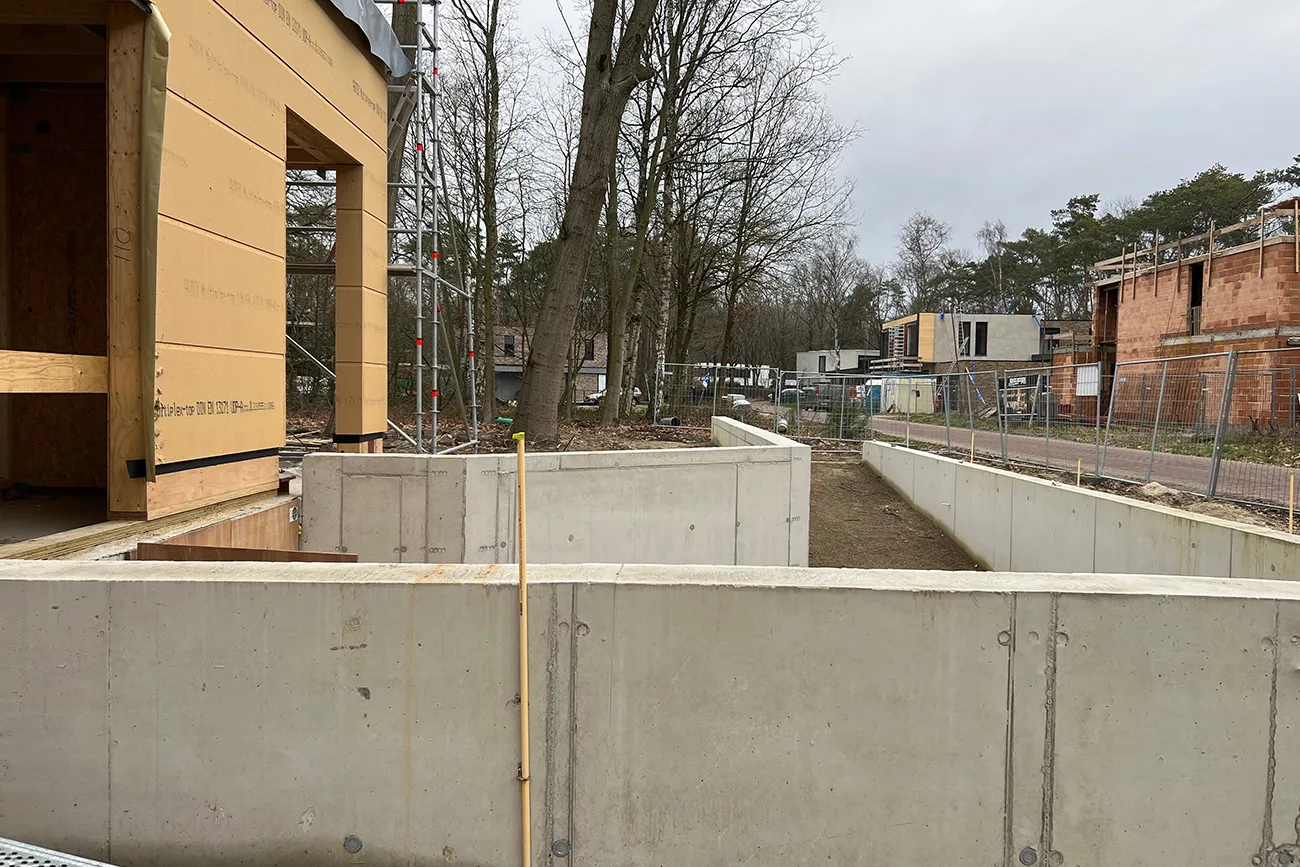
In 2019, the Province of Limburg bought the so-called mobilisation complex on Diesterbaan in Weert from the Central Government Real Estate Agency. It then sold the site to Ruimte voor Ruimte Limburg C.V. to build a new residential neighbourhood. And not just any neighbourhood, but a wooded area with spacious plots for 43 detached houses. Four years later, the first homes have been occupied by their new residents and Boswaard is nearing completion. However, not all the objectives set out in the ambitious plans have been achieved. Building on this scale in and with greenery still presents a number of obstacles, and offers important lessons for the future.
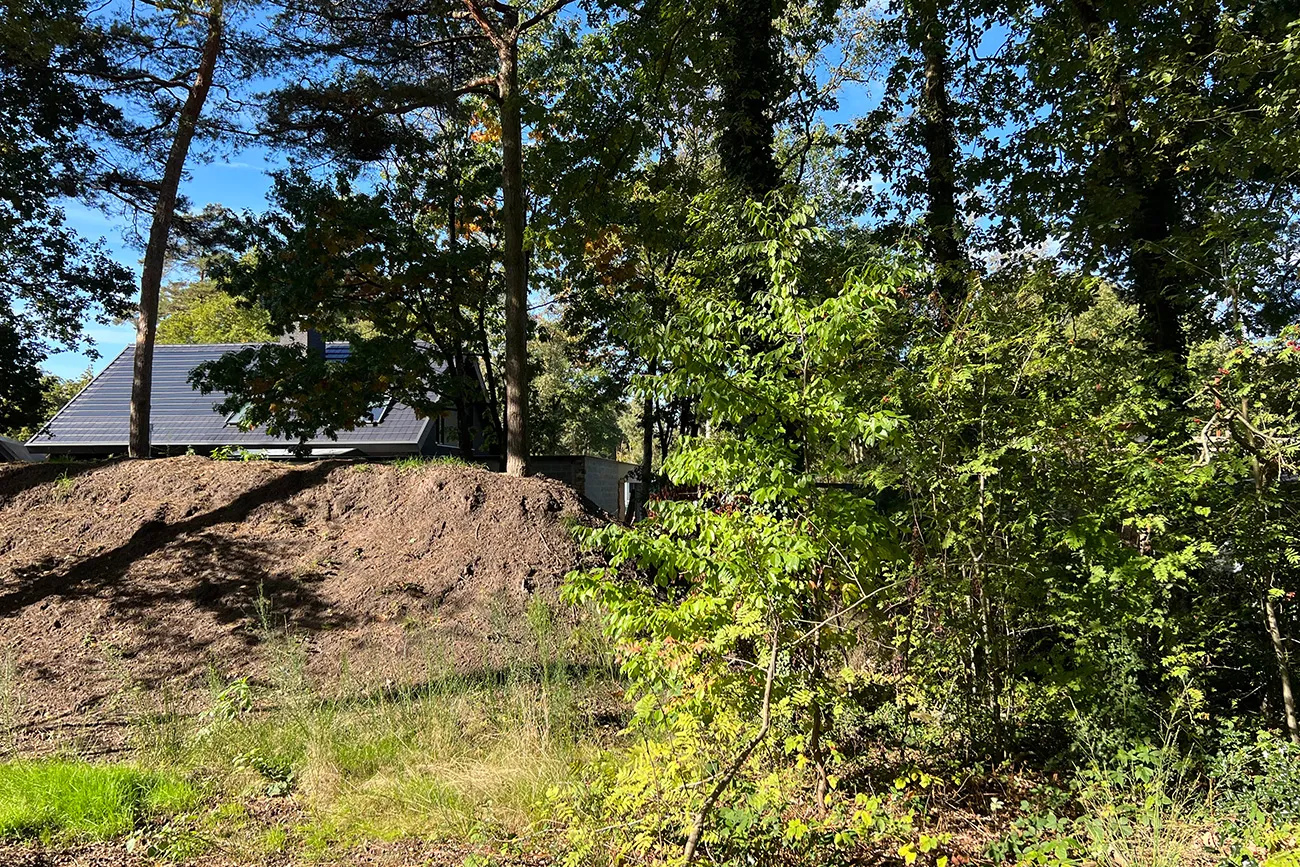
From the first sketches onwards, the aim was to preserve as much of the existing woodland as possible and “create a unique living environment where true lovers of living in a woodland setting can realise their dream home”, as stated in the design quality plan.
“That’s right,” says Werner Mentens, policy adviser for
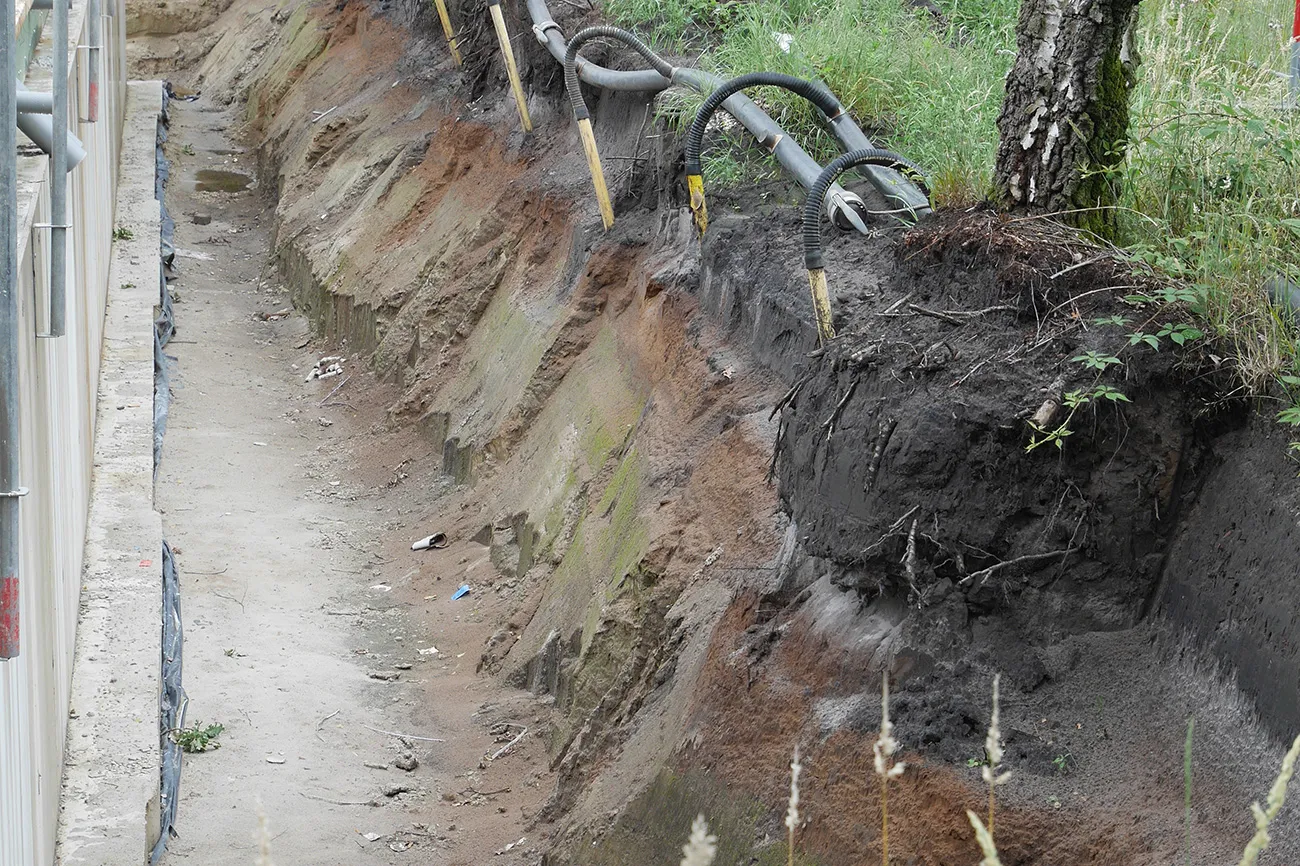
ecology, green space, nature and landscape at the municipality of Weert. “But with the benefit of hindsight, we might have needed to set out or organise certain things differently. When you offer building plots of this size, you can expect each new owner to have their own particular wishes. One wants a swimming pool, another a large basement for several cars. This requires groundwater lowering in several places at once, as well as the removal and delivery of large quantities of soil. That does not always sit well with preserving as many trees as possible.”
Plot passport
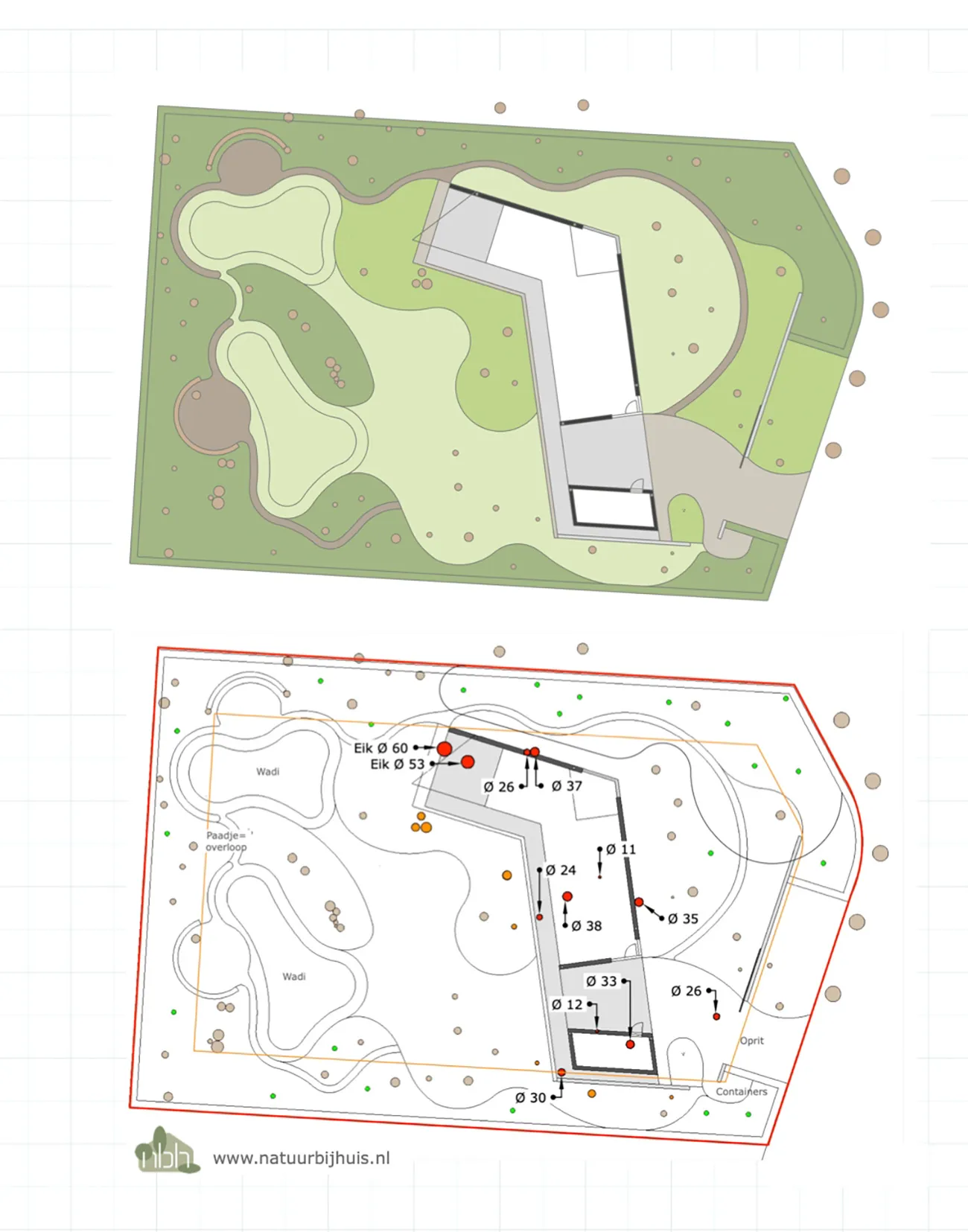
Garden designer Iverna Zaalberg of Natuur bij Huis and a member of Bloeimeesters nods in agreement. Zaalberg was brought in by a plot owner fairly early in the process to design a garden, but also, and above all, to obtain planning permission for the plans. “I started studying the design quality plan and the plot passport, and contacted Werner Mentens fairly quickly to check my garden design with him first, so I could be sure it met the requirements. One thing led to another, and I was soon asked to design a few other plots too. As I had by then become familiar with the process, I also acted as a kind of intermediary between the municipality and a number of new residents, with the aim of accommodating their wishes as far as possible within the scope of what was feasible.”
Mentens values Zaalberg’s input. “This was new for us too, and probably a one-off. Normally, you assess a planning application solely against the spatial planning framework set out in a zoning plan. But because this is such a special environment, other considerations come into play.” Such as preserving as many existing trees as possible. That had been a challenge in Boswaard from the outset. Mentens says: “People are keen to live in the woods, but when they come to realise their dream, a lot of trees have to go, and then you no longer have a woodland. We were constantly searching for the right balance between building and nature conservation. That led to quite a bit of tension and some heated discussions.”
Areas for improvement
Zaalberg notes that the design quality plan still has quite a few areas for improvement. “There was still too much leeway. The garden or landscape designer should really have been involved at an even earlier stage. We could then have addressed some of the sticking points. Some plots, for example, are heavily wooded. That makes sustainable building with solar panels difficult. In addition, felled trees had to be replaced on the plot itself. Sometimes there was hardly any room to do so, while other plots had very few trees. It would have been ideal to compensate across the neighbourhood rather than on individual plots. Or take the requirement that all trees had to remain outside the building footprint. In practice, that is not feasible: the construction work affects those trees regardless, through root damage caused by machinery or through the construction of basements.”
“Well,” says Mentens, “those basements also meant that groundwater lowering was being carried out on several plots at the same time, sometimes for extended periods. Many trees will suffer as a result in the future. They have taken a hit during construction.”
Moreover, not all plots entered the planning application process at the same time, making it difficult to coordinate the garden designs. “We have learned from that as a municipality too,” says Mentens. “When I cycle through the neighbourhood now, I am a little taken aback by how close together some of the houses are. I would have preferred to see more woodland between them, or fewer houses. But the municipality was not responsible for the development, that was Ruimte voor Ruimte’s responsibility. These are all competing interests that have to be weighed against one another.”
Enforcement
Better information for future residents could also have helped preserve the woodland, Zaalberg believes. “On some plots, literally every little tree that wasn’t listed in the plot passport was felled. I don’t blame the owners, because they didn’t know any better. But preserving a healthy woodland takes more than just keeping the trees of historic value. The understorey vegetation matters too. That is why effective enforcement by the municipality is important.”
“That’s right,” says Mentens. “But that isn’t always easy either, because capacity is limited.”
“That’s why I advocate a different approach to land allocation,” says Zaalberg. “With less private land and more public space. That would give the municipality more control.”
Mentens agrees. “Our experience in Boswaard has also changed how we view housing projects elsewhere. The time is right to give greater importance to green space.”
Question about this story? Ask your question
Keep following this
Get an email when a new story is published. No account needed.
- SubjectGeneral







