









Bringing nature and technology together
Text Armand LandmanImage The Urban Jungle Project
Greening places where it would seem impossible
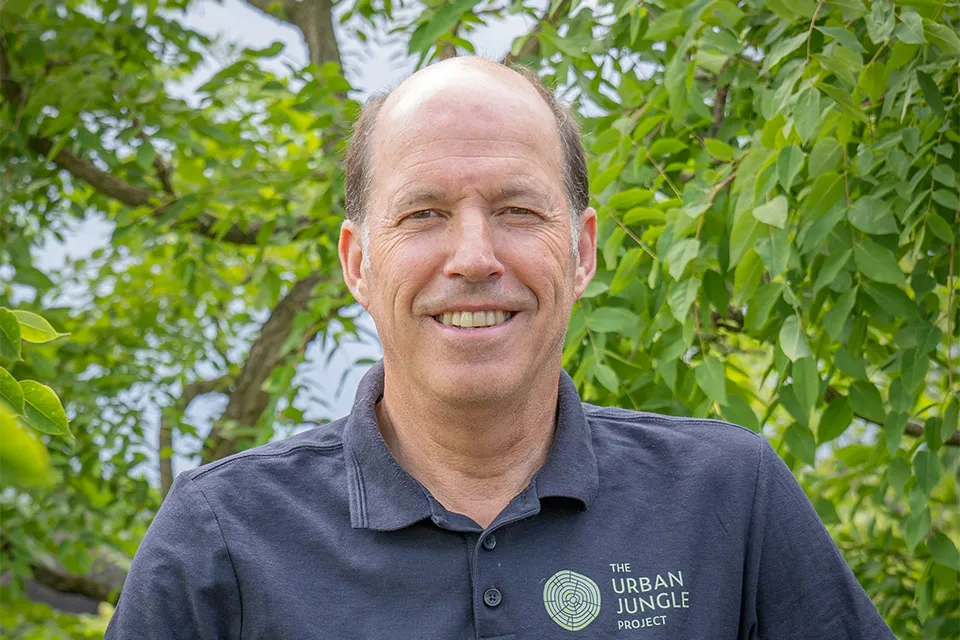
“Green was always a bit of an afterthought,” says landscape architect Maarten Grasveld. “Ten years ago, we were often brought in at the last minute. Now green infrastructure is seen as a crucial solution to heat stress, water management challenges and biodiversity.” Grasveld owns Grasveld Tuin- en Landschapsarchitecten and co-founded The Urban Jungle Project. In these roles, he works closely with organisations including Boomkwekerij Ebben to develop innovative solutions that make greening possible in places where it would normally be difficult, such as on roofs with limited load-bearing capacity or in existing urban areas with little space.
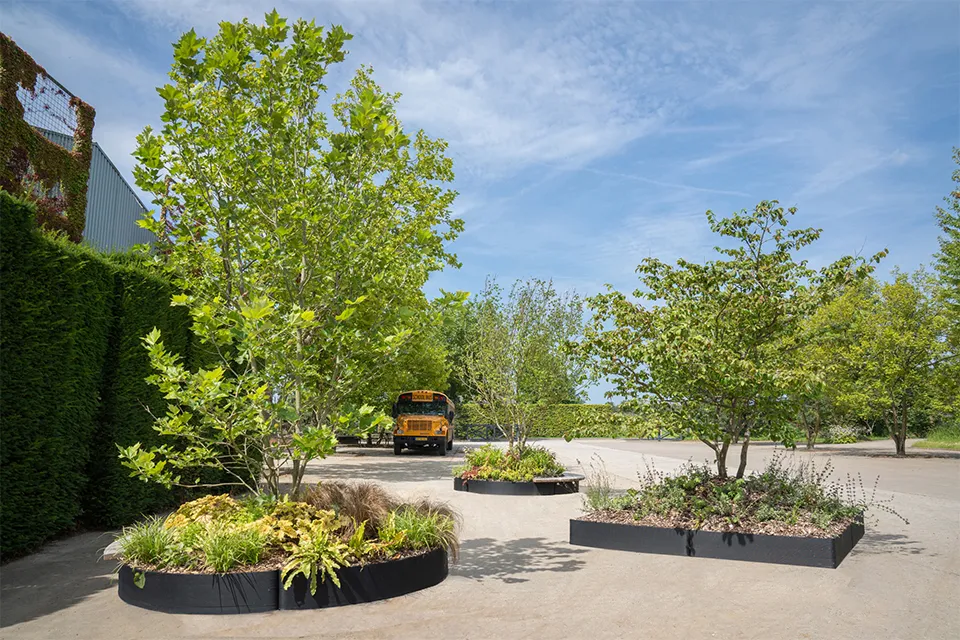
Traditionally, the process of designing a new building or area was relatively straightforward: first came the building professionals and engineers, and only when everything was in place did anyone look at where some greenery could be added. “We really were the last link in the chain,” Grasveld recalls of when he started his own business almost 40 years ago. “But today, as sustainability and climate adaptation become increasingly important, the design process is changing. Landscape architects are now part of the design team at an early stage. That is a huge step forward, because properly integrating the outdoor space into the overall design means many problems, such as heat stress and water storage, and, just as importantly, creating a liveable residential environment, can be addressed from the outset.”
Yet the greater role of green infrastructure also has another side, Grasveld notes: “In the past, we could approach a design purely aesthetically. Now it has to serve several functions: green spaces must not only look good, but also contribute to biodiversity, water retention and a healthier living environment, for example. That is a fantastic opportunity, but it does require an integrated approach involving many different parties. We need to work together better than ever, not only landscape architects with one another, but also with engineers, tree growers and clients.”
Nature and technology
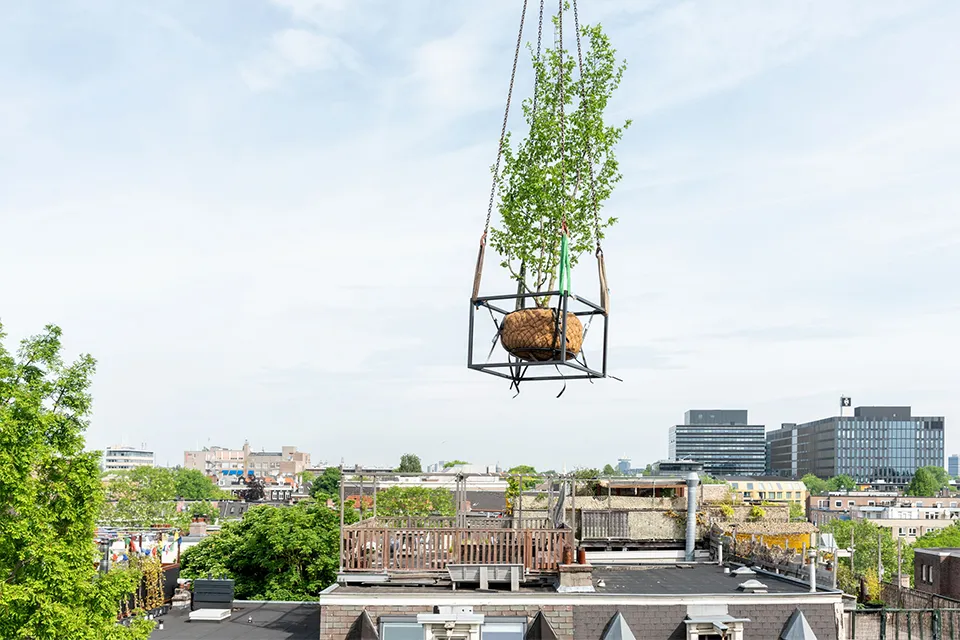
As part of this integrated approach, Grasveld and his partners joined forces with a technical innovator several years ago. This eventually led to The Urban Jungle Project, which aims to green roofs on existing buildings where a layer of soil would normally not be feasible. “It started with the question: how can we make cities more liveable and resilient for the future? Take a city like Rotterdam: the city centre alone has around one million square metres of grey roofs. That is an enormous opportunity for greening. But you cannot simply put tonnes of soil on them,” says Grasveld.
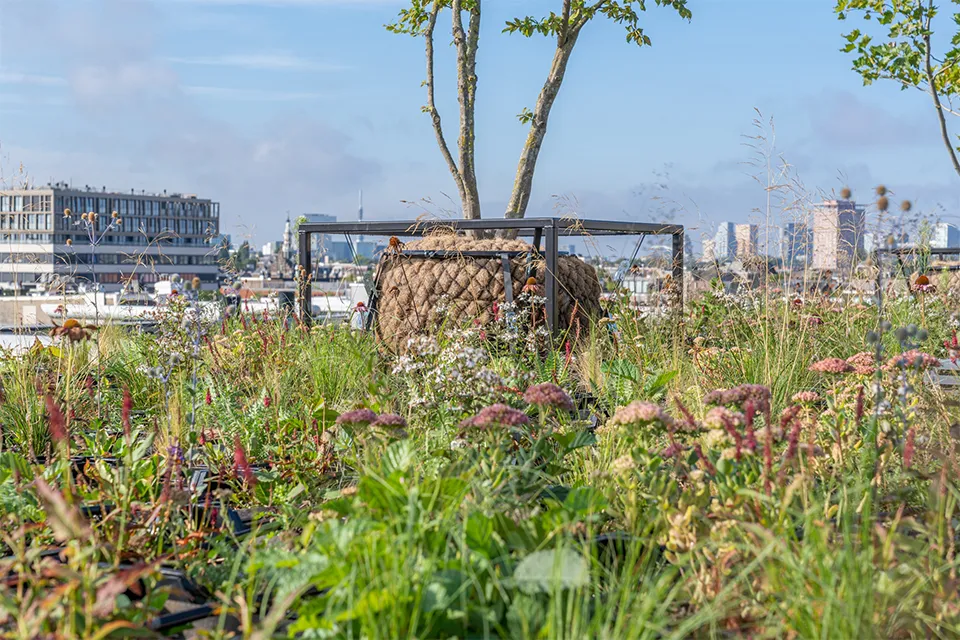
The result is lightweight, modular structures for trees and plants that avoid overloading the surface and can be moved if necessary, for example to carry out roof repairs. “This makes it possible to have trees and other plants on parking decks, penthouses or existing roofs with low load-bearing capacity. Technology is essential: trees have to be anchored and protected against issues such as water shortages. We use plug-and-play systems and make as much use as possible of rainwater for irrigation. We truly believe in combining nature and technology: where one falls short, the other provides the solution.”
Testing and learning
It takes experimentation and a willingness to keep learning. Grasveld says: “We have been working on this for about eight years. That is a very short time in nature’s terms, so we are still learning which species thrive in our structures, how to manage the water supply and how to keep the trees healthy. That is why we remain involved in maintenance after a project is completed. This is living material, responding dynamically to its conditions. If it is scorching hot for two weeks and there is no rain, the tree needs to be watered in the meantime. Conversely, each tree teaches us about its behaviour, allowing us to keep refining our solutions.”
The Urban Jungle Project also places great emphasis on biodiversity. “We look at the planting as a whole, from trees and shrubs to herbs. In some places, we can create a broad, lush landscape; elsewhere, space is limited. That calls for a tailored, creative approach. Ultimately, though, we want to achieve more than a few green accents: it needs to become a fully-fledged place for both people and nature.”
Tendering and developing expertise
Grasveld stresses that this way of working requires a different mindset across the industry. “Many clients now recognise the importance of green infrastructure, but traditional procurement methods are not always suited to living materials. If greenery is treated as an afterthought in a specification rather than a core element, problems arise: short contract periods, inadequate planning for the substrate and too little consideration of the long term. That is detrimental to quality. Working as part of a construction team and under a long-term maintenance agreement means having the confidence to invest in the quality and vitality of green spaces.”
The landscape architect says efforts are also needed to attract more young talent: “We urgently need more people choosing green as their field and bringing technical knowledge with them. In practice, however, we see that education providers sometimes struggle with the image or naming of a course. Horticulture courses are being rebranded as ‘management’ courses, while plant knowledge is underrepresented, even though it is fundamental to the profession. Fortunately, I also see people from other sectors switching careers into green industries. There is enormous demand for quality, and the sector is evolving rapidly.”
Stepping stones
For many projects by Grasveld and The Urban Jungle Project, trees are the key to keeping cities liveable. They provide shade, capture water and cool their surroundings. They also boost biodiversity by acting as stepping stones between other green spaces in the city. “Wherever possible, we plant trees in the ground,” says Grasveld. “But that simply is not an option on existing roofs. So we need to do something extra, and that starts with the right collaboration between the architect, tree grower, landscape architect and client. We want to be flexible, but also to avoid greenwashing. Our greenery has to make a genuine difference.”
Question about this story? Ask your question
Keep following this
Get an email when a new story is published. No account needed.
- ThemeNature-friendly green space management
- SubjectGeneral







