









Buxus is one of the best plants for bees
Text Didier HermansImage Herplant BV
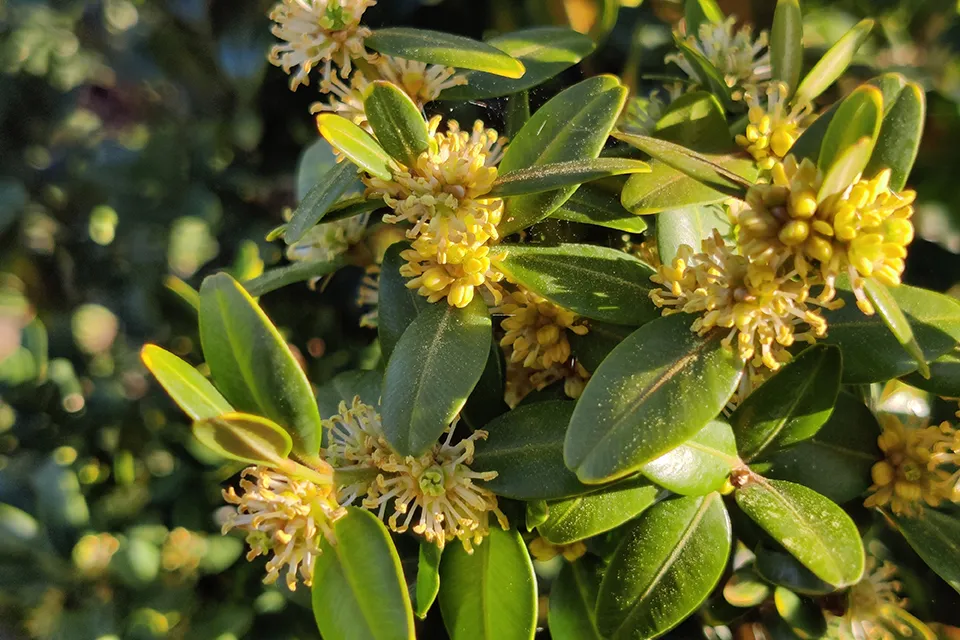
Small flowers, much loved
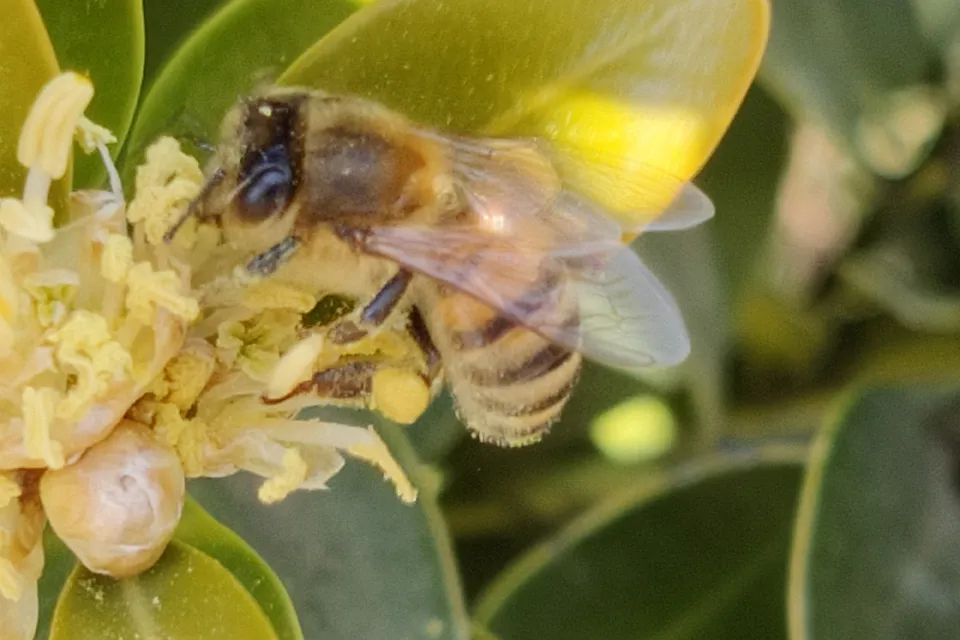
Beekeepers know Buxus as one of the best plants for bees, but unfortunately, the wider public does not. And it is not only honeybees that flock to Buxus. Many species of wild bees and hoverflies also find this source of pollen and nectar in early spring.
Buxus balearica and common box (Buxus sempervirens) are native to Europe. The latter is also found in many gardens and is native to the Netherlands. The flowering times of the different Buxus species can vary considerably.
The earliest-flowering box in our region is Buxus microphylla var. koreana, Korean box. This is usually a compact shrub with very small leaves, which can start producing its strongly scented flowers as early as the beginning of February. ‘Flowers’ may be an overstatement for Buxus, as they are usually small and inconspicuous, but bees certainly know where to find them.
The main flowering period for Buxus sempervirens and its cultivars begins in late March or early April. Most other Asian species also flower during this period. The flowering season for Buxus ends with Buxus balearica, which usually finishes around 30 April.
Buxus that is not pruned often, or has reached a certain age, flowers every year. This does not harm the plant and is a natural process. There is a great deal of confusion about this, even among so-called professionals in our sector. They usually refer to plants grown in pots and subjected to extreme conditions (no food or water), which then flower. This is the plant’s survival instinct and has nothing to do with normal growing conditions.
Both the pollen and nectar of Buxus are rated at the highest level: see https://www.imkerpedia.nl/wiki/index.php/drachtplanten. Moreover, Buxus flowers when few other plants are in bloom and attracts large numbers of a wide variety of beneficial insects. Both pollen and nectar are collected, and are crucial for young bees and other insects.
Bee species and hoverflies
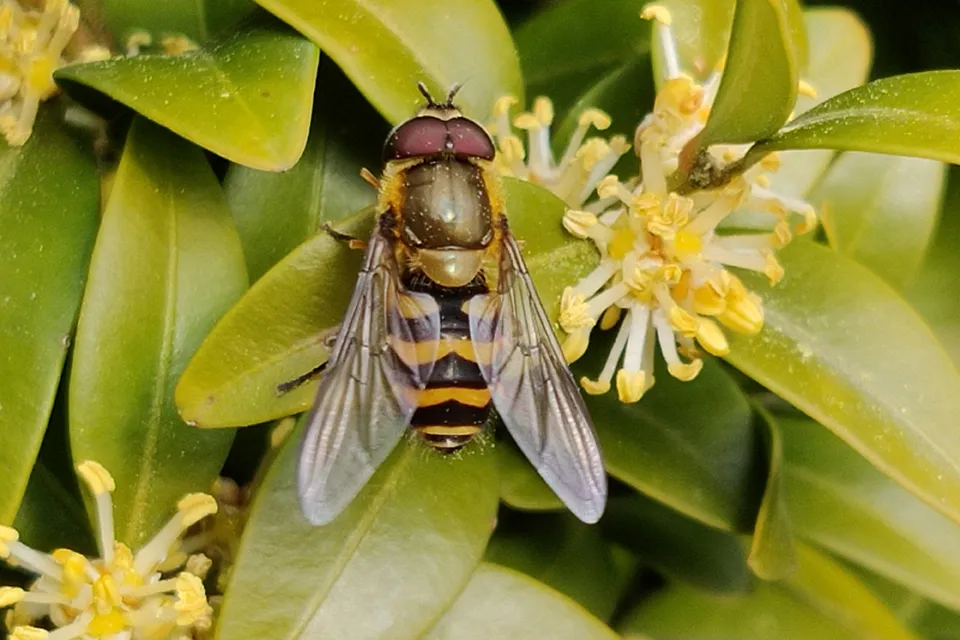
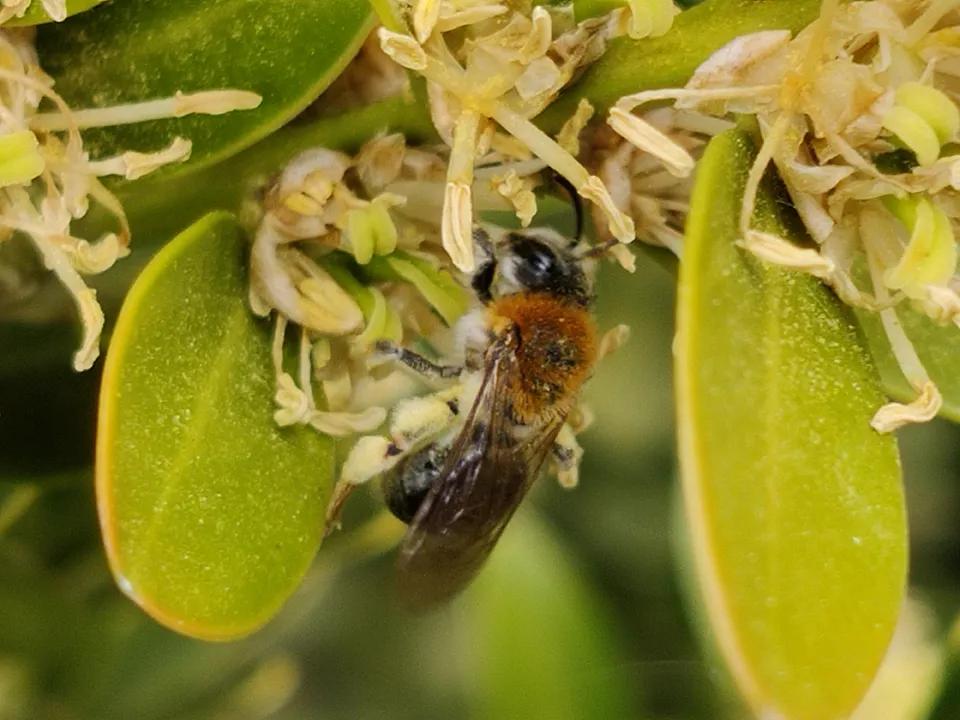
There are around 360 species of wild bees and some 340 different species of hoverflies in Belgium. Bees have four wings and long antennae. Hoverflies have two wings and short antennae. They are highly agile and can hover in one spot. Hoverflies mimic wasps and bees to deter their natural enemies. However, they have no sting and are therefore harmless. Recent research (2020-2022) has shown that dozens of species of wild bees and hoverflies forage on flowering Buxus.
Pollen
Buxus is an important plant for bees, providing high-quality pollen and nectar for honeybees, wild bees and a whole host of other beneficial insects. As Buxus is generally classified by many as an ‘ordinary garden plant’, it has received far too little attention in this respect.
In recent years, Buxus has been plagued by the invasive box tree moth, and people were even urged to remove it on a large scale. This campaign has probably led to the loss of many older Buxus shrubs that flowered prolifically every year. This has presumably had a major impact on our biodiversity and may also have been highly detrimental to the many species that forage on Buxus. Further research will be needed to establish the impact, but one thing is certain: insects value Buxus highly.
Buxus grown as a multi-stemmed shrub or small tree, or left largely unpruned, certainly has a place in our gardens and contributes to biodiversity. Many species and cultivars require little pruning and are ideal for use in a more natural garden.
Question about this story? Ask your question
Keep following this
Get an email when a new story is published. No account needed.
- SubjectGeneral







