









Clay pavers and the water cycle
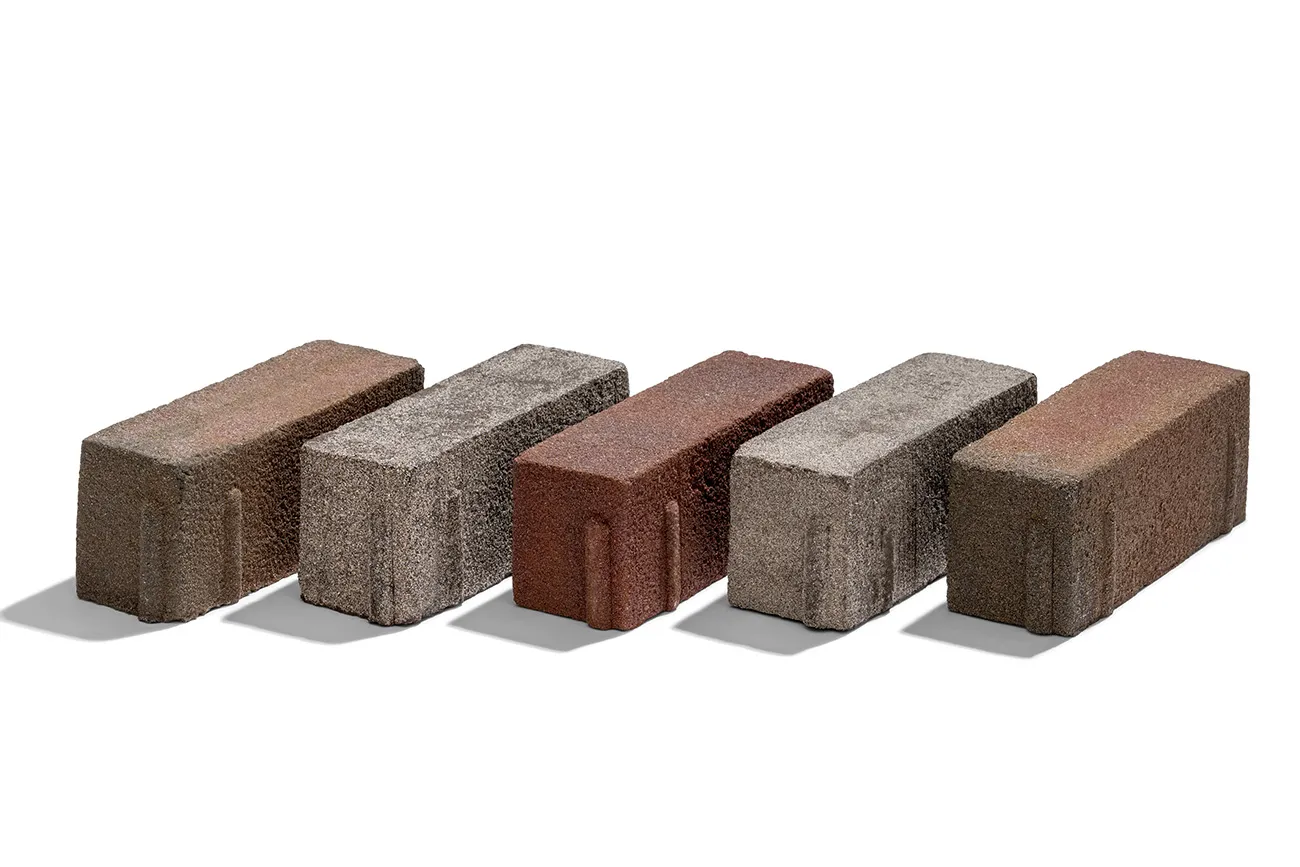
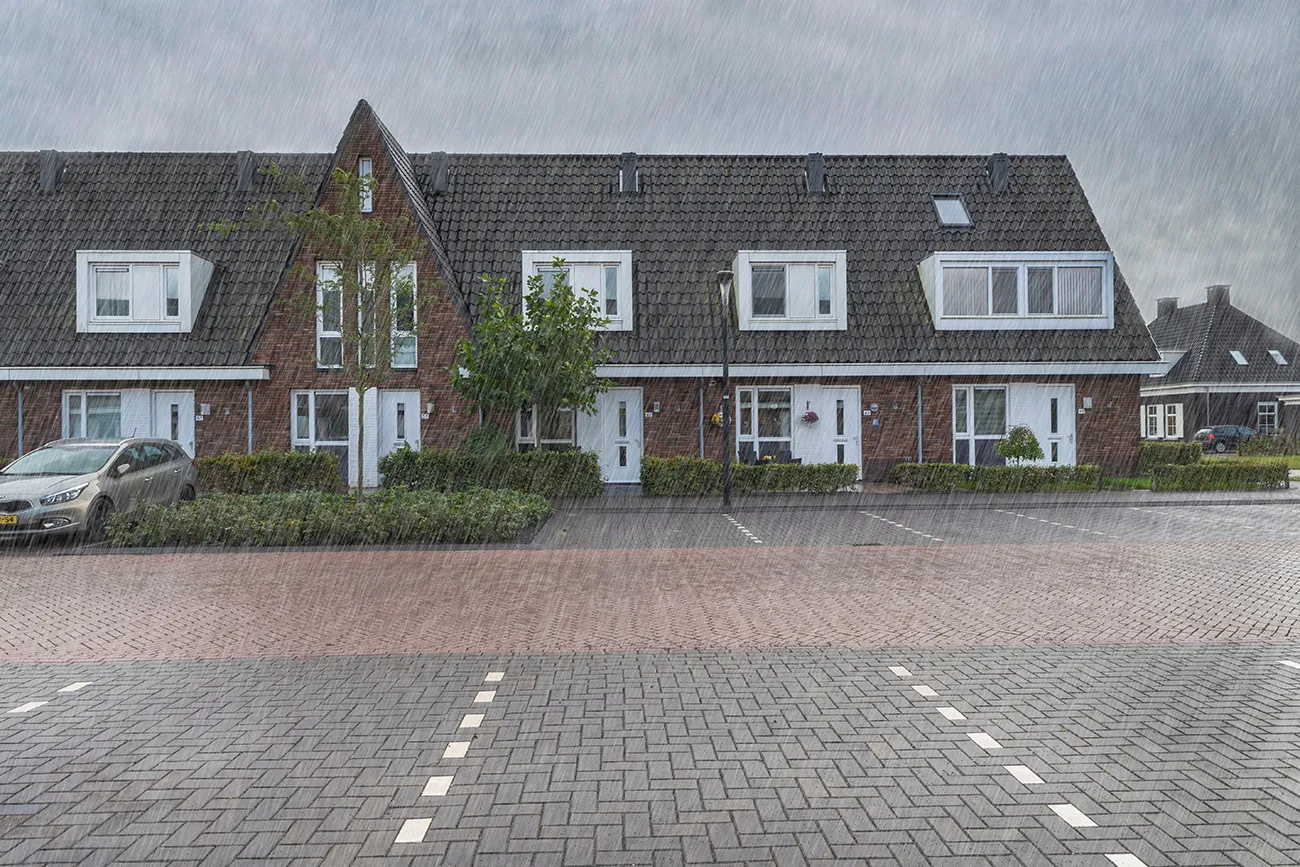
The consequences of the increasingly pronounced swing between prolonged drought and intense downpours are becoming hard to ignore. Stricter urban planning regulations are intended to limit the damage. Anyone still planning to pave an area today would be wise to look for a water-infiltrating alternative. One option, for example, is Vandersanden’s Drainflow® water-permeable clay pavers, although the manufacturer is quick to point out that this alone is not enough. A complete systems approach is needed.
Climate adaptation requires a systems approach
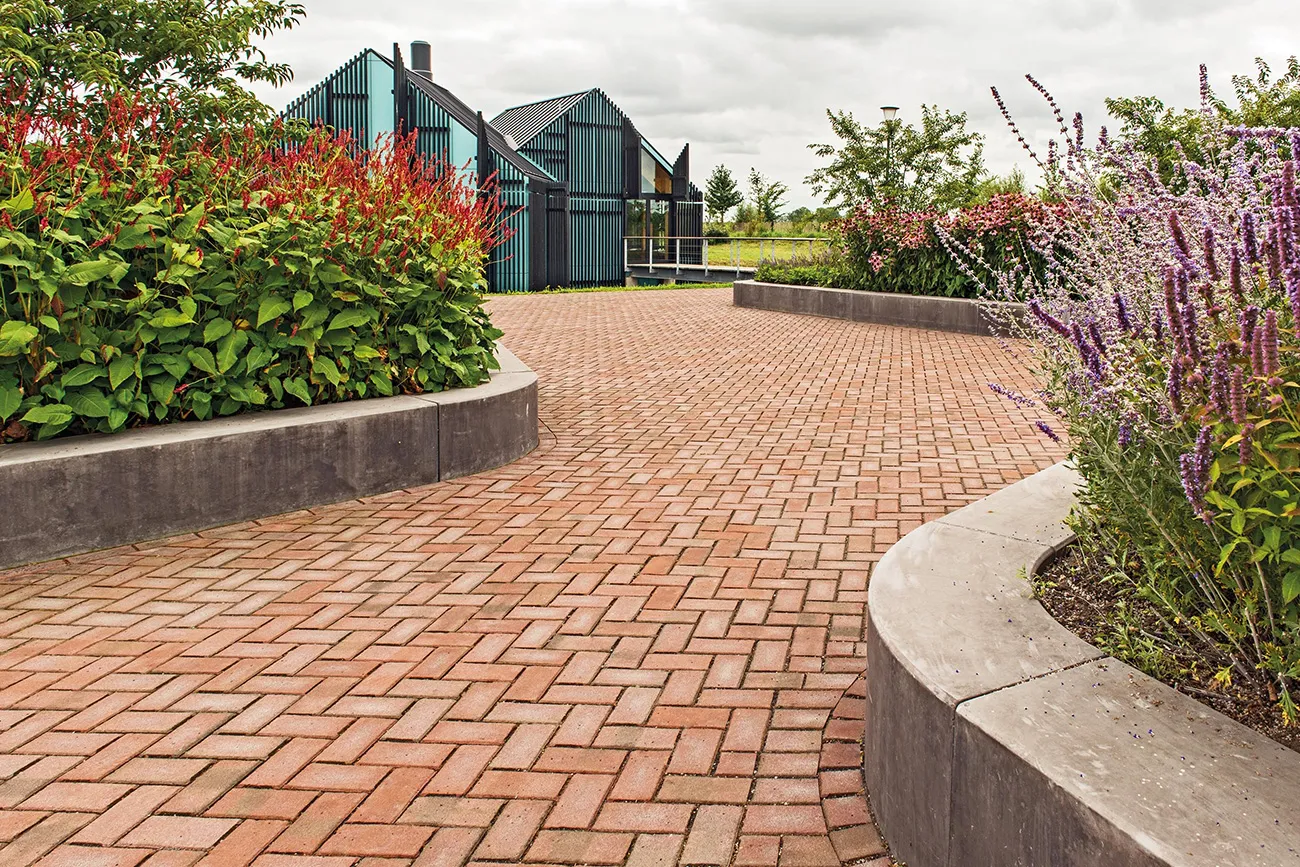
Drainflow® is a range of water-permeable clay pavers, available in various sizes and thirteen sand-faced moulded colours. “The pavers are designed with spacers or recesses on the ends, or even all the way round,” says Kris Van Duyse, commercial director of Pavers at Vandersanden. “When they are laid, this creates an open space between each paver, allowing water to seep into the ground.”
The benefits of fired clay
The fact that Vandersanden offers a water-permeable rather than a water-porous solution is inherent to the product. Van Duyse explains: “Fired clay is not porous, so you cannot simply make it water-permeable. However, it offers remarkable strength and robustness, a proven average lifespan of 135 years and, for example, excellent recyclability.”

“Drainflow®’s water-permeable design means that all these qualities can still be combined with the key water-permeability standards. And there is no need for extra work with plastic or other spacers, either. The pavers’ own design ensures the necessary spacing, allowing them to be laid smoothly.”
The system also determines water permeability
Drainflow®’s water-permeability performance has been tested on several test surfaces. “The minimum standard of 540 litres infiltrating per hectare per second, equivalent to twice the average rainfall, was comfortably exceeded,” says Van Duyse. “In some cases, the paving allowed more than twice that amount to pass through. But that is not down to our water-permeable pavers alone. The entire system build-up matters.”
As well as the pavers themselves, Van Duyse also stresses the importance of the materials used for the joints and sub-base. “Depending on the type of subsoil, it may also be necessary to install infiltration crates or other buffer systems. Periodic maintenance, in the form of brushing and high-pressure air cleaning, is needed to maintain the paving’s high infiltration rate.”
“Ultimately, all these factors help determine the system’s infiltration capacity and, therefore, the success of our product. It makes sense, then, that we also provide sound advice on this.”
The complete cycle
At the same time, Van Duyse is well aware that Drainflow® paver production is also part of a larger system. “In terms of water management, it is worth noting that clay extraction contributes to better water management. Clay extraction creates new nature areas and retention basins where water can be collected during periods of heavy rainfall and released back into nature.”
‘Together to Zero’
“We aim to be fully CO2-neutral by 2050,” he says. “This ambition calls for action at every level: from manufacturing products that contribute to a climate-resilient environment to greening our production methods, dematerialising products as much as possible and generating our own electricity. Next year, we even want to bring a CO2-negative brick to market,” Van Duyse reveals, “made from a by-product of the metal industry. This is how we consciously look beyond our own sector.”
Question about this story? Ask your question
Keep following this
Get an email when a new story is published. No account needed.
- SubjectGeneral







