









Clouds and topiary forms in holm oak or kermes oak
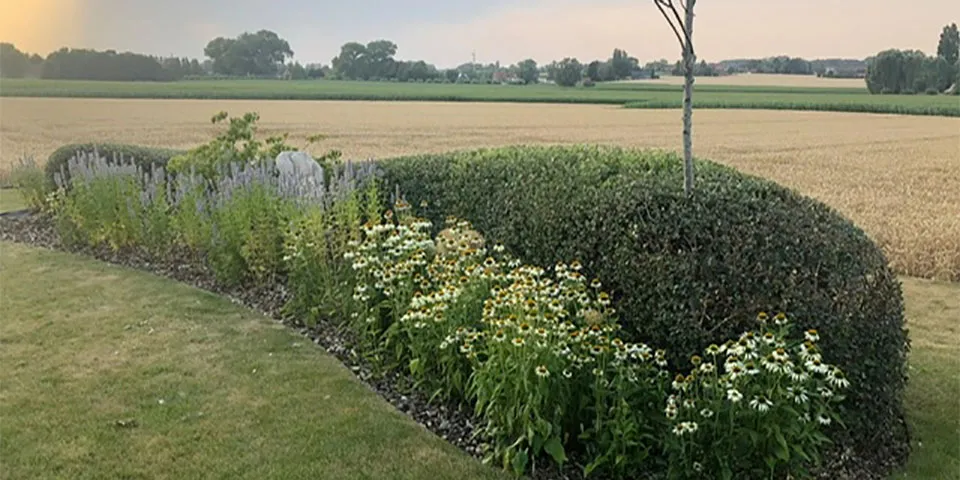
Robust yet elegant, winter-hardy clouds and topiary forms have long secured their place in modern garden and park design. To ensure they continue to fulfil their decorative role brilliantly for years to come, Hugo Maes in Waregem takes great care to grow holm and kermes oaks with small, fresh-looking leaves.
Decorative and winter-hardy: an eye-catching feature in gardens and parks
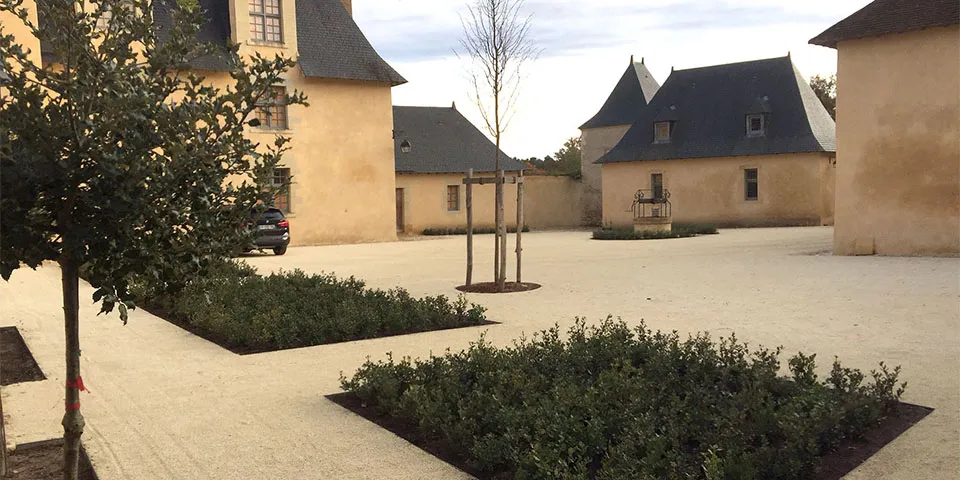
For planting topiary forms, use 5 to 7 plants per m2.
Holm oak, or Quercus ilex, grows mainly in southern Europe and North Africa, as does its smaller relative, Quercus coccifera (kermes oak). It is one of the most common woody plants in these regions, perfectly suited to calcareous soils and mild temperatures, and is characterised by its dense foliage of leathery, smooth or holly-like serrated leaves with felt-grey to silvery undersides. Depending on the growing site, leaves in this natural habitat reach around 3 to 8 cm in length, although Hugo Maes has a clear preference for plants from southern France with the smallest leaves. Each year, he carefully selects the finest acorns in the garrigue, then has them germinated and grown on in Waregem.
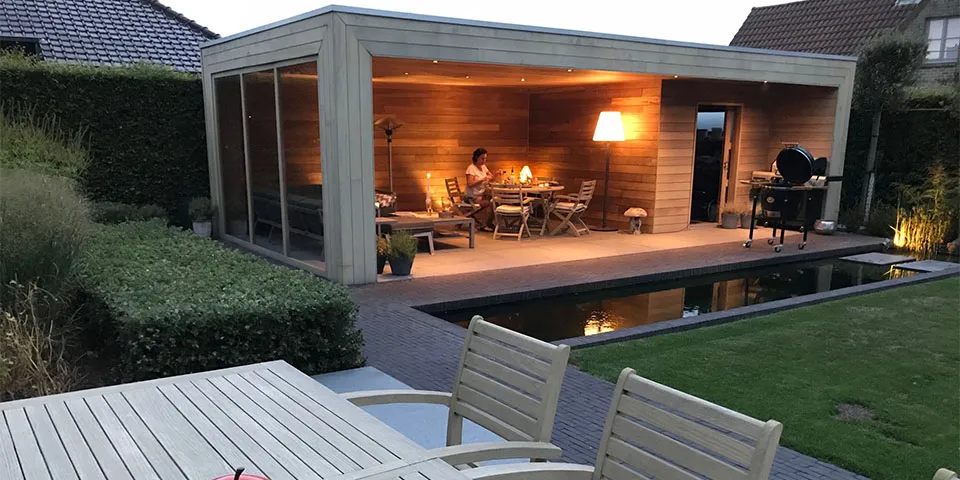
Quercus ilex is also suitable for creating clean-cut surfaces and lines in a modern garden design.
Compact and dense
The choice of acorns of French origin, combined with the regular pruning and extensive care the plants receive as they are grown on in Belgium, produces compact, bushy, well-branched plants with small evergreen leaves. Plant 5 to 7 per m2 to create a completely dense and durable topiary form. Thanks to the full, sturdy foliage, there is no need to worry about gaps appearing in your perfectly sculpted ornamental hedge.
If prolonged extreme cold or drought does exceptionally cause the holm oak to lose some leaves, new growth is quick to appear. Fresh young leaves emerge almost immediately where the foliage has been lost.

As holm oak is relatively slow-growing, topiary forms retain their shape perfectly for a long time.
Suitable for every style of pruning
For the same reasons, Quercus ilex is also ideal for a wide range of pruning styles. Wave-shaped topiary forms along a path or natural pond, decorative clouds adding variety to an otherwise flat lawn, or clean lines and surfaces delineating garden rooms in a modern design… the possibilities are endless.
As holm oak is relatively slow-growing, topiary forms also retain their shape perfectly for a long time. Two pruning sessions a year, one in late spring and one in early autumn, are enough to maintain even the sharpest contours. If you opt for a looser style, one pruning session will be enough.
Exceptionally robust
Topiary forms made from holm oak are also easy to maintain in other respects. Unlike other hardy species traditionally used for this type of planting, Quercus ilex is not susceptible to diseases, pests or damage. Thanks to its southern origins, it stands up well to sun, drought, wind and even salt, while Hugo Maes has adapted the plant perfectly to our own winters and soil conditions through careful local cultivation. In addition to one or two pruning sessions, an annual application of lime is all that is needed.
However, planting topiary forms does require some extra care, especially during hot, dry summers. For the plants to establish their roots properly, it is essential that they receive enough water during this period. If there is not enough rain, they will need to be watered by hand. Once established, they no longer need watering, even in extreme weather conditions.
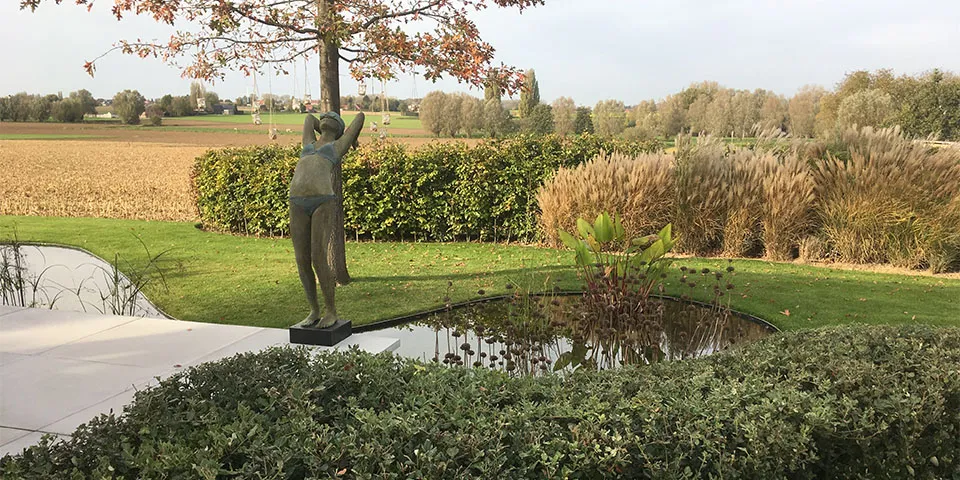
Thanks to its southern origins, Quercus ilex stands up well to sun, drought and wind.
Also suitable for small gardens
In principle, Quercus ilex can be used to create clouds and topiary forms up to around three metres high, although lower clouds and surfaces are generally preferred in practice.
There is also demand for miniature topiary forms, particularly in smaller gardens. Quercus coccifera, or kermes oak, is especially well suited to this. These plants grow no taller than one and a half metres, are even slower-growing and more compact than holm oak, and are so drought-tolerant that they can, for example, also be planted in gravel.
Another advantage is that the hard, spiny leaves of this miniature version turn a warm, soft bronze in spring. This brings an unexpected spectacle to the garden throughout the year.
Question about this story? Ask your question
Keep following this
Get an email when a new story is published. No account needed.
- SubjectGeneral







