









Controlling oak processionary moths while boosting biodiversity?
Focusing solely on pest control risks making the problem worse. The same applies to oak processionary moths, where years of control measures also killed many natural enemies. The solution? The Storix EPR Regulation Method offers ecological, sustainable and cost-effective management.
Controlling oak processionary moths while boosting biodiversity?
Since oak processionary moths (OPM), with their urticating hairs, began irritating people and animals, every effort has been made to control them. Measures have ranged from spraying biological bacterial preparations to vacuuming up the feared nests. But this indiscriminate approach targets not only OPM, it also kills natural enemies such as parasitoids. “Sooner or later, the caterpillar will return from other areas, and without natural enemies, a pest outbreak can run unchecked,” says Ton Stokwielder of Storix. “Our EPR Regulation Method is designed to prevent nuisance from OPM by promoting biodiversity.”
The Butterfly Filter Box
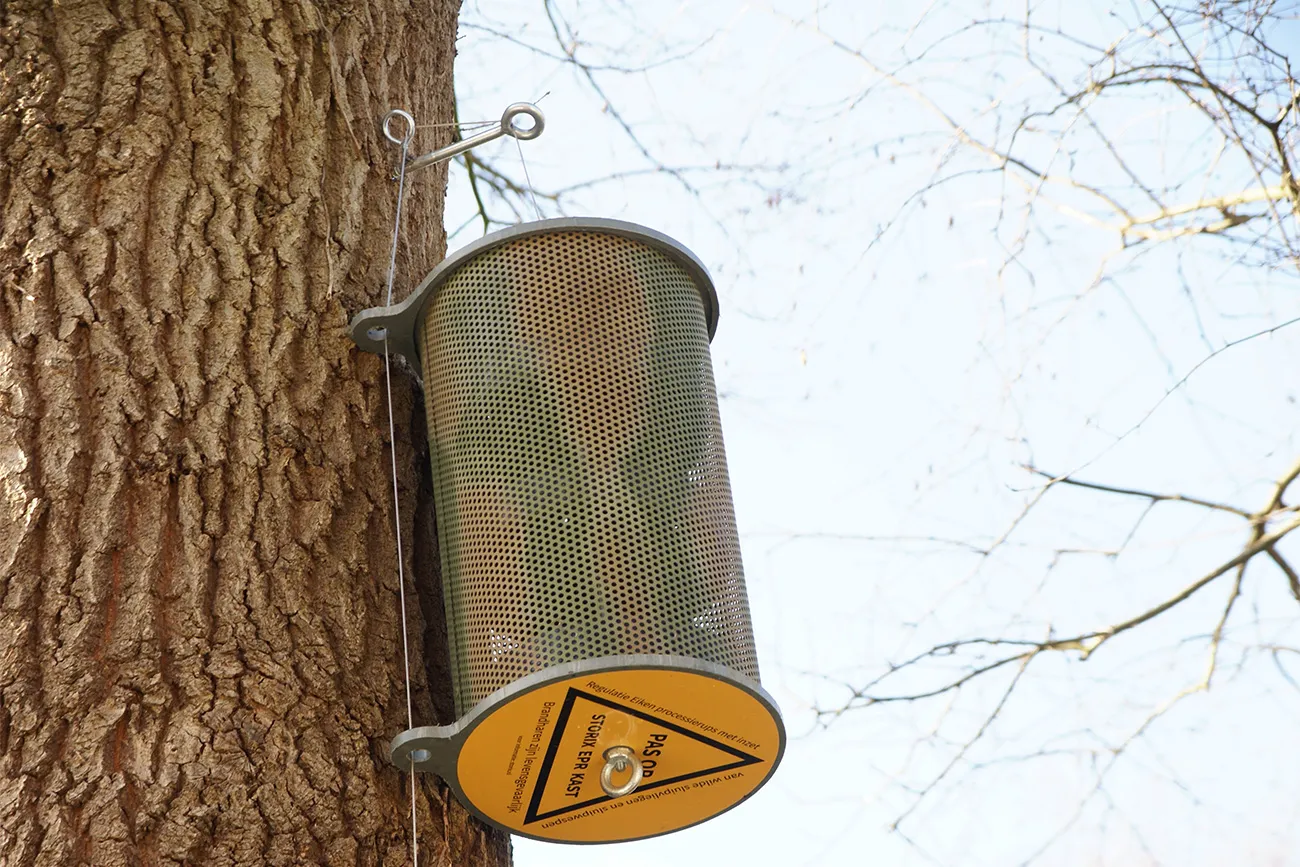
The method began several years ago with the introduction of the Butterfly Filter Box. OPM nests are placed in the box in the first half of July, when all the insects in the nest are at the pupal stage, including both OPM and parasitoids such as ichneumon wasps and flies. The parasitoids can fly in and out through the holes in the box, while the oak processionary moths cannot. As a result, an increasing proportion of caterpillars in the next generation are parasitised, bringing the pest population back to a manageable level. Ideally, nests are collected close to the Butterfly Filter Box. Once the nests are inside, the box provides such effective protection that there is no longer any nuisance from the urticating hairs. Storix also feeds birds OPM caterpillars to condition them to choose these caterpillars over other prey.
Monitoring for balance
Using natural enemies is just one part of the EPR Regulation Method, which is all about research and tailored management. “Monitoring showed that 85% of caterpillars were parasitised in some boxes, compared with 11% in others. If too many caterpillars are parasitised, the OPM population declines too quickly. If too few are parasitised, a pest outbreak looms because there are not enough natural enemies to prevent it. We are seeking a balance, with pest pressure kept at an acceptable level.”
Habitat improvement
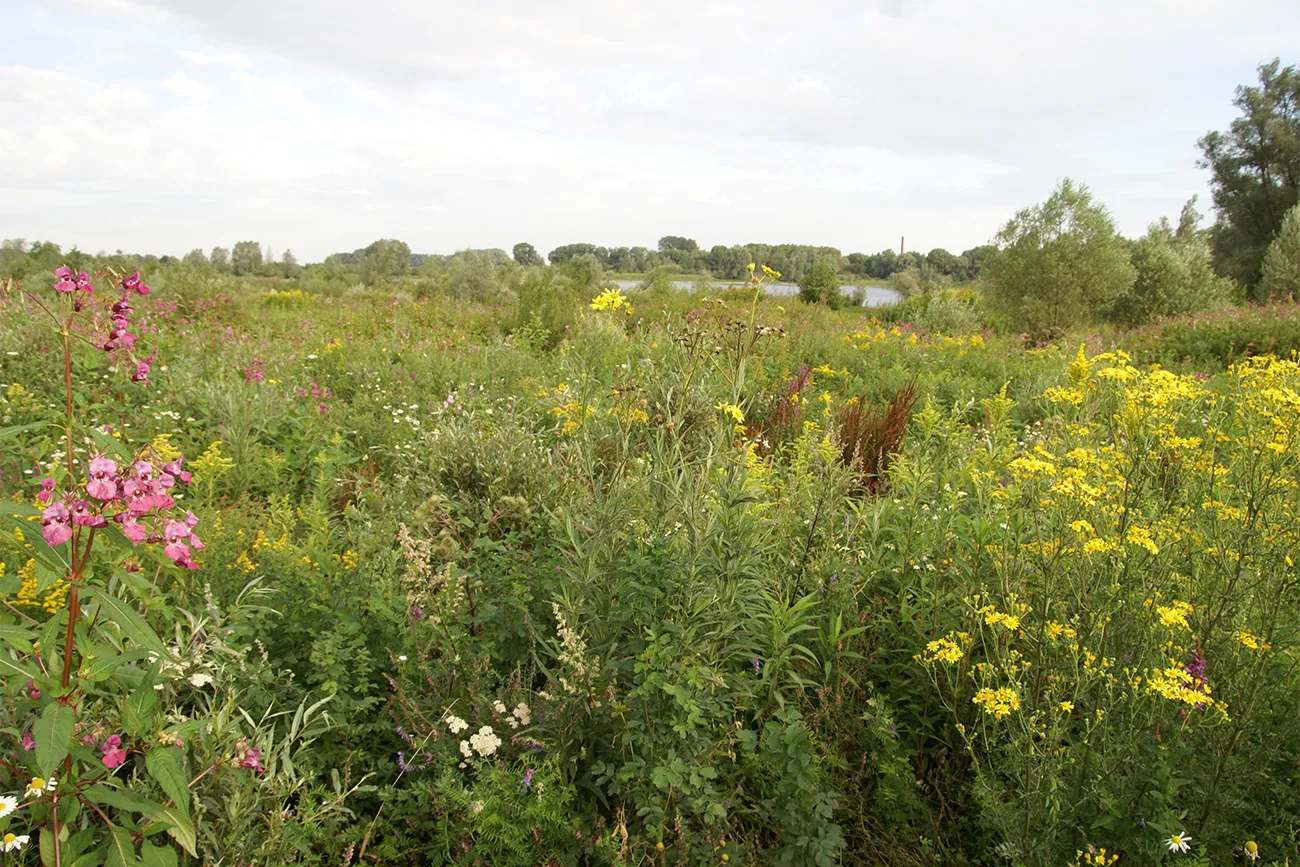
To achieve this, Storix looks at the surrounding area. Is there enough nectar, for example, for parasitoid flies and wasps? “We discovered that the flowers most attractive to OPM parasitoids belong to the oak’s own ecosystem. This balance can be disrupted by paving or mowing practices, but it can also be restored by redesigning and managing the (urban) landscape to make it resilient to OPM.
Success depends on applying the complete Storix EPR Regulation Method, which takes a modular approach. “Simply installing the boxes is not enough. Ultimately, a biodiverse landscape that provides for all animals in the food pyramid creates a balance in which we need to intervene only to a limited extent to prevent pest outbreaks.”
Monitoring, and scaling up or down the use of wild parasitoid flies and wasps as needed, is essential. The Butterfly Filter Box is therefore an ecosystem stimulator. If boxes or crates are used without monitoring, they can quickly disrupt the ecosystem.
Thanks to the Butterfly Filter Box, the cost of OPM control has been reduced by 70 per cent and redirected towards OPM management. “At the ‘Loonsche Duinen’ golf course and in several municipalities, we manage OPM with just 30 per cent of the budget compared with 2019, thanks to the Butterfly Filter Box, and there is still more potential in the modular approach.”
Question about this story? Ask your question
Keep following this
Get an email when a new story is published. No account needed.
- ThemeNature-friendly green space management
- SubjectGeneral







