









Developments in growing and using bay laurel. Even an evergreen has to keep up with the times
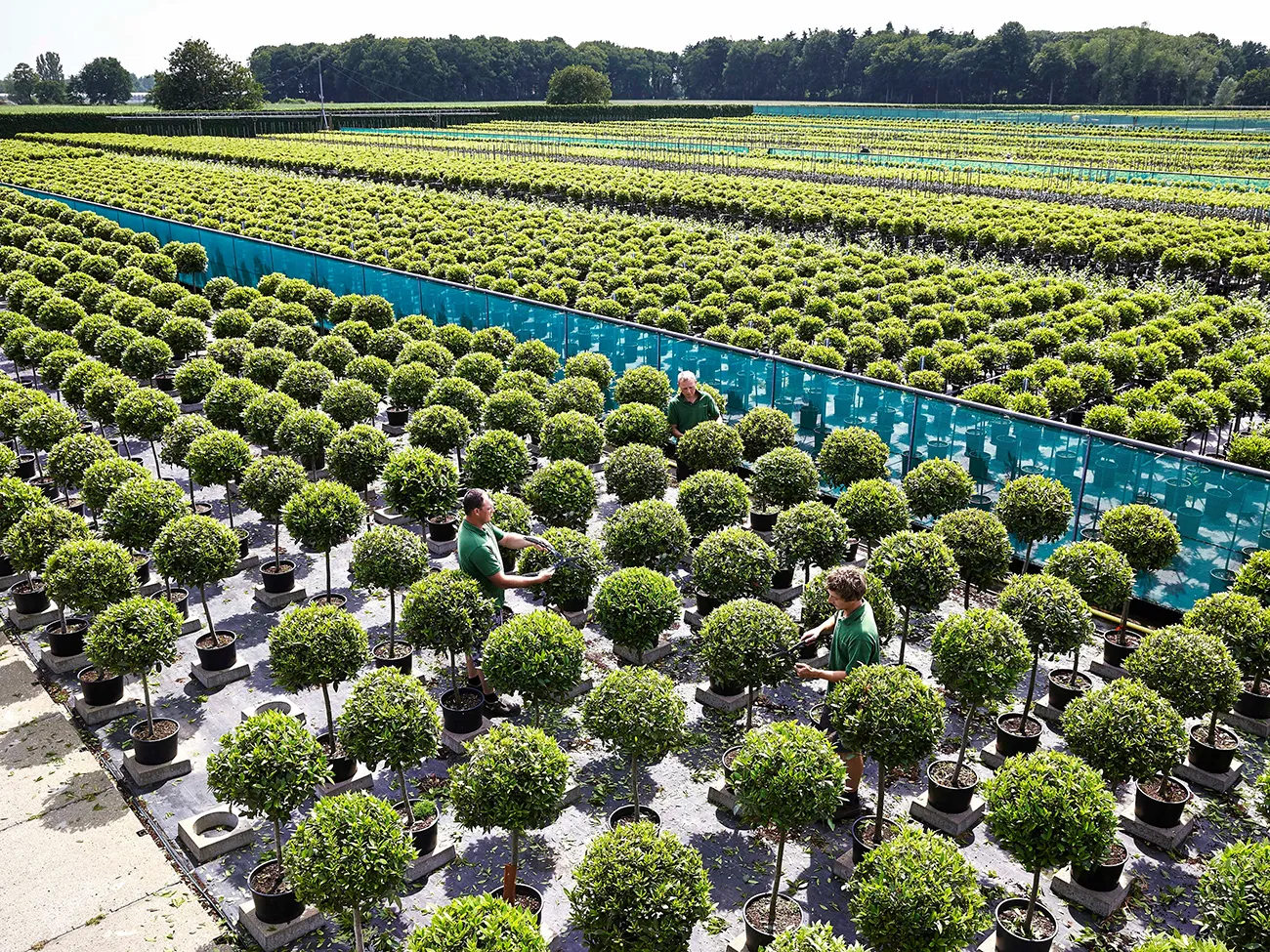
Bay laurel is an evergreen. In the literal sense, it keeps its leaves in winter, but also figuratively: it remains a fixture in many gardens and parks. Yet even this centuries-old plant is clearly subject to changing trends and developments. No one knows that better than Marian Maenhoudt at Laurica-Plants in Jabbeke, which has been growing laurus nobilis for 50 years this year. She lists the key developments.
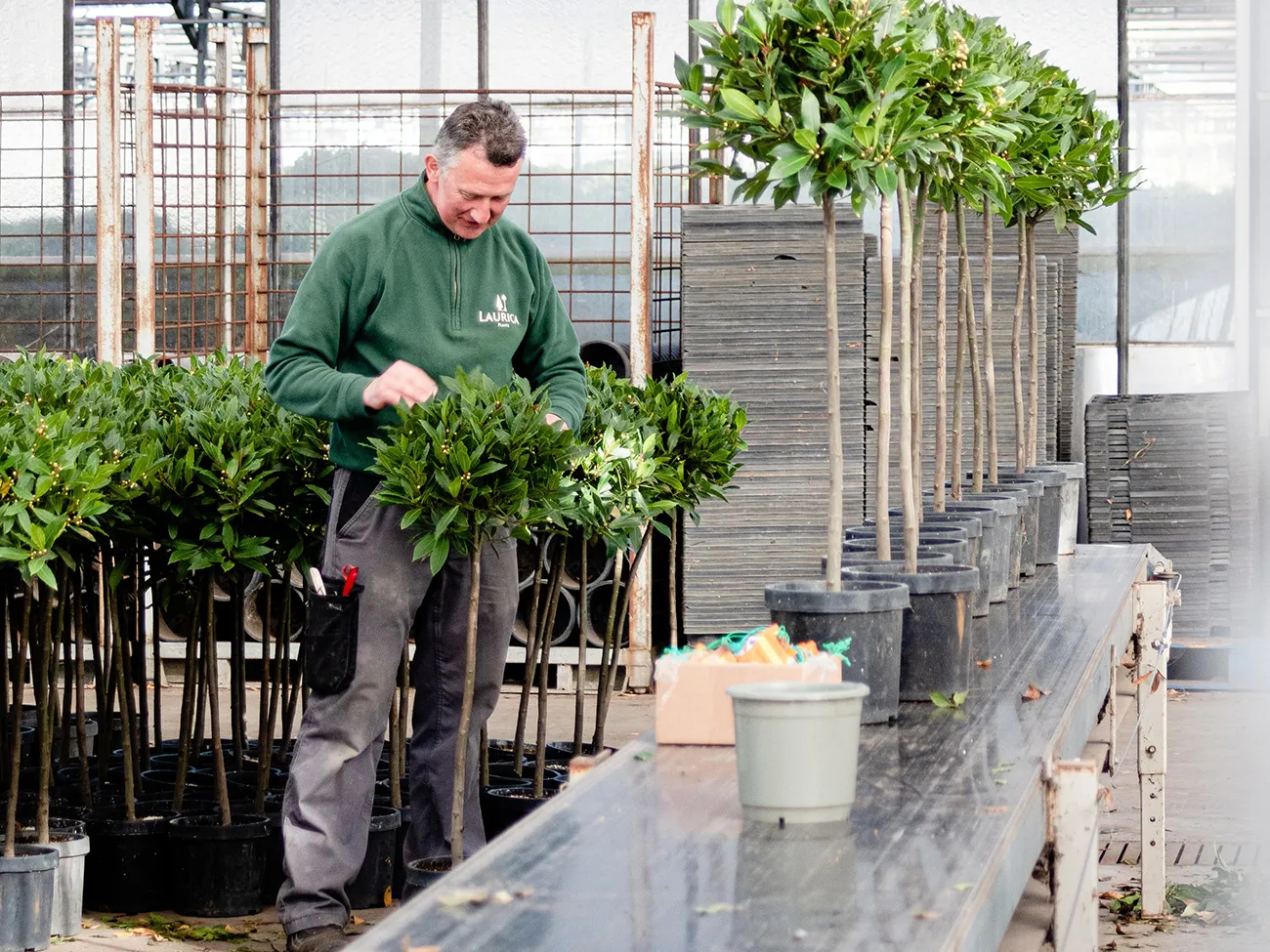
Laurica-Plants celebrates its 50th anniversary in 2022. Over the years, the family business has seen sustained, and rising, demand for topiary bay laurel, while also witnessing changes in growing methods, applications and areas of concern. Today, Brexit is among the factors having a major impact on the nursery’s operations. Previously, automation, climate change and growing interest in unique specimens had already left their mark on the bay laurel market.
Automation
Over recent decades, the plant-growing sector, like industry, has seen a race towards automation. Many nurseries have invested in machinery to organise work more efficiently.
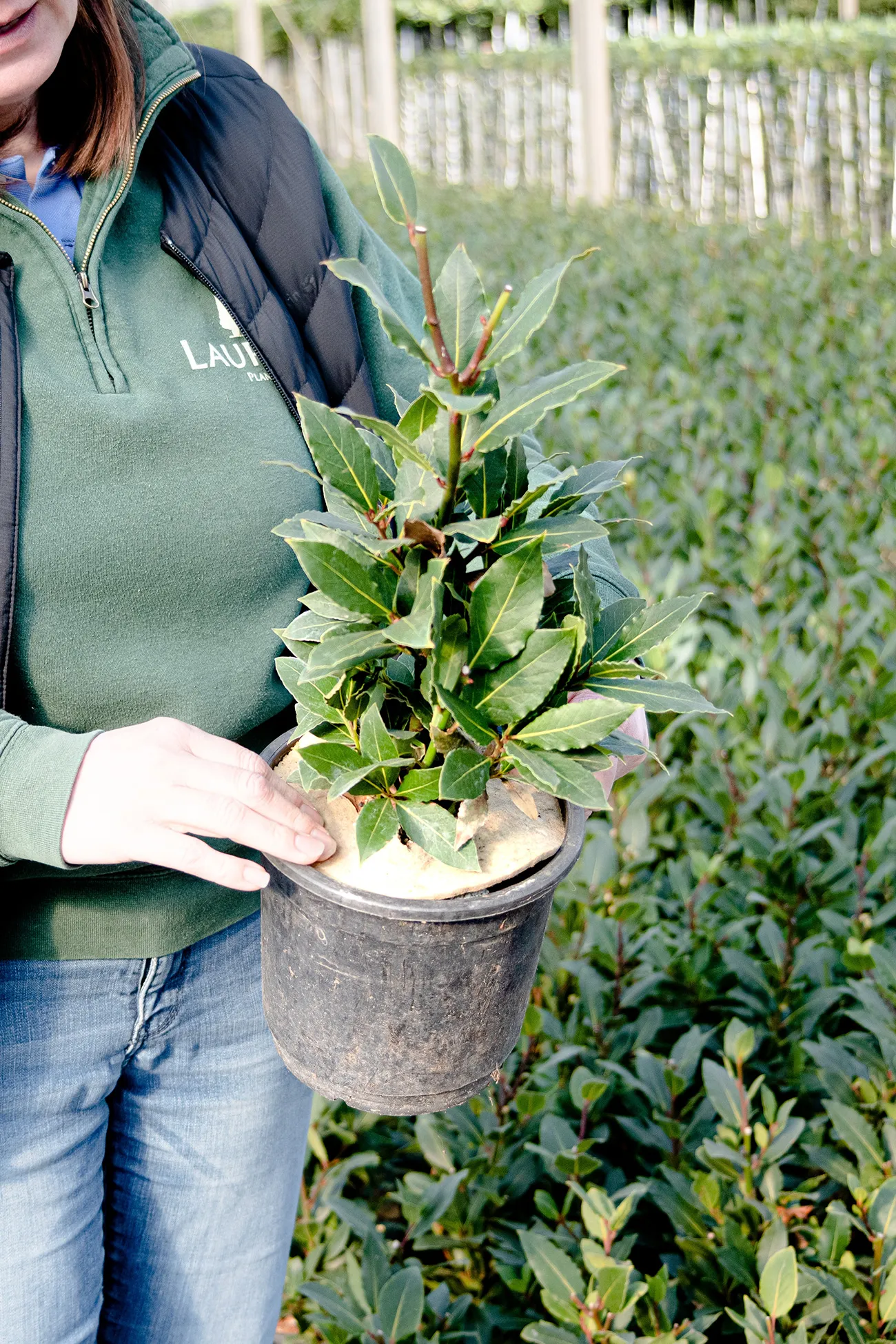
“In our case, this includes using plant forks and installing buffer and conveyor belts so that our staff can work at height,” says Marian Maenhoudt. “In other words, these measures are about improving ergonomics.”
“The use of machinery in growing and pruning bay laurel is fairly limited. The plant’s value lies in the ornamental appeal of its foliage. If you prune it mechanically, you cut right through the leaves and lose an important aesthetic feature. For that reason, we use machinery to prune our plants only to a very limited extent, and all topiary work in recent years has been done by hand.”
Environment and climate
As in other sectors, nurseries now have to take much greater account of their impact on the climate and its impact on them. Marian Maenhoudt explains: “For the past few years, we have been placing mats over the potting compost of young plants. This limits weed growth and consequently reduces the use of crop protection products, although it also means we have to take a different approach to things such as fertilisation.”
“We also have to use water ever more sparingly. That is why we continue to invest in new container fields, ensure water is delivered to the plants as precisely as possible, and collect all surplus water in a 4 million-litre reservoir. The water is filtered and then reused.”
Increasingly extreme weather conditions also affect the plants themselves.
“The climate is hard on us,” says Marian Maenhoudt. “Among other things, we have to protect our plants from cold, dry winds. We have set up various systems to prevent the plants from being blown over, depending on their shape. The sudden switch from cold winter storage to warm, dry and sunny spring days can also be hard on young plants. That is why, after overwintering, we now let them acclimatise for a while in an additional greenhouse before putting them back outside. Fortunately, the contrast is never likely to be as great for most private gardeners. They can simply put their plants back outside straight after winter.”
Eye-catching specimens
And what about trends? According to Marian Maenhoudt, they still come and go. “Some shapes are always popular, of course. Take the lollipop standard, as they call it in the UK. These are still often used in pairs, beside the front door or to mark the boundary of an avenue or path. Nowadays, though, many other plants are pruned into the same shape. There are even flowering specimens. In that respect, bay laurel is no longer unique.”
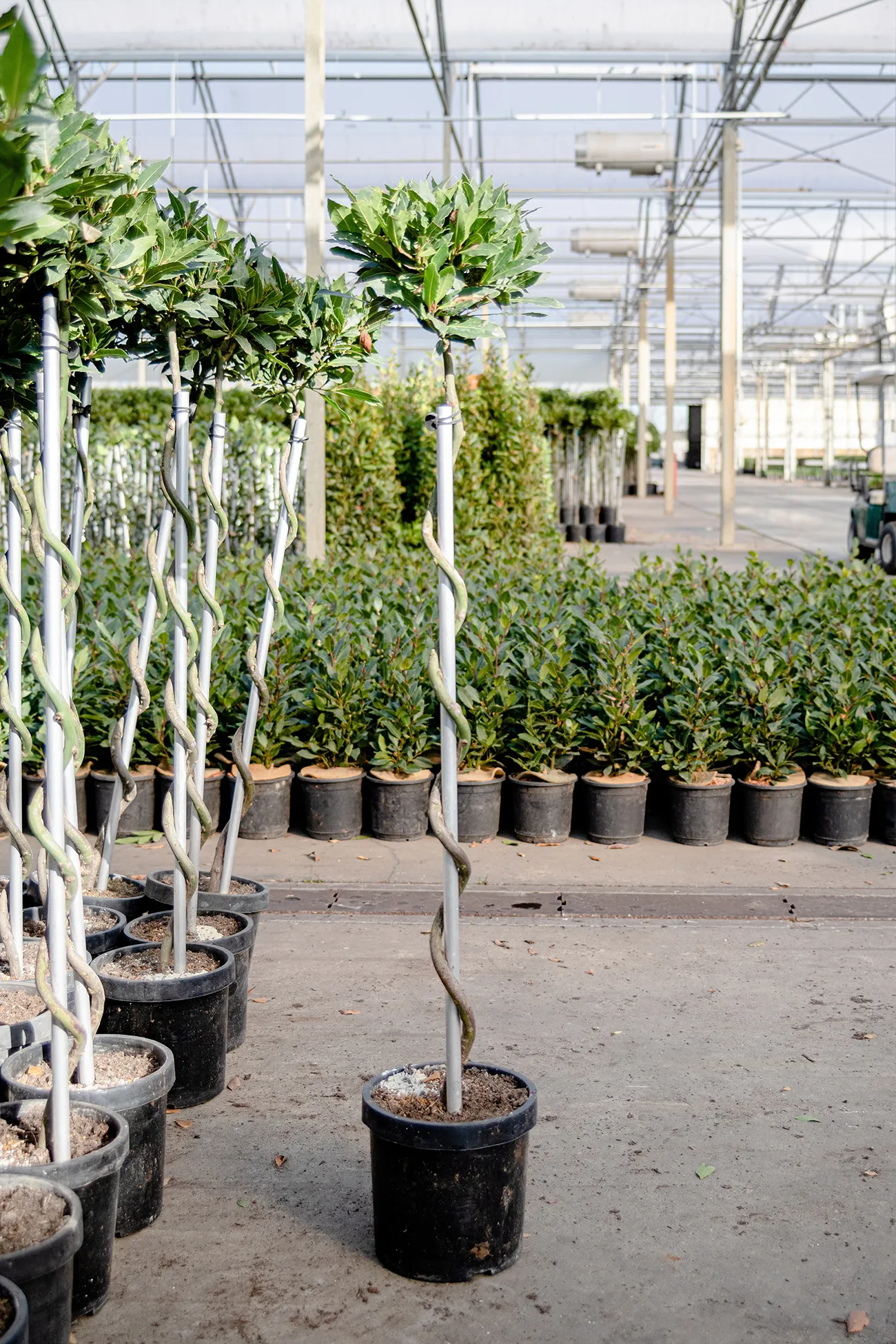
Today, it is mainly the unusual shapes that set bay laurel apart. “We are seeing huge interest in plants with twisted or braided stems. In these cases, customers choose one large or medium-sized plant to take centre stage as an eye-catching specimen.”
The red-potted pyramids that Laurica-Plants offers in autumn are more seasonal. “They are bought as an alternative to a Christmas tree or to add a little festive atmosphere to the home, but are generally given a permanent spot on the patio afterwards.”
Question about this story? Ask your question
Keep following this
Get an email when a new story is published. No account needed.
- SubjectGeneral







