









Does the neighbourhood fit your play provision management?
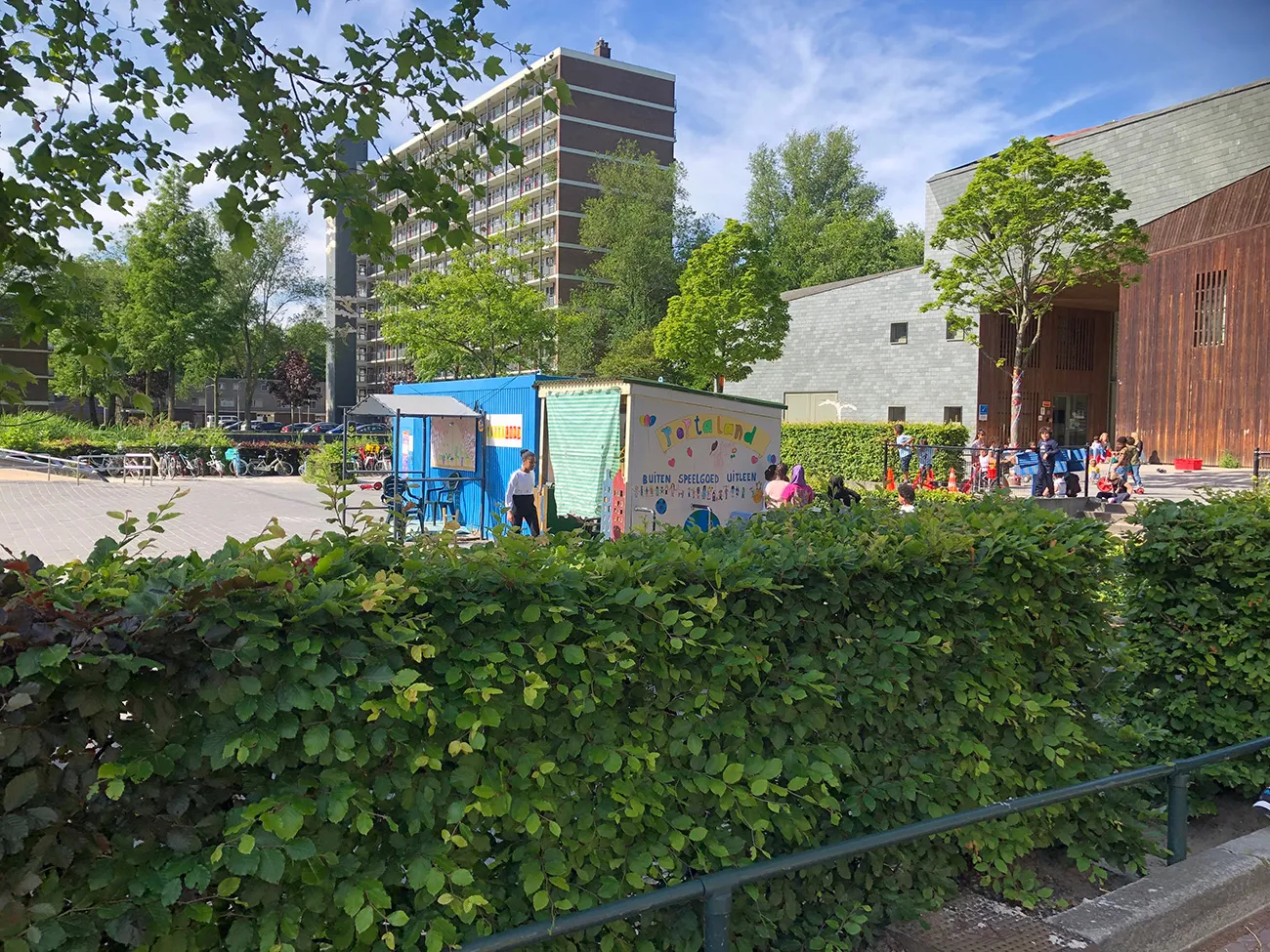
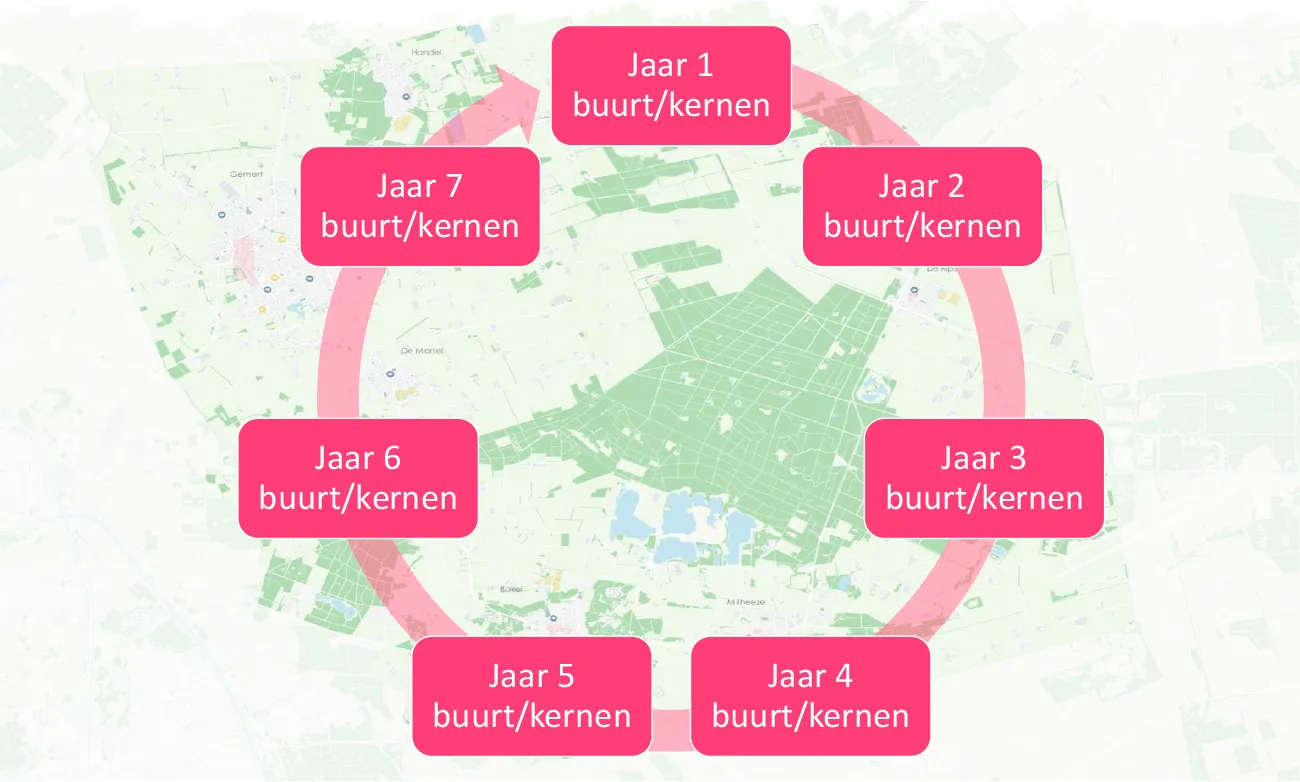
A seven-year management cycle for BOSS facilities, bringing policy and residents together.
Who hasn’t seen it? A young family makes a big fuss about wanting a climbing frame or slide right outside their front door, even though there is a large, recently refurbished play area less than 100 metres away. Managers have to find a way to bring residents’ wishes, management ambitions and policy visions together, somewhere between their own judgement, the pressures of day-to-day work and fine words in vision documents. It often feels like juggling what you want, what you can do and what you are allowed to do. There is no shortage of plans and wishes, but what about putting them into practice? Several local authorities see the seven-year cycle as a solution. Madeleine Frelier of OBB spelmakers en ruimtedenkers explains how the method works and, above all, what it achieves.
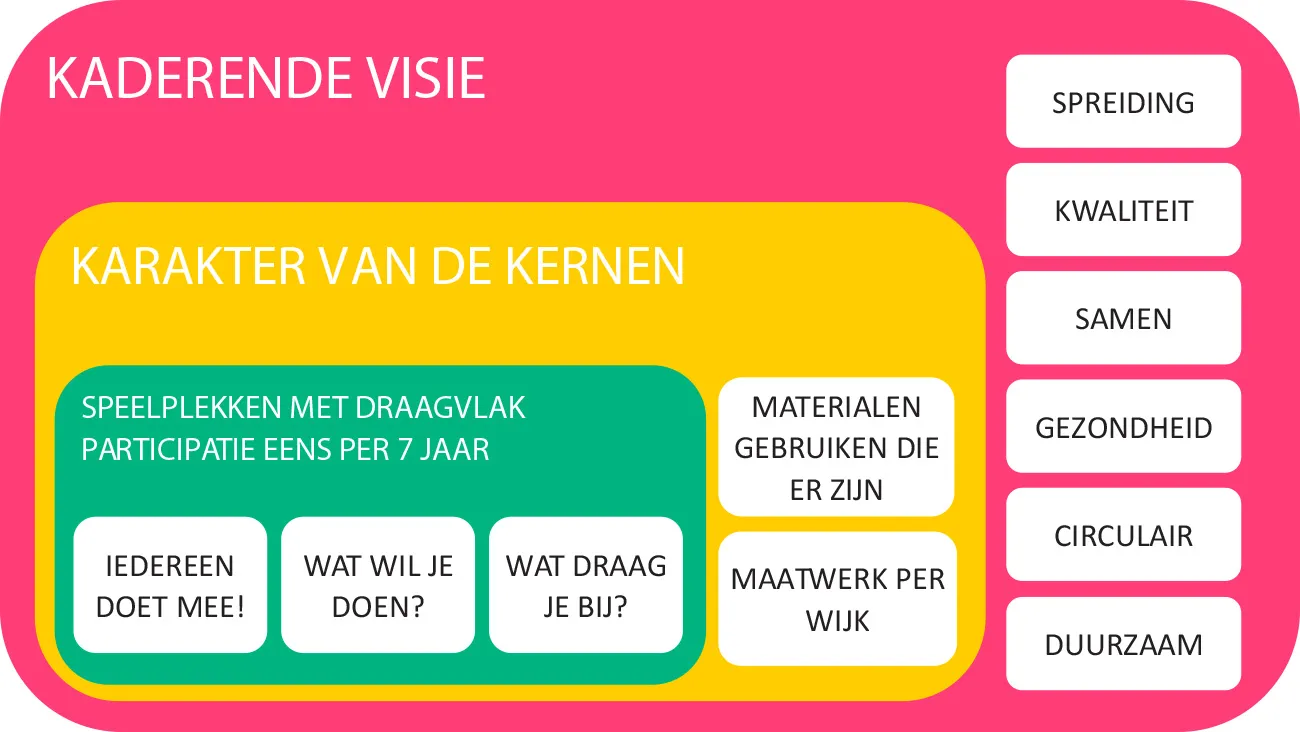
Overarching policy and public-space management visions often determine the content of management plans. These plans set out, among other things, the budgets and FTEs for play facilities. Many management plans offer little guidance on how residents should be involved in managing and replacing them. After all, this is not necessary for most assets. But when it comes to play, there is no getting around it, says Frelier. As a result, managers receive little or no budget for resident participation or for improving the surrounding area. Most importantly, there is no process to clarify how to involve residents in decisions about play. The Environment and Planning Act is on its way and will change this. There will need to be more scope for participation.
The long view
The environmental vision, which has already been adopted by many local authorities, also sets objectives such as promoting positive health, encouraging residents to be more active and creating more opportunities to meet, alongside participation. Sustainability, and often circularity too, are naturally high on the agenda. The vision is adopted for the long term. Its objectives are then translated into programmes, such as a BOSS programme (physical activity, meeting, play and sport), which is adopted for a somewhat shorter period. A good programme translates the environmental vision into practical measures for neighbourhoods and villages. Frelier argues that it is then up to the manager to translate those measures into implementation plans for management, maintenance and replacement.
The new way of working introduced by the Environment and Planning Act offers an opportunity to reshape the management cycle, with more scope for input from local residents, among other things. This article is based on a seven-year cycle.
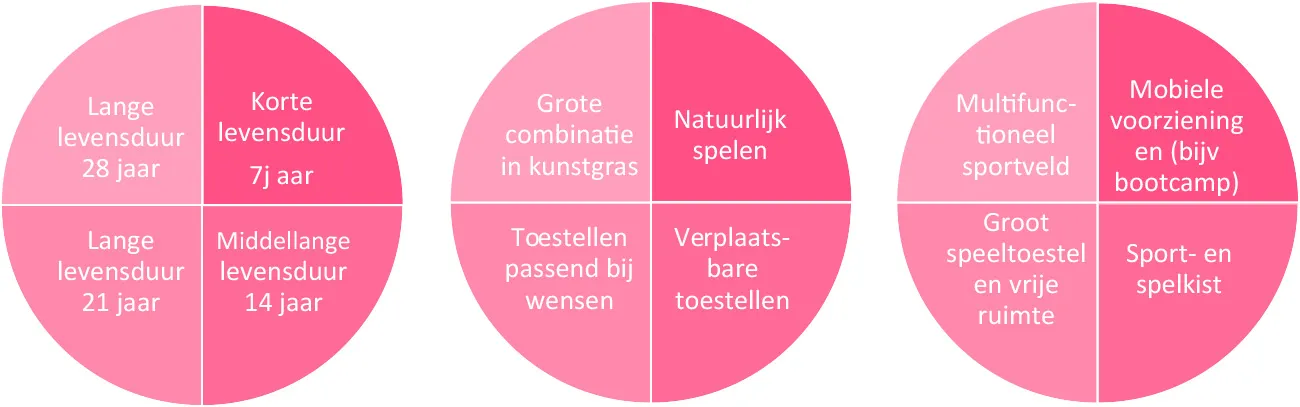
There are two reasons for this: play equipment has a service life that is a multiple of seven years, and the make-up of a neighbourhood also changes every seven years as people move home and children grow up. Making management cyclical builds in evaluation points to assess whether the measures are suitable. Procurement of works and services can also be aligned with the cycle.
Connecting with residents
You may have a well-developed management plan full of great ideas for the next few years, with clear diagrams and well-supported budgets that are easy to explain to colleagues. But as a manager, you are right in the middle of things, between residents, colleagues and sometimes elected representatives. How do you explain it all? That you want to focus on sustainability, circularity, inclusivity, involving children, climate adaptation, meeting, physical activity and, oh yes, installing a few pieces of play equipment too.
Involving residents is often not part of a manager’s expertise, but when it comes to play, there is no getting around it. Sooner or later, residents will make their wishes, ideas or demands known. As a manager, you will have to get to work with colleagues in participation and communications to involve residents, preferably in an enjoyable, accessible and regular way. After all, residents move away, children grow up and wishes change.
Experience shows that talking to residents once every seven years at a slightly higher level creates sufficient support, while helping residents stay engaged with, and become enthusiastic about, the themes mentioned above. For each neighbourhood or village, you draw up a plan for renovations, using existing materials where possible (sustainable! circular!). This allows you to tailor the approach to local needs. Madeleine says: “The discussion is no longer about that one spring rocker, but about what people would like to do in their neighbourhood and what they themselves can contribute. Everyone naturally takes part in the discussion, including children, young people and people with disabilities.” Ideally, this is done on a seven-year cycle. The management plan can be aligned with it, but does not have to be.
Putting it into practice
A seven-year cycle of discussions with residents and major BOSS measures sounds like a great idea. But which neighbourhood or village should you start with? And what does this involve? Frelier says: “This is already a good starting point for the cycle: aligning it with the replacement cycle. A good implementation plan also provides guidance on which neighbourhood or village to start with. You draw up a priority list, so that one seventh of your local authority’s area is covered every seven years. Naturally, you leave room for one-off maintenance and management. This allows you to work towards the ideal situation, in which the programme’s objectives can be achieved. In the first few years, you carry out research, draw up project plans, consult residents and include larger initiatives. In the intervening years, you take care of maintenance, and residents’ smaller initiatives can also go ahead. Then, after seven years, you return to take forward those larger wishes and initiatives.”
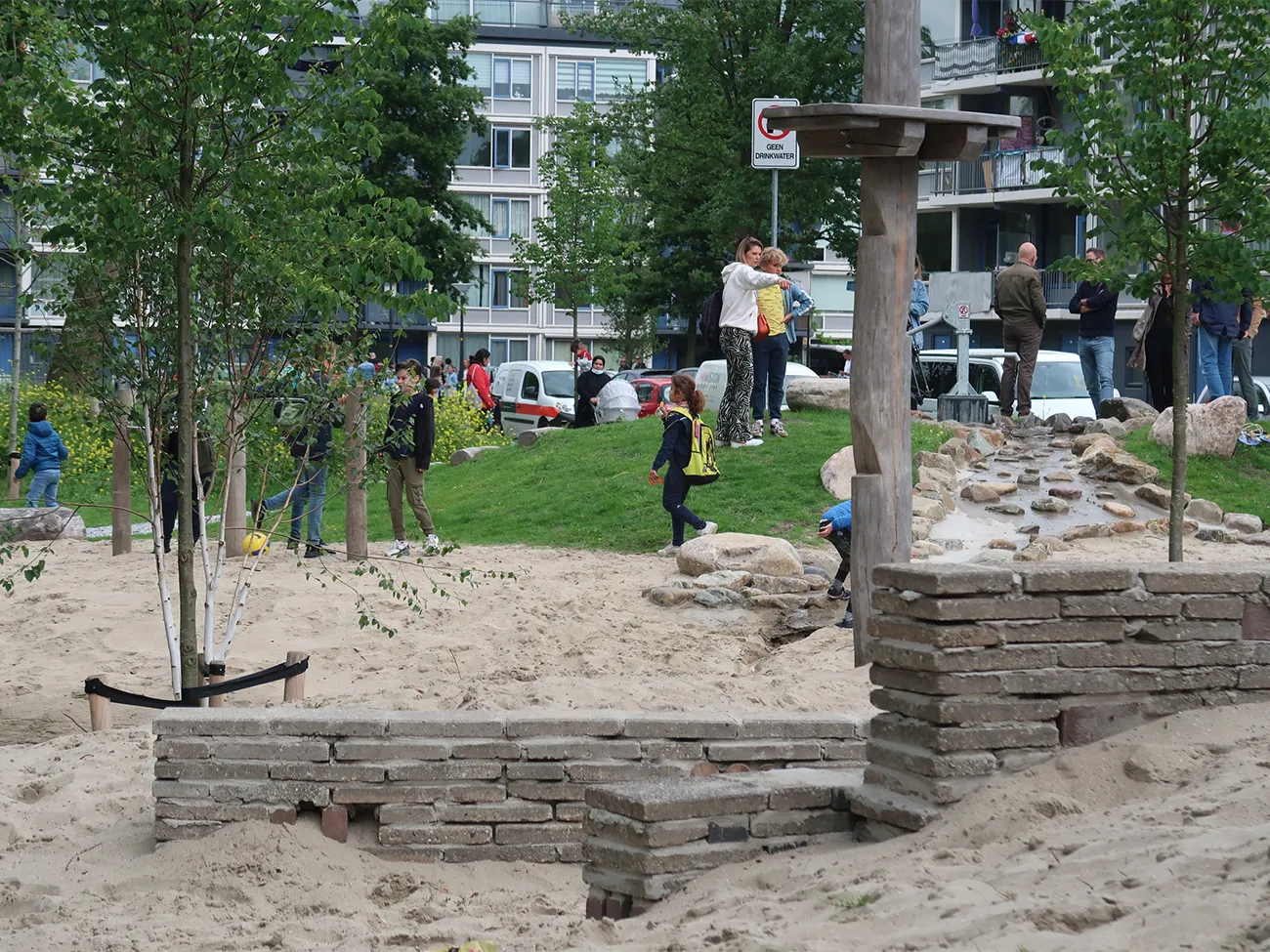
This is an opportunity to promote ideas such as ‘don’t throw equipment away, reuse it’, ‘reuse soil from projects to create mounds at a large central location’ and ‘use materials such as lampposts, paving slabs and sewer pipes as play features’. Or, if residents are already around the table, find space for community activities such as growing vegetables, barbecues and children’s activities.
What does this mean for me as a manager?
Working with residents at neighbourhood or village level on a seven-year cycle to support physical activity, meeting, play and sport helps build support for management and maintenance measures. Clear timeframes for consulting residents and carrying out major measures bring greater clarity and peace of mind. These arrangements can also be included in contracts with contractors or suppliers commissioned to carry out work such as design and implementation. Or, where there is an in-house team, they can cover the harvesting of materials for reuse. “In short,” says Frelier, “the seven-year cycle creates a more consistent workload, less complex decision-making and, hopefully, greater job satisfaction. Who wouldn’t want that?”
Question about this story? Ask your question
Keep following this
Get an email when a new story is published. No account needed.
- SubjectGeneral







