









‘Elm removal must follow a protocol: safety and health come first’
Text GreenproImage Boomrooierij Weijtmans
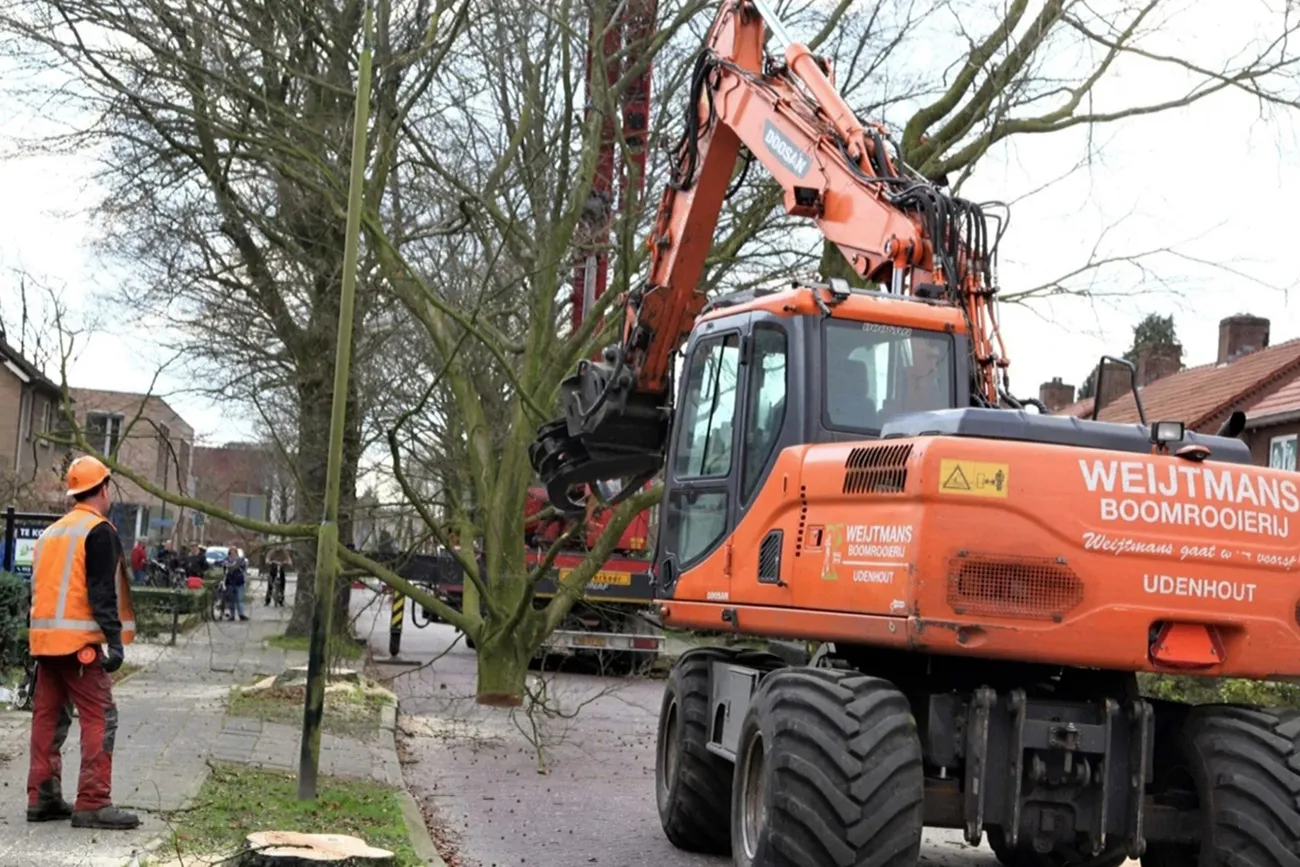
Boomrooierij Weijtmans removes diseased elms using, among other equipment, telehandlers and an electric mobile crane with a misting system
The fight against Dutch elm disease is about to begin again. Control involves removing diseased elms in accordance with a rigorous sanitation protocol, carried out by Accredited Elm Contractors. Boomrooierij Weijtmans is one of 24 nationally certified companies and will soon start work for the municipality of Tilburg.
Dutch elm disease is caused by a fungus and spread by (flying) elm bark beetles and underground root contact between elms. Kees Weijtmans, owner of Boomrooierij Weijtmans, says: ‘“The disease has been present in Western Europe since 1918 and caused widespread damage in the Netherlands because the whole country was full of elms. The elm is, after all, a typically Dutch tree, planted as a windbreak along fields and dykes because of its high salt tolerance. Large monoculture populations were particularly common in coastal areas.”
No more monocultures
Fortunately, resistant and tolerant varieties have been identified again and are now being planted, but something has changed for good: they are no longer planted on the same massive scale as before. Dutch elm disease has in fact been in decline for several years.
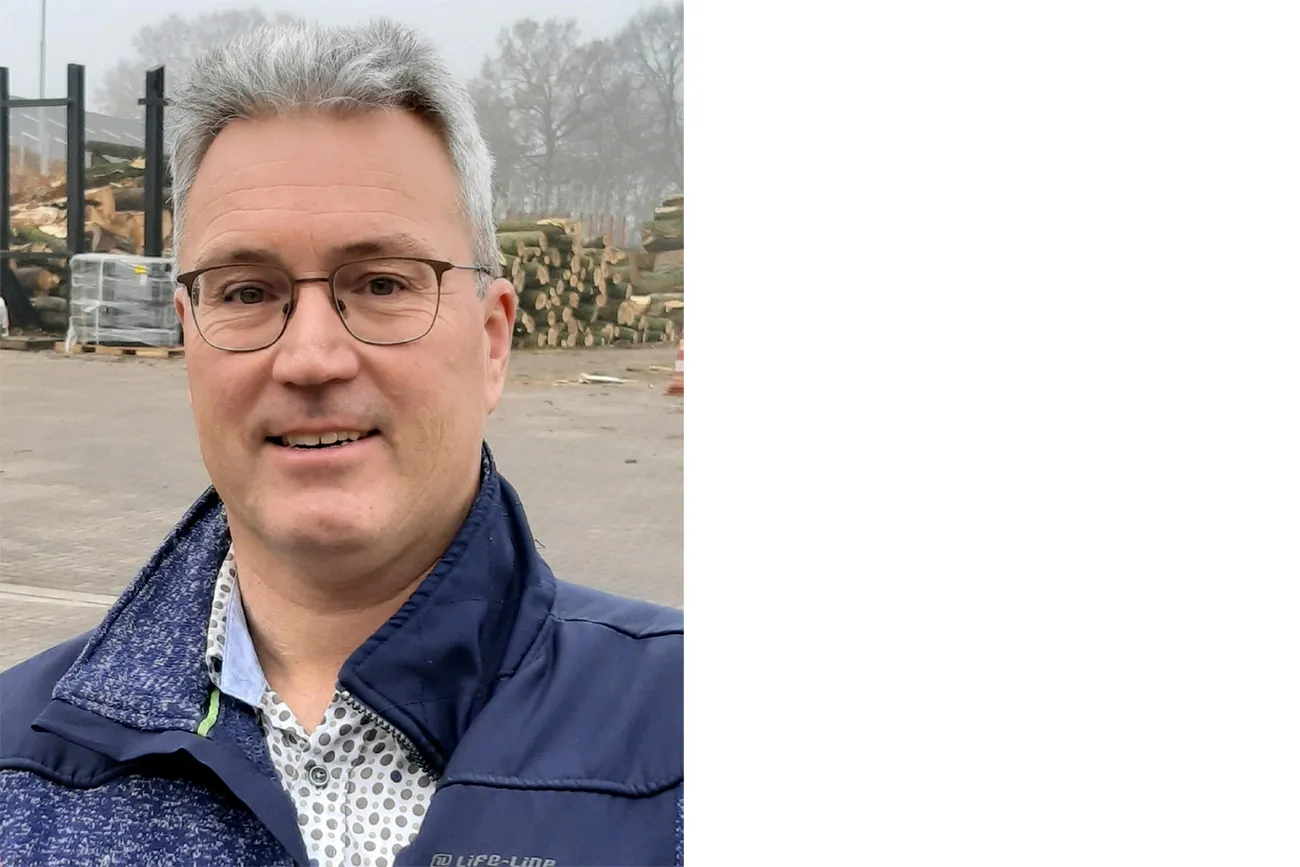
“It does seem that fewer elms are diseased, but that may also be because there are far fewer elms than there used to be. Dutch elm disease could also become more severe again in the future. So it is fine to keep planting elms, but in moderation. As with everything, really,” says Weijtmans. “Variety is important too: include elms in a diverse planting scheme and use different elm species, because monocultures provide a fast track for diseases and pests.”
Accredited Elm Contractor
Boomrooierij Weijtmans is an Accredited Elm Contractor, a certification awarded by Aequator that shows the company follows the nationally recognised Dutch elm disease control protocol. There is a select group of 24 Accredited Elm Contractors in the Netherlands. “We have been an Accredited Elm Contractor since 2004, but before that we had already been working for more than ten years in accordance with the Dutch elm disease control protocol drawn up by the Bomenstichting, which also required the trees to be debarked,” Weijtmans explains.
The sanitation process
Diseased elm timber must be rendered harmless within eight days, so that the elm bark beetle does not have a chance to establish itself between the bark and the trunk wood. Decades ago, diseased elm timber was regularly burned on site, but it is now taken away to ensure safety and minimise disruption. Each load must be registered and is often covered during longer journeys.
“When removing diseased elms, we separate the thinner branches from the cut trunks,” Weijtmans explains. “The branches are collected at our own site, where they are chipped. We remove the bark from the trunks, as it can provide a breeding ground for the elm bark beetle. New elm bark beetles emerge from eggs laid under the bark after just six weeks, so the bark needs to be removed as soon as possible. Large batches of trunks are debarked mechanically at the sawmill. For smaller batches, we fit a debarking head to the chainsaw.”
Proactive action is key
Dutch elm disease is controlled by removing diseased elms as quickly as possible. Proactive action is essential, including during the bird breeding season. “You obviously cannot leave diseased elms standing because it is the bird breeding season. That would be counterproductive and would destroy large sections of the elm population in a short time. Sanitation is necessary, but it must of course be carried out with the utmost care.”
To ensure that no nesting birds are disturbed, Boomrooierij Weijtmans carefully surveys the area before work begins. “Our company is certified at Nature Conservation Act levels 1 and 2. Our operatives hold Nature Conservation Act level 3 certification. For complex projects, we bring in ecologists from a consultancy.”
Essential: working together
According to Weijtmans, Dutch elm disease control can only succeed if everyone works together to curb the disease. “All land managers must take responsibility and get involved. In the 1980s and 1990s, municipalities in the border region on the other side of the border did nothing to control Dutch elm disease. As a result, tackling the disease in the province of Zeeland, which was full of elms, was like mopping up water while the tap was still running, and the municipalities and province of Zeeland gave up the fight. The result was that Zeeland’s elm population was decimated completely.”
Specialist in sanitation for sooty bark disease
Boomrooierij Weijtmans has also since specialised in sanitising maples affected by sooty bark disease, or Cryptostroma corticale, which was first observed in the Netherlands in 2014. This fungal infection produces spores that cause respiratory problems and can spread when professionals fell, prune or process the trees. The sanitation process is carried out with great precision to control this tree disease and prevent this occupational illness.
Sanitation work for sooty bark disease is a collaboration between Boomrooierij Weijtmans and Nationale Bomenbank. “Nationale Bomenbank staff are used to working with personal protective equipment, wearing full protective suits, thanks to their expertise in oak processionary moth control. We provide the specialist machinery needed for safe cutting: our telehandlers and electric mobile crane are equipped with a misting system. Nationale Bomenbank’s chipper is also fitted with a misting system. Using water prevents the fungal spores from becoming airborne.”
Boomrooierij Weijtmans arranges for the wood chips to be taken to a plant, where they are processed in accordance with health and safety regulations.
As Weijtmans noted earlier, careful control is only part of the solution to tree diseases. “We need to think about which species we plant, and where. Fortunately, monocultures really are a thing of the past: biodiversity is the magic word.”
Een zakelijke vraag aan Boomrooierij Weijtmans B.V.? Get in touch
Companies in this story
Keep following this
Get an email when a new story is published. No account needed.
- ThemeTrees and plants for tomorrow
- SubjectGeneral
- CompanyBoomrooierij Weijtmans B.V.







