









Evelien de Mey seeks a balance between rules, people and nature
Text Kris VandekerckhoveImage EDM Tuin & Landschap
The changing role of the landscape architect
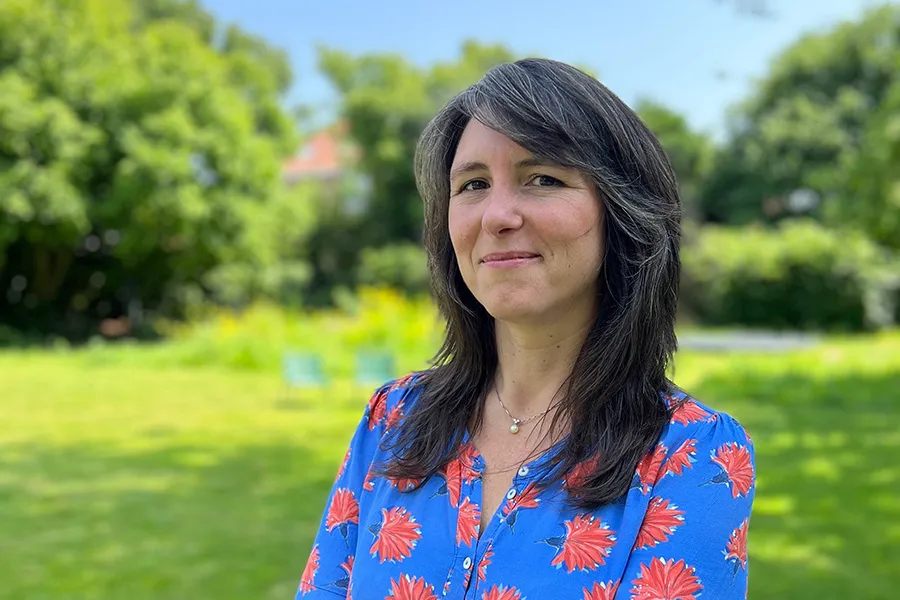
Evelien de Mey is a landscape architect and managing director of EDM Tuin & Landschap. She works on public and semi-public projects in the Netherlands and Belgium, focusing on sustainability, user experience and maintenance. Her work reflects a love of space, people and nature, with collaboration as a common thread. “We enjoy creating beautiful projects with lovely people.”
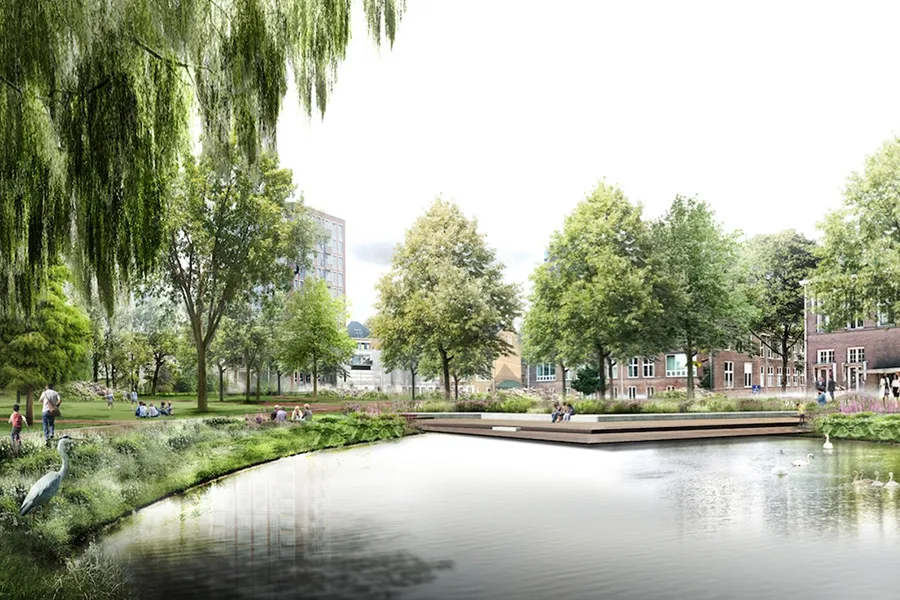
At a time when every square metre is assessed for water storage, biodiversity and safety, landscape architect Evelien de Mey argues for a renewed appreciation of the experience of a place. “Sometimes I just want to create a really lovely outdoor space,” she says. “A place where people want to be. Where they can find peace and meet one another. That is where quality of life begins.”
The changing role of the landscape architect
According to de Mey, the designer’s role has changed fundamentally. “In the past, it was often about producing a beautiful plan with a good story. Today, as a landscape architect, you have to be a kind of puzzle solver, balancing policy objectives, regulations, permits and interests. A great deal is now expected of outdoor spaces. Above ground, we want room for all kinds of functions, while underground, more and more technology and infrastructure are claiming space. That can make the design process complex. We are constantly talking to clients to make the right choices, explaining why certain elements are essential and others have to go, even when they do not tick every box.”
Even so, she remains positive. “There is a lot of energy in our sector. I enjoy working with a wide range of people. Urban planners, architects, planting specialists, cultural historians, landscape managers… You can’t do anything alone. The best projects come about when disciplines strengthen one another.”
The new reality of project briefs
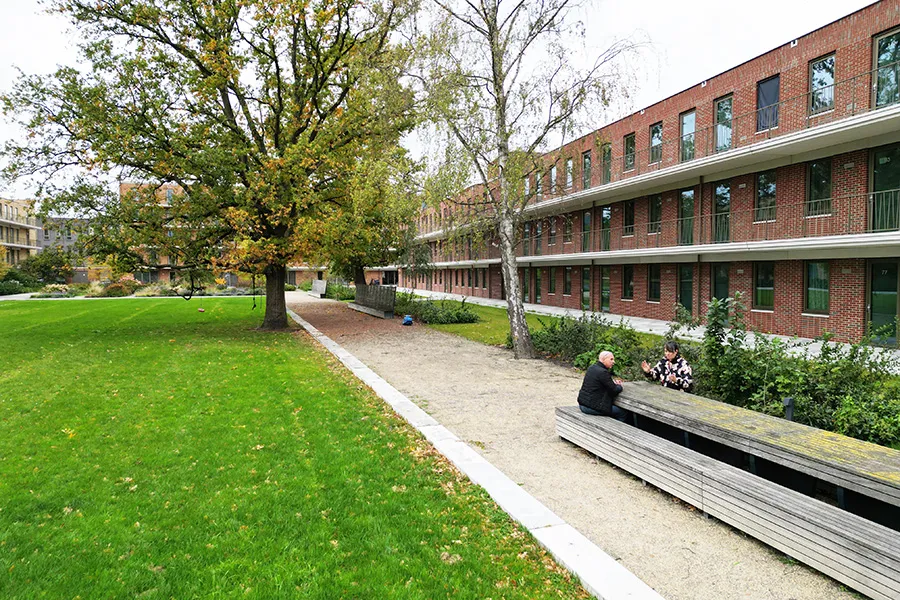
De Mey has also noticed that project briefs are changing significantly. “They no longer say: draw up a beautiful plan for a plot and we’ll find a contractor afterwards. Today the brief is: deliver everything from A to Z within this budget. That means we have to work much more analytically, even though we do not always know what we will encounter as the project progresses.”
The growing complexity means landscape architects are more than ever acting as process facilitators. “There is so much policy, so many rules. You are constantly negotiating between requirements, interests and visions. At the same time, you want to put something of yourself into the project. That takes conviction. Sometimes you have to dare to say: this is what we will do, and this is how it will succeed. And this is what we will not do, and this is why that matters.” For her, it is essential to leave room for a pleasant atmosphere and a certain beauty. That matters for the future too. “We have to make choices and dare to say that not everything is possible. A design must continue to move people.”
What makes a good public space?
For de Mey, a good public space is one that works on every level. Not just on paper or in a rendering, but in its use and the experience it offers too. “A pleasant public space only comes about when the design encourages the intended use and creates an experience with a compelling story.” At the same time, she sees a positive trend. “There is greater awareness. Municipalities better understand that a paved-over space is not the future. The value of more green space is increasingly recognised. Not only ecologically, but emotionally too. But we are not there yet, there is still work to do.”
Designing for people and society
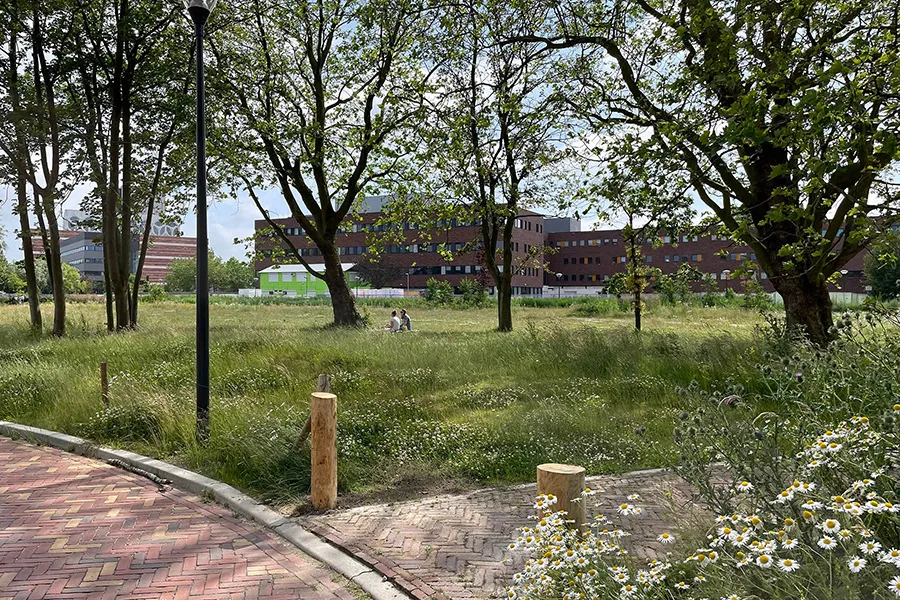
De Mey sees her work as much more than mere design. “We shape behaviour and society. How people use a place, how they meet one another there or can spend some time alone. That affects the wellbeing of a neighbourhood.” She laughs: “Sometimes I think I should really have studied environmental psychology. But you learn a lot simply through experience, by looking back at your own work and observing how a place is actually used. That is how you become an expert through experience.” In her projects, she is always seeking a balance between social interaction and quiet reflection, in relation to nature. “You need places where people can come together, but also places for contemplation. Silence is a public good too.”
Activist or adviser?
De Mey has no doubts about the future of her profession. “We need to dare to be a little activist. Not with placards, but by planting seeds with clients. Someone once told me: you have to make them believe the idea was theirs. Then you know you have done a good job.” She sees activism not as making a noise, but as gently resisting mediocrity. “We must keep defending what is valuable: beauty, nature and space to breathe. And at the same time, go along with policy, because otherwise you achieve nothing.”
Data and feeling
What about the rise of data, AI and algorithms in design? De Mey is sceptical, but not dismissive. “We once received a plan generated purely from figures. Everything added up on paper. But its soul was gone. You could feel it wasn’t alive. Data can help you take the first step, but human intuition remains decisive. A computer cannot create layers of meaning in which feeling plays an important role. You get to know a place by walking, looking and listening.”
Time as a design factor
While architects can proudly take a photo of their building when it is completed, landscape architects often have to wait years before their work becomes truly visible. “We depend on the years that follow, and therefore on maintenance too,” says de Mey. “Our materials are living things. They grow, change and die. You cannot assess a design on the day it is completed, and it needs to be cared for properly.” For de Mey, that is precisely what makes the profession so fascinating: time itself is a design factor. “A garden or landscape comes to life through the seasons and through the people who use it. You have to learn to let go, while also looking after a sustainable future. Finding that balance may well be one of the most rewarding challenges in our profession.”
Question about this story? Ask your question
Keep following this
Get an email when a new story is published. No account needed.
- SubjectGeneral







