









Every solution for a climate-resilient garden
Text and images ACO

Less paving and more (native) plants, shrubs and trees
There is currently a great deal of focus on the climate-resilient garden. More and more local authorities are encouraging this, and more and more people want to help develop and contribute to solutions for a better climate. The garden is an ideal way to do this. Greening a garden benefits biodiversity, while also making it a more pleasant and cooler place to spend time. This is why there is an increasing emphasis on less paving and more (native) plants, shrubs and trees in the garden.
How do you keep all that greenery green?
A green garden also brings challenges. Not everyone has green fingers. Rainwater is crucial for a climate-adaptive garden. But too much is no good, and neither is too little!
The complete picture
“We believe it is important to look at the complete water cycle in the garden.” Speaking is Pascal Derksen, Segmentspecialist House&Garden at ACO. This cycle has been disrupted. Waterlogging, alternating with prolonged drought, makes it difficult to manage a green garden. Many garden owners have busy schedules and little time to spend on their gardens. The desire for convenience is also an important factor, and understandably so. Fortunately, a growing sense of responsibility is emerging, including an awareness that using precious, increasingly scarce tap water to water the garden is wasteful. If you think carefully in advance about how to manage rainwater when designing and building a garden, maintenance becomes much easier, and garden owners can start enjoying it!”
The convenience of everything under one roof
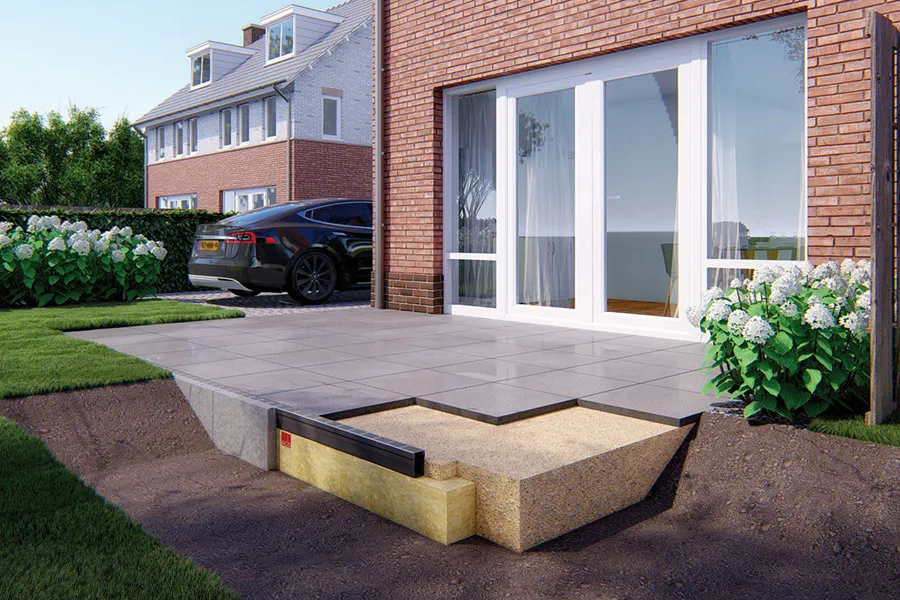
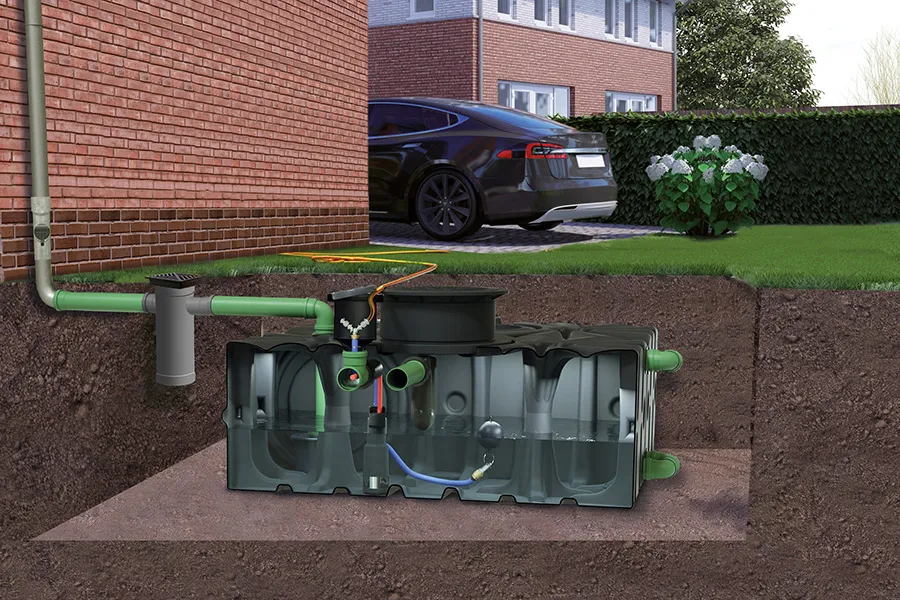
“At ACO, we look at the garden as part of a system chain, from collecting rainwater to reusing it,” Pascal continues. “To prevent waterlogging, you need to collect water during wet periods and retain as much of it as possible in the garden. You can do this with linear drainage channels, gullies and permeable paving. Where possible, retain the collected water rather than draining it away, and allow it to infiltrate the garden using, for example, infiltration blocks. These work like a sponge, releasing water back into the soil during dry periods. An even smarter option is to collect water in an underground tank and use it later, for example, to water the garden. We offer garden designers, landscapers and paving contractors solutions for every step in the climate-adaptive garden’s water cycle. That is the convenience of everything under one roof!”

We look forward to seeing you at the Groene Sector vakbeurs!
Thinking about a climate-resilient garden is becoming increasingly important. We would be delighted to tell you more on Tuesday 7, Wednesday 8 and Thursday 9 January at the Groene Sector vakbeurs in Hardenberg! You can find us at stand 157. See you there!
Question about this story? Ask your question
Keep following this
Get an email when a new story is published. No account needed.
- SubjectGeneral







