









From afterthought to management tool
Text Armand LandmanImage Rod’or Advies en SmitsRinsma
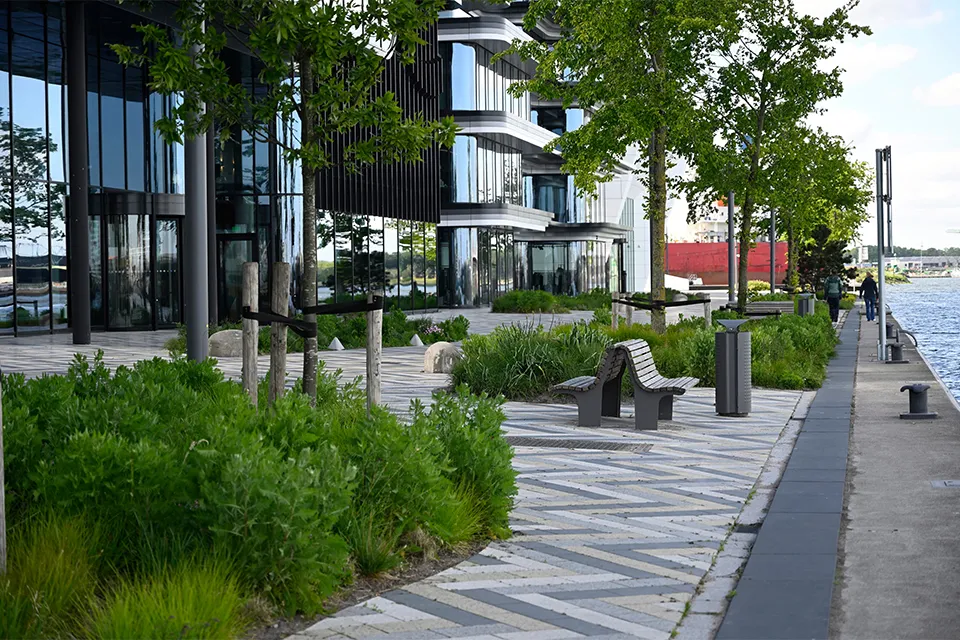
Three consultancies on management in specifications
How can we make management and specifications a driver of green innovation rather than a brake? Three practitioners, Niek van Langen (SmitsRinsma), Roy Wouters (Burobol) and Ronald Brenkman (Rod’or Advies), explain what can and must be improved, from design through handover and aftercare.
According to Ronald Brenkman, the shift is unmistakable. “Twenty years ago, a ‘leftover corner’ of a site would be planted up, simply to make it green. Today, everything has to be climate-resilient, biodiversity must be increased and new buildings must be nature-inclusive,” he says. “Mature trees make a significant contribution to climate regulation in urban areas, in some cases greater than that of technical cooling systems. The growing focus on green spaces can therefore be seen as a positive development.”
That development does, however, require clients to have the necessary expertise. “Large municipalities generally have a lot of expertise around the table. Specialists from different disciplines immediately consider whether something will be manageable over time,” says Brenkman. “Smaller municipalities often lack those specialists, and the labour market is tight.”
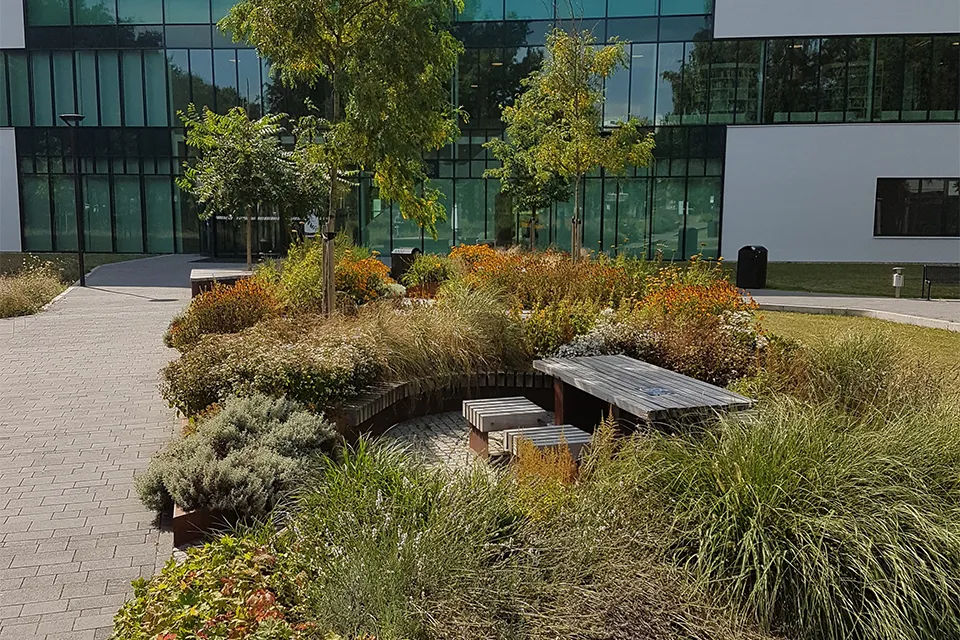
“Design with maintenance in mind” and “manage with design in mind”
Niek van Langen believes the translation of vision into sustainable practice must improve. “Can it be better? I would cross out ‘can’: it must be better,” he says. “We need to design with maintenance in mind, asking of every design: can it be maintained, is it efficient, and does it suit the end user? And, on the delivery side, we need to manage with design in mind.”
A good example is what some larger municipalities already require. “Amsterdam asks for a maintenance plan and a cost plan for annual maintenance and replacement as part of permit applications. That means you think about it earlier and set money aside for later,” says Van Langen. “Architects should also ‘look back’ more often: return a few years after completion to see what is really there.”
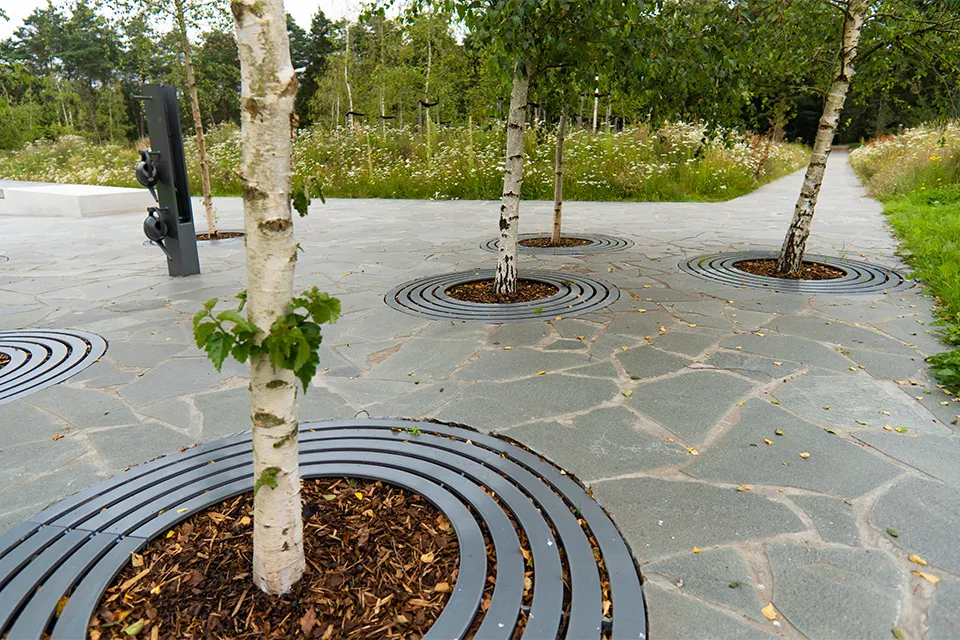
Keep designers on board for longer, even after completion
Roy Wouters argues that designers should remain involved until after completion. “For us, the job is not really done until two or three years after completion, when the maintenance period has ended,” he says. “Keep us involved as your right-hand partner, providing ‘supervision’ of the specification and the works. That ensures the design is properly translated into the specification and allows us to safeguard the intended end result during delivery.”
Wouters says things still go wrong too often during the transition from contractor to managing authority. “You build responsibility into your specification, but when the work is handed over to the municipality, things become unclear. It is then uncertain what the contractor still has to do, and a newly planted bed is left without water or protection.”
Aftercare and replacement planting: specify them explicitly
Brenkman also highlights the crucial first years after planting. “We always include items for aftercare. This specifically covers replacing failed plants and watering during dry periods. Trees need support during the first two to three years after planting. We also always recommend including maintenance work, such as mowing and weed control, in the specification for one, two or three years after planting. The client then decides whether this work will be included in the tender or handled by a separate maintenance contractor.”
Van Langen sees the same issue at the interface between completion and management. “Green spaces involve living materials. Think of watering, plant guarantees and the quality of the growing environment. You can even contractually secure a desired ‘end result’: after three years, a tree should have reached a specified trunk size and crown development.”
Bring management into the design process early
Both Rod’or Advies and SmitsRinsma get involved during the early planning stages, advising on technical matters, feasibility and management. “We bring the right expertise to the table straight away, from emergency services to event pressures and the positioning of green spaces,” says Van Langen. “That prevents tensions between design, procurement and management later on.”
Wouters says more and more clients are explicitly requesting a management review and cost estimate. “Assess the manageability of what you are proposing and explain the implications to the council. In Eindhoven, additional management funding was deliberately requested because the desired quality required it. That is how you safeguard the long-term vision.”
Procurement approaches: one size does not fit all
The interviewees take a nuanced view of the “ideal” contract model. Wouters says: “If we can work in a construction team, that is our preference. You get the delivery partners around the table early, build good working relationships and ultimately save the client money.”
Van Langen offers a caveat: “If you have the manager, designer and technical specialist at the table, you do not necessarily need the contractor, unless a particular construction method or phasing is genuinely critical. That is less often the case in management than in major landscaping projects.”
Brenkman notes that a construction team is almost always more expensive than traditional tendering. He also does not believe that longer management contracts are always the answer. “On the one hand, the manager’s enthusiasm and sense of challenge fade, so quality declines over the years. On the other, the parties eventually get tired of working with each other.”
Longer management contracts can, however, help build knowledge and take a genuinely forward-looking approach, says Van Langen. “Give green-space contractors time: the first year is about investing and getting to know the area. It is only from year three or four that you start looking ahead together. Five years at least if you put it out to tender. We have projects where the same manager has been in place for twenty or twenty-five years. That works brilliantly.”
From brake to driver: what works
So what makes management and specifications a driver of innovation? The common thread running through the conversations:
- Build management in from day one. Require a management and cost plan, and assess designs for manageability, including the growing environment and subsoil.
- Keep designers involved for longer. Arrange supervision through to the end of the maintenance period and make sure handovers are not a black box.
- Specify aftercare explicitly. Include at least watering and replacement planting as performance obligations in the specification.
- Choose contract models to suit the task. Use a construction team where it adds value; otherwise, bring the key players, management, design and technical expertise, together early.
- Invest in knowledge and capacity. This is especially important for smaller municipalities: bring in external expertise to turn ambitions into reality.
Or, as Van Langen puts it: “Design with maintenance in mind and manage with design in mind.” Do that, and the specification becomes not a brake but an accelerator of green quality that residents really notice, not just on the day of completion, but especially in the years that follow.
Question about this story? Ask your question
Keep following this
Get an email when a new story is published. No account needed.
- SubjectGeneral







