









Garden ponds act as ‘stepping stones’, connecting populations and keeping them connected
Text and images Guido Lurquin
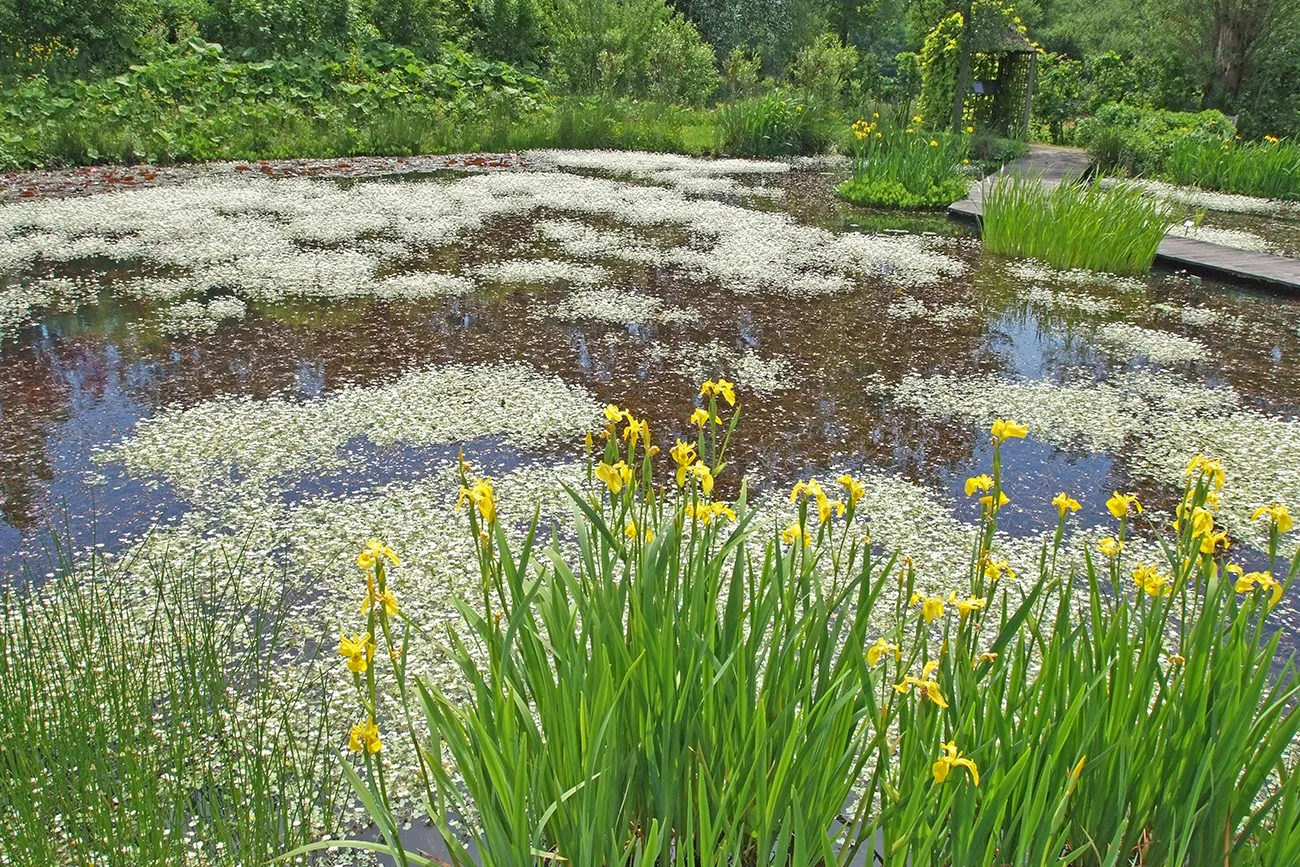
‘There should really be a pond in every garden’
Creating a garden without a pond… is actually irresponsible. There are three very good reasons to create a pond in as many gardens as possible.
1. Water moderates the garden climate
Extreme weather events are becoming more and more common. Heat records are being broken, and hot days and heatwaves have become more frequent in recent decades. Spending time in a ‘bare’ garden with only a patio and lawn is not much fun when it is hot. A parasol offers little relief. The most pleasant garden is one with trees, real trees, not dwarf varieties, and water. Both have a real cooling effect and moderate the climate.
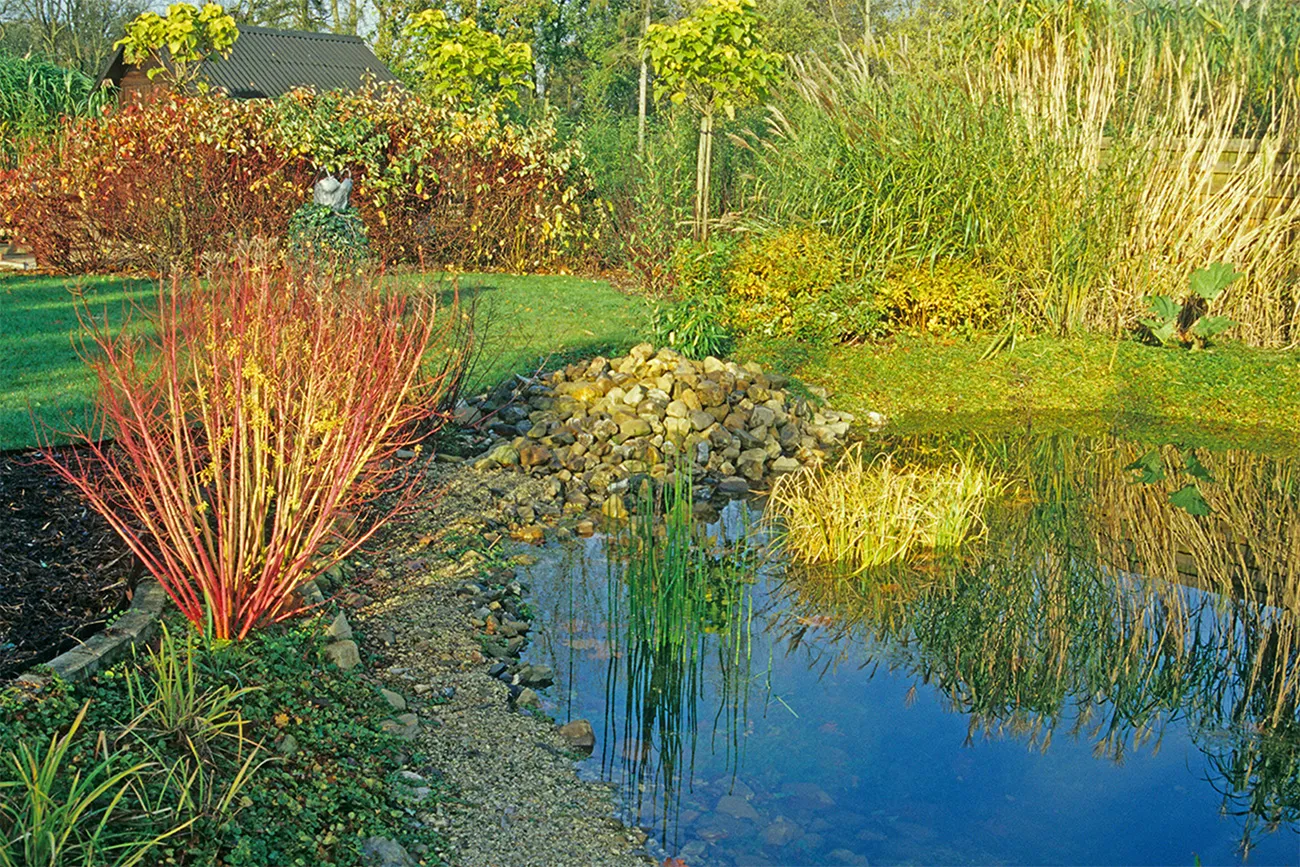
2. Storing water is essential
In recent years, there have been several periods when drinking water was clearly in short supply, and water reserves were replenished only with difficulty. Storing rainwater and allowing it to infiltrate through a swale are the solution to this problem. But capacity is often an issue. A rain barrel holds only a few hundred litres, while an underground cistern holds only a few thousand. It therefore makes sense to create a pond that the rain barrel or underground cistern can overflow into. The pond can then overflow into an infiltration area beside it, or even one beneath it to save space. In that case, it is important to weigh down the waterproofing so it cannot be pushed upwards. The pond section of the swale also helps clean the water locally, through the action of micro-organisms and plants.
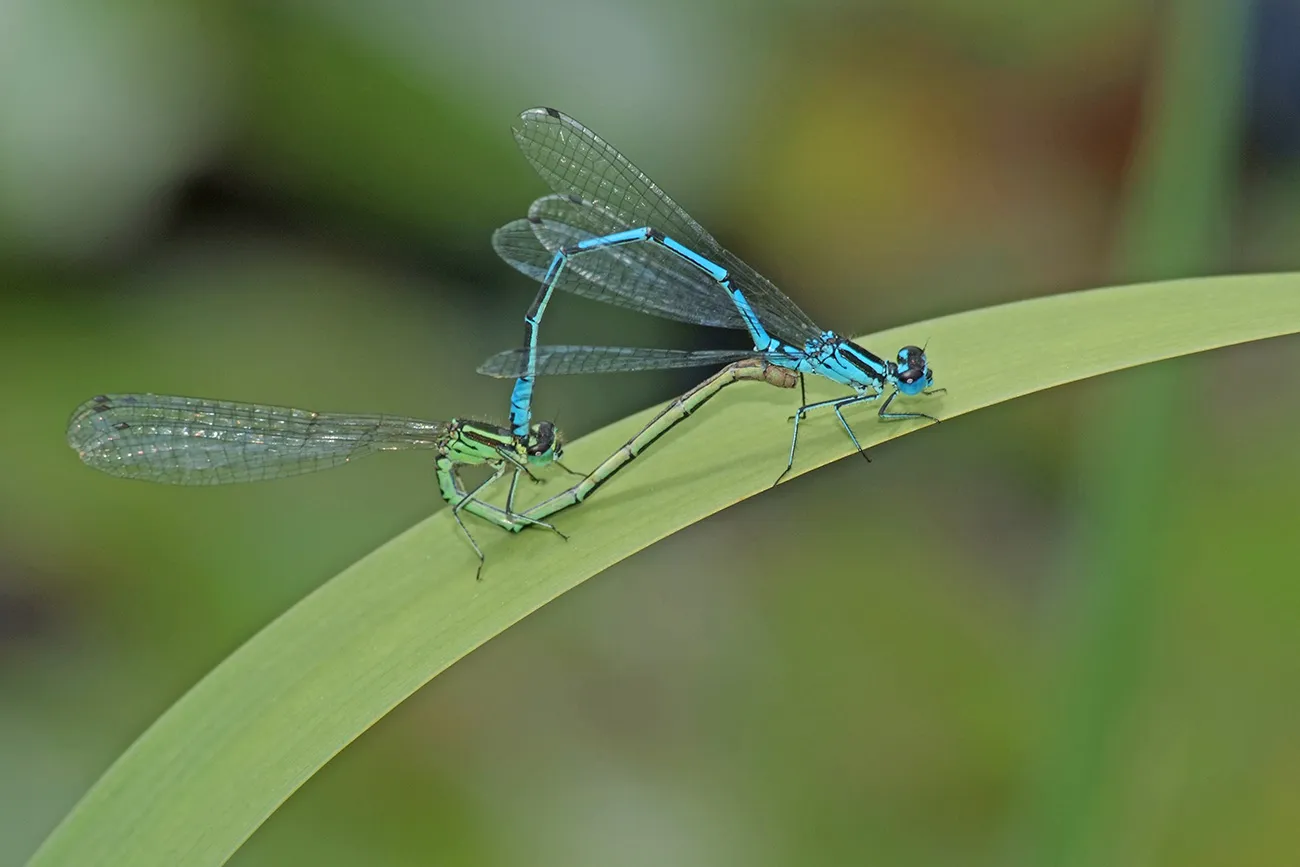
3. Water as a habitat, action is urgent
Amphibians and other aquatic creatures in our country are currently in a very bad way. Various causes can be cited, such as disease and more extreme weather. These certainly play a part. But the most important reason is the lack of habitats, as well as the excessive distances between them. Amphibians move slowly and cannot travel further than a few kilometres, sometimes only a few hundred metres. For our amphibians to survive, it is more important to have many small bodies of water than a few large ones. Garden ponds act as ‘stepping stones’, connecting populations and keeping them connected, which is important from a genetic perspective.
Ecological ponds are particularly recommended
An ecological pond is adapted to the native fauna and flora of wetland areas. Any garden pond that resembles a natural pool can be described as an ‘ecological garden pond’. It can be small and still attract plenty of amphibians and aquatic insects. It is important to ensure that there is always some water in the pond. Bear in mind, for example, that dragonfly larvae live underwater for a year before transforming into flying insects.
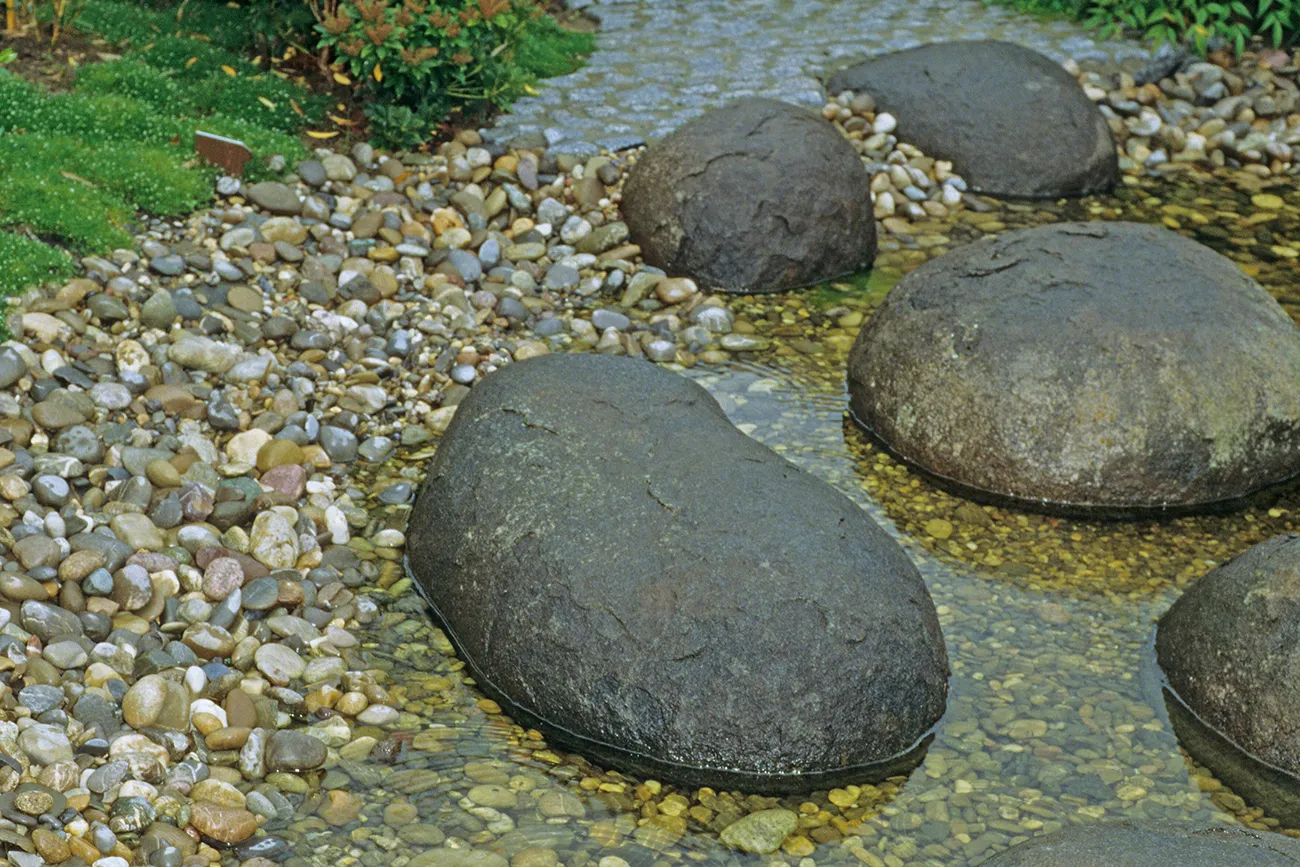
To get through harsh winters and dry summers without problems, a deep-water zone of 80 to 100 centimetres is recommended. Long, irregular banks and broad, shallow areas are beneficial. The planting should consist mainly of native species, although a frog really will not mind if the water lily has yellow rather than white flowers.
Accepting fluctuating water levels
It is a misconception that all ponds must remain full to the brim. That is certainly not necessary for every pond. Even when a pond is half-empty, it is still half-full, which is enough for many of the life forms that inhabit it.
In the wild, fluctuating water levels are the rule rather than the exception. Many marsh plants are adapted to this and can grow in reasonably deep water as well as in drier conditions.
With a pond of this kind, it is important that a lower water level does not spoil the view. Boulders and plants create a transition from water to land, so that the waterproofing is barely or not at all visible even when the water level is low. Choosing the right plants ensures that the whole pond remains attractive during drier periods.
To reduce water evaporation, it is best to include plenty of ‘covering’ plants, such as water lilies, water hawthorn and frogbit.
A ten-year experiment
As an experiment, I never top up two of my own ponds. Nor do they receive extra rainwater from the roof of a garden shed or carport, for example. They are up to one metre deep and receive water only from the clouds above them. They are near Leuven, where average annual rainfall is 795 millimetres. One pond is in a sunny spot and contains marsh plants and water lilies. It has never been less than half full, which was more than enough to see all native wildlife through the dry spells. The other pond is more shaded and contains only water lilies and abundant duckweed. Even during the driest periods, it remained 85% full.
Making other water features more ecological
Swimming ponds are already a more ecological option for swimming. If the filtering marsh zone is designed with varying water depths above the filter substrate and a diverse range of plants, it too can become a pond habitat for native wildlife.
A koi pond can be made more ecological by creating a plant pond and/or a planted stream alongside it. This allows water from the filter to be channelled through them. This provides more space for biological processes and means less water needs to be changed.
Plant ponds are inherently very wildlife-friendly, but you can make them even more attractive to native aquatic creatures. Provide places where animals can easily get in and out of the water, such as a gently sloping gravel beach or a log extending into the water. If you want to add fish, choose, for example, golden rudd. Provide different depth zones too, so that every animal and plant can find a suitable place.
There is no need to be afraid
Take a course on ponds. With coherent, well-considered information, you can avoid major mistakes and make maintenance easier. Do the right things at the right time and… work with nature.
Question about this story? Ask your question
Keep following this
Get an email when a new story is published. No account needed.
- SubjectGeneral







