









Greater diversity leads to stability. How can tree damage be prevented?
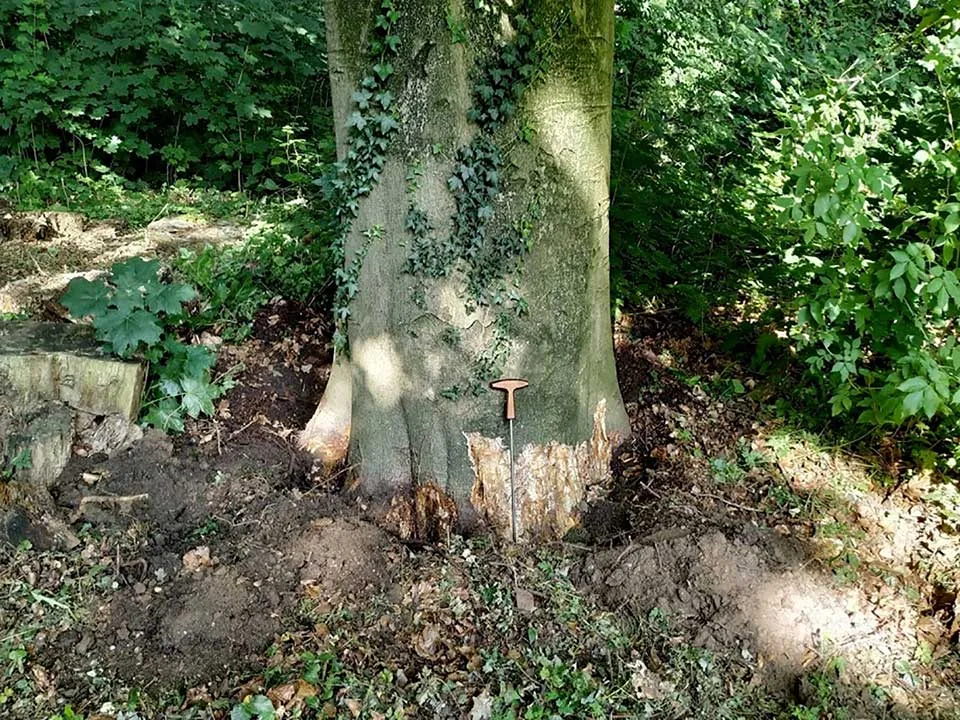
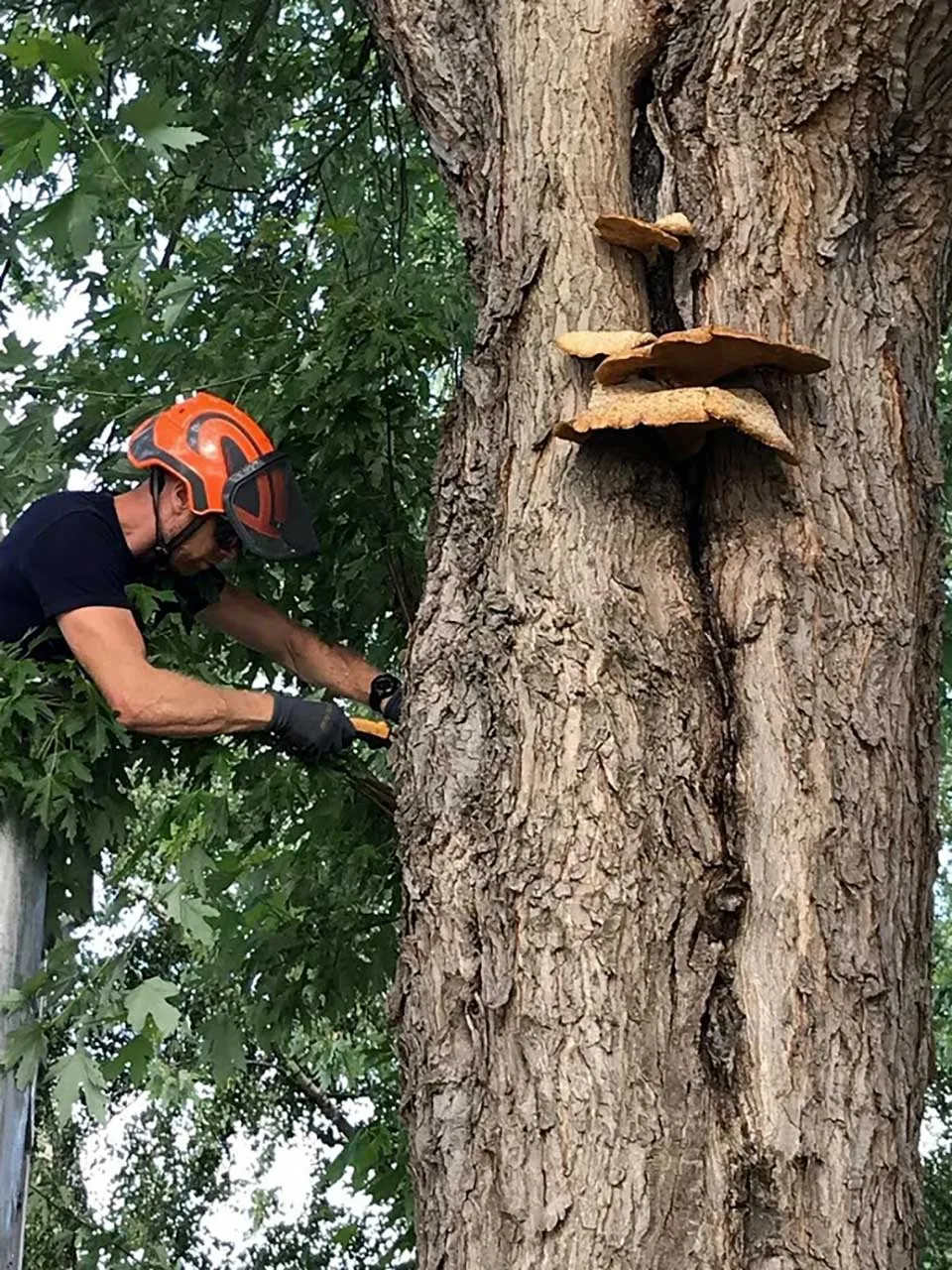
Thankfully, the days when fungal damage meant an imposing oak had to be felled are over.
Many tree managers know that older trees are worth preserving. But when can a tree still be saved? And, above all, how can we keep trees healthy?
Gijsbert-Jan van Voorthuizen (ETT/ETW-er), owner of Van Voorthuizen Boom & Groenverzorging B.V. in Lienden, has more than 20 years’ experience in tree management. He advocates a tailored approach to tree damage. “It starts with the tree species. Pioneer species such as birch and poplar grow quickly and die young. They have often reached the end of their life after 60 years. An oak or lime, by contrast, can be enjoyed for many years to come, even if it is damaged. The important thing is that the tree is still vigorous and does not pose a danger to its surroundings.”
Vigour versus condition
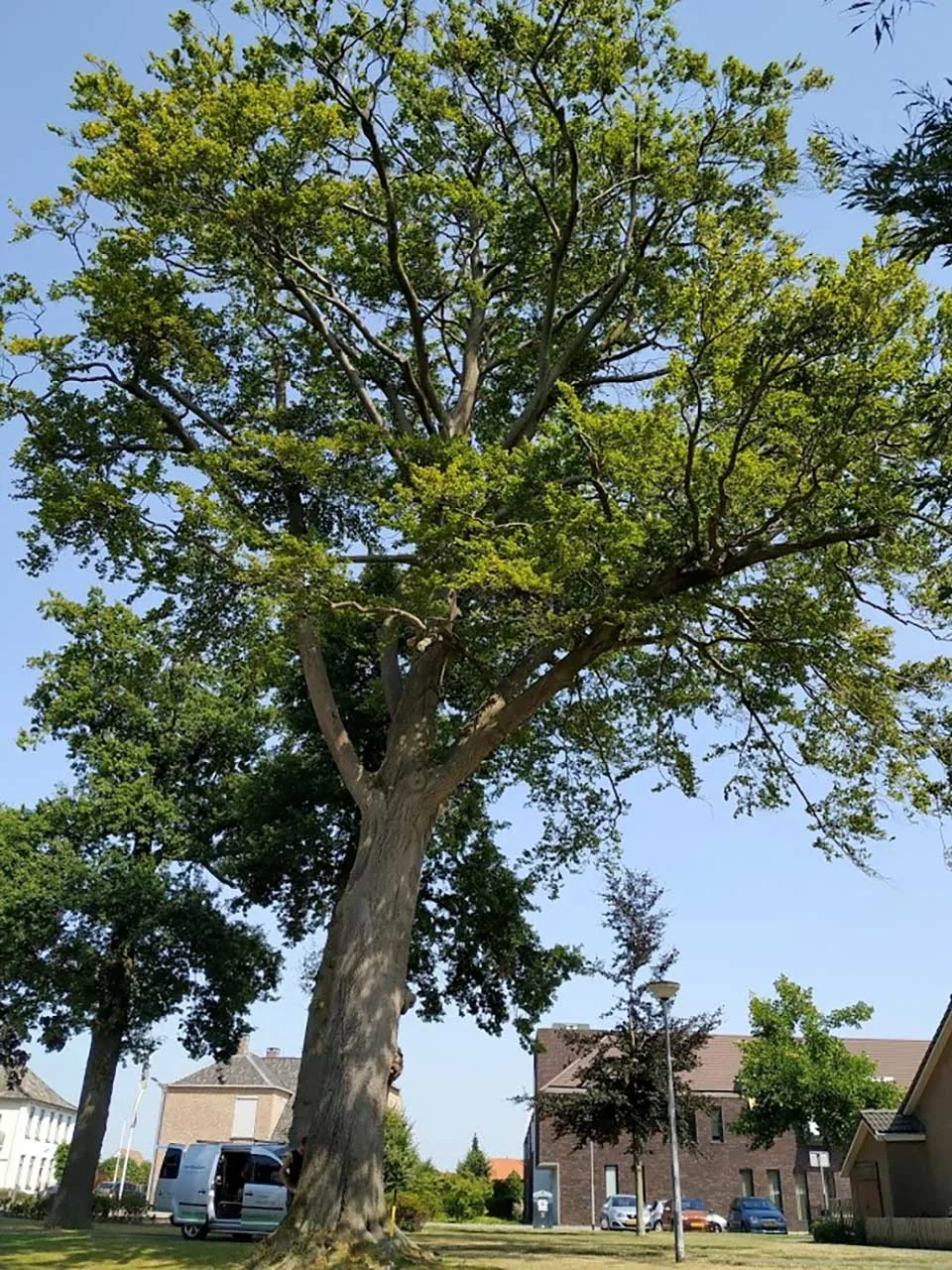
A tree’s vigour and condition can often be assessed by a trained eye. A beech, for example, may suffer from drought stress after a long, dry summer, resulting in reduced and premature leaf fall. Or roots may be partly damaged by excavation work, leading to crown reduction. “These are signs of a decline in condition,” says Gijsbert-Jan. “But condition is a snapshot, and a vigorous tree can, as it were, ‘reorganise’ itself. Wood-decay fungi play a crucial role in this. A tree that is producing young wood in the form of compensatory tissue, such as water sprouts, is still vigorous and may be worth saving.”
As well as assessing the tree itself, soil condition is a determining factor. Gijsbert-Jan stresses that preventing degradation is more important than improving soil quality. “Healthy soil with sufficient rooting space, organic matter and abundant soil life is the foundation.”
Diverse planting
Greater diversity is the strongest weapon against damage and disease. “A disease needs enough food, and spreads faster in monocultures. In some cities, 30 per cent of planting consists of a single species. Climate change and pollution also have an effect, of course. We do not know which diseases and pests will emerge in the future, but one thing is certain: biodiversity and genetic diversity in planting are the answer. Greater biodiversity prevents the loss of entire tree stocks, reduces infection pressure and lowers tree population losses.”
This diversity can be achieved by importing southern species, although Gijsbert-Jan would rather see rare native species such as wild apple and black poplar valued once more. “Despite the rise in average temperatures, we still get severe night frosts late in spring. Native species cope better with these conditions. But one thing is certain: effective disease and pest control, high biodiversity and a resilient tree population can only be achieved through greater diversity.”
Question about this story? Ask your question
Keep following this
Get an email when a new story is published. No account needed.
- ThemeTrees and plants for tomorrow
- SubjectGeneral







