









Green City Challenge gives municipalities a clear picture of greening opportunities
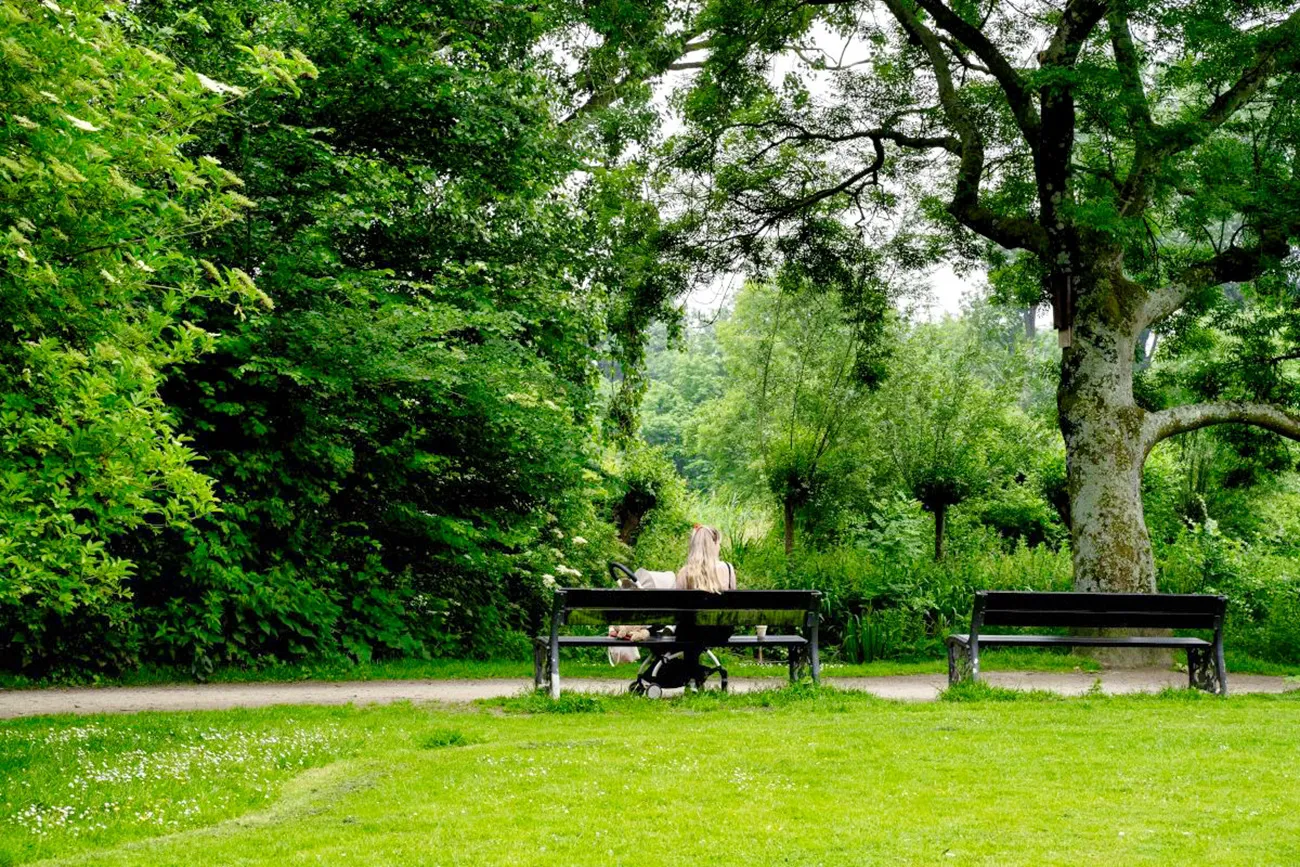
Last summer, the organisers behind the 2021 Green City Challenge set a target of 25 participating municipalities. Ambitious, but with TV gardener Lodewijk Hoekstra as ambassador and leading organisations Sweco and Husqvarna as fellow challengers, it seemed achievable. The response exceeded all expectations: no fewer than 104 municipalities took part in the first edition of the challenge. The results were announced last January. Among the cities, the municipality of Rijswijk (ZH) took a surprising first place, while Bloemendaal (NH) proved to be the greenest village.
Initiative provides a baseline assessment of all green space in the Netherlands
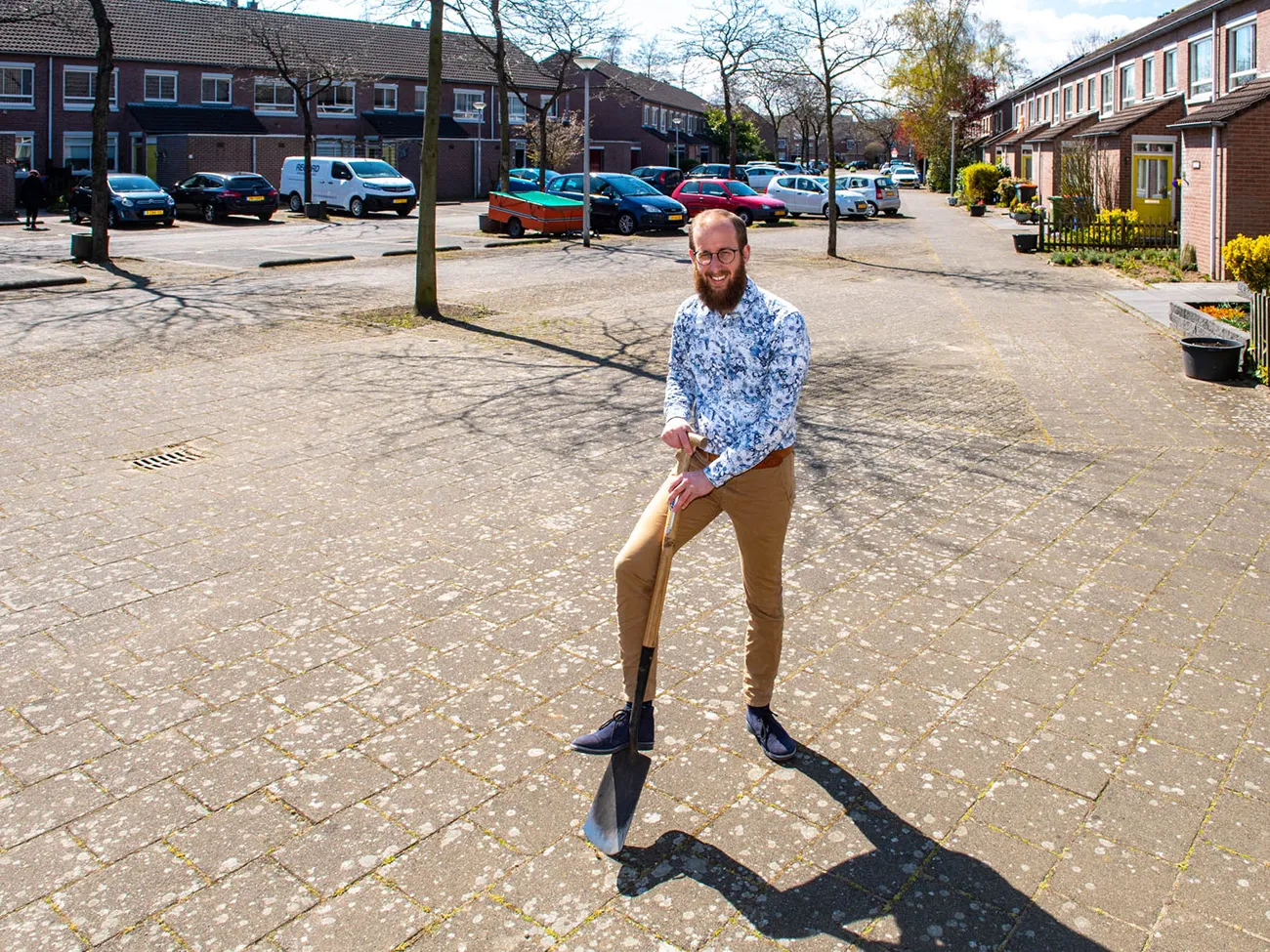
The challenge is not intended to be a competition to decide which municipality is the greenest. “It is about the insight we provide. The challenge is essentially the first national baseline assessment of all green space in the built-up areas of the Netherlands. That is extremely valuable for municipalities,” says originator and ambassador Lodewijk Hoekstra.
Green space in focus
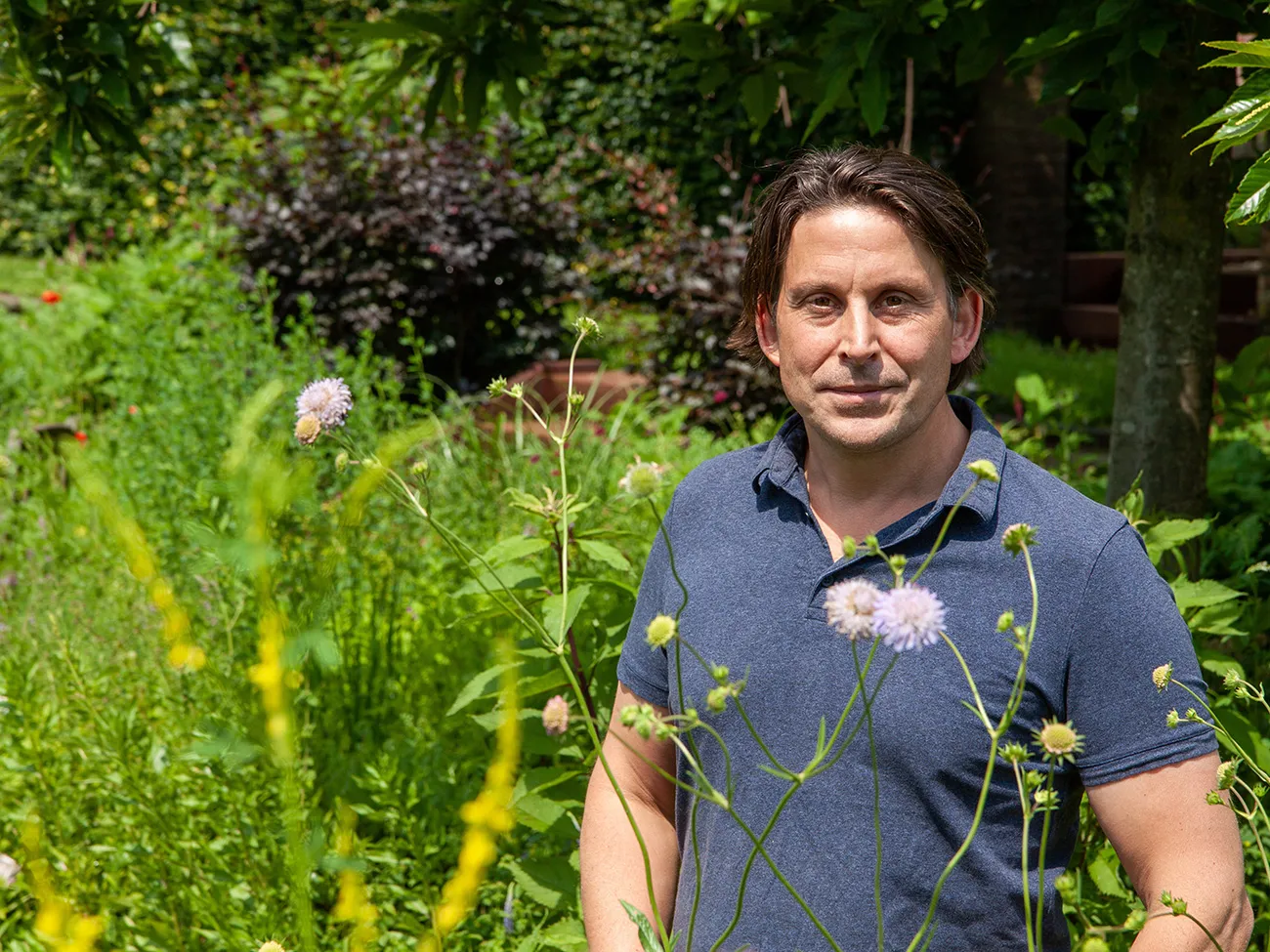
The Green City Challenge was Hoekstra’s own idea. He is a familiar face across the country as the former TV gardener on Eigen Huis & Tuin, but he is involved in much more. He founded NL Greenlabel, a network organisation he established with landscape designer Nico Wissing, which has since grown into a major player in greening the living environment. Lodewijk says: “When we started NL Greenlabel ten years ago with a group of like-minded companies from the green sector, government bodies paid little attention to issues such as sustainability, climate adaptation and biodiversity. Fortunately, that has changed. These days, every municipality that takes itself seriously wants to get to work on greening. I am often asked: how? What can we base our policy on? We came up with the challenge to help municipalities answer these questions. It literally maps where green space and grey infrastructure are located in their municipality, and what action they can take.”
HUGSI
Swedish company Husqvarna joined the Green City Challenge to map green space in every municipality. At first glance, it might seem an unusual partner. Hoekstra says: “Like everyone else, I mainly knew Husqvarna as a quality brand of garden machinery and tools. A few years ago, I discovered that the company also launched HUGSI, the Husqvarna Urban Green Space Index. Using satellite data, it maps green space in cities around the world and publishes a ranking of the greenest cities. At NL Greenlabel, I saw a great opportunity to enrich HUGSI’s quantitative data with the more qualitative approach we have developed at NL Greenlabel. Erik Swan from HUGSI was enthusiastic about the prospect of working together, so at the end of 2019 we entered into a multi-year partnership with Husqvarna. The Green City Challenge grew directly out of that partnership.”
A winning combination
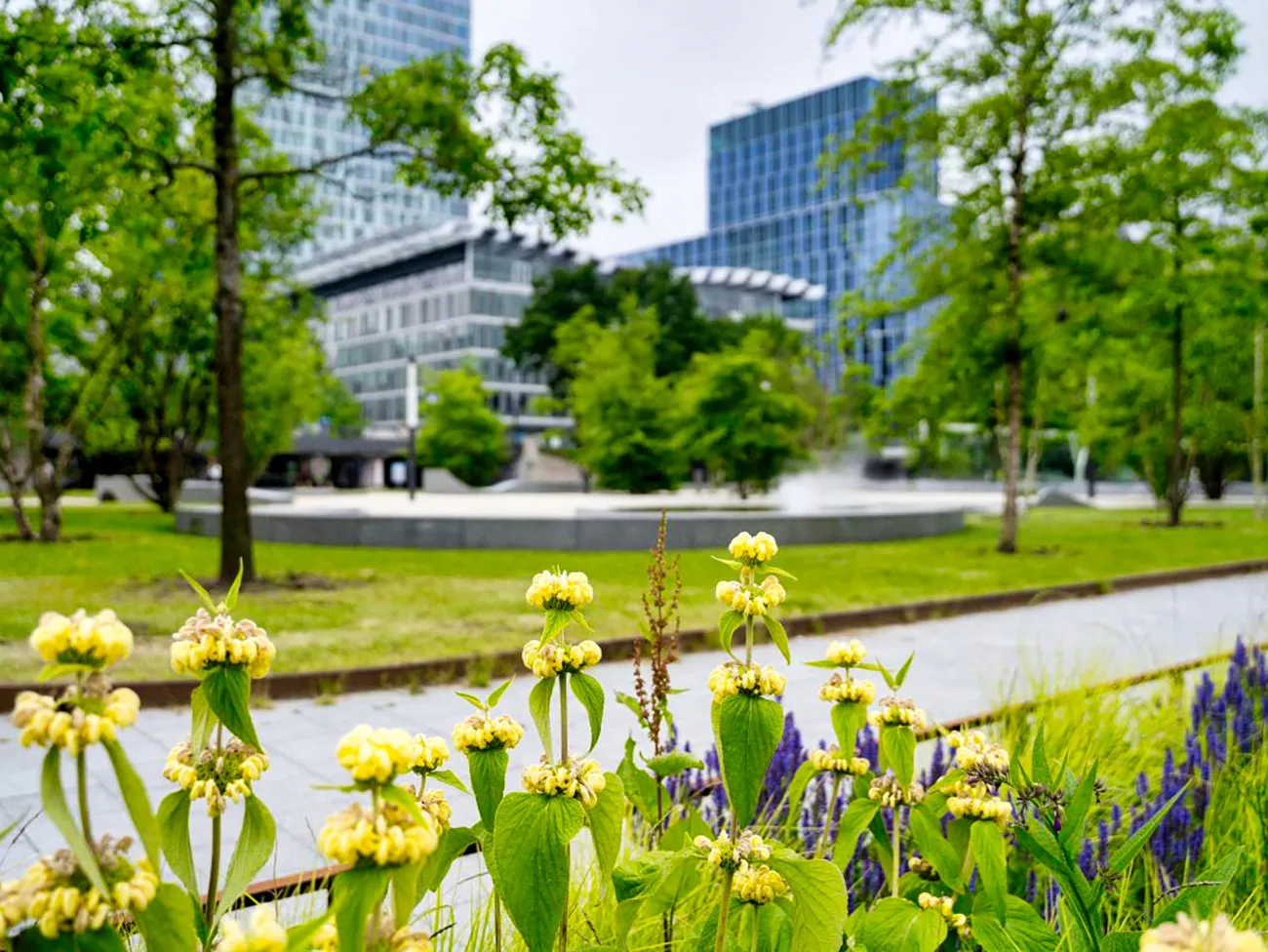
The third partner behind the Green City Challenge is Sweco, an international consultancy and engineering firm with extensive expertise, project experience and know-how in data analysis. Joeri Meliefste, urban green space and climate adaptation adviser at Sweco, heard about the collaboration between NL Greenlabel and HUGSI and saw an opportunity to bring Sweco’s broad expertise to the challenge. Meliefste says: “When Lodewijk told me more about the plans for the challenge, I immediately thought: if Sweco can contribute its network and data expertise to this collaboration, we will have a winning combination that can deliver significant value to Dutch municipalities, provinces and businesses.”
National baseline assessment
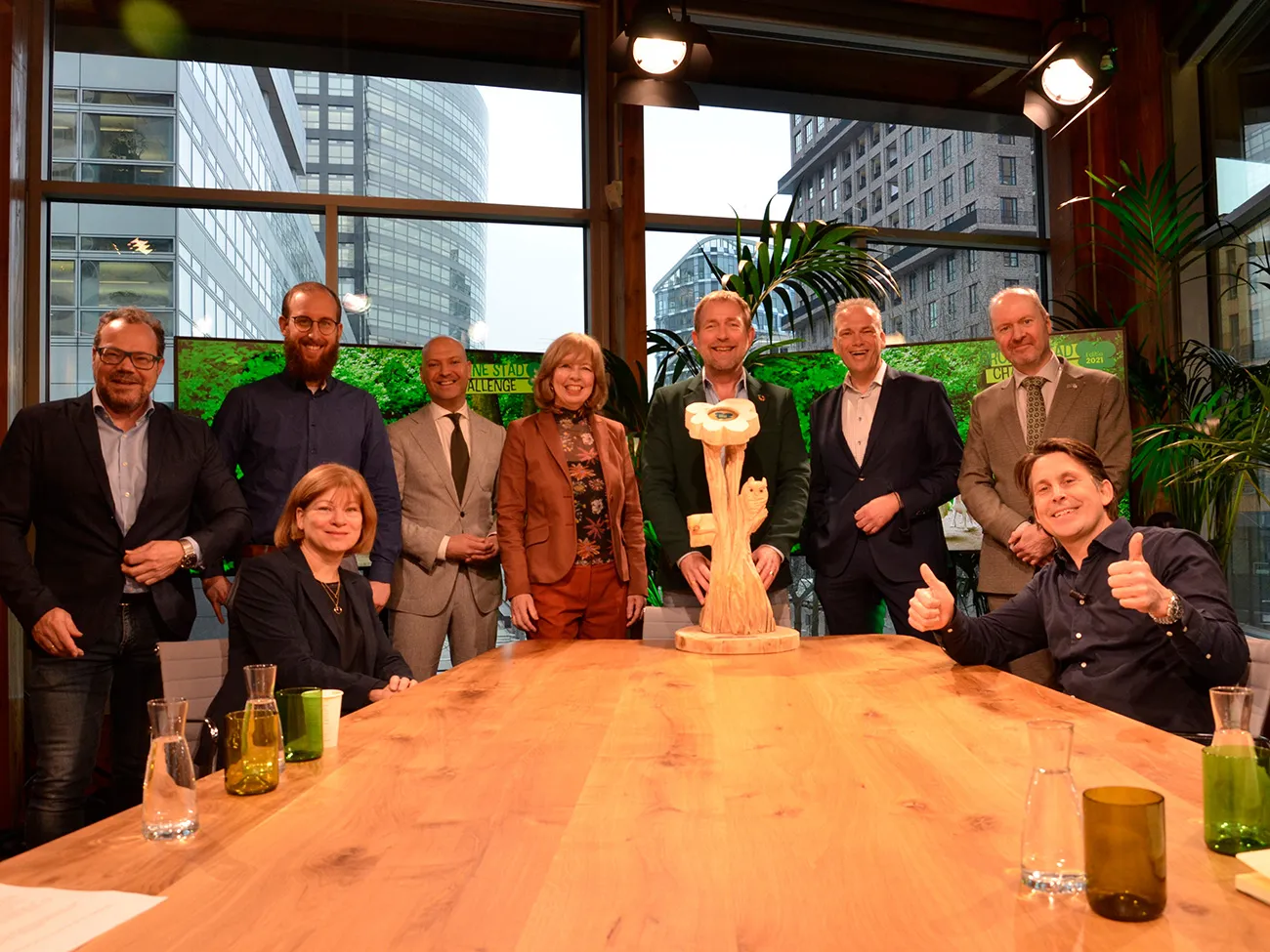
And so the plans for the Green City Challenge took shape in spring 2021. Hoekstra says: “I am also an ambassador for NK Tegelwippen, a fun and successful campaign that challenges municipalities to replace paving tiles with greenery. It is an enjoyable initiative that gets a lot of positive reactions. That gave me the idea of a ‘competition’ between municipalities for the title of Greenest City or Greenest Village in the Netherlands. But ultimately, it is not about winning or losing. The challenge is mainly a way to encourage policymakers and residents to think about green space in their municipality. It gives us a clear picture of the state of nature in their living environment, and we can help them with practical ways to tackle the challenge of greening. In effect, we provide a national baseline assessment of all green space in built-up areas and show where more greenery is possible. That is quite unique.”
A range of data sources
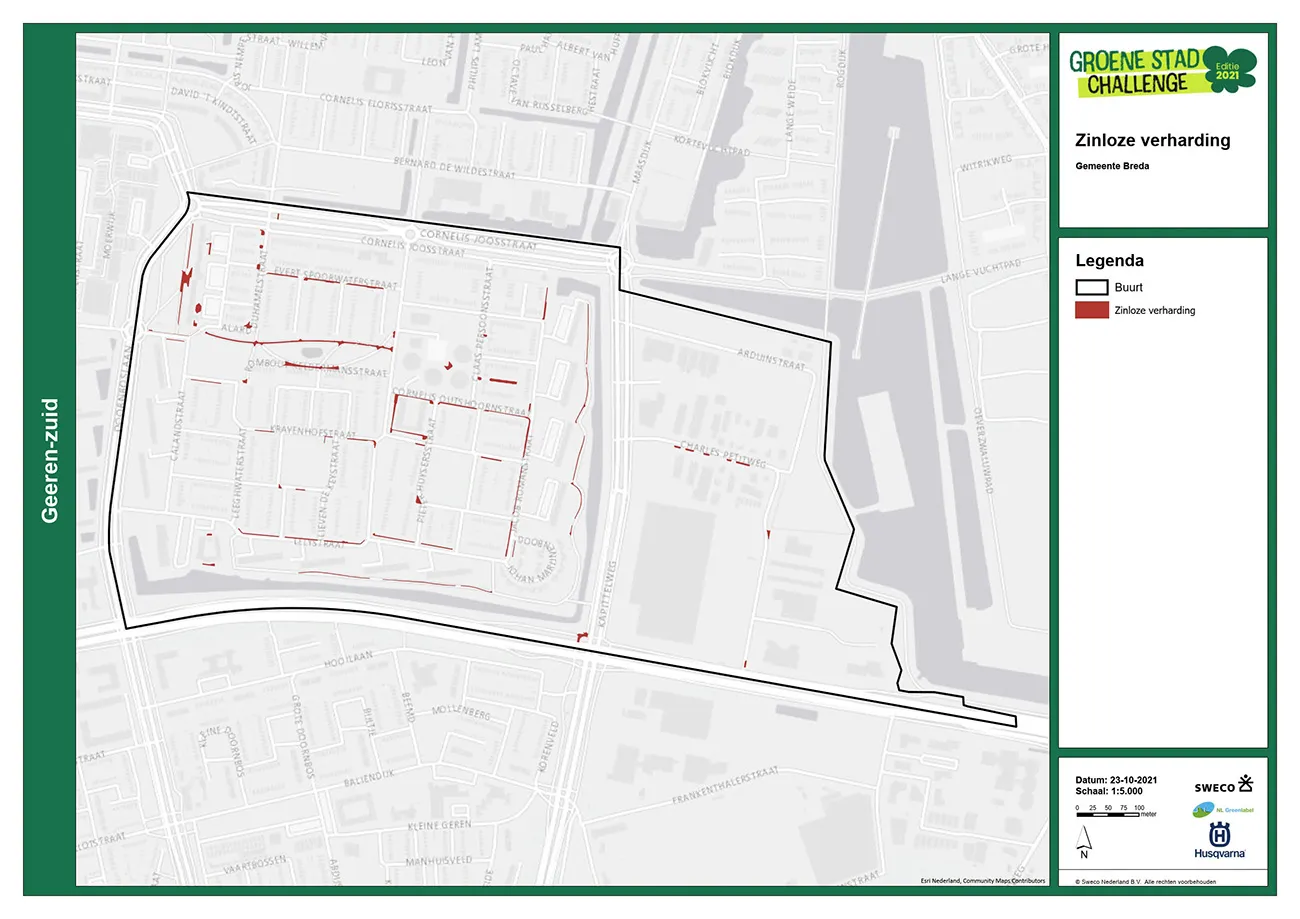
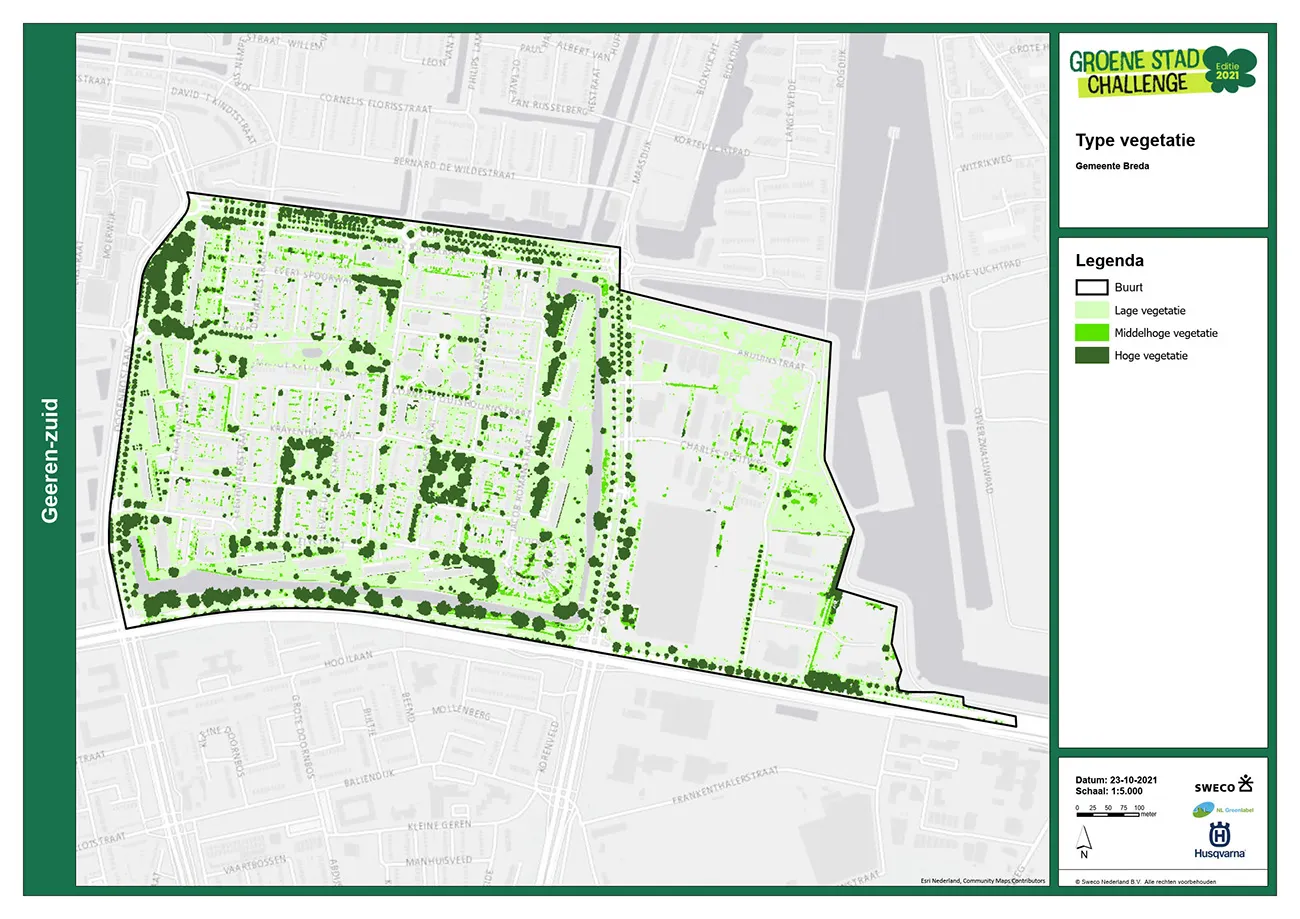
A national baseline assessment sounds good, but what exactly is measured, and how? Joeri Meliefste explains: “We use a range of data sources, including the Publieke Dienstverlening Op de Kaart (PDOK) platform, the Basisregistratie Grootschalige Topografie (BGT) and the latest data from Statistics Netherlands (CBS). Using very recent aerial photographs, we can identify the location of green space to within 50 cm, as well as the type of green space: trees, shrubs or grass.” The data is then used to analyse each municipality at district or neighbourhood level, based on five indicators (KPIs). We look at factors such as green space versus paved surfaces, the area of public urban green space per resident, and the health of the green space. The challenge website provides a detailed explanation of this methodology, so everyone can see how we work.”
Potential for greening
The assessment is a first step towards what Hoekstra and Meliefste may consider the challenge’s most important outcome: identifying the potential for greening. Hoekstra says: “We deliberately chose to make this a challenge, not a competition. But when we challenge municipalities to create more green space, they naturally want to know where and how. That is why we map the potential for greening.” Meliefste says: “We use seven greening opportunities to give municipalities a detailed picture of places where more greenery is possible. These include areas with unnecessary paving, parking spaces and roofs that could be greener, and sites suitable for planting more trees. We also include private gardens, so municipalities can see the green space they do not manage themselves and the potential for greening it. And that potential is significant: 50 percent of gardens could be made more than 30 percent greener. Many municipalities find that very valuable.”
Comparison
The municipality of Doetinchem certainly found it valuable. It secured a place in the top 10 in the first edition of the challenge and also received the award for the municipality with the most green space per resident. At the awards ceremony, alderman Ingrid Lambregts said: “Doetinchem is a compactly built city with a lot of municipal green space. But this award is not just about green space managed by the municipality, it also takes private gardens into account. So it is a very good result!” Lambregts does not have to think long when asked why Doetinchem took part in the challenge. “Our people already know that we are a green municipality and where we can make improvements, but for me it is mainly about the comparison. That is what I find so interesting about this study.” Jacqueline van Dongen, alderman for the municipality of Zwijndrecht, which won the award for the best distribution of green space, agrees: “We responded to Lodewijk’s call because we want an objective picture of where we stand and how we compare with other municipalities.”
Benchmarks for green space
The organisers emphasise once again that the comparison is not about competition, but about developing benchmarks for green space. What is the minimum amount of green space every village and city should have? Various principles have already been put forward, such as ‘every resident should be able to reach a park or green space within a five-minute walk’ or the so-called ‘3-30-300 rule’. To share knowledge on these topics, Koninklijke Vereniging Stadswerk has set up a Community of Practice specifically for municipalities taking part in the challenge. Stichting Steenbreek, which many municipalities are already affiliated with, is also closely involved in the Green City Challenge. Hoekstra is pleased with these collaborations. “Stadswerk is a network of municipalities. Its members know all about policymaking and how to develop best practices through collaboration. Steenbreek is, of course, the partner to turn to if a municipality wants to develop initiatives with residents. The fact that these partners are involved in the Green City Challenge really says something about its impact.”
Greater impact
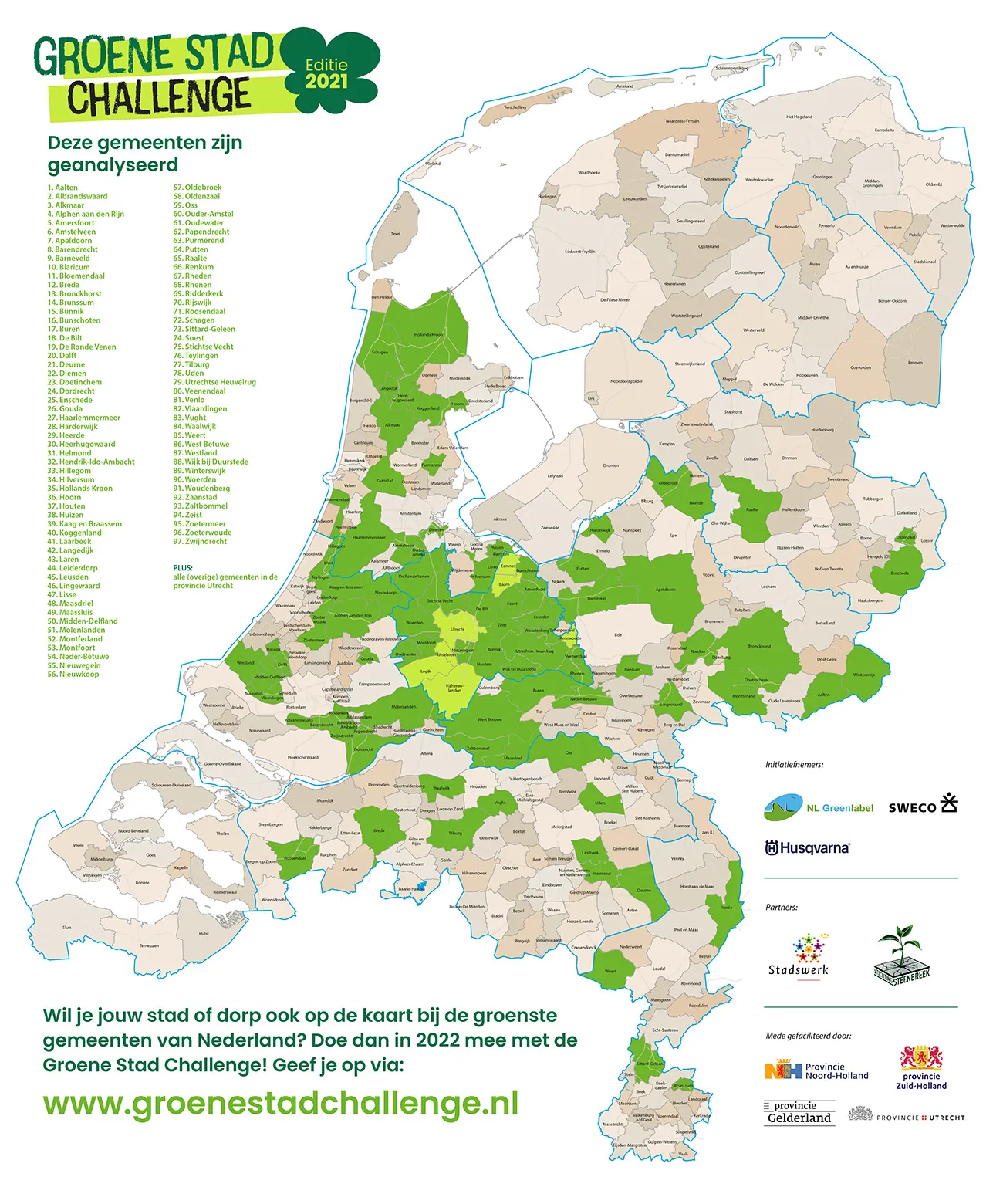
Hoekstra and Meliefste stress that the challenge needs to have a much greater impact. “In the 2021 edition, 104 municipalities and four provinces took part, allowing us to analyse about one third of the Netherlands. That is great, of course, but we want more. The aim is to map and green the whole of the Netherlands, meaning all 344 municipalities across every province. The larger municipalities are still lagging behind somewhat, so we want to give them extra attention in the next edition,” says Hoekstra. Support from the provinces is also helping. In the last edition, the provinces of South Holland, North Holland, Utrecht and Gelderland helped municipalities take part in the challenge. “For the next edition, we hope the other provinces will join them. Ultimately, we all want the same thing: a green, healthy and happy Netherlands. The Green City Challenge helps municipalities make that a reality. That is what we are working towards!”
What questions does the Green City Challenge answer?
- How green is my city or village, and how does it compare with other villages and cities in the Netherlands?
- How green are the different neighbourhoods in my city or village?
- How green are the gardens in each neighbourhood?
- How green are the public spaces in my city or village?
- How many square metres of public green space are available to each resident?
- What types of urban green space are found in my city or village, such as low-growing vegetation, shrubs or trees?
- How is urban green space, including trees, shrubs and low-growing vegetation, distributed across my city or village?
- How many m2 of tree canopy cover are there in my city or village, and how is it distributed across the city?
- How healthy is the urban green space in my city or village, based on NDVI?
For more background information and to register, visit www.groenestadchallenge.nl
Question about this story? Ask your question
Companies in this story
Keep following this
Get an email when a new story is published. No account needed.
- ThemeSpace for urban green
- SubjectGeneral
- CompanyNL Greenlabel







