









Historic gardens come back to life with boxwood
Text Trees AccouImage Herplant

Resistant varieties find a place in castle gardens
“The box tree moth has certainly taken its toll in private gardens in Belgium and the Netherlands,” begins Didier Hermans. “But it is above all the negativity that has done this distinctive evergreen shrub in. The box tree moth is easy to control, even organically. Unfortunately, it has become a cause célèbre, and a great deal of boxwood has ended up at recycling centres.”

Local authorities and private garden owners hoped to replace boxwood with other evergreens, such as Ilex crenata, or Japanese holly. But this proved unsuccessful. “No plant comes close to boxwood in terms of appearance, maintenance and tolerance of pruning. Boxwood grows in every soil type and stays green all year round. There is no plant that can replace it, and people are gradually realising this.”
If you look after boxwood properly, it will last a lifetime and beyond. That is something enthusiasts who still have the plant in their gardens know well. Hermans also senses a change: boxwood is being chosen more often again. Those looking to plant boxwood again can get started when the leaves fall. The autumn months are usually wet enough for planting evergreens. There are more than enough boxwood varieties to choose from, with something to suit every garden.
A resistant alternative
After the wet summers, the long-feared fungal disease is flaring up again. It is somewhat harder to control, but Herplant has an answer for that too: Betterbuxus®, a selection of cultivars resistant to the fungal disease, supplied exclusively to landscapers, garden designers and historic garden managers for the past few years. The latter in particular are embracing boxwood wholeheartedly. “Every week, a new castle garden welcomes our Betterbuxus®,” says Hermans with a smile.
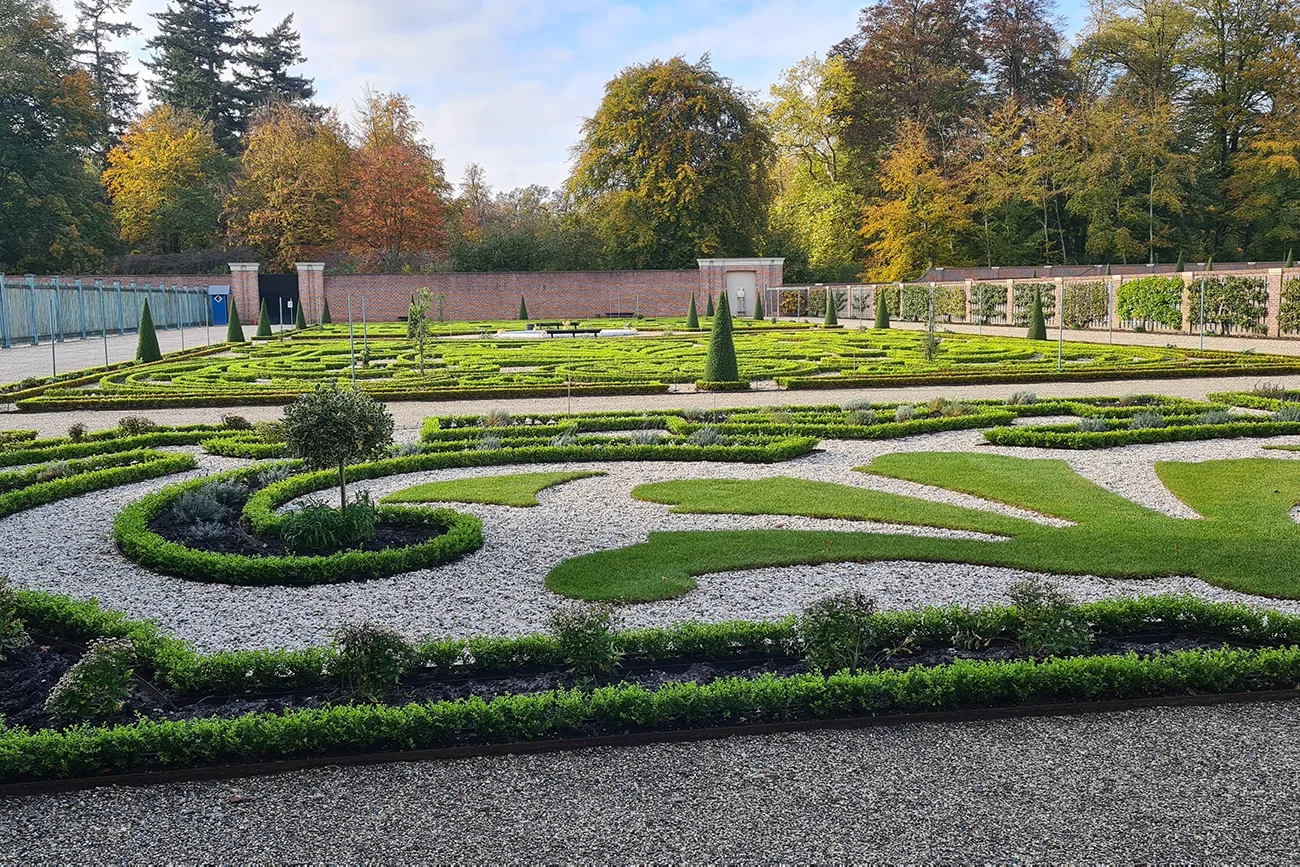
One of the biggest projects is in Apeldoorn in the Netherlands. The historic garden at Paleis Het Loo was laid out in the seventeenth century as a baroque garden, commissioned by stadtholder-king Willem III and his wife, Queen Mary II. Over the following centuries, the garden was transformed into a landscape park, but since the 1980s the original garden has been restored to its former glory, including many box hedges. Due to waterlogging and the spread of the fungal disease, these hedges were replaced with Japanese holly in 2012.
Eight kilometres of Betterbuxus®
Didier Hermans: “Boxwood is difficult to replace in a historic garden. Ilex crenata is hard to keep healthy and does not tolerate the heavy pruning that is so characteristic of boxwood. It is also unsuitable for every soil type and has a limited lifespan.”
The same was true of the palace garden at Het Loo. In 2020, the King's Garden was planted with Betterbuxus®, followed this year by the Queen's Garden. More than eight kilometres of boxwood have now been replanted, using three low-growing varieties from Herplant's range: Renaissance, Heritage and Babylon Beauty. The garden team at Paleis Het Loo planted them expertly and incorporated them into the beautiful, graceful baroque patterns.
“The new planting has more than lived up to the garden team's expectations. It is important to prune, water and fertilise the plants correctly. That is why we provide every customer with comprehensive advice,” concludes Didier Hermans.
Question about this story? Ask your question
Keep following this
Get an email when a new story is published. No account needed.
- SubjectGeneral







