









‘If we are involved early, at the preliminary design stage, we can still influence things’
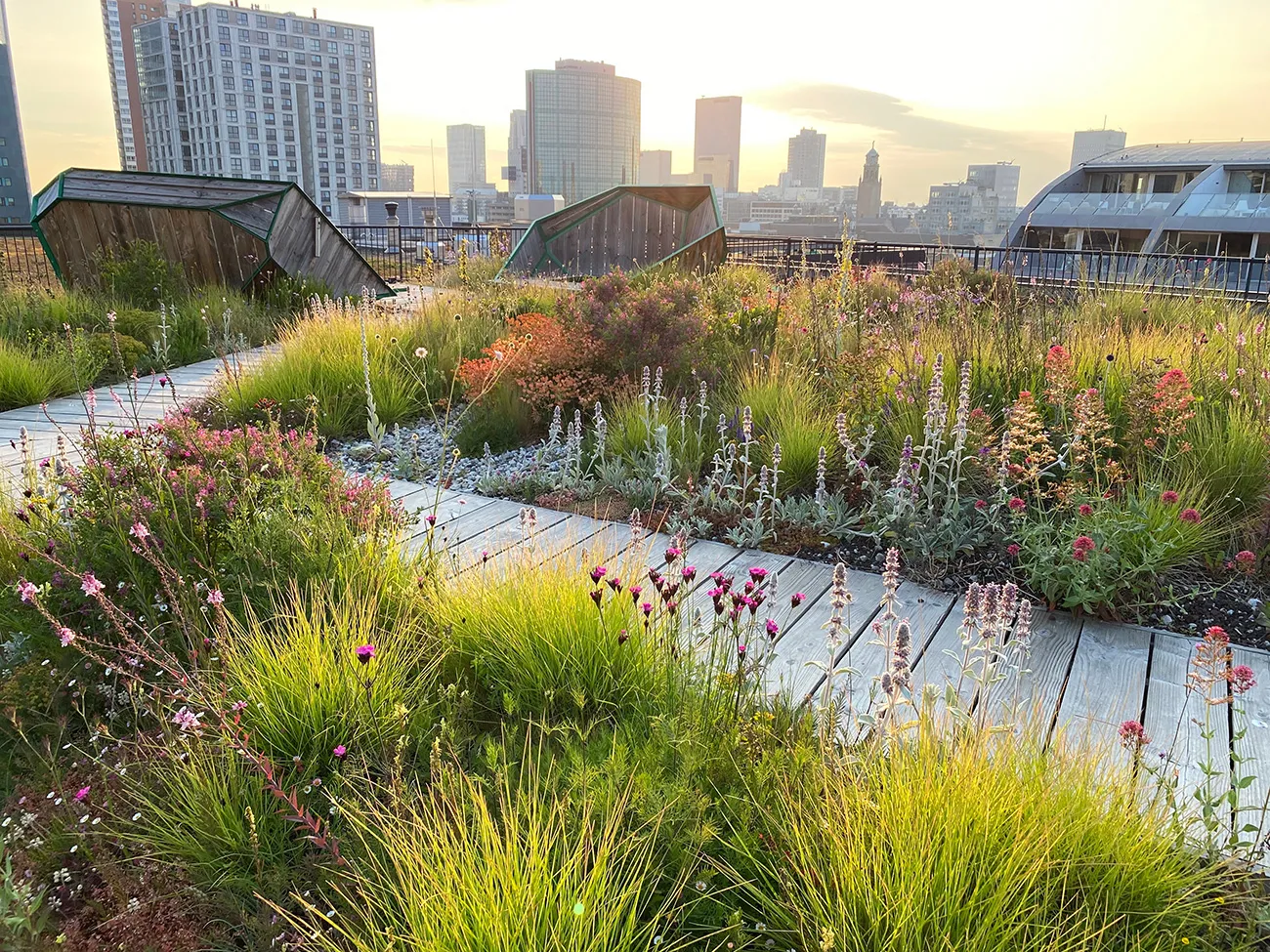
Knowledge of plants and soil is the starting point. Beyond that, nothing is black and white when designing a garden, because every situation calls for a bespoke approach. That is the view of garden designer Arjan Boekel, a member of De Bloeimeesters, a partnership of green professionals. De Bloeimeesters’ message: the importance of plant knowledge in projects.
De Bloeimeesters broaden their plant range by always trying something new and seeing whether it works
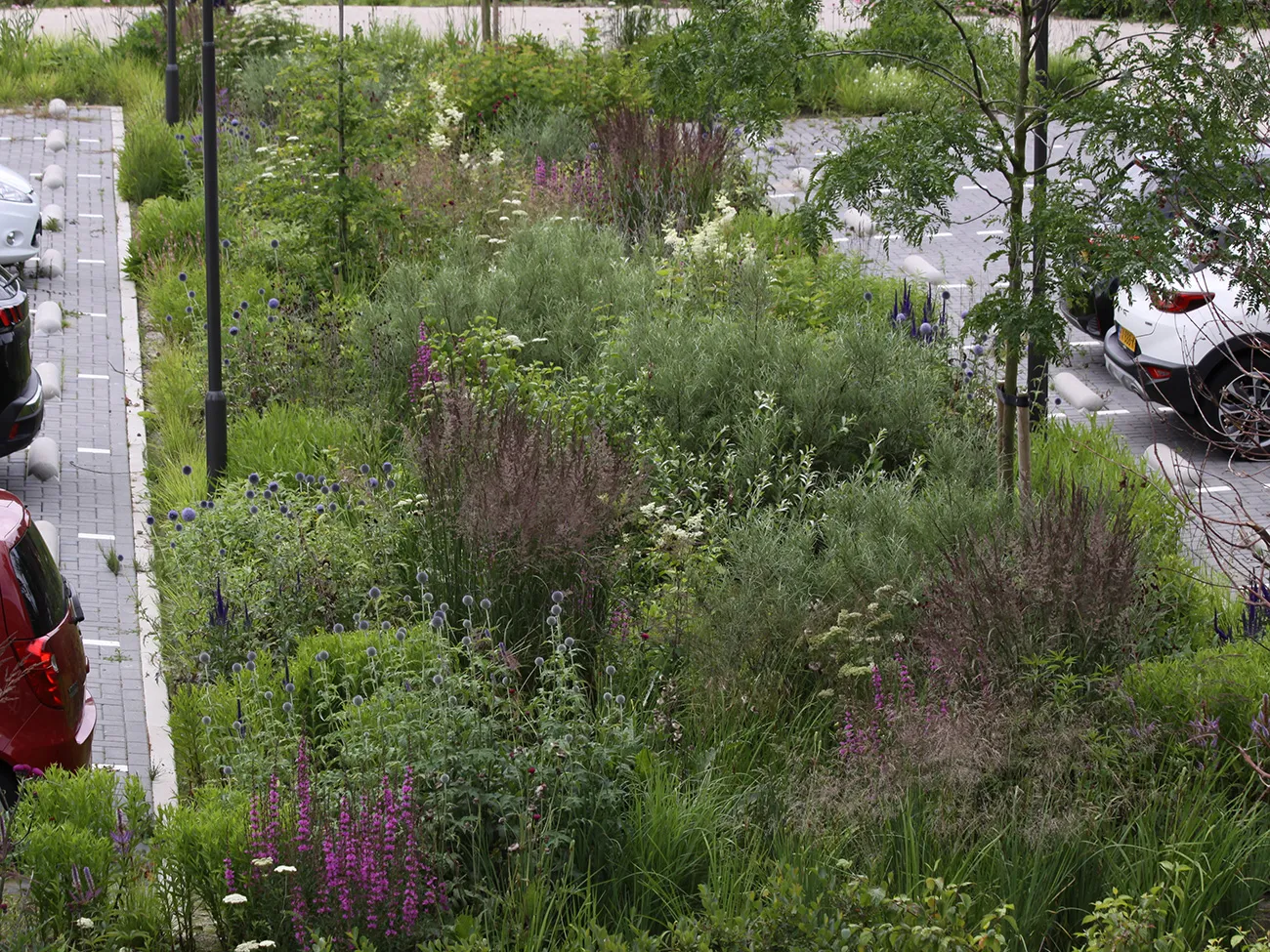
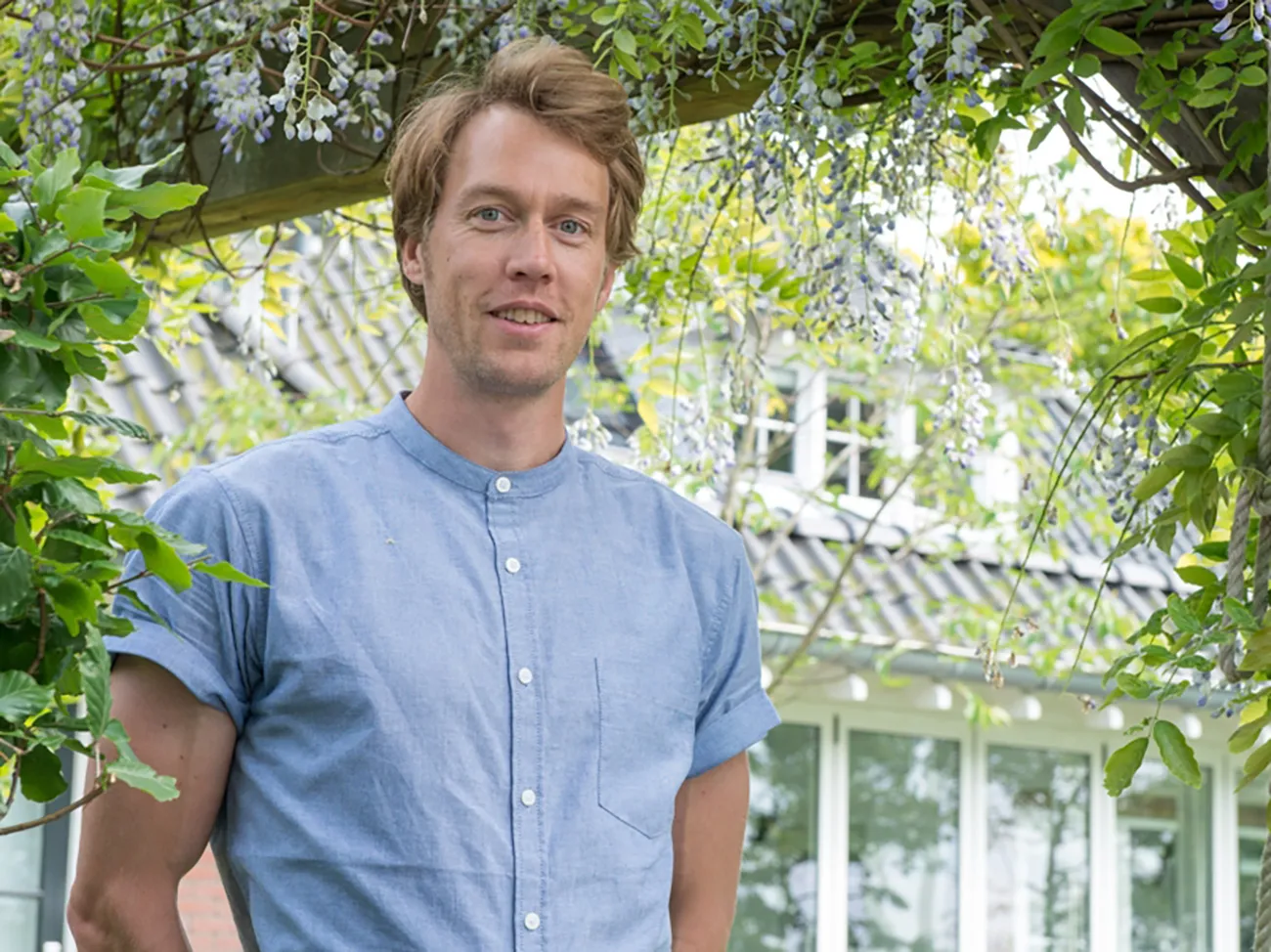
Award-winning garden designer Arjan Boekel set up his business, Boekel Tuin en Landschap, around fourteen years ago. At first, he mainly designed gardens for private clients. In recent years, he has also taken on (semi-)public projects, often working with other landscape architects and bringing his planting expertise to the project team.
Planting is always central to De Bloeimeesters, and Boekel’s designs are no exception. ‘The biggest step towards making outdoor spaces more sustainable is turning a hard, paved area into a green one,’ Boekel explains. Alongside planting, he prefers permeable surfacing to hard paving, so that rainwater can infiltrate effectively.
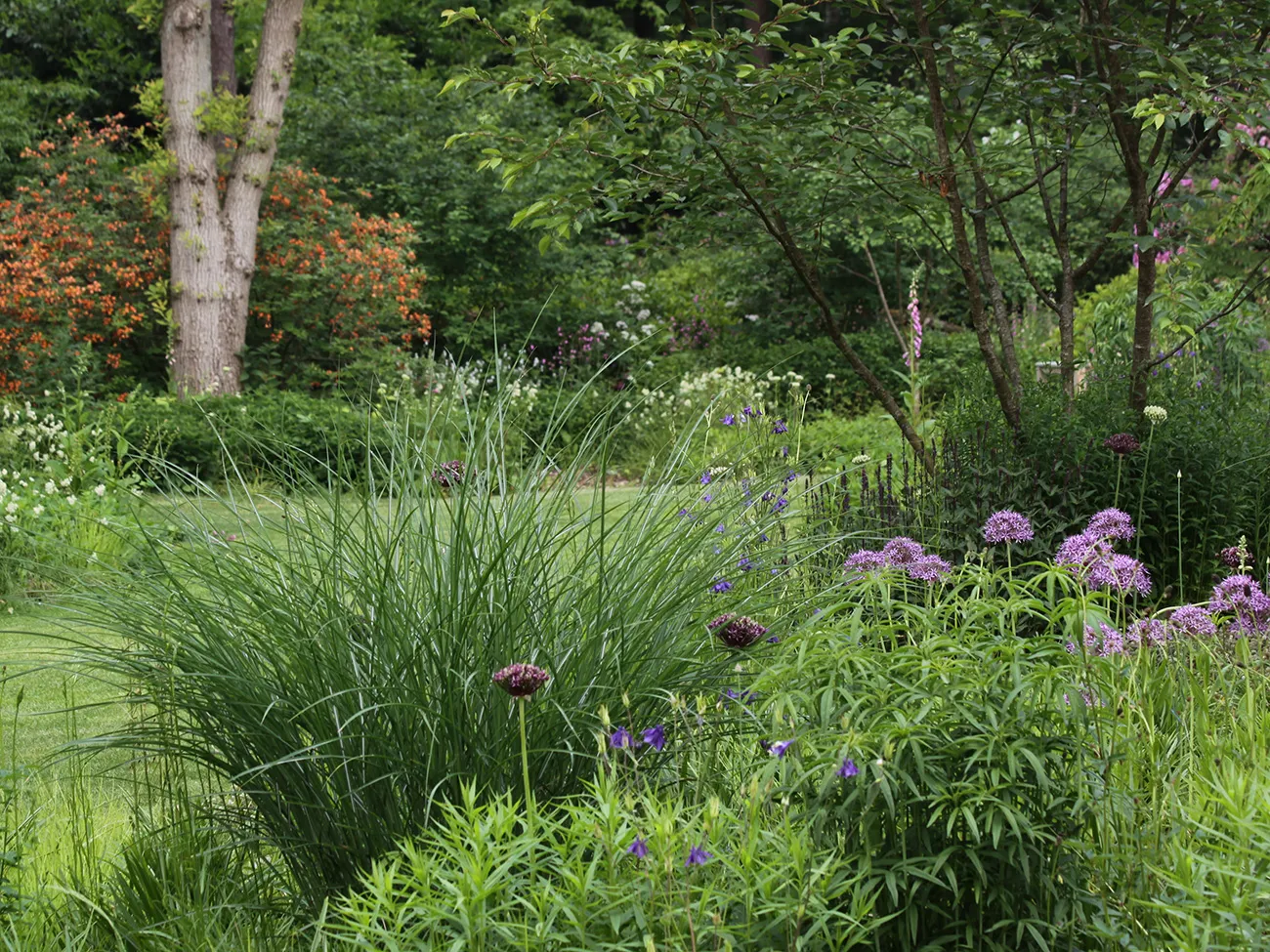
Boekel first uses planting to shape space. A spatial plan can be enhanced by making clever use of the height, mass and transparency of planting. He therefore thinks in layers, which he deliberately fills with plants, or leaves open. His designs do not have a distinctive signature, because every project is bespoke. However, he often favours recreating the richness and layers of a woodland edge: trees, with suitable shrubs beneath them, and perennials below those. Everything in the right place, sometimes planted separately and sometimes in layers. Planting also has a functional role, helping to create a sense of safety and shelter, shape the microclimate, support water infiltration, bring seasonal change and increase biodiversity.
De Bloeimeesters see planting knowledge as the foundation of a well-designed garden. Boekel explains: ‘There are quite a few good planting designers, starting with those in the De Bloeimeesters partnership. But I realise that puts me in a bubble with like-minded people who have the same level of knowledge,’ Boekel says. ‘Across the wider industry, however, there is not enough knowledge of soil and plant ranges to enable truly creative design. Garden designers copy a lot and innovate little. Despite the wide range of plants available, there is relatively little innovation.’
Every site calls for a bespoke approach
According to Boekel, it is difficult to give examples of new planting choices because every situation is unique. One trend, though, is for planting to look increasingly natural, and demand for native plants is also growing. The most challenging sites are often the most enjoyable to work on: draughty corners around a particular building, rooftop conditions, shady spots or poor, dry soil. The plant palette must be carefully adapted to the conditions on site.
‘Without a thorough understanding of the site and which plants will thrive there, a garden designer will sooner or later get it wrong. Some plants will fail to establish, or will perform poorly in the short or long term, and the finished scheme will not look as the designer intended. Sometimes you first need to put a spade in the ground to see what the soil is like. Things also go wrong when a contractor or developer brings in poor-quality soil and no budget has been set aside to improve it. That is why it helps if we are involved early in the process and can insist on a sound choice of soil and proper checks!’
A bespoke approach means that filling in a design is never a standard exercise. The debate over native versus non-native plants is not so black and white either. Boekel’s guiding principle is to make planting fit its surroundings. That sometimes means native plants, sometimes non-native species that provide a longer-lasting experience. Sometimes the choice is plants that attract more biodiversity, sometimes those with greater visual impact. And in certain places, such as city centres or on rooftops, species from southern Europe, for example, may grow better than their native counterparts. In that case, even with climate change in mind, non-native species may be the better choice.
Trying something out from time to time
When selecting plants, Boekel seeks a balance between reliable, robust plants and species that are not yet widely used. ‘For De Bloeimeesters, the most inspiring thing is to be involved at the start of projects. There is less scope for challenge if the conditions have already been determined by the end of the design phase, and the garden or landscape architect is only then asked to “just add some planting”. If we are involved early, at the preliminary design stage, we can still influence the planting concepts and any soil improvement. We can also discuss and contribute to decisions about maintenance after planting. That is another crucial factor that is often overlooked. If we are brought in early enough to have a say, we are more often given the scope to try something other than the usual species, because we can then put forward a stronger concept. Trying something new and seeing whether it works is ultimately the only way to broaden the plant range and keep creating unique, bespoke planting schemes.’
Question about this story? Ask your question
Keep following this
Get an email when a new story is published. No account needed.
- SubjectGeneral







