









‘Insect-friendly’ plants turn out to be pesticide cocktails
Text Carolien KleesImage Pesticide Action Network Netherlands
The benefits of choosing pesticide-free plants
Recent research into common garden plants has produced worrying results. A sample taken from garden centres found one or more insecticides in 82% of plants. Chemical pesticides have a negative impact on nature, but also directly affect the health of gardeners and green-space workers. By buying pesticide-free plants, you not only deliver quality, but also make a convincing statement about your business. After all, clients and local residents are taking an increasingly critical view of the impact of pesticides on health, biodiversity and the living environment.
Margriet Mantingh is chair and co-founder of Pesticide Action Network Netherlands (PAN-NL). The foundation is part of an international network working to phase out the most toxic pesticides and raise awareness of their effects on people, animals and the environment. Mantingh has a background in biochemical and clinical chemistry laboratory work and spent many years researching pesticides in water, vegetables and fruit, both on livestock farms and in nature reserves. “The Netherlands has the most polluted surface water in the EU. And after Malta, we use the most pesticides per hectare,” says Mantingh, outlining the problem. “That is why we are working to raise awareness. It is also important for green-space professionals to realise that approved does not always mean safe,” Mantingh warns.
Approved versus safe
Mantingh regularly hears the same response: if products have been approved, surely they must be safe? In her view, that reasoning is too simplistic. “Products have been approved in the past only to be withdrawn from the market later. Approval does not mean that new insights will not emerge, or that our government is ahead of the curve. Take organophosphate pesticides. They have been proven to have negative effects on unborn children and have now almost all been withdrawn from the market. Another example is the bee-killing pesticide imidacloprid. It was once promoted as ‘safe for everything and everyone’, but later proved to be a highly harmful insecticide. But look at other countries too. In 2012, France already recognised Parkinson’s disease as an occupational disease among agricultural workers exposed to pesticides for at least ten years. Italy and Germany followed later. Yet the Netherlands wants to carry out more research of its own first. You might ask whether you want to wait for that, especially since proving a causal link in a densely populated country like ours is extremely difficult.”
Worrying research results
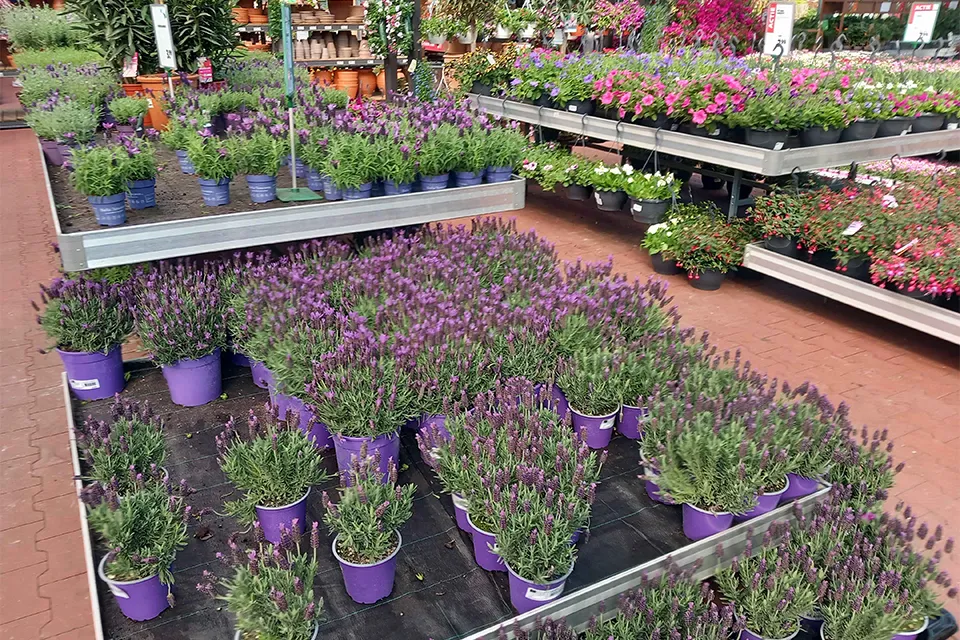
PAN-NL researches garden plants every year. The results consistently underline the importance of choosing plants critically. This year, for example, its sample of 17 plants contained no fewer than 13 substances classified as ‘highly hazardous’. It is also worrying that the research focuses specifically on widely used plants such as lavender, butterfly bushes, bellflowers and rosemary. These are, of all things, often promoted as insect-friendly.
Advice
Mantingh has some useful advice for gardeners, landscape contractors and municipal buyers who want to buy pesticide-free plants: “Not every sustainability label says the same thing about pesticides. SKAL-certified organic plant material offers the greatest assurance: no synthetic pesticides are used during or after cultivation. MPS-GreenerGrown with three stars is also a strong indication, as only biological pesticides are used.”
If in doubt, Mantingh advises asking suppliers specific questions. Is the plant material organically certified? Are residue analyses available? Which country does the material come from, and which products were used during or after cultivation? “By choosing more consciously, buying more critically and talking to suppliers, you also create pressure further up the supply chain. This encourages growers to opt for unsprayed cultivation more often.”
PAN-NL has compiled a list of sustainable and organic ornamental plant growers, as well as a document about labels. Both can be downloaded from www.pan-netherlands.org.
Question about this story? Ask your question
Keep following this
Get an email when a new story is published. No account needed.
- ThemeNature-friendly green space management
- SubjectGeneral







