









Key considerations when choosing a fence
Text Carolien KleesImage Voshaar Schuttingen
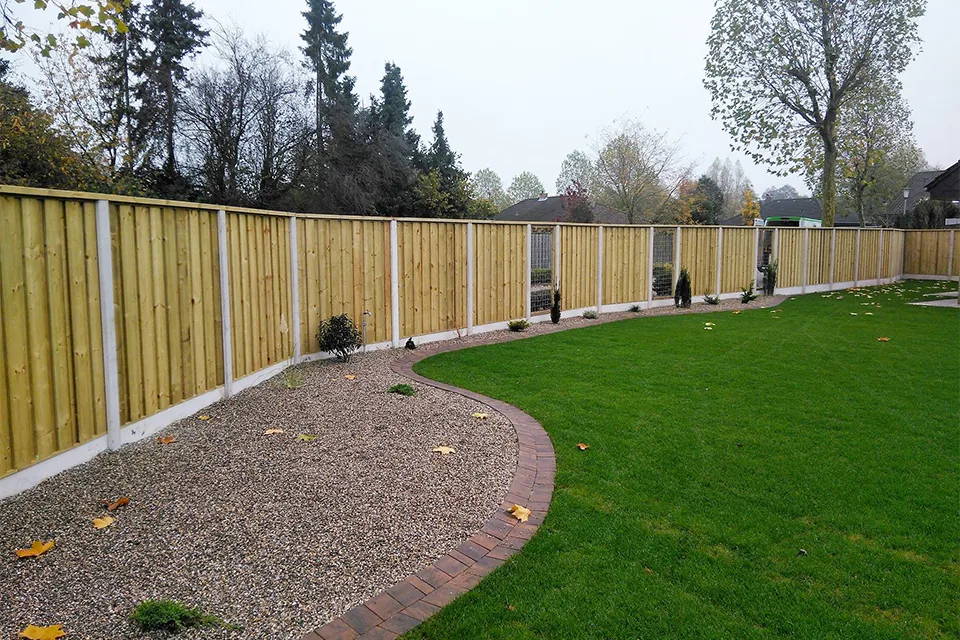
A quintessentially Dutch garden boundary with centuries of history
Did you know that fence posts were already used in ancient Egypt to mark property boundaries? Back then they were made of wood, but today concrete fence posts are an essential feature of Dutch gardens. The choice of garden boundaries is growing, but what should green professionals consider when choosing a fence? We asked Rick Voshaar, owner of Voshaar Schuttingen, about the options and the absolute do’s and don’ts.
It is generally well known that concrete fence posts last longer than their wooden counterparts. However, Voshaar explains that the treatment process used for wooden fence panels also affects their lifespan: “We dry the boards until their moisture content is down to twenty per cent. They are then stacked with a batten between each board and placed in a vacuum chamber. The wood is then impregnated under high pressure, ensuring that the treatment penetrates right through. This process ensures optimum quality and longevity.”
Type of wood
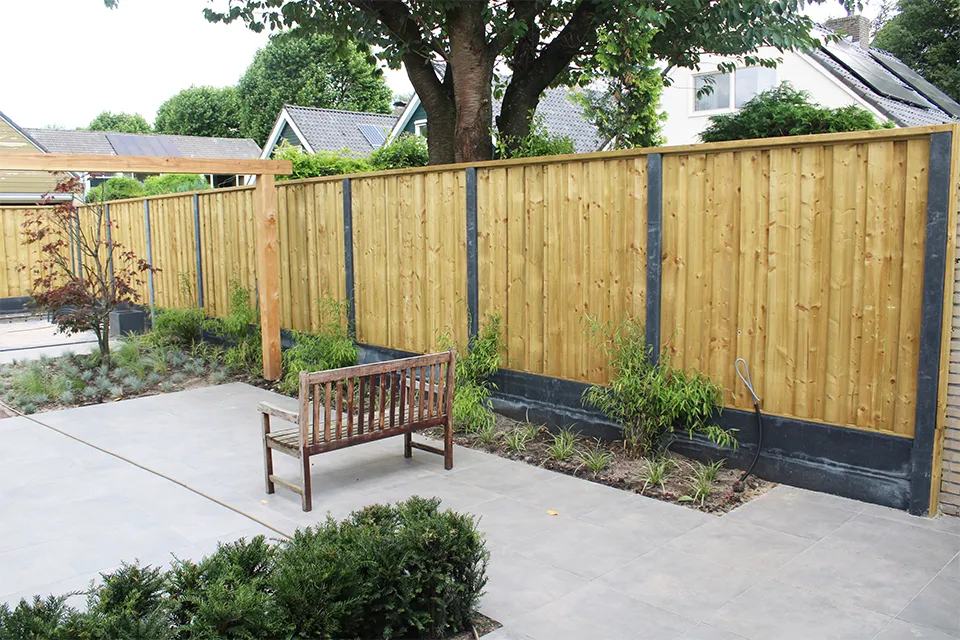
Voshaar has opted for spruce, whose finer knots create a more uniform appearance. He advises against using hardwood fence panels, as they can ‘bleed’ when exposed to sunlight: “The sap then runs onto the concrete, which detracts from the appearance of the fence. Oak is also not recommended, as this type of wood is too prone to movement. I would also advise against so-called Douglas-look wood such as Red Class Wood. It is nothing more than a spruce board treated with a coloured finish. You pay too much for what you actually get. In this case, genuine Douglas fir is a better choice. We also stock it for customers who want a slightly warmer wood colour. The presence of certification is another point to consider. PEFC and FSC certification are really the bare minimum.”
And what determines whether to choose a vertical or horizontal board construction? “The latter is ideal if you want to make a garden appear deeper, while a vertical fence creates a more restful effect.”
Trends
In keeping with the current trend for anthracite-coloured patio slabs, more and more companies are offering other shades alongside the traditional light-grey concrete posts and gravel boards. Voshaar has an important tip, however: “Dark anthracite fades quickly in sunlight because far too little pigment is often used. It is therefore advisable to use a fence supplier that makes its own concrete. We do too, and add a larger quantity of pigment, so the colour fades much less.”
Variations
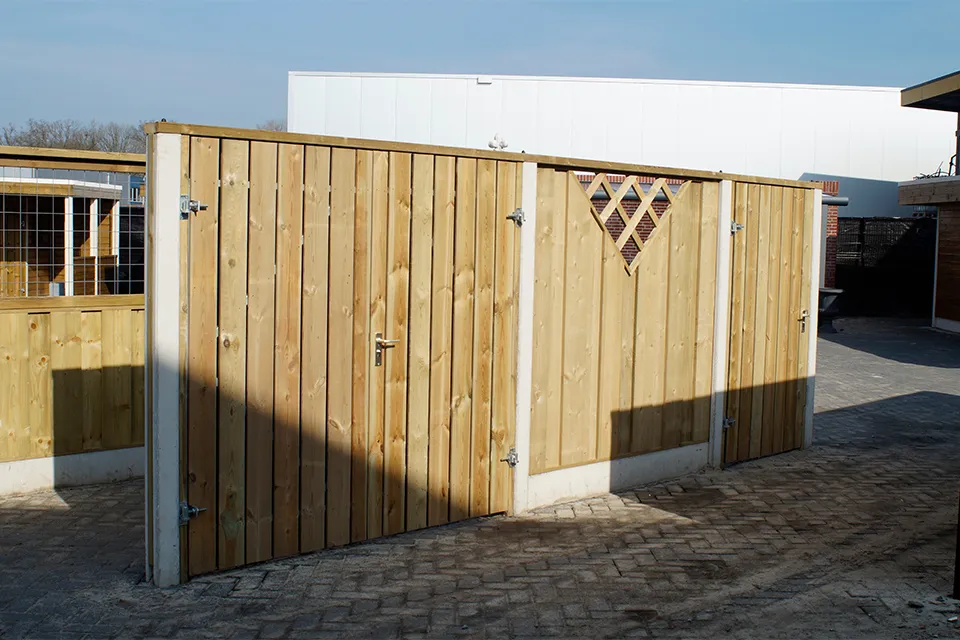
Alongside the conventional, straightforward fence, green professionals now have plenty of options. For more light or a more playful look, they can choose a V-trellis garden screen or a full or half trellis screen. The latter also provides support for climbing plants. Popular gabion systems filled with stones offer another attractive variation and can enhance the garden design.
Advice
Finally, Voshaar advises checking the warranty and other services on offer when looking for a fence supplier: “Does the ground also need to be levelled or excavated, for example? Is a canopy or paving also required? It is more efficient to have one company carry out all the work. That is why we set up Voshaar Groep, so that we can also take care of the groundworks.”
Question about this story? Ask your question
Keep following this
Get an email when a new story is published. No account needed.
- SubjectGeneral







